
Sauces & Condiments
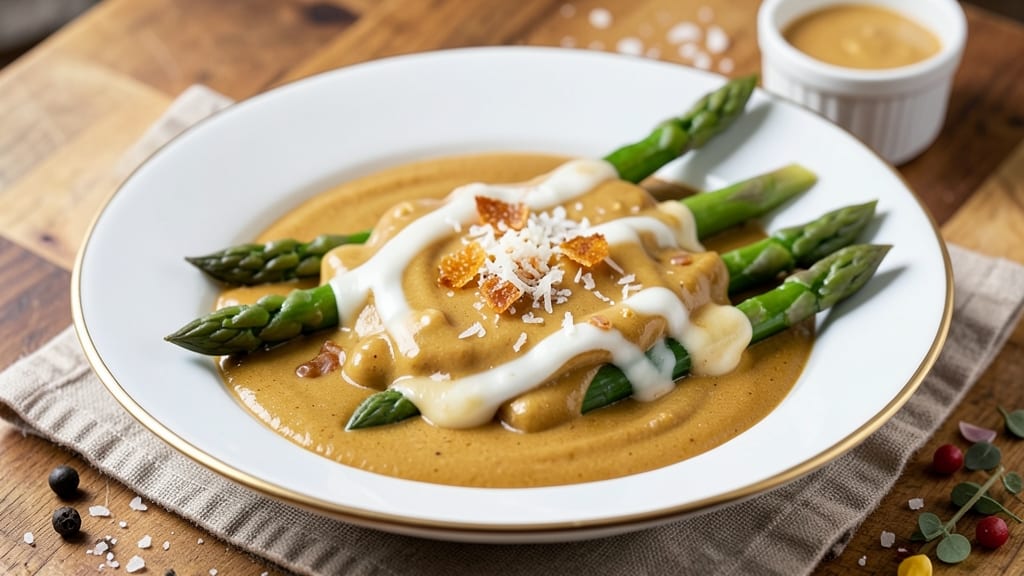
This asparagus alfredo sauce recipe transforms simple ingredients into a velvety, herb-infused sauce with unexpected depth from fresh asparagus. The secret lies in blending puréed asparagus into the classic cream-and-cheese base, creating a sauce that's both rich and vibrant—perfect for elevating weeknight dinners.
Unlike traditional alfredo, this version maintains a lighter texture while delivering layers of earthy, green flavor that pairs beautifully with fettuccine or grilled chicken.
The process is straightforward but requires attention to blending for that signature smoothness. You'll start with a classic roux—equal parts butter and flour cooked until golden—before adding heavy cream and freshly grated Parmesan. The asparagus comes in later, puréed until silky and folded into the sauce just before serving.
This technique ensures the sauce stays creamy without becoming heavy, with the asparagus adding a subtle freshness that brightens every bite.
What makes this sauce truly special is its versatility. It works as a luxurious pasta topping, a rich dip for crusty bread, or even a glaze for roasted vegetables. The herb infusion—typically a mix of parsley, chives, and garlic—adds an aromatic finish that complements the earthy asparagus.
The result is a sauce that feels indulgent yet balanced, with just the right amount of tang from the cheese and creaminess from the purée.
For best results, use fresh asparagus and blend it until completely smooth before incorporating it into the sauce. This ensures the texture remains silky and the flavor integrates seamlessly.
Serve immediately for the most vibrant taste, or store in the refrigerator for up to 3 days—though it’s likely to disappear faster than that. Let’s get started!
Ingredients for asparagus alfredo sauce
Velvety texture meets earthy asparagus in this herb-infused alfredo—no heavy cream overload here.
| Ingredient | Amount | Notes |
|---|---|---|
| Fresh Asparagus Spears 🌱 | 1 lb | Trimmed, puréed until silky |
| Unsalted Butter 🧈 | ½ cup | Cold, cut into small cubes |
| All-Purpose Flour 🌾 | ½ cup | Sifted for smooth roux |
| Heavy Cream 🥛 | 1 ½ cups | Full-fat for richness |
| Freshly Grated Parmesan Cheese 🧀 | 1 cup | Block-style, microplane preferred |
| Fresh Garlic Cloves 🧄 | 4 cloves | Minced, aromatic intensity |
| Fresh Flat-Leaf Parsley 🌿 | ¼ cup | Chopped, vibrant green |
| Fresh Chives 🌿 | 2 tbsp | Finely chopped, mild onion note |
| Diamond Crystal Kosher Salt 🧂 | ½ tsp | Adjust to taste |
| Freshly Ground Black Pepper 🌶️ | ¼ tsp | Cracked, not powdered |
The asparagus is non-negotiable for that signature freshness. Look for bright green spears with tight tips—avoid woody or yellowing stalks. Whole Foods or local farmers markets carry the freshest cuts, but any grocery store's produce section will do. For puréeing, immersion blenders are ideal—they keep the texture silky without over-processing. If using a regular blender, add a splash of cream to help it blend smoothly. The garlic and herbs should be freshly chopped just before folding into the sauce; pre-minced jarred garlic lacks the aromatic punch you want here.
No fresh asparagus? Frozen asparagus works in a pinch, but thaw and drain it thoroughly before puréeing to avoid watering down the sauce. Swap the heavy cream for half-and-half if you prefer a lighter texture, though the sauce will be slightly less rich. For a dairy-free option, use full-fat coconut milk (the canned kind, not carton), though the flavor profile shifts noticeably. The Parmesan is critical—pre-grated cheese contains anti-caking agents that prevent proper emulsification. If you're in a hurry, Parmigiano-Reggiano from a block is worth the extra minute of grating. And yes, you can make this without herbs, but why would you?
This sauce is best served immediately, but if you need to prep ahead, store it in an airtight container with a thin layer of plastic wrap pressed directly onto the surface to prevent a skin from forming. Keeps for 3 days in the fridge, though the texture may thicken slightly—simply whisk in a splash of warm cream to restore smoothness. For longer storage, freeze in 1-cup portions for up to 3 months. When reheating, do so over low heat to prevent curdling. The sauce pairs beautifully with fettuccine, grilled chicken, or even as a dip for roasted vegetables—just don't skimp on the herbs when serving.
Why You'll Love This Recipe
- Five-Minute Prep: I swear by this—just trim the asparagus, melt butter, and stir. No chopping, no fuss, just a quick sauté before the sauce comes together like magic.
- Creamy Without the Guilt: That rich, velvety texture comes from heavy cream and Parmesan, but the asparagus keeps it bright and fresh. Honestly, it’s the kind of comfort food that doesn’t leave you sluggish.
- Weeknight to Dinner Party: Same sauce, endless uses—toss it with pasta, drizzle over grilled chicken, or even spoon it into a baked potato. (Yes, even on a Tuesday night.)
- Leftover Goldmine: The flavor only gets better the next day. I make a double batch, freeze half, and pull it out for lazy mornings or last-minute guest dinners—no one ever suspects it’s reheated.
Step-by-step instructions for herb-infused asparagus alfredo sauce
Transform simple ingredients into a velvety sauce where asparagus meets creamy richness.
Blanch and Purée the Asparagus
Trim the tough ends from the 1 lb fresh asparagus spears, leaving only the tender portions. Bring a pot of salted water to a boil and blanch the asparagus for exactly 2 minutes—just enough to soften without losing color. Immediately drain and transfer to a food processor or blender.
Add 2 tablespoons of the heavy cream to the processor along with the blanched asparagus. Purée until completely smooth, scraping down the sides as needed. The result should be a silky, vibrant green purée with no visible texture. Set this aside—it's the secret to our sauce's signature flavor and color.
Create the Classic Roux Foundation
In a large saucepan, melt the ½ cup unsalted butter over medium heat until it foams but doesn't brown. Add the ½ cup all-purpose flour all at once and whisk vigorously for 1-2 minutes until the mixture forms a smooth, pale roux with no floury taste.
This step is critical—the roux is what will thicken our sauce and create that luxurious, clinging texture. If it darkens too quickly, reduce the heat slightly. You're aiming for a color between pale blonde and light tan, not brown. The roux should coat the back of a spoon smoothly when stirred.
Infuse with Aromatics and Cream
Gradually whisk in the 1½ cups heavy cream to the roux, adding it slowly to prevent lumps. Stir constantly for 3-4 minutes until the mixture thickens noticeably and begins to coat the back of a spoon. Add the 4 minced garlic cloves and cook for another 30 seconds, just until fragrant—don't let it brown.
Here's where we build flavor depth. The garlic should perfume the sauce without becoming bitter. If you notice any browned bits developing, immediately reduce the heat. This is the moment that matters: the sauce should smell like warm cream, garlic, and something promisingly rich.
Incorporate Asparagus Purée and Cheese
Reduce the heat to low and gradually add the asparagus purée, whisking continuously to prevent curdling. Stir in the 1 cup freshly grated Parmesan cheese and ½ teaspoon kosher salt, ensuring the cheese melts completely into the sauce. The mixture should be thick but still pourable.
Taste and adjust seasoning—you may need a bit more salt or a pinch of the ¼ teaspoon black pepper to balance the flavors. The sauce should taste rich, slightly sweet from the asparagus, and properly cheesy. If it's too thick, whisk in 1-2 tablespoons of hot water or cream to reach your desired consistency.
Finish with Fresh Herbs and Rest
Remove the sauce from heat and stir in the ¼ cup chopped parsley and 2 tablespoons chopped chives. These fresh herbs add brightness that cuts through the richness. Let the sauce rest for 5 minutes—this allows the flavors to meld and the sauce to thicken slightly as it cools.
For the best results, serve immediately over pasta or with grilled chicken. The sauce should cling beautifully to whatever it's poured over, with visible green flecks from the asparagus and a glossy sheen. Each bite should deliver creamy texture with subtle asparagus sweetness and herbal freshness.
Pro Tips For Making Asparagus Alfredo Sauce
- Cook asparagus first: Cut the tough ends off the spears, then blanch them in boiling salted water for 2-3 minutes—just until bright green and tender. Drain and set aside; this keeps them from turning mushy when added to the sauce later (yes, even if you're impatient like me).
- Use cold butter, hot pan: Melt the butter over medium heat, then immediately whisk in the flour to form a roux—don’t let it brown. Cold butter blends smoother and prevents a grainy texture, which is the thing that matters most when you’re aiming for that velvety alfredo.
- Skip the pre-shredded cheese: Freshly grate the Parmesan right before adding it to the sauce, and use the fine side of a box grater. Pre-shredded cheese has anti-caking agents that make the sauce look and taste dull, and it clumps like a sad, dry snowstorm.
- Temper the cream slowly: After the roux forms, pour in the heavy cream a little at a time while whisking constantly—about ½ cup at a time. Dumping it all in at once risks curdling, and nobody wants to salvage a broken sauce mid-recipe. (Your future self will thank you.)
Storing and reheating your leftovers
Refrigerator Storage
Store your asparagus alfredo sauce in an airtight container with a layer of plastic wrap pressed directly onto the surface to prevent a skin from forming. The sauce keeps well in the fridge for up to 3 days, though I always find it disappears faster than that!
If the texture thickens slightly upon reheating, simply whisk in 1-2 tablespoons of warm cream to restore its silky consistency. 🥣
Freezer Storage
For longer storage, freeze the sauce in 1-cup portions using quart-sized freezer bags—this makes it easy to thaw just what you need. Leave 1 inch of headspace in the bag to account for expansion, and squeeze out excess air to prevent freezer burn.
The sauce maintains its quality for up to 3 months when frozen, though I recommend labeling with the date to keep track. 🧊
Reheating Methods
Reheat the sauce gently over low heat on the stovetop, stirring constantly to prevent curdling. If you're using the microwave, transfer the sauce to a microwave-safe bowl and heat in 30-second intervals, stirring between each interval until it reaches 165°F.
Avoid high heat—it can break the sauce's delicate emulsion and make it grainy. 🔥
Thawing Frozen Sauce
To thaw frozen asparagus alfredo, transfer the bag from the freezer to the refrigerator and let it sit overnight. For quicker thawing, place the sealed bag in a bowl of cold water and change the water every 30 minutes until fully thawed.
Once thawed, reheat using the stovetop method for the best results—this helps restore the sauce's creamy texture. ❄️
Reviving Thickened Sauce
If your refrigerated sauce has thickened too much, whisk in 1-2 tablespoons of warm heavy cream or water to loosen it up. For a smoother finish, strain the sauce through a fine-mesh sieve to remove any lumps.
The key is to warm the sauce gradually—never microwave it directly from the fridge, as the temperature shock can cause separation. 💫
Serving After Storage
After reheating, give the sauce a final taste and adjust seasoning if needed—it often needs a pinch more salt or black pepper after storage. If the herbs have lost their vibrancy, garnish with fresh chives or parsley just before serving.
The sauce works beautifully over fettuccine, as a dip for garlic bread, or as a glaze for roasted chicken. 🍽️
Nutrition facts
Frequently asked questions
Can I use frozen asparagus instead of fresh?
Yes, but with a few adjustments! Thaw and drain frozen asparagus completely before puréeing to avoid watering down your sauce. For best results, use 1 lb frozen asparagus and add an extra 1 tablespoon of heavy cream to the purée to compensate for any excess moisture. The texture may be slightly less vibrant, but the flavor will still shine.
Why did my sauce turn grainy when reheating?
This usually happens when the sauce cools too quickly or is reheated too aggressively. Always reheat over low heat while stirring constantly. If it's already grainy, strain through a fine-mesh sieve and whisk in 1 tablespoon of warm cream to restore smoothness. For future batches, avoid letting the sauce sit at room temperature for more than 30 minutes.
Can I make this sauce without dairy?
Swap the butter for vegetable oil or dairy-free margarine, use full-fat coconut milk instead of heavy cream, and replace Parmesan with nutritional yeast or vegan Parmesan. The texture will be lighter but still creamy. For extra richness, add 2 tablespoons of cashew cream to the purée. The asparagus flavor will still shine through beautifully.
How can I make this sauce extra creamy?
For a silkier texture, whisk in 1 tablespoon of cold butter just before serving—this adds richness without cooking. You can also replace ½ cup of the heavy cream with ½ cup of crème fraîche for a tangier, ultra-creamy finish. For an even smoother purée, blend the asparagus with 1 tablespoon of olive oil before mixing into the sauce.
What's the best way to use up leftover sauce?
This versatile sauce works perfectly as a dip for garlic bread or roasted vegetables, a glaze for grilled chicken or fish, or even a filling for stuffed shells. For a quick meal, toss with cooked quinoa or rice and top with toasted breadcrumbs. The asparagus flavor pairs especially well with earthy mushrooms or spinach** in these dishes.