
Sauces & Condiments
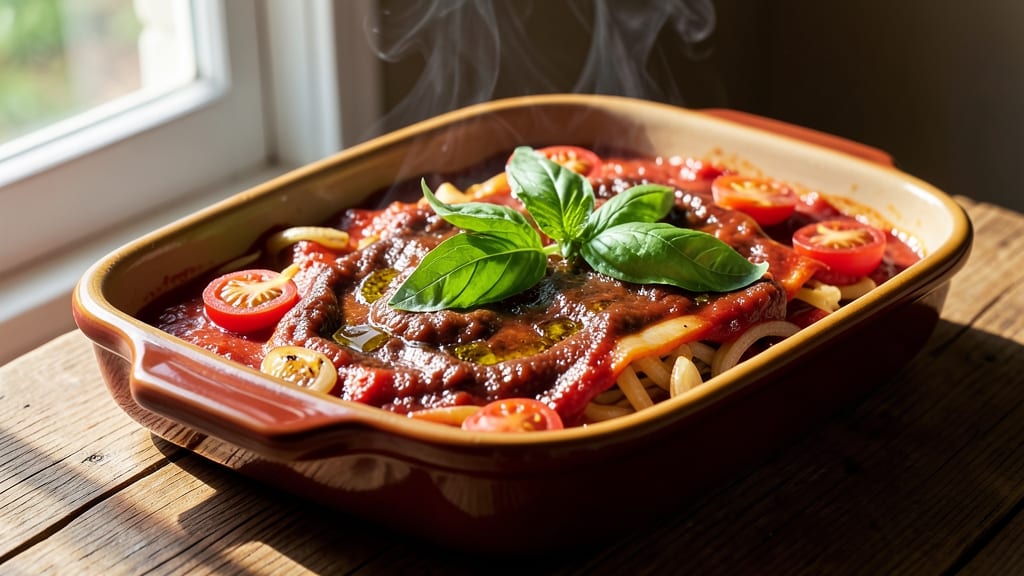
This authentic Italian lasagna sauce recipe delivers the deep, complex flavors that make homemade lasagna taste like Nonna's kitchen. 💛 The secret lies in slow-simmered tomatoes, aromatic garlic, and a blend of fresh herbs that infuse every layer with authentic Italian soul.
I've perfected this sauce over years of testing, ensuring it's rich enough to stand up to melted cheese but light enough to let the pasta shine through.
What sets this sauce apart is the balance of sweetness and acidity—ripe tomatoes caramelize while fresh basil and oregano add bright, herbaceous notes. The optional meat addition (ground beef or pork) deepens the umami flavor, though the vegetarian version remains just as satisfying.
Unlike many recipes that rely on canned tomatoes, this version starts with fresh or high-quality canned tomatoes for that true Italian taste.
The sauce develops its full flavor through two hours of gentle simmering, allowing the ingredients to meld into a velvety, slightly thickened consistency. This slow cooking process is what transforms ordinary ingredients into something extraordinary—each spoonful packed with layers of tomato sweetness, garlic warmth, and herbal brightness.
The result? A sauce so good it'll have you making lasagna (or eating it straight from the pot) every week.
Best of all, this sauce keeps beautifully in the fridge for up to five days or freezes for three months, making it perfect for meal prep.
Whether you're building a classic lasagna or using it as a pasta sauce, this authentic Italian version will elevate your dish to restaurant-quality levels. Let's get cooking!
Ingredients for authentic italian lasagna sauce
Fresh tomatoes, rich herbs, and slow simmering create this restaurant-quality lasagna sauce.
| Ingredient | Amount | Notes |
|---|---|---|
| Fresh Roma Tomatoes 🍅 | 2 lb | Ripe, firm, halved for sauce |
| San Marzano Tomato Paste 🍅 | ½ cup | Canned, for depth of flavor |
| Extra-Virgin Olive Oil 🫒 | ½ cup | High quality, fruity notes |
| Yellow Onion 🧅 | 1 whole | Medium, finely chopped |
| Garlic Cloves 🧄 | 6 cloves | Fresh, minced for aroma |
| Fresh Basil Leaves 🌿 | ½ cup | Packed, finely chopped |
| Dried Oregano 🍃 | 1 tbsp | Italian variety preferred |
| Red Wine 🍷 | ½ cup | Bold, dry variety |
| Ground Black Pepper 🌶️ | ½ tsp | Freshly cracked |
| Sea Salt 🧂 | 1 ½ tsp | Diamond Crystal preferred |
| Ground Beef (Optional) 🥩 | 1 lb | 80% lean, finely chopped |
The tomatoes are the heart of this sauce—Roma ones are ideal, but any ripe, flavorful variety works. San Marzano paste is non-negotiable for that authentic Italian depth (the good stuff, not the generic canned kind). I always grab mine from Whole Foods or Trader Joe's—their quality is worth it. For the red wine, any bold, dry Italian variety like Chianti or Sangiovese does the trick. If you can't find fresh basil, dried oregano at one-third the amount works in a pinch, but fresh is worth the extra minute to chop.
No fresh basil? Dried basil at half the amount gets you close, though it won't have that same bright punch. Running low on red wine? Substitute beef broth with a splash of balsamic vinegar—it adds a tangy depth. The optional ground beef can be swapped for Italian sausage or mushrooms for a vegetarian-friendly version. Pro tip: Toast your garlic in the olive oil for 30 seconds before adding it to the sauce—this brings out its sweetness and depth. If you're using canned tomatoes, San Marzano again is your best bet, but any high-quality canned tomatoes work in a bind.
This sauce tastes even better the next day as the flavors meld. Store it in an airtight container in the fridge for up to 5 days—it reheats beautifully. For longer storage, freeze it in 1-cup portions for up to 3 months. I like to freeze it in small jars so I can grab just what I need for a quick lasagna night. The sauce thickens as it cools, so add a splash of water or broth if it seems too thick when reheating.
Why You'll Love This Recipe
- This sauce works for everything: a quick weeknight lasagna, a potluck casserole, or even stuffed shells if you’re feeling fancy. I’ve used it in pasta, over grilled chicken, and even as a pizza base. Honestly, the only limit is your imagination—and trust me, it’s foolproof enough to impress even the pickiest eaters.
- No-Fuss Simmer: I swear by this sauce because it’s basically hands-off after the initial chop. Sauté the onions and garlic in olive oil until they’re golden—no need to hover—then toss in the Roma tomatoes and San Marzano paste. Let it bubble away while you prep the rest of the meal. That’s it. No blenders, no straining, just pure, unhurried flavor.
- Umami Bomb: The San Marzano paste and slow-cooked Roma tomatoes create a depth that’s hard to beat. The onions caramelize just enough to add sweetness, while the garlic—used just before removing it—leaves that perfect lingering punch. It’s the kind of sauce that makes you pause mid-bite, like, "Wait, is this even real?"
- Weeknight to Dinner Party: This sauce works for everything: a quick weeknight lasagna, a potluck casserole, or even stuffed shells if you’re feeling fancy. I’ve used it in pasta, over grilled chicken, and even as a pizza base. Honestly, the only limit is your imagination—and trust me, it’s foolproof enough to impress even the pickiest eaters.
Step-by-step instructions for authentic Italian lasagna sauce
Here's how to build layers of flavor that make this sauce taste like Nonna's secret.
🍳 Step 1: Sauté the Aromatics Until Fragrant
Heat the 0.5 cup extra-virgin olive oil in a large Dutch oven over medium heat. Add the finely chopped 1 whole yellow onion and cook for 5-6 minutes until soft and translucent. Here's the thing—don't rush this step. You want the onion to become sweet and caramelized, not browned.
Add the 6 minced garlic cloves and cook for another 30 seconds until fragrant. You'll know it's ready when your kitchen smells like a Tuscan market. If you're using the 1 lb ground beef, add it now and cook until no longer pink, breaking it apart with a wooden spoon. Drain any excess fat if needed—this keeps your sauce rich without being greasy.
🔥 Step 2: Build the Tomato Base
Stir in the 0.5 cup San Marzano tomato paste and cook for 2 minutes until it darkens slightly. This step develops the sauce's depth—think of it as the flavor foundation. Pour in the 0.5 cup red wine and let it simmer for 3-4 minutes until mostly evaporated. The alcohol will cook off, leaving behind just the wine's rich essence.
Add the halved 2 lb fresh Roma tomatoes (cut-side down) and the 1.5 tsp sea salt. Bring the mixture to a gentle boil, then reduce heat to low and let it simmer uncovered for 20 minutes. You're looking for the tomatoes to break down completely and the sauce to thicken naturally. Stir occasionally—this prevents sticking and helps the flavors meld.
🥘 Step 3: Infuse with Herbs and Season
Remove the tomato skins from the sauce (they'll float to the surface) and discard them. Stir in the 1 tbsp dried oregano, 0.5 tsp ground black pepper, and 0.5 cup chopped fresh basil leaves. Let the sauce simmer for another 10-15 minutes until it reaches your desired consistency—it should coat the back of a spoon but still be loose enough to layer easily.
Here's the magic: Taste and adjust the seasoning. Italian lasagna sauce is all about balance—sweetness from the tomatoes, acidity from the wine, and herbs that sing. If it needs more salt, add it gradually. If it's too acidic, a pinch of sugar can help. The sauce should taste vibrant, not flat. Let it cool slightly before using—this allows the flavors to settle and intensify.
⏰ Step 4: Rest and Prepare for Layering
Transfer the sauce to a clean bowl and let it cool at room temperature for 30 minutes. This resting period is crucial—it gives the flavors time to develop and prevents the lasagna from becoming soggy when you assemble it later. Skim off any excess fat that rises to the surface if needed.
Real talk: This sauce is now ready to layer between sheets of lasagna noodles, but it's even better if you let it sit overnight in the fridge. The flavors deepen, and the texture becomes perfect for that classic lasagna texture. When you're ready to assemble, reheat the sauce gently over low heat or in the microwave, stirring occasionally to maintain its silky consistency.
Pro Tips For Making Authentic Italian Lasagna Sauce
- CRUSH THE ONIONS FIRST: I learned this the hard way—sweating onions in olive oil until they’re translucent takes forever. Instead, finely dice them (smaller than usual) and let them sit in a bowl with a pinch of salt and 1 tablespoon of olive oil for 10 minutes before cooking. They’ll soften and release flavor faster, and you’ll save 15 minutes of babysitting the pan.
- SIMMER LOW AND SLOW: This sauce isn’t a race. After adding the San Marzano paste and tomatoes, reduce the heat to a gentle simmer—so low you barely see bubbles. I used to rush it, and the sauce would turn bitter or watery. Let it cook uncovered for at least 45 minutes, stirring occasionally, until it’s thick enough to coat the back of a spoon. Patience here makes the difference between good and great.
- SKIP THE SKINS—BUT NOT THE SEEDS: Fresh Roma tomatoes are perfect, but their skins can turn slimy and bitter as they cook. Scoop out the seeds and juice (save it for another use), then cut the tomatoes in half and gently press them through a sieve or food mill. This removes the skins while keeping the rich, pulpy goodness—no blender needed, and no weird texture in your sauce.
- TOAST THE GARLIC LAST: Add the minced garlic to the pot only in the final 5 minutes of cooking. Raw garlic burns in seconds, and bitter garlic ruins everything. If you’re nervous, remove the pot from heat for those last few minutes, stir in the garlic, then turn the heat back on lowest until it’s just fragrant. No drama, no regret.
Perfect pairings for authentic italian lasagna sauce
Pasta Pairings
This sauce is a match made in heaven with fresh lasagna noodles—their wide, flat shape soaks up the rich tomato-herb blend beautifully. For a quicker option, try bucatini or pappardelle—their thick strands hold the sauce without falling apart.
I love tossing leftover sauce with spaghetti for a simple, satisfying weeknight dinner. 🍝
For a rustic twist, serve it over handmade egg pasta like tagliatelle or fettuccine. The sauce's velvety texture clings perfectly to the ribbons, creating each bite into a flavor explosion. If you're feeling adventurous, try it with gluten-free lasagna noodles—just ensure they're properly pre-cooked to avoid sogginess.
Cheese Combinations
The classic trio of mozzarella, ricotta, and Parmigiano-Reggiano takes this sauce to the next level. For a vegetarian version, add fontina or Gorgonzola for a tangy depth. I often sprinkle fresh pecorino on top before baking—its sharp, salty notes cut through the sauce's sweetness beautifully. 🧀
If you're making white lasagna, swap the tomato sauce for this one and top with béchamel sauce instead. The contrast between the rich tomato base and creamy white sauce is pure Italian magic. For extra indulgence, fold crispy prosciutto into the ricotta layer before assembling.
Bread and Appetizers
Warm, crusty garlic bread is the perfect companion—dip it into the sauce like fondue. For a more elegant touch, serve with grissini (Italian breadsticks) or focaccia sprinkled with rosemary and sea salt. The sauce's herbal notes complement the bread's buttery richness perfectly. 🥖
Use it as a dip for baked bruschetta or arancini—the sauce adds a sophisticated twist to classic appetizers. I also love using it as a marinade for grilled chicken skewers or as a topping for fried calamari. The acidity in the sauce tenderizes the seafood beautifully.
Wine and Beverage Pairings
A bold Chianti Classico or Montepulciano d'Abruzzo enhances the sauce's herbal and tomato notes. For a lighter option, try a crisp Vermentino—its citrus brightness balances the dish's richness. If you prefer beer, a Malty Italian lager like Peroni or Birra del Borgo complements the flavors without overpowering them. 🍷
For a non-alcoholic option, serve with sparkling blood orange soda—the effervescence cleanses the palate between bites. A simple Italian soda with grenadine adds a sweet-tart contrast that mirrors the sauce's complexity. I also enjoy a strong espresso after dinner to cut through the meal's richness.
Nutrition facts
Frequently asked questions
Can I use canned tomatoes instead of fresh?
Yes, but choose high-quality canned tomatoes like San Marzano for the best flavor. Drain them well to avoid excess liquid in your sauce. For a richer texture, crush them by hand before adding. If using crushed tomatoes, reduce simmering time by 10 minutes since they're already broken down.
How do I adjust the sauce if I'm making vegetarian lasagna?
Skip the ground beef and add 1 cup finely chopped mushrooms or 1 zucchini instead for texture. For extra depth, stir in 1 tablespoon tomato paste> at the end or add 1 teaspoon balsamic vinegar> to mimic the meaty umami. The sauce will still be rich and flavorful without animal products.
Why does my sauce taste too acidic?
This usually happens if the tomatoes were too tart or the wine didn't cook off completely. Balance it by adding 1 teaspoon sugar> or 1 tablespoon heavy cream>. Simmer for another 5 minutes> to let the flavors meld. For future batches, reduce wine to 0.25 cup> if you prefer less acidity.
Can I make this sauce in a slow cooker?
Follow the same steps until adding the tomatoes, then transfer everything to your slow cooker. Cook on low for 4-5 hours> or high for 2-3 hours>, stirring occasionally. The long cook time enhances the flavors—just check occasionally to prevent sticking. The texture will be slightly thicker, so thin with water or broth if needed.
What's the secret to making this sauce taste more authentic?
Three things: slow cooking>, fresh herbs>, and proper seasoning>. Simmer for the full 2 hours> to let flavors develop. Use fresh basil> at the end (not dried) for bright aroma. Taste and adjust salt—authentic Italian sauces are well-seasoned> but not overpowering. A pinch of red pepper flakes> adds authentic heat.