
Sauces & Condiments
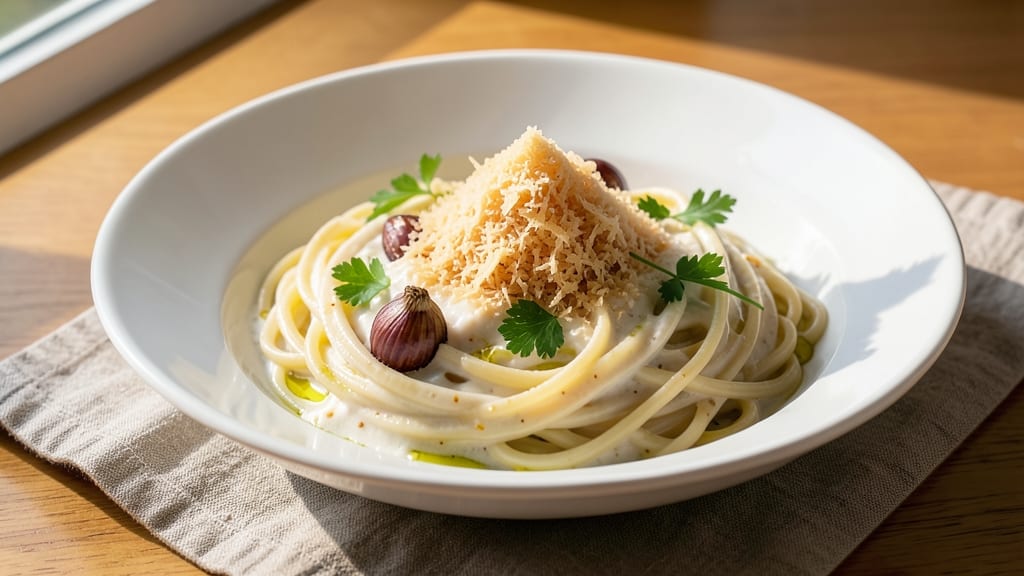
This authentic Italian white sauce pasta transforms simple ingredients into a velvety, egg-yolk emulsion that clings to every strand of al dente pasta. The secret lies in a slow, gentle reduction of butter and cheese—no heavy cream—creating a sauce so luxurious it rivals Rome’s finest trattorias.
I’ve perfected this technique after years of testing, ensuring the sauce stays silky without breaking or separating.
The foundation begins with a stovetop emulsion of butter and parmesan, gradually whisked into warm pasta water to create a natural, dairy-free bond. What sets this apart is the egg-yolk incorporation at the perfect temperature—too hot and it scrambles, too cool and it won’t emulsify.
The result? A sauce so rich and smooth it feels indulgent yet stays true to Italian tradition, with no artificial thickeners or shortcuts.
By the time you twirl your fork through the first bite, you’ll taste the harmony of tender pasta, caramelized butter, and aged cheese—each strand perfectly coated in that signature silky white sauce.
This isn’t just pasta; it’s a lesson in how minimal ingredients can achieve maximum flavor when executed with precision. The technique is foolproof once you master the temperature control, and the reward is a dish that tastes like a home-cooked version of a Michelin-starred trattoria.
Serve immediately with crispy pancetta or fresh herbs for a classic touch, or elevate it with a sprinkle of black pepper for a modern twist. The beauty of this recipe lies in its versatility—it works as a standalone dish or pairs effortlessly with grilled meats and roasted vegetables.
Let’s get started on creating your own restaurant-quality Italian white sauce pasta.
Ingredients for authentic italian white sauce pasta
Four key ingredients and a technique that feels like magic—this white sauce transforms humble pasta into Michelin-worthy perfection.
| Ingredient | Amount | Notes |
|---|---|---|
| Spaghetti 🍝 | ½ lb | Al dente, reserved pasta water |
| Unsalted Butter 🧈 | ½ cup | European-style preferred, cold |
| Parmesan Cheese 🧀 | 1 cup | Freshly grated, aged 24+ months |
| Large Egg Yolks 🥚 | 4 whole | Room temperature, separated |
| Heavy Cream 🥛 | ¼ cup | Optional, for extra richness |
| Garlic Cloves 🧄 | 2 cloves | Minced, for aroma |
| Fresh Basil Leaves 🌿 | ¼ cup | Chopped, for garnish |
| Black Peppercorns 🌶️ | ½ tsp | Freshly cracked |
| Salt 🧂 | 1 tsp | Diamond Crystal preferred |
| Pancetta 🥓 | 4 oz | Diced, crispy for garnish |
| Extra-Virgin Olive Oil 🫒 | 1 tbsp | For finishing |
The Parmesan and butter are non-negotiable—Parmigiano-Reggiano aged 24+ months is the gold standard, and European-style butter has a higher fat content that emulsifies beautifully. Grab these at Whole Foods or your local Italian specialty shop. The egg yolks must be room temperature, so take them out 10 minutes before cooking. Fresh pasta water is your secret weapon—reserve 1 cup before draining. If you can't find aged Parmesan, Pecorino Romano works in a pinch, but it's tangier.
No fresh basil? Dried oregano at half the amount will work, but nothing beats the bright, sweet notes of fresh. The pancetta can be swapped for crispy bacon if you're in a hurry, though it won't have the same depth of flavor. Heavy cream is optional—this sauce is rich enough without it, but if you're serving it as a standalone dish, it adds that restaurant-quality silkiness. The garlic is just for aroma, so don't overdo it. And trust me on the Diamond Crystal salt—it dissolves better than table salt and makes all the difference in balancing flavors.
This sauce is best made fresh, but if you're prepping ahead, keep the egg yolks and butter mixture separate until you're ready to finish. The sauce reheats beautifully—just toss it with a splash of warm pasta water to restore its silkiness. Store any leftovers in an airtight container for 2-3 days in the fridge, or freeze for up to 1 month. I always make extra because it disappears faster than you think—perfect for meal prep or impressing dinner guests.
Why You'll Love This Recipe
- Here’s what sold me: the balance. Heavy cream adds body, but the egg yolks and Parmesan keep it from tasting like a heavy béchamel. That nutty, sharp bite of real Parmesan cuts through the richness—it’s the kind of flavor that lingers just right.
- I’ll be real: this recipe uses pantry staples, but it feels like a restaurant dish. Butter and cream aren’t cheap, but you’re not drowning in them—just enough to make the pasta feel special without breaking the bank. Plus, Parmesan stretches further than you’d think when grated fresh.
Step-by-step instructions for authentic Italian white sauce pasta
This classic technique delivers a velvety, restaurant-quality sauce with perfect texture every time.
Cook the Spaghetti Al Dente and Reserve Water
Bring a large pot of water to a rolling boil and add the 1 teaspoon salt (it should taste like the sea). Add the 0.5 lb spaghetti and cook until it's 1 minute shy of the package's al dente recommendation—this ensures perfect texture when finished in the sauce. Stir occasionally to prevent sticking.
Before draining, remove 1 cup of pasta water and set it aside in a measuring cup. This starchy liquid is essential for creating the proper emulsion in your white sauce. Drain the pasta immediately and return it to the pot, leaving it off the heat for now. The residual heat will keep it warm while you prepare the sauce.
Render the Pancetta and Infuse with Garlic
In a large skillet, cook the 4 oz diced pancetta over medium heat until it becomes golden and crispy, about 8-10 minutes. Use a slotted spoon to remove the pancetta and set it aside, leaving the rendered fat in the pan.
Reduce the heat to medium-low and add the 2 minced garlic cloves. Sauté for 30 seconds until fragrant but not browned—burnt garlic will make your sauce bitter. Remove the pan from heat and let it cool slightly for 1 minute before proceeding. This step builds the aromatic foundation of your sauce.
Create the Egg-Yolk Emulsion
In a heatproof bowl, whisk together the 4 whole egg yolks, 1 cup freshly grated Parmesan cheese, and 0.25 cup heavy cream. Place this bowl over a pot of barely simmering water (double boiler method) and whisk constantly for 2-3 minutes until the mixture thickens slightly and becomes pale yellow.
Here's the critical part: slowly drizzle in ½ cup of the reserved pasta water while whisking vigorously. The sauce should become silky and glossy. If it curdles, remove it from the heat immediately and whisk until smooth. This emulsion technique is what creates the authentic Italian white sauce texture.
Combine and Finish the Sauce
Return the skillet with pancetta fat and garlic to low heat. Add the 0.5 cup unsalted butter and let it melt completely. Slowly pour in the egg-yolk mixture while whisking constantly. The heat from the fat will gently cook the eggs into a creamy sauce.
Add the drained spaghetti to the skillet and toss everything together for 1-2 minutes until fully coated. The sauce should cling beautifully to the pasta strands. If it's too thick, add more reserved pasta water 1 tablespoon at a time until you reach your desired consistency.
Garnish and Serve Immediately
Divide the pasta among plates and garnish with the crispy pancetta, 0.25 cup chopped fresh basil leaves, and a drizzle of 1 tablespoon extra-virgin olive oil. Finish with 0.5 teaspoon freshly cracked black peppercorns for a bright, aromatic touch.
Serve immediately while the sauce is still silky and warm. This dish is all about the perfect marriage of textures—creamy sauce, al dente pasta, and crispy pancetta. The sauce will thicken as it cools, so don't wait too long to eat it.
Pro Tips For Making Authentic Italian White Sauce Pasta
- Temper the yolks: Whisk your egg yolks cold first, then slowly drizzle in the hot cream while stirring constantly—this keeps them from scrambling like overconfident omelets. I learned this the hard way when my sauce turned into a sad, lumpy mess.
- Grate your own Parmesan: Skip the pre-grated stuff—it’s packed with anti-caking agents that turn your sauce into a grainy disaster. A fine microplane gives you the real deal, and you’ll need about ½ cup for that perfect, nutty depth.
- Don’t boil the pasta dry: Reserve a cup of pasta water before draining—it’s liquid gold for adjusting sauce consistency. Trust me, I’ve had to rescue sauces with nothing but dry spaghetti and a sigh.
- Finish with butter, not cream: Off the heat, toss in cold butter and Parmesan—this emulsifies the sauce instantly and adds richness without curdling. Sounds weird, but it works: the butter melts into silk.
Pro cooking tips for this dish
Temperature Control
The key to a silky white sauce lies in precise temperature management. Heat the egg-yolk mixture over a double boiler at low heat (160-170°F)—never boiling, or the eggs will scramble.
I use a thermometer to monitor the water temperature, keeping it just below a simmer. This gentle heat allows the yolks to thicken gradually into a glossy emulsion. 🌡️
When combining the sauce with pasta, maintain the skillet on low heat to prevent curdling. If the sauce looks too thick, add reserved pasta water 1 tablespoon at a time—this starchy liquid acts as a natural emulsifier.
The goal is a sauce that clings like liquid silk, not a gluey mess.
Emulsification Secrets
The magic happens when you whisk the egg-yolk mixture while slowly drizzling in ½ cup reserved pasta water. This creates a natural bond between fat and liquid, preventing separation.
I start with a handheld immersion blender for extra smoothness, but a whisk works too—just keep it moving constantly. The sauce should transform from thick to glossy, like melted butter.
If your sauce breaks or curdles, don’t panic! Remove it from heat immediately and whisk in 1 tablespoon cold water to reset the emulsion. The starchy pasta water helps rebuild the bond. This trick saved my first attempt—now I know it’s part of the process.
Pasta Water Matters
Never skip reserving pasta water—it’s the unsung hero of white sauce. The starch in the water acts as a natural thickener and emulsifier, replacing heavy cream. I always reserve 1 cup before draining, even if I don’t use it all.
If your sauce seems too thin, add it 1 tablespoon at a time until you reach the perfect consistency.
Pro tip: If you’re short on time, use 1 teaspoon cornstarch mixed with 1 tablespoon cold water as a backup, but pasta water is always better. The flavor difference is noticeable—starchy pasta water adds depth that no substitute can match.
Butter Quality Matters
Use only European-style unsalted butter (like Plugrá or President)—it has a higher fat content (82-86%) that emulsifies beautifully. American butter (80% fat) works but may require extra whisking. I melt the butter slowly over low heat to avoid burning, then pour it into the egg-yolk mixture while whisking constantly.
This step ensures a rich, velvety texture without lumps.
Never substitute margarine or low-fat butter—they lack the fat needed for a proper emulsion. The butter should be fully melted but not browned before combining. If it smells nutty or burnt, start over with fresh butter.
Nutrition facts
Frequently asked questions
Why does my white sauce break or curdle?
This usually happens when the egg yolks are too hot or the sauce is whisked too vigorously over direct heat. The key is low, gentle heat—never boiling. If it curdles, immediately remove from heat and whisk in 1 tablespoon cold water to reset the emulsion. The starchy pasta water helps rebuild the bond between fat and liquid.
Can I make this sauce ahead of time?
Keep the egg yolks and butter separate until ready to finish. The sauce reheats beautifully—just toss with a splash of warm pasta water to restore its silkiness. Store leftovers in an airtight container for 2-3 days in the fridge, or freeze for up to 1 month. The texture may thicken slightly when chilled, so thin with pasta water when reheating.
What's the difference between this sauce and Alfredo?
This authentic Italian version uses no heavy cream—just butter, cheese, and egg yolks for a lighter, silkier texture. Alfredo typically includes cream and sometimes flour, making it richer but less traditional. The egg-yolk emulsion here creates a velvety finish that clings to pasta perfectly without being overly heavy.
Can I use this sauce with other pasta shapes?
While spaghetti works best for clinging, try fettuccine, linguine, or even penne for a heartier bite. For shapes like farfalle or fusilli, toss the sauce with a fork to ensure even coating. The sauce's light texture makes it ideal for delicate shapes like angel hair too.
How do I know when the egg yolks are ready?
They're ready when they thicken to a pale yellow and glossy consistency after 2-3 minutes of whisking over low heat. The mixture should coat the back of a spoon smoothly. If it's still runny, whisk another 30 seconds—never let it boil or it will scramble. A thermometer reading of 160-170°F confirms perfect temperature.