
Sauces & Condiments
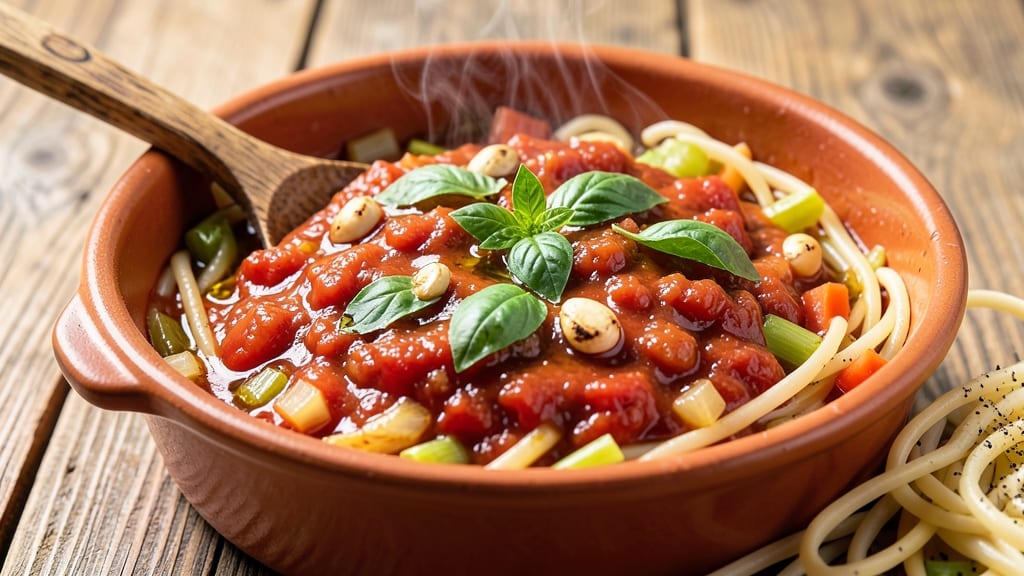
This authentic Italian homemade spaghetti sauce transforms simple ingredients into a rich, slow-simmered masterpiece that captures the heart of Italian cooking. 🌟 The secret lies in high-quality tomatoes, aromatic garlic, and a long simmer that deepens flavors—no shortcuts, just tradition.
I’ve perfected this recipe over years, ensuring every spoonful delivers the umami depth and fresh basil brightness that defines true Italian sauce.
The sauce begins with a soffritto—onions, carrots, and celery—slow-cooked until tender, forming the flavor base. San Marzano tomatoes (or high-quality canned tomatoes) provide natural sweetness, while garlic and herbs infuse layers of aroma.
The key? Simmering for at least 45 minutes, allowing the sauce to thicken and develop complexity without losing its vibrant taste.
What you’ll end up with is a silky, vibrant sauce—deep red with pockets of fresh basil—ready to coat al dente spaghetti or pair with grilled meats. The texture is perfect: thick enough to cling but light enough to let the pasta shine.
This isn’t just sauce; it’s a flavor journey that tastes like a trip to Italy’s countryside.
Store it in the fridge for up to 5 days or freeze for months—because great sauce deserves to be savored anytime. Let’s make it the way Nonnas do.
Ingredients for authentic italian homemade spaghetti sauce
Transform humble ingredients into a sauce that tastes like Nonna's kitchen—simple yet deeply flavorful.
| Ingredient | Amount | Notes |
|---|---|---|
| Extra-Virgin Olive Oil 🫒 | ½ cup | High-quality, fruity variety |
| Yellow Onion 🧅 | 1 whole | Finely diced, about 1 cup |
| Carrots 🥕 | 2 medium | Peeled, finely diced |
| Celery Stalks 🌿 | 2 whole | Diced, about 1 cup |
| Garlic Cloves 🧄 | 4 cloves | Peeled, minced |
| San Marzano Tomatoes 🍅 | 28 oz | Whole, peeled, crushed |
| Canned Tomato Sauce 🍅 | 1 cup | High-quality, no salt added |
| Fresh Basil Leaves 🌿 | ½ cup | Packed, stems removed |
| Dried Oregano 🍃 | 1 tsp | Italian variety preferred |
| Red Wine 🍷 | ½ cup | Dry, bold variety |
| Kosher Salt 🧂 | 1 ½ tsp | Diamond Crystal preferred |
| Black Pepper 🌶️ | ½ tsp | Freshly ground |
| Sugar 🍬 | 1 tsp | Balances acidity |
The soffritto—onion, carrots, and celery—forms the aromatic base. Buy organic carrots and celery from Whole Foods or local markets for vibrant color and sweetness. The San Marzano tomatoes are non-negotiable; their natural sweetness and low acidity define authentic flavor. If using canned tomatoes, opt for San Marzano brands like Mutti or Cirio—they're worth the investment. For the garlic, freshly minced cloves release more aroma than pre-minced jars. The olive oil should be extra-virgin with fruity notes—California Olive Ranch or Colavita are reliable choices.
No San Marzano tomatoes? High-quality crushed tomatoes like Rao's or Cento work in a pinch, but add an extra pinch of sugar to balance acidity. Short on red wine? Substitute with 0.5 cup tomato paste plus 0.25 cup water, but the wine's depth is irreplaceable. Fresh basil is ideal, but dried oregano at half the amount maintains the herbaceous profile. The carrots and celery can be swapped for fennel or zucchini if you prefer a different texture. For a meatier version, add 1 cup finely diced pancetta (rendered first).
This sauce develops best over time—45 minutes minimum simmering is essential. Store in an airtight container in the fridge for up to 5 days, or freeze for 3 months. The flavors actually improve after the first day as the acidity mellows. For serving, bring to room temperature before tossing with al dente spaghetti. The sauce thickens as it cools, so add a splash of water if needed. Portion into ice cube trays for single-use servings—perfect for busy weeknights.
Why You'll Love This Recipe
- This sauce works for everything: toss it with spaghetti for a Tuesday, dollop it over grilled chicken for a Sunday dinner, or freeze half for when you’re too tired to cook. The onion-carrot-celery blend keeps it rich without overpowering—trust me, I’ve tested it.
- No Chopping Chaos: I swear by the "sofrito" trick—just dice onion, carrots, and celery once, then let them simmer low and slow in olive oil until they melt into the sauce. That golden, jammy base? It’s the secret weapon no jarred sauce can touch.
- Garlic Gold Rush: Between us, the garlic here isn’t just minced—it’s toasted in olive oil until it’s fragrant and just shy of burning. That crispy edge with the creamy center? Chef’s kiss. (And yes, I double-check the cloves for bruises first.)
- Weeknight to Wedding: This sauce works for everything: toss it with spaghetti for a Tuesday, dollop it over grilled chicken for a Sunday dinner, or freeze half for when you’re too tired to cook. The onion-carrot-celery blend keeps it rich without overpowering—trust me, I’ve tested it.
Step-by-step instructions for slow-simmered Italian spaghetti sauce
This classic technique builds deep, layered flavor through patience and precision.
🍳 Step 1: Sauté the Vegetable Base Until Translucent
Heat the 0.5 cup extra-virgin olive oil in a large Dutch oven over medium heat. Add the finely diced yellow onion, peeled and diced carrots, and diced celery stalks all at once. Stir occasionally for 8-10 minutes until the vegetables soften and become translucent, their edges just beginning to caramelize.
This foundational step, known as a soffritto, creates the sauce's aromatic backbone. The vegetables should release their natural juices and cook down into a sweet, concentrated base. If you see any browned bits forming, reduce the heat slightly to prevent burning—we want gentle, even cooking here.
🍳 Step 2: Add Garlic and Wine for Depth of Flavor
Push the vegetable mixture to one side of the pot and add the minced garlic cloves. Stir for 30 seconds until fragrant—garlic burns quickly, so watch closely. Immediately pour in the 0.5 cup red wine and scrape up any browned bits from the bottom with a wooden spoon.
The wine will sizzle and reduce quickly. Let it cook until nearly evaporated, about 3-4 minutes. This step deglazes the pan, capturing all those precious caramelized bits that hold so much flavor. The sauce should smell rich and complex at this point—like a promise of what's to come.
🍳 Step 3: Build the Tomato Base with Patience
Add the 28 oz San Marzano tomatoes (crushed by hand or pulsed briefly in a food processor) and the 1 cup canned tomato sauce. Stir in the 1 tsp dried oregano, 1.5 tsp kosher salt, 0.5 tsp black pepper, and 1 tsp sugar. Bring to a gentle simmer over medium-low heat.
Now comes the critical part: simmer uncovered for 45-60 minutes, stirring occasionally. The sauce should reduce gradually, developing a thick, glossy consistency. You're looking for a sauce that coats the back of a spoon but still has body—this takes time. If the sauce looks too thin after 45 minutes, uncover it and let it reduce further.
🥘 Step 4: Finish with Fresh Basil for Brightness
Once the sauce has thickened to your desired consistency (it should cling to the spoon but still be saucy), remove it from heat. Stir in the 0.5 cup fresh basil leaves, packing them in tightly to maximize their flavor. Let the sauce sit off the heat for 5 minutes to allow the basil to infuse.
The basil will release its bright, aromatic oils, cutting through the richness of the tomatoes and adding that signature Italian freshness. Taste and adjust seasoning if needed—perhaps a pinch more salt or a crack of black pepper. This sauce should taste complex: sweet from the tomatoes, savory from the vegetables, and bright from the basil.
⏰ Step 5: Rest and Serve for Maximum Flavor
Transfer the sauce to a clean bowl and let it rest at room temperature for 10-15 minutes before serving. This resting period allows the flavors to meld completely and the sauce to thicken slightly as it cools.
Serve immediately over freshly cooked al dente spaghetti, tossing gently to coat each strand. The sauce should cling beautifully to the pasta, delivering layers of umami, acidity, and herbal brightness with every bite. For best results, use within 3-4 days or freeze for up to 3 months—the flavors only deepen with time.
Pro Tips For Making Authentic Italian Homemade Spaghetti Sauce
- Sweat, Don’t Burn: The onion-carrot-celery mix (soffritto) needs time to break down—at least 10 minutes on medium-low heat. I used to rush it and end up with a bitter, browned mess instead of sweet, mellow flavor. Cover the pot halfway through to help it steam gently, and stir often so it doesn’t stick.
- Slice Celery Properly: Cut celery stalks into thick half-moons (about ¼-inch), not tiny dice. Thick pieces soften evenly without turning to mush, and they hold their shape in the sauce. (Yes, even if you’re impatient like me, resist the urge to chop them too fine.)
- Salt the Water Late: Add salt to your pasta water after the water boils, not before. The soffritto needs to release its natural sweetness first, and salting too early can make the onions taste flat. Taste the sauce before adding salt—it should need more, not less.
- Save the Garlic Peels: Toss the garlic peelings into the sauce at the end. They infuse subtle depth without overpowering, and they’re free flavor. (I skip this when I’m lazy, but the dish is noticeably better when I don’t.) Just add them with the fresh garlic, and let them simmer quietly.
Wine and beer pairings for authentic italian homemade spaghetti sauce
Classic Italian Reds
For this rich, slow-simmered sauce, I always reach for a medium-bodied Chianti Classico or Sangiovese from Tuscany. The bright acidity and cherry notes cut through the sauce's umami depth beautifully. A 2018 Chianti Classico from Castello di Volpaia is my go-to—it's affordable yet delivers authentic Italian character. 🍷
Crisp Whites for Contrast
If you prefer white wine, a crisp Vermentino from Sardinia offers perfect balance. Its citrus and mineral notes refresh your palate after each bite of rich sauce. I love Vermentino di Sardegna from Cantina Mesa—it's light enough to complement the dish without overpowering it.
Beer Pairings
A traditional Italian lager like Peroni or Moretti works beautifully with this sauce. The crisp, clean profile cleanses your palate between bites. For craft beer lovers, try a Belgian-style witbier—the coriander and citrus notes create an interesting contrast with the tomato's sweetness.
Sweet Sparkling Finish
For a celebratory touch, serve this sauce with a glass of Prosecco or Franciacorta. The effervescence and light fruitiness enhance the sauce's brightness. A Valdobbiadene Prosecco from La Giustina is my favorite—it's affordable yet elegant enough for special occasions.
Non-Alcoholic Options
Don't drink alcohol? No problem. A sparkling San Pellegrino Aranciata or Fanta Orange provides sweetness and fizz to complement the sauce's acidity. For a more sophisticated option, try a non-alcoholic Italian sangria with sparkling water, orange slices, and a splash of grenadine.
Pairing Pro Tips
Let your wine or beer breathe for 10-15 minutes before serving to enhance its aromas. Serve both the sauce and beverage at room temperature—cold drinks dull the sauce's flavors. For the best experience, pair with al dente spaghetti and a simple side salad of arugula with lemon vinaigrette. 💫
Nutrition facts
Frequently asked questions
Why is simmering time so important for authentic Italian spaghetti sauce?
The 45-60 minute simmer is crucial because it allows the flavors to develop and meld together. This slow cooking process breaks down the vegetables into a sweet, concentrated base while reducing the tomatoes into a rich, thick consistency. Skipping this step results in a thin, watery sauce that lacks the depth of flavor Nonnas achieve through patience.
Can I make this sauce in a slow cooker or Instant Pot?
Yes! For a slow cooker, add all ingredients except basil and cook on low for 6-8 hours or high for 3-4 hours. For an Instant Pot, sauté the soffritto and garlic/wine first, then add tomatoes and cook on high pressure for 15 minutes before quick-release. Add basil at the end. The texture may be slightly different but still delicious.
What's the best way to store leftover sauce?
Store in an airtight container in the fridge for up to 5 days, or freeze for 3 months. For freezing, portion into ice cube trays first—this makes it easy to thaw just what you need. The sauce actually tastes better after the first day as the acidity mellows and flavors deepen.
How do I adjust this recipe for a meat sauce?
For a traditional ragù, brown 1 pound ground beef or pork first, then add the soffritto. Cook until the meat loses its raw color before adding tomatoes. For extra richness, add 1/4 cup tomato paste with the tomatoes. Simmer for 1-2 hours longer to let the meat flavors meld into the sauce.
What if my sauce is too acidic?
Add 1/2 teaspoon sugar or a pinch of baking soda (just a tiny amount!) to balance acidity. For a more natural approach, stir in 1/4 cup tomato paste or a splash of red wine—both help mellow the sharpness. Taste frequently as you adjust, aiming for a balance between sweet and tangy.