
Sauces & Condiments
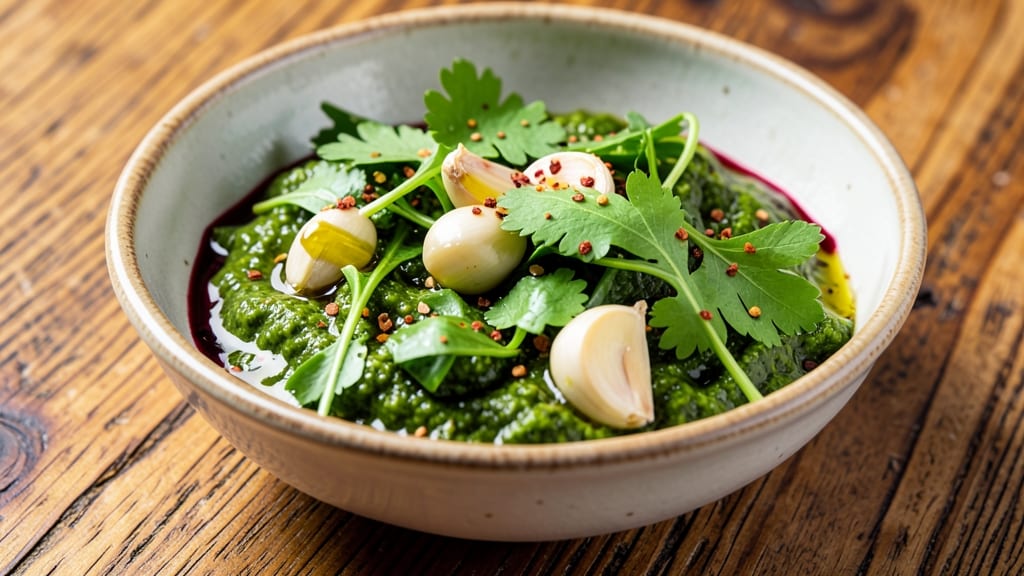
This arugula chimichurri sauce recipe transforms traditional chimichurri into something brighter, fresher, and packed with peppery arugula's signature bite. The secret lies in blending tender arugula with parsley, garlic, and a tangy vinegar base—no mayo means it stays light yet intensely flavorful.
I developed this version after craving something herbaceous that could elevate grilled meats, roasted vegetables, or even salads without overpowering them.
The beauty of this sauce is its versatility—it works as a marinade, dipping sauce, or salad dressing, yet requires just 10 minutes to prepare.
The arugula adds a subtle bitterness that balances the richness of olive oil and garlic, while red pepper flakes introduce just enough heat to make it exciting. Unlike traditional chimichurri, this version stays fresh for up to 5 days in the fridge, making it perfect for meal prep.
What makes this sauce truly special is how it transforms simple dishes into restaurant-worthy meals. Drizzle it over grilled steak or chicken for instant depth, toss it with roasted Brussels sprouts for a bright contrast, or use it as a dressing for grain bowls.
The texture is silky yet textured, with flecks of arugula that add a satisfying crunch. Once you try it, you’ll never go back to store-bought versions.
For best results, let the sauce sit for 10 minutes after mixing to allow the flavors to meld. If you love fresh herbs and bold flavors, this is your new go-to condiment. Let’s make it—your taste buds will thank you.
Ingredients for arugula chimichurri sauce
Nine fresh ingredients blend into a vibrant, herb-packed sauce that's lighter than traditional chimichurri.
| Ingredient | Amount | Notes |
|---|---|---|
| Fresh Arugula Leaves 🌿 | 1 ½ cups | Packed, stems removed for texture |
| Fresh Flat-Leaf Parsley 🌿 | ½ cup | Stems removed, tightly packed |
| Garlic Cloves 🧄 | 4 cloves | Peeled, roughly chopped for bold flavor |
| Extra-Virgin Olive Oil 🫒 | ¾ cup | High-quality, fruity variety preferred |
| Red Wine Vinegar 🍷 | ¼ cup | Bold, dry variety for tang |
| Red Pepper Flakes 🌶️ | 1 tbsp | Adjust for desired heat level |
| Diamond Crystal Kosher Salt 🧂 | 1 ½ tsp | Fine grain for perfect seasoning |
| Fresh Lemon Juice 🍋 | 1 tbsp | Freshly squeezed for brightness |
The arugula and parsley are non-negotiable here—farmers market greens have the best flavor, but grocery store bags work in a pinch. Look for bright green, crisp leaves with no yellowing. Garlic should be freshly peeled and roughly chopped (no mincing—we want texture). For the olive oil, California avocado oil or Italian extra-virgin brands like Bertolli or Filippo Berio elevate the dish. Red wine vinegar? Bartles & Jaymes is reliable, but any bold, dry variety works. The pepper flakes can be adjusted—hotter blends for spice lovers, milder for subtle heat.
No fresh arugula? Baby spinach or baby kale work in a bind, but the peppery bite will be milder. Swap parsley for cilantro or basil if needed, though parsley's freshness is ideal. Short on red wine vinegar? Apple cider vinegar or lemon juice adds brightness, though the flavor shifts slightly. The olive oil is crucial—don't substitute neutral oils like canola, or the sauce loses its richness. For extra depth, toast the red pepper flakes in a dry pan for 30 seconds before adding (trust me, it's worth it).
This sauce keeps beautifully—up to 5 days in an airtight jar in the fridge, though the arugula may soften slightly. For longer storage, freeze in 1-tablespoon portions in ice cube trays. Thaw overnight in the fridge before using. To preserve texture, add a thin layer of olive oil on top before sealing. Double the batch—it disappears fast on grilled meats, roasted veggies, or as a salad dressing. The flavors meld beautifully after 10 minutes of resting, so plan ahead.
Why You'll Love This Recipe
- No Pulse Needed: I just toss arugula, parsley, and garlic into my food processor—no chopping, no stress. The blades do all the work while I sip my coffee, and honestly? That’s my kind of cooking.
- Bright & Bold: The peppery arugula cuts through the richness of olive oil, while the garlic and vinegar add a zing that makes it impossible to stop dipping. It’s fresh, bright, and way more exciting than store-bought sauce.
- Weeknight to Party: Drizzle it over grilled chicken for a quick weeknight dinner, or toss it with seared scallops for a fancy-ish appetizer. Between us, it’s the kind of sauce that works just as hard in my sweatpants as it does at a dinner party.
- Lasts Where It Counts: I make a big batch on Sundays because it keeps in the fridge for days—no weird texture, just flavor that stays sharp. And since it’s mostly herbs and oil, it’s cheap enough to use freely without guilt.
Step-by-step instructions for arugula chimichurri sauce
This vibrant sauce comes together in minutes with no cooking required.
Chop the Herbs and Garlic
Place the 1.5 cups fresh arugula leaves and 0.5 cup fresh flat-leaf parsley on a cutting board. Remove any thick stems from the parsley and discard them. Using a sharp chef's knife, finely chop both herbs together—you want small, even pieces that will blend smoothly into the sauce. The arugula should be cut just fine enough to release its bright flavor without turning into a pulp.
Next, add the 4 peeled garlic cloves to the herb mixture. Roughly chop them rather than mincing them finely—this ensures bold garlic flavor without overpowering the delicate herbs. I like to use the flat side of my knife blade to gently crush the garlic cloves before chopping for maximum aroma release. Keep all chopped ingredients together in a medium bowl for the next step.
Add Acid and Seasonings
Pour the 0.25 cup red wine vinegar and 1 tbsp fresh lemon juice into the bowl with the chopped herbs and garlic. The vinegar will immediately begin to brighten the herbs, while the lemon juice adds a fresh citrus note that balances the acidity. Stir everything together with a wooden spoon until the herbs are thoroughly wetted and the mixture starts to take on a vibrant green color.
Next, add the 1.5 tsp Diamond Crystal kosher salt and 1 tbsp red pepper flakes. Sprinkle them evenly over the herb mixture and give it another thorough stir. The salt will enhance all the flavors, while the red pepper flakes add just the right amount of heat. Taste the mixture at this point—it should be tangy, slightly spicy, and herby, but still need the olive oil to come together.
Finish with Olive Oil
Slowly drizzle in the 0.75 cup extra-virgin olive oil while continuing to stir with the wooden spoon. The oil will begin to emulsify with the acidic herb mixture, creating a thick, vibrant sauce. I like to add the oil gradually to prevent it from separating—this is where patience pays off. Keep stirring until the sauce reaches your desired consistency, which should be thick enough to coat the back of a spoon but still pourable.
For the perfect texture, I recommend letting the sauce sit for 5-10 minutes after adding all the oil. This allows the flavors to fully meld together. Give it one final taste and adjust the seasoning if needed—you might want to add a pinch more salt or a splash of lemon juice to balance the flavors. The sauce should be bright, herby, slightly spicy, and perfectly balanced with acidity.
Rest and Serve
Transfer the chimichurri to a clean jar with a tight-fitting lid. Let it rest at room temperature for at least 30 minutes before using—this resting period allows all the flavors to develop fully. The longer it sits, the more vibrant and complex the flavors become. I often make this sauce a day ahead to let the flavors really shine.
When ready to serve, give the chimichurri one final stir before using. This sauce pairs beautifully with grilled meats, roasted vegetables, or even as a vibrant dip for crusty bread. The bright green color and fresh flavors will make any dish feel special. Store any leftovers in the refrigerator for up to 5 days, though I rarely have any left that long!
Pro Tips For Making Arugula Chimichurri Sauce
- STACK THE GREENS RIGHT: Use about 3 parts parsley to 1 part arugula—parsley keeps the sauce vibrant, while arugula adds that peppery bite. I learned this the hard way when I overdid the arugula and ended up with a sauce that tasted like a mouthful of soap.
- PULSE DON’T PUREE: Chop the herbs and garlic first, then pulse in a food processor in short bursts—no more than 3 seconds at a time. You want texture, not a sad, mushy paste. I used to over-blend and regretted it every time.
- SALT THE GARLIC: Toss the minced garlic cloves in a pinch of flaky salt before adding them to the processor. It mellows the sharpness and deepens the flavor—trust me, it’s worth the extra 10 seconds.
- DRIZZLE THE OIL LAST: Add the olive oil and vinegar one tablespoon at a time while the processor is running. This keeps the sauce emulsified and prevents it from turning into a greasy mess. (Yes, I’ve seen it happen.)
Best sauces and condiments for this arugula chimichurri sauce
Grilled Meat Elevator
This chimichurri transforms grilled meats into showstoppers. Drizzle it over skirt steak or chicken thighs while they're still sizzling—it clings beautifully and adds a peppery brightness that cuts through fat. For best results, marinate your meat in half the sauce for 15-20 minutes before grilling.
I love using it on flank steak or shrimp skewers too—the arugula's bite balances the richness perfectly. 🔥
Roasted Veggie Brightener
Roasted vegetables like Brussels sprouts, asparagus, or carrots become irresistible with this sauce. Toss them with 2 tablespoons olive oil and roast at 425°F for 20-25 minutes, then finish with 1-2 tablespoons chimichurri just before serving.
The acidity in the sauce helps tenderize slightly under-roasted spots. For extra crunch, sprinkle with toasted pine nuts or crumbled feta right before eating.
Salad Dressing Game-Changer
Use this sauce as a dressing for arugula salads, kale salads, or grain bowls—it's like a fresher, herby version of pesto. Start with 1 tablespoon per serving and adjust to taste.
The arugula in the sauce adds a subtle bitterness that pairs perfectly with sweet ingredients like roasted sweet potatoes or pears. For a creamy twist, stir in 1 tablespoon Greek yogurt just before serving. 🥗
Dipping Sauce for Crudité
This sauce is ideal for dipping crudité trays or warm pita bread. Serve it in a small bowl alongside sliced cucumbers, bell peppers, and cherry tomatoes for a vibrant appetizer.
The peppery arugula and garlic flavors make it addictive—guests will reach for seconds. For extra flair, drizzle a thin stream of balsamic glaze over the top just before serving.
Pasta Sauce Twist
Toss this chimichurri with cooked pasta like spaghetti or linguine for a quick, herb-packed sauce. Start with 2 tablespoons per serving and add grilled chicken or white beans for extra protein. The acidity in the vinegar helps prevent the pasta from becoming gummy.
For a lighter option, use whole wheat or chickpea pasta to bulk up the dish while keeping it fresh and bright.
Storage and Flavor Boost
Store leftovers in an airtight glass jar in the fridge for up to 5 days. The flavors actually improve over time as the herbs mellow slightly. For a quick flavor boost, add 1 teaspoon of honey or 1 tablespoon of capers when reheating—both add depth without overpowering.
If the sauce separates, simply whisk it vigorously before using. For longer storage, freeze in 1-tablespoon portions in ice cube trays. 💡
Nutrition facts
Frequently asked questions
Can I make this sauce without arugula?
The arugula is key for that signature peppery bite, but you can substitute 1 cup baby spinach or baby kale for a milder flavor. If you're feeling adventurous, try half arugula and half basil for a sweeter, Italian-inspired twist. Just remember—arugula's sharpness balances the richness of the olive oil beautifully.
How spicy will this chimichurri be?
The 1 tablespoon of red pepper flakes gives a mild to medium heat—think "kick" rather than "fire." For less spice, reduce to ½ tablespoon, or omit entirely for a completely neutral version. If you love heat, toast the pepper flakes in a dry pan for 30 seconds first to deepen the flavor. Always taste before serving!
Can I use this sauce on seafood?
This chimichurri pairs perfectly with grilled shrimp, salmon, or swordfish. The bright acidity cuts through delicate fish flavors, while the arugula adds a refreshing contrast. For best results, marinate seafood in half the sauce for 10-15 minutes before cooking. Avoid using it on raw seafood like oysters, as the vinegar may cook them slightly.
Why does my chimichurri separate?
Separation happens when the oil and vinegar aren't properly emulsified. Stir more vigorously when adding the oil, or use a fork to mash the herbs slightly before mixing. If it separates later, simply whisk or shake the jar vigorously before using. For extra insurance, add ½ teaspoon of Dijon mustard when mixing—it acts as a natural emulsifier.
What's the best way to store leftovers?
Keep chimichurri in an airtight glass jar in the fridge for up to 5 days. The arugula may soften slightly, but the flavors actually improve as the herbs mellow. For longer storage, freeze in 1-tablespoon portions in ice cube trays. Thaw overnight in the fridge—never at room temperature. To preserve texture, add a thin layer of olive oil on top before sealing.