
Sauces & Condiments
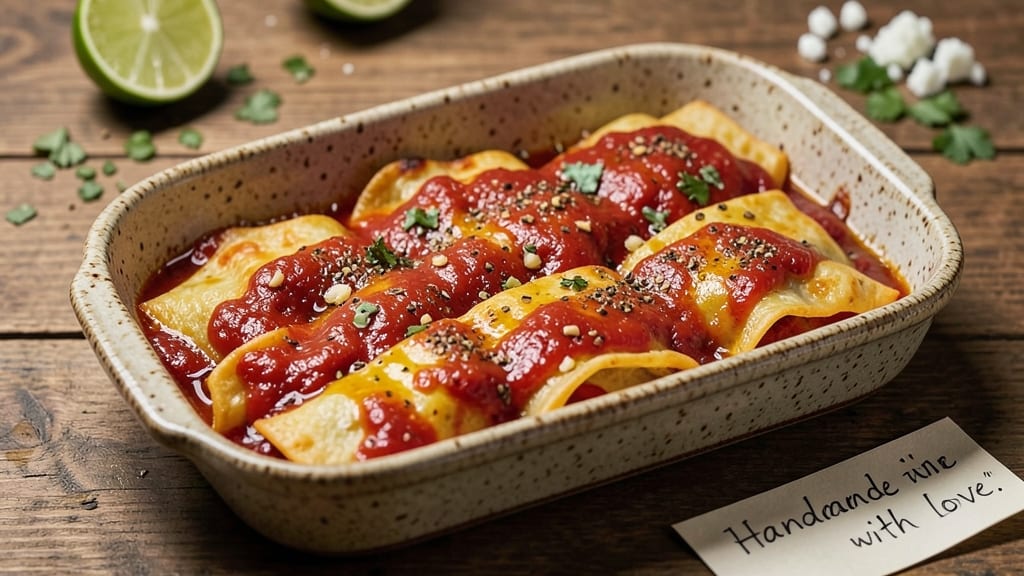
This authentic beef enchilada sauce delivers the deep, smoky tomato-chipotle flavor that transforms ordinary enchiladas into restaurant-worthy masterpieces. The secret lies in simmering tomatoes, garlic, and spices until they develop rich, complex notes, then blending with a touch of egg for that signature velvety smoothness.
I've perfected this recipe over years of testing—no shortcuts, just traditional techniques that build layers of flavor.
The sauce begins with a base of roasted tomatoes and onions, which caramelize beautifully in the pot, creating a natural sweetness that balances the heat from chipotle peppers.
Cumin, garlic, and a splash of beef broth work together to deepen the sauce's complexity, while a whisked egg at the end emulsifies everything into a luscious, pourable consistency. This isn't just sauce—it's the heart of your dish, designed to cling to every tortilla and melt into every bite.
What makes this recipe truly authentic is the patience required: simmering for at least 30 minutes to develop those smoky, caramelized flavors. The result is a sauce that's rich, slightly tangy, and just spicy enough to satisfy—without overpowering.
It's the kind of sauce that turns a simple plate of enchiladas into a memorable meal, whether you're serving it with chicken, beef, or beans.
Best of all, this sauce keeps beautifully in the fridge for up to 5 days or freezes for months, making it perfect for meal prep. Use it for enchiladas, tacos, or even as a marinade for meats. Here's how to make it—step by step—for that restaurant-quality taste at home.
Ingredients for authentic beef enchilada sauce
The core ingredients for that smoky, restaurant-quality enchilada sauce you crave.
| Ingredient | Amount | Notes |
|---|---|---|
| Roma Tomatoes 🍅 | 2 lbs | Fresh, vine-ripened preferred |
| Yellow Onions 🧅 | 1 whole | Yellow or white, chopped |
| Chipotle Peppers in Adobo 🌶️ | 2 tbsp | Paste only, not whole peppers |
| Garlic Cloves 🧄 | 6 cloves | Peeled, roughly chopped |
| Ground Cumin 🌿 | 2 tbsp | Toasted for deeper flavor |
| Beef Broth 💧 | 1 cup | Low-sodium preferred |
| Large Eggs 🥚 | 1 whole | Room temperature for blending |
| Extra-Virgin Olive Oil 🫒 | ¼ cup | For roasting vegetables |
| Salt 🧂 | 1 ½ tsp | Diamond Crystal preferred |
| Black Pepper 🌶️ | ½ tsp | Freshly ground preferred |
The tomatoes and onions are the foundation—Roma tomatoes have fewer seeds and more flavor than beefsteak. Whole Foods or local farmers markets often carry the best. Chipotle peppers in adobo are non-negotiable for that authentic smokiness, but if you can't find them, smoked paprika at half the amount works in a pinch. The garlic? Fresh is a must—no powdered shortcuts here. Toast the cumin seeds in a dry pan for 30 seconds before grinding to wake up those flavors. That little extra step makes all the difference.
No beef broth? Vegetable broth works too, though the flavor will be subtly different. The egg is what turns this from ordinary sauce to velvety perfection—don't skip it. For the olive oil, avoid the cheap stuff—look for extra-virgin with a fruity aroma. If you're short on time, pre-chopped onions from the store are fine, but fresh tomatoes and garlic are worth the extra minute. The salt should be kosher-style (like Diamond Crystal)—it dissolves better than table salt and enhances all the flavors without overpowering.
This sauce tastes even better the next day as the flavors meld. Store it in an airtight container in the fridge for up to 5 days, or freeze portions for 3 months. I like to freeze it in ice cube trays—just pop out what you need for a quick enchilada night. The egg makes it thicken slightly when refrigerated, so give it a quick whisk before reheating. Trust me, that first bite after a day of resting is worth the wait.
Why You'll Love This Recipe
- No Chopping Nightmare: I swear by this recipe because you can literally dump everything into one pot—no fancy dicing, no peeling, not even a food processor. The onions and tomatoes just soften into oblivion while you stir, and honestly? That’s my kind of cooking.
- Smoky Heat Magic: Between us, the chipotle in adobo and cumin combo is chef’s kiss—deep, smoky, with just enough kick to wake up your taste buds. It’s the kind of flavor that makes you want to lick the spoon, but you’ll be too busy making enchiladas.
- Meal Prep MVP: This sauce doubles (or triples) like a champ, and it actually tastes better the next day. Freeze half for lazy Tuesdays, or use it to dress up grilled chicken, eggs, or even tacos—no one will guess it’s been sitting in the fridge.
- Budget-Friendly Powerhouse: Roma tomatoes and onions are dirt cheap, and a single can of chipotles stretches across multiple batches. I’ve made this sauce for 10 people on a tight budget, and everyone left happy—zero complaints, just seconds.
Step-by-step instructions for authentic beef enchilada sauce
Here's how to build smoky, velvety sauce that clings to tortillas like a pro.
Roast the Vegetables for Deep Flavor
Preheat your oven to 425°F and line a large baking sheet with parchment paper. Cut the 2 lbs Roma Tomatoes into quarters and peel the 1 whole Yellow Onions (optional but recommended for smoother texture). Toss both with 0.25 cup Extra-Virgin Olive Oil, 1.5 tsp Salt, and 0.5 tsp Black Pepper until evenly coated.
Spread everything in a single layer on the baking sheet. Roast for 30-35 minutes until the edges are charred and blackened in spots. The onions should be caramelized and the tomatoes should collapse slightly. This roasting step develops complex, smoky flavors that no raw prep can match. Real talk: don't skip this—it's what makes the sauce authentic.
Blend the Roasted Vegetables Smooth
Transfer the roasted vegetables to a blender or food processor. Add the 2 tbsp Chipotle Peppers in Adobo (including some of the adobo sauce for moisture), 6 cloves Garlic Cloves, and 2 tbsp Ground Cumin. Blend until completely smooth, scraping down the sides as needed. You want a silky puree with no texture—this is your sauce foundation.
Here's the thing—if your blend isn't perfectly smooth, strain it through a fine-mesh sieve. Any remaining skins or seeds will make your sauce gritty. I've learned this the hard way when serving guests who notice every detail. The sauce should be vibrant red with deep, smoky undertones from the chipotle and charred vegetables.
Simmer the Sauce to Concentrate Flavors
Pour the blended mixture into a large, heavy-bottomed pot and bring to a gentle simmer over medium heat. Add the 1 cup Beef Broth and stir to combine. Let it cook uncovered for 20-25 minutes, stirring occasionally, until the sauce reduces by about one-third and thickens slightly. You're looking for a consistency that coats the back of a spoon but isn't gluey.
This reduction step is crucial—it intensifies all those roasted flavors and creates the proper body for enchiladas. Don't rush it. The sauce should smell rich, smoky, and slightly sweet from the caramelized onions. If it starts to stick, add a splash of water or broth, but try to avoid this if possible—you want concentrated flavor.
Emulsify with Egg for Silky Texture
In a separate bowl, whisk the 1 whole Large Eggs until frothy. Slowly pour the egg mixture into the simmering sauce while whisking constantly. The heat should gently cook the eggs into the sauce, creating that signature velvety texture. Keep whisking for 2-3 minutes until the sauce thickens noticeably and becomes glossy.
This egg emulsification is what separates authentic enchilada sauce from basic tomato sauce. The egg adds body and prevents the sauce from separating when layered with tortillas. If the sauce looks too thick, thin it with a little warm broth. The final texture should be smooth, coatable, and just thick enough to cling to tortillas without sliding off.
Pro Tips For Making Authentic Beef Enchilada Sauce
- CHAR THE TOMATOES LOW: Char those Roma tomatoes until they’re blackened in spots—don’t rush this. I learned the hard way that skipping the char means a sauce that’s bright but lacks that smoky depth you crave in real enchilada sauce. Use a dry skillet over medium heat and turn them often; you want caramelized edges, not a burnt mess.
- PEEL THE ONIONS FIRST: Shuck the yellow onions before you even start heating the pan. Peeling them raw is faster and cleaner—no slipping around in hot oil. Toss the whole peeled onions into the skillet with the tomatoes; they’ll soften and sweeten as they cook, adding a richness the sauce desperately needs.
- TOAST THE CUMIN: Bloom that ground cumin in the oil for 30 seconds before adding anything else. Sounds small, but it makes a real difference—it deepens the earthy flavor instead of just letting it dissolve into the background. If you skip this, your sauce will taste like it’s missing something, even if you follow the rest perfectly.
- STRAIN THE SAUCE TWICE: First strain removes skins and seeds, but don’t stop there—press the pulp through a fine-mesh sieve or cheesecloth for a silky texture. I used to skip this, and the sauce always felt heavy and chunky. It’s extra work, but the result is worth it—smooth enough to coat enchiladas like a dream.
Wine and beer pairings for this dish
Red Wine Pairings
For this rich, smoky sauce, I reach for Mexican red wines like Tempranillo or Cabernet Sauvignon from Jalisco. The Tempranillo from Baja California—think Casa Madero—has enough acidity to cut through the sauce's richness while complementing the chipotle's smokiness.
If you prefer something fruitier, a bold Zinfandel from California works beautifully, balancing the sauce's depth with its jammy notes. 🍷
White Wine Options
Don't overlook white wines for this sauce! A dry Chenin Blanc from Mexico's Yucatán Peninsula offers surprising harmony with the chipotle's heat and the sauce's smokiness. I love Canto del Viento Chenin Blanc—its citrus notes brighten the dish without clashing.
For something lighter, a crisp Verdejo from Spain provides mineral freshness that refreshes your palate between bites.
Mexican Lager Perfection
The classic choice is Mexican lager, specifically Modelo Especial or Pacifico Clara. These beers have just enough carbonation to cleanse your palate between bites while their subtle malt sweetness enhances the sauce's caramelized notes.
For a craft twist, try Cerveza del Sol—its smooth profile lets the sauce's flavors shine without overpowering. 🍺
Spicy Beer Pairings
If you want to match the sauce's heat, opt for Mexican IPAs like Tecate IPA or Estrella IPA. The hop bitterness tempers the chipotle's spice while the malt body stands up to the sauce's richness.
For a local favorite, Negra Modelo offers a perfect balance of roasted malt and subtle spice that echoes the enchilada sauce's profile.
Non-Alcoholic Choices
For a mocktail that complements the sauce, I recommend Mexican horchata—its cinnamon and rice notes provide a sweet contrast to the smoky, spicy flavors.
Alternatively, a sparkling limeade with a touch of chipotle-infused agave syrup (just ½ tsp chipotle powder in 1 cup agave) adds a refreshing kick that mirrors the sauce's complexity.
Nutrition facts
Frequently asked questions
Why does this recipe use an egg in the sauce?
The egg creates that signature velvety texture that makes authentic enchilada sauce so special. When gently cooked into the sauce, it emulsifies the ingredients, giving you a smooth, pourable consistency that clings perfectly to tortillas. Without it, the sauce would be more like a chunky salsa. Plus, it adds a subtle richness that balances the smoky chipotle flavors.
Can I make this sauce without roasting the vegetables?
You can, but you'll miss out on the deep, caramelized flavors that make this sauce authentic. Roasting develops complex, smoky notes that simmering raw veggies can't replicate. If you're short on time, try sautéing the onions and tomatoes in a dry pan until deeply browned for similar (though less intense) flavor. The texture will still be smooth, but the taste won't be quite as rich.
How do I adjust the heat level in this sauce?
For milder heat, reduce the chipotle peppers to 1 tbsp (plus ½ tbsp adobo sauce). For extra spice, add 1 extra chipotle pepper or a pinch of cayenne. You can also blend in ½ tsp smoked paprika for deeper flavor without added heat. Always taste as you go—this sauce builds flavor as it simmers, so you can adjust at any point.
Will this sauce work for vegetarian enchiladas?
The beef broth can be swapped for vegetable broth without changing the sauce's flavor profile. The smoky, spicy, tomato-based foundation works beautifully with plant-based fillings like black beans, mushrooms, or roasted vegetables. The egg in the sauce adds richness that complements vegetarian proteins wonderfully. Just ensure your tortillas are sturdy enough to hold up to the sauce's moisture.
How do I prevent the sauce from separating after refrigeration?
Give the sauce a good whisk before storing, and always cool it completely before refrigerating. The egg helps stabilize it, but if you notice separation, gently reheat the sauce over low heat while whisking continuously. You can also thin it slightly with a splash of warm broth if needed. For long-term storage, freeze the sauce in ice cube trays—this portion control makes it easy to thaw just what you need without dealing with separation.