
Sauces & Condiments
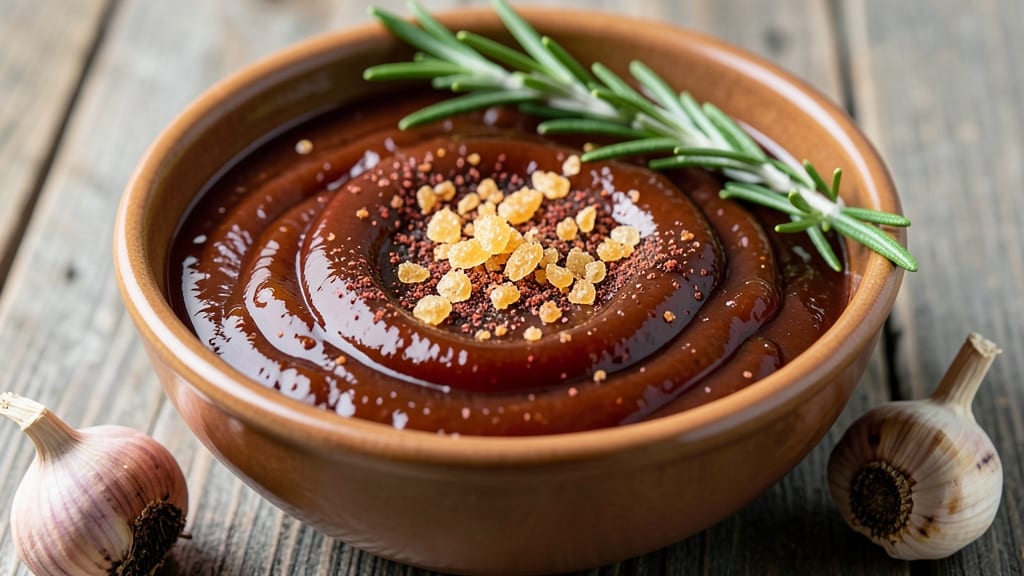
This Oklahoma BBQ sauce recipe delivers that signature smoky-sweet balance with a secret tang that sets it apart from traditional sauces. The key lies in the careful blend of tomato paste, molasses, and a touch of vinegar that creates depth without overpowering.
I've perfected this recipe over years of testing, and it's become the go-to glaze for everything from ribs to pulled pork.
The sauce starts with a rich base of tomato paste and vinegar, which builds both sweetness and acidity. Molasses adds that characteristic Oklahoma depth, while smoked paprika and cayenne bring the heat and smokiness.
What makes this sauce special is how these flavors develop as it simmers, creating a smooth, velvety texture that clings perfectly to meats.
By the time you're done, you'll have a sauce that's bold enough for competition BBQ but simple enough for weeknight meals. The balance of sweet, smoky, and tangy creates a glaze that caramelizes beautifully on grilled meats.
This isn't just another BBQ sauce—it's the one that will make you reach for the bottle again and again.
The best part? This sauce keeps well in the refrigerator for up to two weeks, so you can make a big batch and have it ready whenever you need that authentic Oklahoma flavor.
Whether you're slow-cooking brisket or basting chicken on the grill, this sauce will elevate your dishes to the next level.
Ingredients for oklahoma bbq sauce
Nine simple ingredients transform into that iconic Oklahoma BBQ sauce you'll reach for again.
| Ingredient | Amount | Notes |
|---|---|---|
| Tomato Paste 🍅 | ½ cup | High-quality, no sugar added |
| Molasses 🍯 | ⅓ cup | Unsulphured preferred for depth |
| Apple Cider Vinegar 🍏 | ¼ cup | For that signature tang |
| Smoked Paprika 🌶️ | 2 tbsp | H hungarian for authentic smokiness |
| Cayenne Pepper 🔥 | 1 ½ tsp | Adjust for heat preference |
| Garlic Powder 🧄 | 1 tsp | Freshly ground preferred |
| Onion Powder 🧅 | 1 tsp | For subtle depth |
| Brown Sugar 🍚 | ⅓ cup | Light or dark works |
| Black Pepper 🌶️ | ½ tsp | Freshly cracked for best flavor |
| Salt 🧂 | 1 ½ tsp | Diamond Crystal preferred |
| Water 💧 | 1 cup | For thinning consistency |
The tomato paste is your flavor foundation—Mueller's or San Marzano are my go-tos, but any quality brand works. Molasses is where the Oklahoma magic happens: Goya unsulphured has that perfect balance of sweetness and depth. I grab mine from the baking aisle at Walmart or Kroger—it's cheaper than specialty stores and lasts forever. For the vinegar, Bragg's apple cider adds that subtle fruitiness that cuts through the sweetness. If you can't find it, regular apple cider vinegar works fine—just don't use white vinegar. The smoked paprika? Hungarian is non-negotiable for that authentic smokiness—regular paprika just won't give you that campfire flavor.
No molasses? Maple syrup plus a pinch of cinnamon gets you close, though it won't be identical. Short on tomato paste? Crushed tomatoes at half the amount works in a pinch, but you'll need to simmer longer to thicken. Cayenne too spicy? Cut it in half or use red pepper flakes. The brown sugar can be swapped for white sugar plus a dash of cinnamon, but you'll lose some of that caramelized depth. For the spices, if you've got whole spices, toast them first—it brings out so much more flavor. The water is just for thinning, but don't skip it. This sauce needs to coat the back of a spoon, not be gluey.
Once cooled, this sauce keeps for 2 weeks in the fridge—though honestly, it disappears faster than that. For longer storage, freeze it in ice cube trays. Pop out what you need and toss the rest back in the freezer. The flavors actually improve after a few days as everything melds together. I like to make a big batch and keep it in a glass jar in the fridge—it's ready for ribs, pulled pork, or even drizzled over baked beans whenever the mood strikes. The sauce thickens as it sits, so give it a quick stir before using.
Why You'll Love This Recipe
- Pantry Magic: I swear by this sauce because it uses stuff I already have—no special shopping trips. That molasses? It turns sweet and smoky in one simmer, while the apple cider vinegar cuts right through the richness. Honestly, I make it when I’m too lazy to order takeout.
- Smoky Kick: Between the smoked paprika and cayenne, this sauce has that thing—deep, slightly spicy, and just sweet enough to linger. Slather it on ribs or drizzle it over baked beans, and suddenly everything tastes like a Sunday dinner.
- Weeknight Hero: I keep a jar in the fridge because it’s my go-to for quick meals. Toss it with grilled chicken, mix it into scrambled eggs, or even use it as a marinade. It’s the kind of sauce that makes lazy nights feel intentional.
- Budget Stretch: A little goes a long way, and it’s dirt cheap to make. That tomato paste and molasses combo costs pennies, yet it feels like a restaurant-quality finish. Plus, it keeps for weeks, so I’m always covered—no last-minute store runs.
Step-by-step instructions for Oklahoma BBQ sauce
Here's how to build that signature Oklahoma boldness—smoky, sweet, with a vinegar kick that cuts through the richness.
Bloom the Spices in a Heavy Pot
Combine the 0.5 cup tomato paste, 0.33 cup molasses, 0.33 cup brown sugar, 1.5 tsp salt, 0.5 tsp black pepper, 1 tsp garlic powder, and 1 tsp onion powder in a heavy-bottomed saucepan. Place it over medium-low heat and stir constantly for 5 minutes—this lets the spices bloom and releases their full flavor.
Watch for the mixture to thicken slightly as the sugars begin to caramelize. You'll notice a deep, aromatic fragrance developing—this is where the sauce's soul forms. If you smell something burning, reduce the heat immediately. The goal is to develop flavor, not color.
Add Vinegar and Water for Balance
Pour in the 0.25 cup apple cider vinegar and 1 cup water, then stir vigorously to combine. The vinegar will create a slight effervescence as it reacts with the sugars. Let the mixture simmer gently for 10-12 minutes, stirring occasionally, until it thickens enough to coat the back of a spoon.
This is where the sauce's signature tang emerges—don't rush it. You want the vinegar to mellow slightly while still maintaining that bright, cutting acidity. If the sauce reduces too quickly, add 1-2 tablespoons water to maintain the right consistency for glazing.
Incorporate the Smoky Depth
Reduce the heat to low and sprinkle in the 2 tbsp smoked paprika and 1.5 tsp cayenne pepper. Stir continuously for 2-3 minutes until the paprika dissolves completely and the sauce takes on a rich, smoky hue. The cayenne will add heat, but it will mellow as the sauce cooks further.
Here's the thing—Oklahoma sauce needs that smoky backbone. The smoked paprika should be fully integrated, not floating on top. If you taste it now, you'll notice the balance of sweet, smoky, and tangy flavors coming together. If it's too thick, add a splash more water; if too thin, simmer longer until it reaches a glossy, paint-like consistency.
Simmer to Perfection
Continue simmering for another 8-10 minutes until the sauce reaches your desired thickness. It should coat the back of a spoon but still flow freely enough to glaze meats. For ribs or pulled pork, aim for a consistency that clings without dripping.
Taste and adjust seasoning if needed—add a pinch more salt if it tastes flat, or a dash of cayenne if the heat has mellowed too much. The sauce should be bold but balanced, with the vinegar cutting through the sweetness and the smoke adding depth. Let it cool slightly before using, as it will thicken further as it sits.
Pro Tips For Making Oklahoma Bbq Sauce
- Bloom the Spices: Toast the smoked paprika and cayenne in a dry pan for 30 seconds before adding liquid—it deepens the flavor and cuts through the molasses’ sweetness. (I learned this the hard way after a batch tasted flat.)
- Simmer Slow and Steady: Keep the heat at a gentle simmer, not a boil, or the vinegar will evaporate too fast and leave your sauce sharp instead of balanced. Thirty minutes is the magic number for letting flavors meld.
- Whisk in the Molasses: Stir the molasses into the warm sauce, not cold, or it’ll clump like glue. A splash of vinegar first helps it dissolve smoothly—no one wants to scrape gummy bits off the pot later.
- Taste Early, Adjust Late: Check the sauce after 20 minutes, not at the end, so you can tweak salt or cayenne before it’s too thick to fix. (Yes, even if you’re impatient like me.)
Creative variations of this recipe
Sweet Heat Variations
Want to adjust the heat level? Swap the 1.5 tsp cayenne for ½ tsp cayenne plus 1 tsp smoked paprika to mellow it out, or add ½ tsp crushed red pepper flakes for a deeper, fruitier heat.
For a smoky kick without spice, boost the smoked paprika to 3 tbsp—it’ll deepen the campfire flavor without burning your mouth. 🌶️
Fruit-Infused Twists
Add 2 tbsp cranberry sauce or 1 tbsp orange marmalade while simmering for a tangy-sweet fusion that pairs perfectly with pork. For a berry twist, stir in ¼ cup blackberry jam at the end—it adds fruity depth that balances the molasses.
I’ve even added 1 tsp grated ginger for a zesty kick that cuts through the richness.
Smoky-Sweet Glaze
For a thicker, stickier glaze (great for ribs), reduce the water to ½ cup and simmer uncovered for 15 extra minutes to concentrate the flavors. If you prefer a thinner sauce for dipping, add 2 tbsp apple cider vinegar at the end.
The key is patience—let it simmer until it reaches that perfect paint-like consistency.
Herb & Spice Boosts
Fresh herbs elevate this sauce instantly. Add 1 tbsp chopped fresh thyme or rosemary at the end for an earthy aroma, or 1 tsp ground mustard for a subtle tang. For a bold twist, stir in 1 tsp liquid smoke (just a splash!)—it intensifies the smoky flavor without overpowering. 💫
Slow-Cooker Adaptation
Simmer all ingredients in a slow cooker on low for 4-5 hours, stirring occasionally, for a hands-off version. The low heat develops flavors more gently, making it perfect for busy days. Just add 1 extra tbsp molasses to compensate for the longer cook time—it’ll deepen the caramelized notes.
Regional Oklahoma Twists
In Tulsa, locals often add 1 tsp coffee for a mocha-like depth, while Oklahoma City styles lean into 1 tsp cinnamon for warmth. For a Western Oklahoma touch, swap ½ the molasses for maple syrup—it gives a lighter, more herbal note.
Each version keeps that signature tang but puts its own spin on the smoky-sweet balance.
Nutrition facts
Frequently asked questions
Can I make this Oklahoma BBQ sauce without molasses?
Yes, but you'll need to substitute carefully. Use ⅓ cup maple syrup plus ½ tsp cinnamon for the closest flavor, though it won't be identical. For a deeper caramelized note, try ⅓ cup honey plus 1 tsp coffee—the coffee adds a subtle bitterness that mimics molasses' complexity. Just remember, molasses brings that signature Oklahoma depth that's hard to replicate.
How do I adjust the heat level if cayenne is too spicy?
Start by reducing the cayenne to 1 tsp or swap it for ½ tsp crushed red pepper flakes for a smokier heat. For milder sauce, omit the cayenne entirely and add 1 extra tsp smoked paprika—it'll enhance the smoky flavor without the burn. Always taste as you go, especially after simmering, since heat often mellows during cooking.
What's the best way to store leftover Oklahoma BBQ sauce?
Store in an airtight glass jar in the fridge for up to 2 weeks, where it actually improves with time. For longer storage, freeze in ice cube trays—just pop out what you need and return the rest. The sauce thickens as it cools, so stir before using. Pro tip: Keep a small jar on hand in your BBQ toolbox for quick glaze applications!
Can I use this sauce on non-meat dishes?
This versatile sauce works beautifully on grilled vegetables, baked potatoes, or even as a dipping sauce for fries. The smoky-sweet profile pairs well with cheeses too—try it on mac and cheese or grilled halloumi. For vegetarian dishes, add 1 tbsp soy sauce to deepen the umami connection with plant-based proteins.
Why does my sauce taste too sweet after cooking?
This usually happens when the vinegar's acidity hasn't balanced the sweetness. Add 1 extra tablespoon apple cider vinegar and simmer for 5 more minutes to cut through. If it's still too sweet, reduce the heat and let it simmer uncovered for 10 minutes—the alcohol will evaporate, leaving more pronounced acidity. For future batches, try reducing the brown sugar by 1 tablespoon.