
Sauces & Condiments
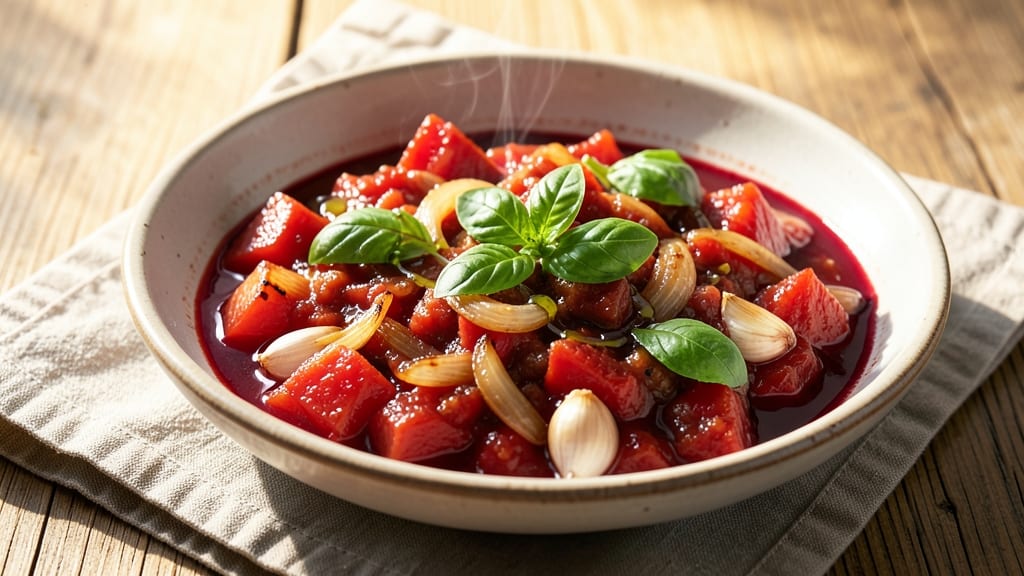
This chunky tomato sauce recipe with fresh tomatoes transforms summer's bounty into a vibrant, garden-fresh condiment that elevates every meal. The secret lies in proper preparation—peeling, seeding, and dicing tomatoes just right to preserve their natural sweetness while achieving that perfect balance of acidity and depth.
I developed this technique during my time in Asheville, where farm-fresh tomatoes were the star ingredient in countless dishes.
What sets this sauce apart is its chunky texture and customizable flavor profile.
Simmering the tomatoes with aromatics like garlic, onion, and fresh herbs creates a rich base that you can adjust to your taste—add a splash of red wine for complexity, a pinch of sugar to balance acidity, or even a dash of smoked paprika for depth.
The 20-minute cooking time ensures you capture all the natural flavors without overcooking the tomatoes into mush.
By the time you're done, you'll have a sauce that's perfect for pasta, pizza, or dipping bread—bursting with fresh tomato flavor and just the right amount of chunkiness. The sauce thickens naturally as it simmers, creating a velvety consistency that clings beautifully to noodles or crusts.
This is the kind of sauce that makes you appreciate the difference between fresh tomatoes and canned ones.
Store it in the refrigerator for up to 5 days or freeze for longer storage, making it perfect for meal prep. The flavors actually improve over time, deepening as the acidity mellows. Let's get started on creating this garden-fresh masterpiece that will transform your cooking.
Ingredients for chunky tomato sauce recipe with fresh tomatoes
Fresh tomatoes take center stage in this vibrant, garden-inspired sauce that's bursting with summer flavor.
| Ingredient | Amount | Notes |
|---|---|---|
| Fresh Tomatoes 🍅 | 2 ½ lb | Ripe, vine-ripened preferred |
| Yellow Onion 🧅 | 1 whole | Medium, finely diced |
| Garlic Cloves 🧄 | 5 cloves | Fresh, minced for depth |
| Extra-Virgin Olive Oil 🫒 | ¼ cup | High-quality, fruity |
| Fresh Basil Leaves 🌿 | ½ cup | Packed, stems removed |
| Red Wine 🍷 | ¼ cup | Bold, dry variety |
| Granulated Sugar 🍚 | 1 tbsp | Balances acidity |
| Smoked Paprika 🌶️ | 1 tsp | For subtle smokiness |
| Salt 🧂 | 1 ½ tsp | Diamond Crystal preferred |
| Black Pepper 🌶️ | ½ tsp | Freshly cracked |
The tomatoes are everything here—look for vine-ripened varieties with vibrant color and minimal blemishes. Local farmers markets are your best bet for peak flavor, but don't overlook the produce section at Whole Foods or Trader Joe's for reliable quality. I always peel the tomatoes (the skin can get tough when cooked), but if you prefer texture, leave it on. For the basil, farm-fresh leaves make all the difference—if you can't find fresh, dried basil at one-third the amount works in a pinch. The red wine adds complexity, so grab whatever bold, dry bottle you've got open—Cabernet Sauvignon or Merlot both work beautifully.
No fresh basil? Dried oregano at one-third the amount brings similar earthy notes. Short on tomatoes? Roma tomatoes hold up better than beefsteak varieties when cooked down. The sugar might seem odd, but it's essential to balance the natural acidity of fresh tomatoes—brown sugar works too. For extra depth, add a pinch of red pepper flakes if you like heat. The smoked paprika can be swapped for regular paprika, but the smoked variety adds that restaurant-quality touch. If you're feeling adventurous, throw in a splash of balsamic vinegar at the end for brightness.
This sauce thickens beautifully as it cools, so don't worry if it seems too loose right after cooking. Store it in the fridge for up to 5 days—the flavors actually deepen over time. For longer storage, portion into ice cube trays and freeze; thaw as needed. The sauce reheats perfectly, making it ideal for meal prep. If you make extra, freeze half immediately—the first batch always disappears fastest
Why You'll Love This Recipe
- No Chopping Struggle: I swear by this—just roughly chop the tomatoes (seeds and all) and toss them in. That’s it. No blender, no straining, no mess. The texture? Thick, rustic, and actually fresh-tasting.
- Garlic-Basil Magic: One whiff of that garlic sizzling in olive oil and you’re hooked. Then the basil—torn fresh, not chopped—releases its perfume when it hits the hot sauce. It’s the kind of flavor that makes you pause mid-bite.
- Pasta Party Starter: This sauce doubles as a marinara and a salsa for grilled chicken. Serve it over spaghetti for dinner, then use the leftovers to top toasted bruschetta for guests. Honestly, I’ve lost track of how many ways I’ve repurposed it.
- Fridge-Friendly Goldmine: Make a big batch—it keeps for a week in the fridge, tastes better as it mellows, and freezes like a dream. I’ve reheated it for tacos, soups, and even scrambled eggs. (Yes, even on a Tuesday night.)
Step-by-step instructions for chunky tomato sauce
Here's how to transform fresh garden tomatoes into a rich, vibrant sauce bursting with summer flavor.
Prep and Sauté the Aromatics
Heat the 0.25 cup Extra-Virgin Olive Oil in a large, heavy-bottomed pot over medium heat. Add the 1 whole Yellow Onion (finely diced) and cook for 5-6 minutes until softened and translucent. You'll know it's ready when the onion releases its sweet aroma and the edges begin to lightly caramelize.
Push the onion to the sides of the pot and add the 5 cloves Garlic Cloves (minced). Stir constantly for 30 seconds until fragrant—garlic burns quickly, so keep your eye on it. The moment it releases its pungent aroma, you've captured its full flavor potential. This aromatic base forms the flavor foundation for your entire sauce.
Cook the Tomatoes Until Broken Down
Add the 2.5 lb Fresh Tomatoes (roughly chopped) to the pot. Stir well to combine with the onion and garlic. Sprinkle with 1 tbsp Granulated Sugar and 1.5 tsp Salt, then bring to a gentle simmer. Let it cook uncovered for 10-12 minutes, stirring occasionally, until the tomatoes begin to break down and release their juices.
You'll see the mixture transform from chunky to slightly saucy as the tomatoes soften. This is where the magic happens—the natural acids in the tomatoes will mellow as they cook, creating a balanced flavor. If the sauce gets too thick before the tomatoes soften, add 2-3 tablespoons of water to keep it moving. The goal is to create a thick, rustic sauce with visible tomato chunks.
Build Depth with Wine and Spices
Pour in the 0.25 cup Red Wine and scrape up any browned bits from the bottom of the pot with a wooden spoon. These flavorful bits, called fond, are packed with concentrated tomato and onion essence. Let the wine simmer for 3-4 minutes until mostly evaporated, allowing its bold flavors to integrate fully.
Reduce heat to low and stir in the 1 tsp Smoked Paprika and 0.5 tsp Black Pepper. Let the sauce simmer uncovered for another 8-10 minutes, stirring occasionally. The paprika will add a subtle smokiness that complements the fresh tomato flavors beautifully. You're looking for a sauce that coats the back of a spoon but still maintains a chunky texture—this balance is what makes this sauce special.
Finish with Fresh Basil and Adjust Seasoning
Remove the pot from heat and stir in the 0.5 cup Fresh Basil Leaves (stems removed). The basil will infuse the sauce with its bright, fresh flavor while adding a beautiful green color contrast. Let the sauce sit off heat for 5 minutes to allow the basil to steep and release its oils fully.
Taste and adjust seasoning if needed. You might need a touch more salt to balance the acidity, or perhaps a pinch more sugar to round out the flavors. The sauce should be vibrant, slightly sweet, and deeply aromatic with a perfect balance of acidity and richness. This is your chance to fine-tune the sauce to your exact taste preferences.
Simmer and Serve
Return the sauce to low heat and let it simmer gently for 5-7 minutes to allow all the flavors to meld together. The sauce should now have a thick, chunky consistency with vibrant red color and visible tomato pieces. If it's too thick for your liking, thin it slightly with a splash of water or pasta water.
Serve immediately over your favorite pasta, with crusty bread, or alongside grilled meats. This vibrant sauce captures the essence of summer in every spoonful, with its bright acidity, rich depth, and fresh herb notes. The chunky texture makes it feel rustic and homemade, while the careful balance of sweet, smoky, and tangy flavors makes it truly special.
Pro Tips For Making Chunky Tomato Sauce Recipe With Fresh Tomatoes
- CHAR THE ONIONS LOW: I used to rush this step and end up with bitter, raw onion bits in my sauce. Simmer the diced yellow onion in olive oil at a gentle bubble—just until it’s translucent and soft, not browned. That’s when it’ll melt into sweetness instead of fighting the tomatoes.
- COOK TOMATOES UNTIL SOFT: Skip the blender—chunky sauce means texture, and that starts with properly cooked tomatoes. Cut them into large pieces, add them to the pot with onions and garlic, and let them simmer uncovered for 15-20 minutes. They’ll break down just enough to release flavor but stay recognizable.
- SALT THE TOMATOES FIRST: Toss your chopped tomatoes with a generous pinch of salt (about 1 tsp per pound) right after cutting. Let them sit for 10 minutes before cooking—this draws out excess water and concentrates their flavor. (Yes, even if you’re impatient like me.)
- FINISH WITH COLD BASIL: Tossing in fresh basil leaves at the end is a must, but here’s the trick: Use leaves straight from the fridge—cold basil holds its bright flavor longer. Add them right before serving, or they’ll turn bitter from the heat. (Your future self will notice the difference.)
Essential equipment for chunky tomato sauce recipe with fresh tomatoes
Heavy-Bottomed Pot
A large, heavy-bottomed pot is essential for even heat distribution while simmering your sauce. I swear by my Le Creuset Dutch oven (it's a splurge but lasts forever), but a good stainless steel pot like All-Clad works perfectly too.
The key is preventing hot spots that can burn your sauce. My 12-quart Dutch oven handles all my tomato sauce batches beautifully—just make sure it's at least 8-quarters for proper volume. 🔥
Wooden Spoon
Never use metal utensils when cooking tomatoes—they can react with the acidity and create an off-flavor. A high-quality wooden spoon (I use OXO Good Grips) is perfect for stirring and scraping up those delicious fond bits from the bottom.
The wood also helps prevent sticking as the sauce thickens. Keep your spoon handy during the entire process—it's your best friend for even cooking. ✨
Immersion Blender
For an extra-smooth but still chunky texture, an immersion blender lets you partially blend the sauce right in the pot. My Ninja Foodi model gives me precise control—just pulse for 5-10 seconds if you want slightly smoother sauce without losing all the texture.
This is optional but saves cleanup compared to transferring to a blender. The best part? You can adjust consistency right where you're cooking. 💫
Fine-Mesh Strainer
If you prefer completely seedless tomatoes, a fine-mesh strainer (like OXO Good Grips) makes quick work of removing seeds and skins. Simply crush the tomatoes through the strainer into your pot while keeping the pulp.
This technique works especially well with Roma tomatoes that have fewer seeds. I keep one in my kitchen specifically for sauce-making—it's a game-changer for texture control. 🍅
Measuring Spoons
Precision matters with spices and liquids in this recipe. My stainless steel measuring spoons from West Bend have comfortable grips and accurate measurements for the 1 tsp smoked paprika and 0.5 tsp black pepper.
I keep them within arm's reach while cooking to avoid over/under-seasoning. For the 1 tbsp sugar, a standard tablespoon measure works perfectly—just don't eyeball it! 🧂
Chef's Knife
A sharp chef's knife (I love my Victorinox Fibrox) is crucial for dicing onions and mincing garlic efficiently. The knife should cut through tomatoes cleanly when roughly chopped for that perfect chunky texture.
I recommend keeping your knife 8-inch for this recipe—long enough to work comfortably but not so large it's cumbersome. A honing steel keeps it sharp between uses. 🔪
Nutrition facts
Frequently asked questions
Why do you peel the tomatoes in this recipe?
Peeling creates a smoother texture and prevents tough skin in the finished sauce. Vine-ripened tomatoes have thinner skins that soften beautifully when cooked, but peeling ensures a cleaner consistency. If you prefer texture, leave the skins on—just use Roma tomatoes which have thinner skins than beefsteak varieties.
Can I substitute canned tomatoes for fresh?
Fresh tomatoes give the brightest flavor, but you can use 2 (28 oz) cans crushed tomatoes in a pinch. Add 1 tbsp tomato paste and reduce simmering time by 5 minutes since canned tomatoes are already broken down. For best results, use high-quality crushed tomatoes without added salt.
How do I adjust the chunkiness level?
For more texture, keep the tomatoes roughly chopped and simmer 5 minutes less. For smoother sauce, use an immersion blender for 5-10 seconds after simmering. The recipe balances both—visible chunks with a velvety base. You can always blend more later if needed.
What's the best way to store leftovers?
Store in an airtight container in the fridge for up to 5 days. For longer storage, freeze in ice cube trays or small containers. The sauce actually improves over time as flavors meld. Thaw overnight in the fridge and reheat gently on low heat, stirring occasionally.
Can I make this sauce without wine?
Replace the wine with 0.25 cup tomato paste or 0.5 cup extra vegetable broth. The sauce will be slightly less complex but still delicious. For depth without alcohol, try 1 tbsp balsamic vinegar instead—it adds brightness and acidity that complements the tomatoes beautifully.