
Sauces & Condiments
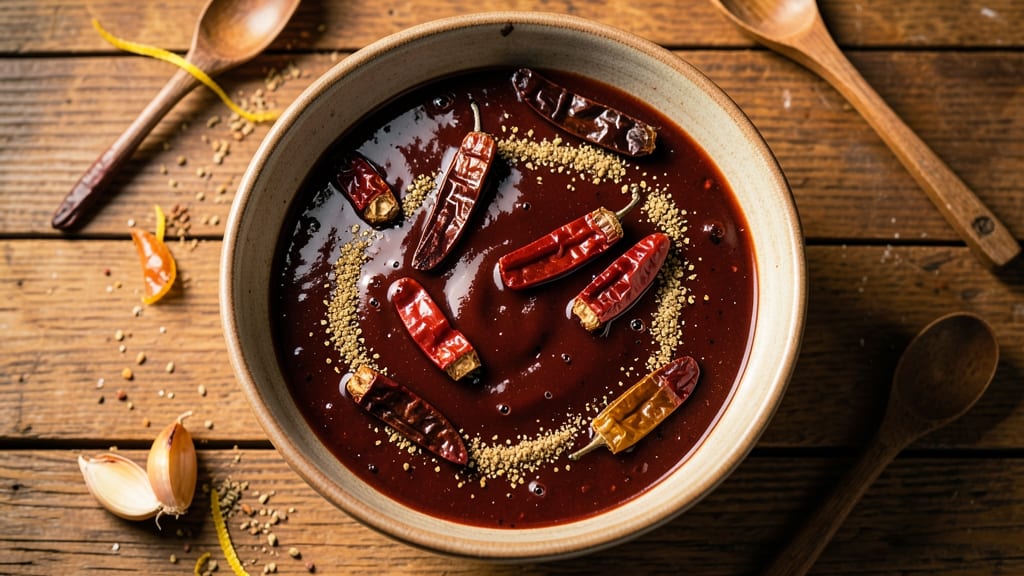
This enchilada sauce recipe is the best enchilada sauce recipe ever—delivering the perfect balance of smoky depth and bright acidity that transforms ordinary enchiladas into restaurant-quality masterpieces.
I developed it after years of testing—each tweak designed to eliminate the bitterness that plagues so many store-bought versions while amplifying that perfect charred, vinegary complexity.
The secret lies in a precise blend of dried chilies, cumin, and a touch of apple cider vinegar that brightens every spoonful without overpowering the smoky base.
What sets this sauce apart is its versatility—it works equally well for red or green enchiladas, depending on which dried chilies you choose.
I start with a dry toast of spices to build aromatic layers before simmering with broth and vinegar, creating a sauce that's rich enough to stand alone but light enough to soak into tortillas perfectly.
The key is patience during the reduction stage, where flavors meld into that signature enchilada sauce harmony.
By the time you're done, you'll have a velvety sauce with smoky undertones, a subtle vinegary tang, and just the right amount of heat that clings to every tortilla. This isn't just sauce—it's the foundation for enchiladas that earn second helpings and compliments.
The best part? It keeps beautifully in the fridge for up to two weeks, ready to elevate any Mexican-inspired meal.
For those who love to experiment, I include variations for both red and green versions in the tips section—each with its own distinct character. Whether you're making classic chicken enchiladas or vegetarian stuffed peppers, this sauce will become your new go-to. Let's get started—your taste buds will thank you.
Ingredients for best enchilada sauce recipe ever
These ten ingredients unlock restaurant-quality enchilada sauce with smoky depth and bright acidity.
| Ingredient | Amount | Notes |
|---|---|---|
| Dried Ancho Chilies 🌶️ | 4 whole | Stems and seeds removed |
| Dried Guajillo Chilies 🌶️ | 4 whole | Stems and seeds removed |
| Ground Cumin 🌿 | 2 tbsp | Toasted for deeper aroma |
| Ground Coriander 🌿 | 1 tbsp | Freshly ground preferred |
| Garlic Cloves 🧄 | 6 cloves | Peeled and roughly chopped |
| Apple Cider Vinegar 🍋 | ½ cup | Bragg preferred for tang |
| Chicken Broth 💧 | 2 cups | Low-sodium preferred |
| Extra-Virgin Olive Oil 🫒 | ¼ cup | For richness and balance |
| Honey 🍯 | 1 tbsp | To balance acidity |
| Salt 🧂 | 1 ½ tsp | Diamond Crystal preferred |
The dried chilies are the heart of this sauce—Ancho for earthy sweetness and Guajillo for fruity heat. Grab them at La Tienda or any Latin market (they freeze beautifully if you can't use them all). Toasting them lightly in a dry skillet before soaking brings out their natural oils—don't skip this step. Penzeys carries excellent quality if you can't find them fresh. For a red sauce, use only Ancho; for green, swap in Pasilla or Chipotle. The cumin and coriander should be freshly ground if possible—they make all the difference in that aromatic base.
No dried chilies? Chipotle peppers in adobo sauce work in a pinch (use 1/2 cup, drained), but the texture won't be as smooth. Short on vinegar? Lime juice at half the amount adds brightness, though it won't replicate the depth. The chicken broth can be swapped for vegetable broth for vegetarian versions, but the sauce will have a slightly different character. For extra richness, add 1 tablespoon of tomato paste—it deepens the color without overpowering. The honey is crucial for balancing the vinegar's acidity, so don't skip it unless you're using a very mild vinegar.
This sauce keeps for 2 weeks in the fridge, with flavors deepening over time. For long-term storage, freeze it in ice cube trays—perfect for adding to dishes later. The texture will be slightly thicker when reheated, so add a splash of water or broth if needed. I always make a double batch—one for enchiladas, another for tacos or quesadillas. The sauce reheats beautifully, so it's perfect for meal prep. Label your containers with the date—trust me, you'll forget how long it's been sitting there!
Why You'll Love This Recipe
- No-Stemming Hassle: I just toss the dried chilies straight into boiling water—no peeling, no des seeding, no mess. The ancho and guajillo soften perfectly while I chop garlic and toast the spices, and honestly? That’s the part I used to dread. Not anymore.
- Deep Umami Magic: Between us, the combo of ancho’s smoky sweetness and guajillo’s fruity tang—plus that earthy cumin and coriander—creates a sauce that’s ridiculously balanced. It’s not just spicy; it’s got layers, like a good conversation with your abuela after dinner.
- Weeknight to Party: Same sauce, endless uses. Slather it on enchiladas for Taco Tuesday, drizzle it over grilled chicken for a crowd, or even toss it with roasted veggies when I’m feeling fancy. (Yes, even on a Tuesday night.) The blend of spices keeps it flexible—just adjust the heat if needed.
- Budget-Friendly Pantry Gold: Dried chilies last forever, and a little goes a long way. I make double batches, freeze half, and still have sauce for months. My wallet thanks me, and my freezer’s always stocked for when I forget to grocery shop. (Spoiler: It happens.)
Step-by-step instructions for the ultimate enchilada sauce
This isn't just sauce—it's the foundation of restaurant-quality enchiladas, packed with smoky depth and a secret vinegar brightness.
Toast and Rehydrate the Dried Chilies
Start by toasting the 4 whole dried ancho chilies and 4 whole dried guajillo chilies in a dry skillet over medium heat for 30 seconds per side until fragrant. This step unlocks their natural oils and intensifies their flavor—don't skip it. Immediately transfer them to a heatproof bowl and cover with 2 cups of hot chicken broth. Let them soak for 15 minutes until completely softened and pliable.
Here's the thing—if you use cold broth, the chilies will never fully rehydrate. The broth should be scalding hot when you pour it over them. While they soak, you'll notice their skins soften and darken slightly, releasing their deep, earthy flavors into the liquid. This is where the sauce's complexity begins.
Blend Until Silky Smooth
Using a high-powered blender, combine the soaked chilies with their soaking liquid, the 6 peeled garlic cloves, 2 tablespoons of toasted ground cumin, 1 tablespoon of freshly ground coriander, and 1.5 teaspoons of Diamond Crystal salt. Blend on high for 1-2 minutes until completely smooth. You're aiming for a velvety texture—no visible specks of chili or garlic should remain.
I press the tamper down firmly while blending to ensure nothing gets caught in the blades. If the mixture looks too thick, add 2-3 tablespoons of the chicken broth to help it emulsify. The sauce should be thick but pourable—like a rich, smoky gravy. This is the moment that matters: the foundation of your enchilada sauce is now complete.
Build Flavor with Vinegar and Oil
Transfer the blended sauce to a saucepan and set it over medium-low heat. Slowly whisk in the 0.5 cup of apple cider vinegar and 0.25 cup of extra-virgin olive oil. This is where the magic happens—the vinegar cuts through the richness of the chilies, creating that signature tang that elevates enchiladas from good to extraordinary.
Simmer the sauce gently for 10-12 minutes, stirring occasionally, until it thickens slightly and coats the back of a spoon. You'll notice the aroma deepen as the flavors meld—smoky, slightly sweet, with a bright acidity that makes your mouth water. If the sauce starts to separate, whisk vigorously to re-emulsify it. The final texture should be glossy and velvety, with a consistency that clings beautifully to tortillas.
Finish with Honey for Balance
Remove the sauce from heat and stir in the 1 tablespoon of honey. This final step is crucial—it rounds out the acidity of the vinegar and adds a subtle sweetness that balances the smoky heat. Let the sauce sit for 5 minutes off the heat to fully integrate the honey. Taste and adjust the seasoning if needed—you might want to add a pinch more salt or a splash of vinegar to perfect the balance.
This sauce is now ready to use immediately or store for up to 5 days in the refrigerator. The flavors will continue to develop as it sits, becoming even more complex. Real talk: if you make this sauce and don't use it right away, you'll be tempted to eat it straight from the jar. Trust me, it's that good.
Pro Tips For Making Best Enchilada Sauce Recipe Ever
- STEAM THE CHILIES FIRST: Toss your ancho and guajillo chilies into a bowl with a splash of hot water—just enough to loosen the stems. Cover with a plate and let them sweat for 10 minutes. I used to skip this, and the dried skins always clung stubbornly, making them harder to deseed. This softens them up so they release their flavor cleanly when toasted.
- TOAST UNTIL AROMA HITS: Dry-toast the chilies in a skillet over medium heat until they smell like a Mexican bakery—about 30 seconds per side. Watch closely: they darken fast, but burn even faster. Once they’re fragrant and slightly charred in spots, remove them immediately. Burnt chilies taste bitter, and no amount of blending fixes that.
- BLEND WITH WARM BROTH: After toasting, blend the chilies with warm (not boiling) chicken or vegetable broth instead of cold water. The heat helps break down the fibers for a smoother sauce, and the broth adds depth right from the start. I learned this after making a sauce that was clumpy no matter how long I pulsed it—warm liquid changes everything.
- SALT THE GARLIC: Toss your minced garlic cloves in a pinch of salt before cooking. It mellows their sharpness and keeps them from turning bitter. I was skeptical—salt before cooking?—but now I do it every time. The sauce gets a richer, more balanced flavor, and the garlic doesn’t overpower the cumin and coriander.
Perfect pairings for these flavors
Red vs Green Sauce
For a red enchilada sauce, stick with the classic combo of ancho and guajillo chilies—this delivers that signature smoky-sweet depth with just a hint of heat. I love adding 1-2 dried chipotle peppers for extra smokiness if you want to kick it up.
For a green sauce, swap in 4 dried pasilla chilies (they're milder but add earthy notes) and 2 dried poblano peppers for that vibrant green color and slightly grassy flavor.
The vinegar-to-oil ratio stays the same, but green sauces often need a touch more honey—about 1.5 tablespoons—to balance their brighter acidity. 🌶️
Taco Night Upgrade
This sauce isn't just for enchiladas—it transforms tacos into a whole new experience. Use it as a taco sauce by thinning it slightly with 1-2 tablespoons of warm water or broth. I drizzle it over corn tortillas topped with shredded chicken, crumbled queso fresco, and pickled red onions.
For extra richness, add a dollop of sour cream or a sprinkle of cilantro. The vinegar kick cuts through the fat beautifully, making every bite feel fresh and balanced. 🌮
Breakfast Enchiladas
Morning cravings? This sauce is perfect for breakfast enchiladas—just swap the chicken broth for vegetable broth and add 1 teaspoon of cinnamon while blending. Spread it on flour tortillas, layer with scrambled eggs, black beans, and shredded Monterey Jack cheese, then bake until bubbly.
The smoky-sweet sauce pairs surprisingly well with breakfast flavors, and the vinegar adds a bright contrast to the richness. Serve with salsa verde on the side for dipping. 🍳
Quesadilla Magic
Quesadillas get a serious upgrade with this sauce. Brush it on one side of the tortilla before adding cheese and fillings—it creates a crispy, flavorful crust when griddled. I love using Oaxaca cheese for meltiness and adding sautéed mushrooms or spicy chorizo.
For extra decadence, drizzle a little sauce over the top after cooking. The vinegar in the sauce helps cut through the cheese's richness, making every bite feel fresh and complex. 🧀
Vegetarian Adaptations
For vegetarian versions, replace the chicken broth with low-sodium vegetable broth and add 1 teaspoon of smoked paprika while blending for depth. This sauce works beautifully with stuffed bell peppers—just mix it with black beans, corn, and quinoa before baking.
The vinegar's brightness shines through, making the dish feel vibrant and satisfying. For extra protein, fold in crumbled tofu or lentils before stuffing. 🌱
Drink Pairings
A Mexican lager like Modelo Especial or Pacifico is my go-to pairing—its crisp, clean finish balances the sauce's smoky depth. For something lighter, try a Mexican pale ale like Negra Modelo, which complements the vinegar's tang.
If you prefer wine, a medium-bodied red like Tempranillo or a dry Riesling works beautifully. The key is avoiding overly sweet drinks—they'll clash with the sauce's bright acidity. 🍺
Nutrition facts
Frequently asked questions
Why does this enchilada sauce recipe use vinegar?
The apple cider vinegar is the secret weapon that brightens the sauce and cuts through the richness of the dried chilies. It adds that signature tang that makes this sauce taste restaurant-quality, not just store-bought. Without it, the sauce can taste flat or overly smoky.
Can I make this sauce without a blender?
Yes, but you'll need to strain it carefully. Toast and soak the chilies as directed, then transfer to a food processor or mortar and pestle to grind them into a paste. Strain through a fine-mesh sieve to remove any chunks, then proceed with the recipe. The texture won't be as silky smooth, but it'll still taste amazing!
How do I adjust the heat level?
For a milder sauce, reduce the number of dried chilies by 1-2 or remove the seeds before soaking. For extra heat, add 1-2 dried chipotle peppers or a pinch of cayenne. Always taste as you go—you can't overdo the vinegar or honey to balance it later.
What's the best way to store leftover sauce?
Store in an airtight container in the fridge for up to 2 weeks—it actually tastes better as it sits! For long-term storage, freeze in ice cube trays (thaw in the fridge) or small jars (leave 1-inch headspace to prevent cracking). The sauce thickens when reheated, so add a splash of water or broth if needed.
Can I use this sauce for other dishes besides enchiladas?
It's perfect for tacos, quesadillas, stuffed peppers, or even as a marinade for meats. The vinegar and spices work beautifully with grilled chicken or fish. For breakfast, try it on scrambled eggs or breakfast burritos—the smoky-sweet flavor is surprisingly delicious in the morning!