
Sauces & Condiments
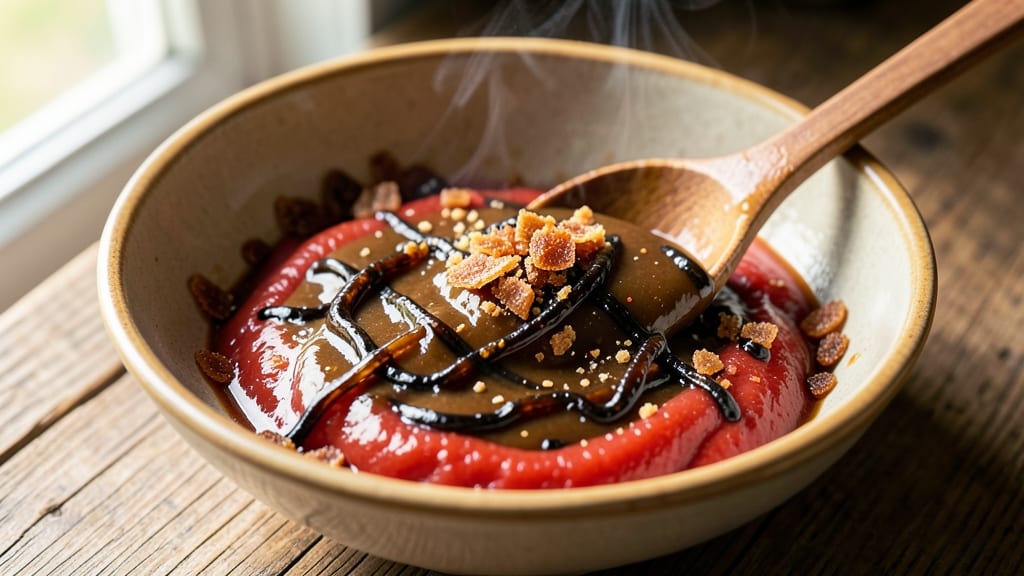
This BBQ sauce recipe no Worcestershire delivers that perfect balance of smoky depth, sweet caramel notes, and bright tang—without any umami shortcuts. The secret lies in a blend of apple cider vinegar and molasses that creates complexity while keeping the sauce versatile for grilling, marinating, or dipping.
I developed this after realizing Worcestershire wasn't always accessible, and the result? A sauce that stands up to bold flavors while remaining flexible for any BBQ style.
The foundation starts with a rich tomato base, where onions and garlic build the aromatic backbone before molasses and brown sugar add that signature caramelized sweetness. A touch of smoked paprika and liquid smoke infuses the smoky character, while apple cider vinegar cuts through the richness with its crisp acidity.
The sauce thickens naturally as it simmers, creating that perfect glaze consistency without needing cornstarch or commercial thickeners.
What you'll end up with is a sauce that's bold enough for ribs, tangy enough for pulled pork, and sweet enough for chicken wings—all while maintaining that professional-grade depth. The vinegar zing ensures it doesn't get cloying, and the molasses keeps it from being too sharp.
This isn't just a substitute; it's a refined sauce with its own identity, ready to elevate any dish from backyard cookout to competition-worthy grill.
Best of all, it keeps beautifully in the fridge for up to 3 weeks or can be canned for long-term storage. Whether you're smoking brisket, basting burgers, or dipping fries, this sauce delivers restaurant-quality flavor with just a few simple ingredients. Let's make it—your grill will thank you.
Ingredients for bbq sauce recipe no worcestershire
Nine ingredients transform into a sauce that rivals any store-bought—smoky, sweet, and tangy without shortcuts.
| Ingredient | Amount | Notes |
|---|---|---|
| Tomato Paste 🍅 | ½ cup | Use high-quality canned |
| Apple Cider Vinegar 🍎 | ½ cup | Unfiltered preferred |
| Molasses 🍯 | ¼ cup | Unsulphured for best flavor |
| Brown Sugar 🍚 | ¼ cup | Light or dark works |
| Onion Powder 🧅 | 1 tbsp | Freshly ground preferred |
| Garlic Powder 🧄 | 1 tbsp | Not garlic salt |
| Smoked Paprika 🌶️ | 1 tbsp | For authentic smoky flavor |
| Liquid Smoke 🔥 | 1 tsp | Adjust to taste |
| Kosher Salt 🧂 | 1 tsp | Diamond Crystal preferred |
| Black Pepper 🌶️ | ½ tsp | Freshly ground |
| Water 💧 | ½ cup | For thinning consistency |
The tomato paste is your flavor anchor—Muir Glen or Barilla are my go-tos for that concentrated umami punch. Apple cider vinegar needs to be the good stuff—Bragg or Texas Pete unfiltered is worth the splurge. Molasses can make or break the depth; unsulphured from a specialty store adds complexity. For smoked paprika, Penzeys or McCormick smoked are reliable. Liquid smoke? Start with half a teaspoon—you can always add more. The brown sugar should be light unless you're going for a deeper caramel note, like for ribs.
No apple cider vinegar? White vinegar or lemon juice works in a pinch, but the flavor won't be identical. Molasses too expensive? Maple syrup or honey (if not vegan) can substitute, though molasses gives that signature BBQ depth. Skip the liquid smoke? Extra smoked paprika plus a pinch of chipotle powder gets you close. The onion and garlic powders are non-negotiable for that aromatic backbone—don't swap for fresh unless you're willing to simmer longer. For a thinner sauce, add water; for thicker, simmer longer. The sauce should coat the back of a spoon but still drip slightly.
This sauce keeps for 3 weeks in the fridge in an airtight container, or up to 6 months in the freezer. I like to portion it into small jars—perfect for grilling trips. If it thickens too much, just stir in a splash of water or vinegar. For extra smokiness, brush it on ribs or chicken before grilling. The vinegar zing means it's perfect for tangy pulled pork, while the molasses keeps it from being too sharp for chicken wings. Make a double batch—you'll want it on everything.
Why You'll Love This Recipe
- Pantry Magic: I swear by this sauce because it uses what’s already lurking in my cupboard—no special trips, no fancy ingredients. That molasses and brown sugar combo? It’s the secret to a deep, caramelized richness without breaking the bank.
- No Burn, All Flavor: Honestly, the apple cider vinegar does the heavy lifting here—cuts through the sweetness and adds that tangy punch. And since we’re simmering it low and slow, there’s zero risk of burning tomato paste or scorching your pan.
- Weeknight Hero: This sauce is my go-to for everything from grilled chicken to baked beans, and it’s the only one I make when I’m too tired to measure spices. (Yes, even on a Tuesday night.) The onion powder gives just enough depth without overpowering.
Step-by-step instructions for smoky sweet BBQ sauce
Here's how to craft a bold, balanced sauce with deep smoky notes and bright vinegar tang.
Combine Dry Ingredients for Maximum Flavor
In a medium saucepan, whisk together the 0.5 cup tomato paste, 0.25 cup molasses, 0.25 cup brown sugar, 1 tbsp onion powder, 1 tbsp garlic powder, 1 tbsp smoked paprika, 1 tsp liquid smoke, 1 tsp kosher salt, and 0.5 tsp black pepper. I like to use a wooden spoon here—the rough texture helps scrape up any stuck bits from the bottom of the pan, ensuring every drop of flavor makes it into the sauce.
Let the mixture sit for 2-3 minutes while you prepare the next step. This brief pause allows the spices to bloom and the sugars to begin caramelizing slightly, building complex flavors before we add the liquid components. The tomato paste will thicken as it warms, so don't rush this stage—patience here prevents a gummy final texture.
Add Vinegar and Water for Tangy Balance
Pour in the 0.5 cup apple cider vinegar and 0.5 cup water, stirring constantly to combine. The vinegar will immediately react with the sugars, creating a subtle effervescence. This is where the sauce starts to come together—you'll notice the mixture lighten in color and become more fluid. I always add the vinegar first because its acidity helps dissolve the brown sugar completely, preventing any graininess in the final product.
Bring the mixture to a gentle simmer over medium heat, then reduce to low heat. Here's where the magic happens: the vinegar's acidity and the molasses' depth will meld with the smoky spices. Let it simmer uncovered for 15-20 minutes, stirring occasionally. You're looking for the sauce to thicken noticeably and reduce by about 25%—this concentration intensifies the flavors dramatically.
Simmer Until Thick and Glossy
Continue simmering for another 10-15 minutes, stirring every 2-3 minutes to prevent sticking. The sauce should coat the back of a spoon smoothly when you lift it—this is your perfect consistency. If it thickens too quickly, add 1-2 tablespoons of water to loosen it. The molasses and brown sugar will caramelize further, giving the sauce its rich, amber hue and deep, complex flavor profile.
Taste and adjust seasoning if needed. I usually find this recipe hits the sweet-smoky balance perfectly, but if you want more heat, add a pinch of cayenne pepper. For extra tang, stir in another ½ teaspoon of vinegar. The sauce should be bold but well-rounded, with the vinegar cutting through the sweetness and the liquid smoke adding that unmistakable smoky depth.
Cool and Store for Maximum Flavor Development
Remove the sauce from heat and let it cool to room temperature. Here's the thing—BBQ sauce tastes even better the next day as the flavors continue to meld. Once cooled, transfer it to a clean glass jar and store it in the refrigerator for up to 3 months. The flavors will deepen and become more harmonious with time, making this sauce worth the wait.
When ready to use, give the sauce a good stir—it may thicken further as it cools. If it becomes too thick for your liking, thin it with a splash of water or apple cider vinegar. This sauce is incredibly versatile: use it as a glaze for ribs, a marinade for grilled chicken, or a dipping sauce for fries. The balance of sweet, smoky, and tangy flavors makes it a crowd-pleaser every time.
Pro Tips For Making Bbq Sauce Recipe No Worcestershire
- STIR CONSTANTLY FIRST 10 MINUTES: The tomato paste will clump like glue if you walk away—after burning three batches, I finally learned to keep a wooden spoon moving nonstop while heating. Once it’s fully dissolved (about 10 minutes on medium), you can ease up, but don’t let it sit unattended.
- USE REAL MOLASSES, NOT SYRUP: That "molasses-flavored syrup" from the baking aisle is a crime—it’s thinner, sweeter, and lacks the deep, smoky complexity. Track down unsulphured molasses (the black kind) for that authentic tang and richness. Yes, it’s thicker, but that’s exactly why it works.
- DILUTE THE VINEGAR FIRST: Pouring straight apple cider vinegar into a hot pot is a one-way ticket to a sour, unbalanced sauce. Mix it with a splash of water or broth first, then stir it in—this tempers the acidity and lets the flavors meld instead of fighting.
- SWEETEN GRADUALLY, TASTE OFTEN: Dump all the brown sugar in at once and you’ll end up with a gloppy, one-note sauce. Add half the sugar first, simmer 5 minutes, then taste. Adjust with vinegar or molasses next—this way, you’re not guessing. (And no, the recipe won’t tell you when it’s right.)
Essential equipment for great bbq sauce recipe no worcestershire
Essential Saucepan
Start with a medium-sized, heavy-bottomed saucepan—I recommend All-Clad Stainless Steel or Calphalon for even heat distribution. The 3-quart size is perfect for this recipe, giving you enough room to stir without spills while preventing overflow. Avoid non-stick pans for this sauce—the caramelization benefits from direct contact with metal.
A wooden spoon is ideal for stirring; its rough texture helps scrape up any stuck bits from the bottom of the pan, ensuring no flavor is wasted. 🔥
Precision Thermometer
A digital instant-read thermometer like the ThermoWorks ThermoPop is a game-changer for monitoring sauce consistency. The ideal simmering temperature for this BBQ sauce is between 190-200°F—this range ensures the molasses caramelizes properly while preventing burning.
I check the temperature every 5 minutes during the simmering stage to adjust heat as needed. For a budget-friendly option, the OXO Good Grips thermometer works just as well.
Fine-Mesh Strainer
If you prefer a smoother sauce, a fine-mesh strainer is essential for removing any lumps from the tomato paste or undissolved sugar crystals. I use a stainless steel mesh strainer from OXO—it’s durable and easy to clean.
Place it over a bowl while the sauce is still warm (but not hot) to avoid burning your hands. This step is optional but makes a noticeable difference in texture, especially if you’re using a lower-quality tomato paste.
Glass Storage Jars
For long-term storage, amber glass jars with airtight lids are your best bet—they preserve the sauce’s flavor and block light, which can degrade liquid smoke over time. I love Ball Mason jars in 8-ounce or 16-ounce sizes; they’re food-safe, reusable, and stack neatly in the fridge.
Label each jar with the date to track freshness—this sauce stays vibrant for up to 3 months in the refrigerator. For freezer storage, leave 1 inch of headspace to prevent expansion cracks.
Measuring Spoons Set
A precision measuring set with ¼-teaspoon increments is critical for balancing the spices in this recipe. I swear by the OXO Good Grips set—they’re ergonomic and accurate. For the liquid smoke and smoked paprika, start with the exact measurements listed, then adjust to taste.
A small squeeze bottle (like those for hot sauce) is handy for adding liquid smoke in precise ¼-teaspoon increments if you’re experimenting with smokiness levels. 💫
Immersion Blender (Optional)
If you prefer an ultra-smooth sauce, an immersion blender like the Ninja BN601 can help break down any remaining lumps after simmering. Pulse the sauce for 10-15 seconds while it’s still warm—this ensures a silky texture without thinning it out.
Skip this step if you enjoy a slightly rustic, textured sauce, as the natural graininess adds depth. For a homemade alternative, a handheld milk frother works in a pinch, though it’s less powerful.
Nutrition facts
Frequently asked questions about this Worcestershire-free BBQ sauce
Why is Worcestershire sauce often used in BBQ sauce, and can I really skip it?
Worcestershire adds umami depth and complexity, but this recipe replaces it with apple cider vinegar and molasses for tangy richness. The vinegar provides acidity while molasses delivers that signature caramelized sweetness—perfect for balancing smoky flavors. You won’t miss it!
How do I adjust the sweetness level if I prefer it less sweet?
Start by reducing the brown sugar by 1-2 tablespoons and replacing it with an equal amount of water. For extra tang, add ½ teaspoon more vinegar. Taste as you go—simmering longer also concentrates flavors naturally. The molasses provides depth even with less sugar.
Can I make this sauce spicier? What’s the best way?
Add ½ teaspoon cayenne pepper or 1 teaspoon chipotle powder during the simmering stage. For heat control, start small—you can always add more later. A dash of hot sauce (like Tabasco) works too, but add it at the end to preserve its kick.
Will this sauce work for grilling or just as a dipping sauce?
This versatile sauce works perfectly for grilling ribs, chicken, or pork—its thick, glossy consistency makes an excellent glaze. It’s also great as a dipping sauce for fries or wings, or even a marinade. The balance of sweet, smoky, and tangy flavors shines in all applications.
What’s the best way to store leftovers to keep them fresh?
Transfer cooled sauce to airtight glass jars and refrigerate for up to 3 months. For longer storage, freeze in ice cube trays (great for portion control) or small jars with 1-inch headspace. Thaw in the fridge overnight—never microwave directly. The flavors actually improve after 24 hours!