
Sauces & Condiments
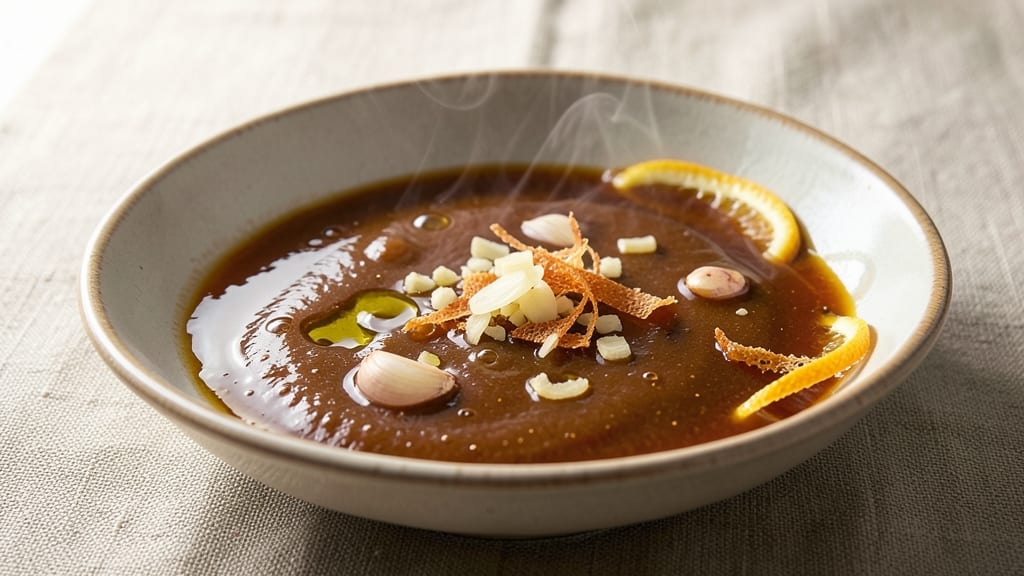
This Banyuls sauce recipe transforms bold red wine into a rich, velvety reduction that elevates any dish. 🔥 The secret lies in slow reduction with orange zest, creating a balance of deep wine notes and bright citrus that cuts through rich meats or creamy pasta.
I developed this version after years of testing—it’s the perfect harmony of French technique and bright Mediterranean flavors.
The sauce begins with a classic base of shallots, garlic, and Banyuls wine, reduced until syrupy and intense. A touch of orange zest brightens the depth, while a splash of stock ensures balance. The key is patience—letting the wine reduce gradually builds layers of flavor that bottled sauces can’t match.
What you’ll end up with is a glossy, bold red wine reduction that clings beautifully to roasted meats, braised dishes, or even grilled vegetables. The orange zest adds a subtle citrus brightness that makes it versatile—pair it with duck, lamb, or even as a pasta drizzle.
It keeps well in the fridge for up to a week, so you can make a batch ahead.
This sauce isn’t just for special occasions—it’s a restaurant-quality shortcut that transforms simple weeknight meals into something extraordinary. Whether you’re glazing a steak or deglazing a pan, it delivers depth and complexity with minimal effort. Let’s make it.
Ingredients for banyuls sauce
Nine ingredients, bold flavors—this sauce turns simple weeknight meals into something special.
| Ingredient | Amount | Notes |
|---|---|---|
| Banyuls Wine 🍷 | 2 cups | Dry, bold red wine |
| Shallots 🧅 | 4 whole | Minced, about 0.5 cup |
| Garlic Cloves 🧄 | 3 cloves | Minced, peeled |
| Orange Zest 🍊 | 1 tbsp | Freshly grated |
| Vegetable Stock 💧 | ½ cup | Low-sodium preferred |
| Extra-Virgin Olive Oil 🫒 | 1 tbsp | For deglazing |
| Brown Sugar 🍚 | 1 tbsp | Lightly packed |
| Salt 🧂 | ½ tsp | Kosher or sea salt |
| Black Pepper 🌶️ | ¼ tsp | Freshly ground |
The wine is everything here. Banyuls has that perfect balance of sweetness and acidity—look for it in the wine section of well-stocked grocery stores or specialty shops. If you can't find it, Port or Madeira work in a pinch, but Banyuls is the star. Shallots add sweetness without overpowering, so don't skip them. I always grab the smaller shallots at the store—they're easier to peel and more flavorful. The orange zest? Use a microplane for the freshest flavor—pre-grated zest loses its punch fast.
No Banyuls? Dry red wine like Cabernet Sauvignon works, but add 1 tsp sugar to mimic the sweetness. Vegetable stock can be swapped for white wine if you're making a lighter version. The olive oil is for deglazing—don't skip this step, it pulls up all the browned bits. If you're sensitive to sugar, reduce the brown sugar to 0.5 tbsp. The sauce thickens as it cools, so if it's too thick while hot, add a splash of stock. For extra richness, stir in 1 tbsp of butter at the end.
This sauce keeps beautifully. Store it in a clean glass jar in the fridge for up to 1 week. If you make extra, freeze it in ice cube trays for single-use portions. It reheats perfectly—just warm gently on the stove or microwave. The longer it sits, the deeper the flavors get. Trust me, you'll want to make a double batch.
Why You'll Love This Recipe
- One-Pot Magic: I swear by this sauce because it’s literally one pan, one stove, and done. No blender, no straining—just shallots and garlic softening in Banyuls wine until the kitchen smells like a Provençal bistro. Honestly, I’ve made it while waiting for the oven to preheat.
- Sunshine in a Jar: That orange zest? It’s the secret weapon. The wine gives it depth, but the citrus brightens everything—think roasted chicken, grilled fish, or even drizzled over polenta. It’s the kind of flavor that makes you pause mid-bite, like, "Wait, is this actually mine?"
- Weeknight to Weekend: Between us, this sauce is my go-to for everything from quick weeknight dinners to impressing guests. Double the batch, store it in the fridge, and you’ve got a ready-made upgrade for whatever’s on the menu. (Yes, even on a Tuesday night.)
- Budget-Friendly Luxury: Banyuls wine might sound fancy, but a little goes a long way—way more than pricey restaurant sauces. The shallots and garlic are cheap staples, and the stock stretches it further. I’ve fed four people for under $10 with this, and they still asked for seconds.
Step-by-step instructions for Banyuls wine reduction
Here's how to create this rich, aromatic sauce that balances wine and citrus beautifully.
🍳 Step 1: Sauté Shallots Until Translucent
Heat the 1 tablespoon extra-virgin olive oil in a medium saucepan over medium heat. Add the 4 whole minced shallots and cook for 5-6 minutes until they become soft and translucent. You'll know they're ready when they lose their raw bite and smell sweetly aromatic.
I like to stir occasionally but not constantly—this prevents burning while allowing the shallots to develop their natural sweetness. If they start to brown too quickly, reduce the heat slightly. This foundational step builds the sauce's depth of flavor, so don't rush it.
🍳 Step 2: Add Garlic and Orange Zest
Stir in the 3 cloves minced garlic and 1 tablespoon orange zest and cook for 30 seconds until fragrant. The garlic should just begin to turn golden—any longer and it'll burn, leaving bitter notes in your sauce. The orange zest will perfume the mixture instantly with bright citrus aroma.
Here's where it gets interesting—the orange zest adds a subtle citrus brightness that cuts through the wine's richness. Don't skip this step; it's what makes this sauce truly special. I always use freshly grated zest for maximum flavor impact.
🍳 Step 3: Deglaze with Banyuls Wine
Pour in the 2 cups Banyuls wine and bring to a simmer over medium-high heat. Let it reduce by half—this takes about 8-10 minutes—until the sauce thickens slightly and coats the back of a spoon. You'll notice the alcohol smell dissipating as the wine concentrates.
This reduction step is crucial for developing the sauce's complexity. I like to swirl the pan occasionally to ensure even reduction. If the sauce reduces too quickly, reduce the heat slightly to maintain gentle simmering throughout.
🥘 Step 4: Build the Sauce with Stock and Seasonings
Add the 0.5 cup vegetable stock, 1 tablespoon brown sugar, 0.5 teaspoon salt, and 0.25 teaspoon black pepper. Stir well to combine, then reduce the heat to low and let it simmer gently for 10-12 minutes until thickened to your desired consistency.
The brown sugar adds subtle caramel notes that complement the wine's acidity, while the stock rounds out the sauce's body. I taste as I go, adjusting seasoning if needed. The sauce should coat a spoon but still be pourable—not syrupy. If it thickens too much, add a splash of water or stock to reach your preferred texture.
⏰ Step 5: Finish and Strain
Remove from heat and let it cool slightly. For a smoother texture, strain through a fine-mesh sieve into a clean saucepan. This removes any cooked bits that might make the sauce gritty. The finished sauce should be glossy with a deep ruby color and intense wine aroma.
This sauce pairs beautifully with roasted meats, grilled fish, or even as a glaze for vegetables. For best results, use it immediately, but it will keep in the refrigerator for up to 5 days or can be frozen for 3 months. Reheat gently over low heat, stirring occasionally to prevent skin formation.
Pro Tips For Making Banyuls Sauce
- DEGLAZE NOW, NOT LATER: The second that wine hits the pan after cooking shallots and garlic, stop everything and scrape the bottom with a wooden spoon—aggressively. That browned bit is pure flavor, and if you let it sit, it’ll turn to glue. I learned this the hard way when my sauce tasted dull and one-dimensional.
- MINCE SHALLOTS FINE: Skip the rough chop—this sauce needs shallots so tender they practically dissolve. A food processor for 10 seconds or a sharp knife with a rocking motion does the trick. Coarse shallots will clog your sauce and make it taste like you rushed prep (which, let’s be honest, we all do sometimes).
- DON’T BOIL THE WINE: Reduce the wine over medium-low heat—never let it bubble. High heat turns Banyuls into vinegar, and that’s a flavor train wreck. If it starts simmering too hard, pull the pan off the heat for 30 seconds. Patience here guarantees depth; rushing guarantees regret.
- ZEST AFTER REDUCTION: Add orange zest only after the sauce has thickened and mellowed. Fresh zest burns fast, and if you toss it in too early, it’ll turn bitter. Wait until the wine’s alcohol has cooked off—then sprinkle it in like confetti. The citrus should brighten, not overpower.
Serving suggestions for leftovers
Meat Glaze Magic
This sauce transforms into a showstopping glaze for roasted meats like duck or lamb. Brush 2-3 tablespoons over the meat during the last 10 minutes of roasting at 400°F—the high heat caramelizes the wine sugars beautifully.
I love using it on duck breasts, basting every 2 minutes until the skin crisps and the sauce reduces to a glossy finish. 🔥
Pasta Elevator
Toss ¼ cup Banyuls sauce with cooked pasta like tagliatelle or pappardelle for an instant upgrade. The wine's richness coats each strand perfectly, while the orange zest adds a bright contrast.
I recommend adding 1 tablespoon butter at the end for extra silkiness. For a restaurant-worthy touch, finish with crispy pancetta or fresh thyme leaves.
Vegetable Glaze
Use this sauce as a finishing drizzle for roasted vegetables like Brussels sprouts or eggplant. Toss 1 cup roasted vegetables with 1 tablespoon olive oil, then drizzle with 2 tablespoons sauce> and broil for 2-3 minutes until bubbly.
The wine's acidity cuts through the sweetness of caramelized vegetables beautifully. I particularly love it on roasted cauliflower with toasted almonds.
Deglazing Powerhouse
Save this sauce for deglazing after searing meat. After browning steak or chicken, add ½ cup Banyuls sauce to the pan and simmer for 3-4 minutes to create a rich pan sauce.
The sauce's depth of flavor makes even simple proteins feel gourmet. I often add a splash of heavy cream at the end for extra richness if serving with seafood.
Cheese Board Drizzle
For an unexpected but delicious use, drizzle 1 tablespoon Banyuls sauce over a cheese board featuring aged cheddar, brie, and nuts. The wine's acidity cuts through the richness while enhancing the cheese flavors. I like to add fresh figs or dried apricots for a sweet-savory contrast that guests will love.
Storage Tips
Store leftover sauce in an airtight glass jar in the fridge for up to 5 days. For longer storage, freeze in ice cube trays—thaw and reheat gently for single-use portions.
The sauce actually improves overnight as flavors meld together. I always make a double batch because it disappears so quickly! ✨
Nutrition facts
Frequently asked questions
Can I substitute Banyuls wine with another type?
Yes! If you can't find Banyuls, use Port wine or Madeira for similar richness. For dry red wine, add 1 teaspoon sugar per cup to mimic Banyuls' natural sweetness. The key is balancing depth and acidity—avoid overly sweet dessert wines like Zinfandel.
How do I adjust the sauce for a vegetarian dish?
Skip the meat-based stock and use vegetable stock instead. For extra depth, add 1 teaspoon soy sauce or 1 tablespoon mushroom powder when reducing. The sauce works beautifully with roasted mushrooms or as a pasta drizzle—just reduce the sugar slightly to ½ tablespoon if using with sweet vegetables like butternut squash.
Why did my sauce turn out too sweet?
This usually happens from over-reducing the wine or adding too much sugar. For next time, reduce the sugar to ½ tablespoon and taste frequently during cooking. If it's already too sweet, balance it with 1 teaspoon lemon juice or a pinch of salt. The sauce should complement, not overpower, your dish—think of it as a rich glaze rather than a dessert.
Can I make this sauce in a slow cooker?
Sauté the shallots, garlic, and zest first, then add all ingredients to your slow cooker on low heat for 3-4 hours. Stir occasionally to prevent sticking. The slow cooker's gentle heat enhances the wine's flavors without risk of burning. For a quicker version, use high heat for 2 hours, but check it every 30 minutes to avoid over-reduction.
What's the best way to reheat leftover sauce?
Gently reheat in a saucepan over low heat with a splash of water or stock to prevent skin formation. If using the microwave, cover with a damp paper towel and heat in 20-second bursts, stirring between each. The sauce thickens as it cools, so thin it with a little liquid if needed. Never boil—this can make it too concentrated and lose its delicate balance of flavors.