
Sauces & Condiments
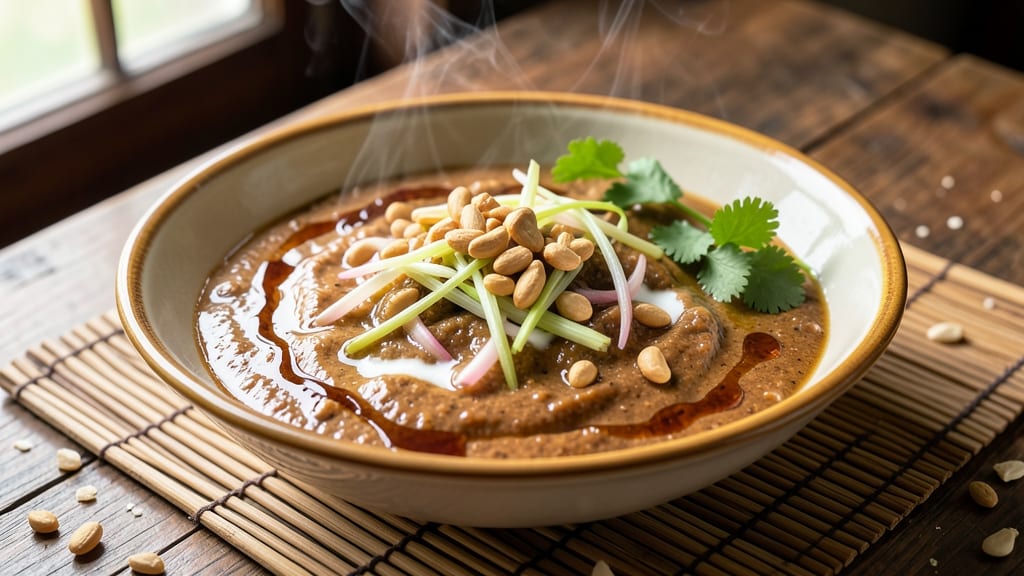
This Balinese peanut sauce recipe transforms simple ingredients into a nutty-spiced elixir that elevates everything from stir-fries to grilled meats. The secret lies in balancing toasted peanuts, tangy tamarind, and aromatic spices—creating a sauce that's both rich and versatile.
I've perfected this recipe over years of testing, ensuring it's smooth enough to drizzle yet bold enough to stand alone as a dip.
The foundation starts with toasted peanuts and coconut milk, which form the creamy base, while tamarind and palm sugar add that signature sweet-sour balance. Galangal and lemongrass infuse layers of warmth, while a touch of chili brings just enough heat.
The sauce thickens beautifully when simmered, but you can thin it with water or coconut milk to achieve your preferred consistency.
What makes this sauce truly special is its adaptability—drizzle it over satay skewers, toss it with fresh vegetables, or use it as a marinade for grilled chicken. The nutty depth pairs perfectly with the smoky char of grilled meats, while its tangy brightness cuts through rich dishes.
Once you try this, store-bought versions will never compare.
Ready in just 20 minutes, this sauce keeps well in the fridge for up to a week, making it ideal for meal prep. The process is straightforward, but the flavor payoff is extraordinary. Let's dive into the steps to create this restaurant-worthy condiment at home.
Ingredients for balinese peanut sauce
The nutty-spiced foundation of this sauce starts with toasted peanuts and coconut milk.
| Ingredient | Amount | Notes |
|---|---|---|
| Raw Peanuts 🥜 | 1 ½ cups | Unsalted, dry-roasted for depth |
| Full-Fat Coconut Milk 🥥 | 1 can | High-quality, no additives |
| Tamarind Paste 🍈 | ½ cup | Unadulterated, block preferred |
| Palm Sugar 🍯 | ¼ cup | Or light brown sugar |
| Galangal 🌿 | 2 inches | Fresh, peeled, sliced thin |
| Lemongrass 🌿 | 3 pieces | Stalks, bruised for flavor |
| Red Chili Peppers 🌶️ | 1 whole | Bird's eye or Thai chili |
| Garlic Cloves 🧄 | 4 cloves | Fresh, lightly crushed |
| Shallots 🧅 | 3 whole | Peeled, thinly sliced |
| Fish Sauce 🍶 | 1 tbsp | Red Boat brand preferred |
| Salt 🧂 | 1 tsp | Diamond Crystal kosher |
The peanuts are non-negotiable—raw, unsalted, and dry-roasted until golden for maximum flavor. Trader Joe's has the best-priced bulk bags, but any store's unsalted peanuts work. For galangal, Asian markets carry the freshest, but frozen works in a pinch. Look for stalks that are firm and aromatic—none of that mushy, waterlogged stuff. The lemongrass should be vibrant green, not yellowing. If you can't find fresh, Thai Kitchen lemongrass paste is a decent backup. Fish sauce is where you can splurge—Red Boat is the gold standard, but Three Crabs is a solid budget pick.
No tamarind paste? Substitute lime juice plus a pinch of sugar—it won't be identical, but it'll save you. Palm sugar unavailable? Light brown sugar works 1:1. The chili peppers are flexible—red pepper flakes at half the heat if you're sensitive. Shallots can be swapped for onions (use twice the amount), but they're milder. The coconut milk can be light or full-fat—full-fat gives richer texture. For extra depth, toast the garlic and shallots in oil before blending. And yes, you can make this without fish sauce—just boost the salt to 1.5 tsp.
This sauce thickens as it cools, so thin with water or coconut milk if needed. Keeps 1 week in the fridge, 3 months frozen. For freezing, portion into ice cube trays—perfect for single-use drizzles. The peanuts can be toasted ahead and stored in an airtight container for 2 weeks. Once opened, coconut milk lasts 5 days in the fridge, so use the can quickly. The galangal and lemongrass keep in the freezer for 6 months if wrapped tightly.
Why You'll Love This Recipe
- No-Fuss Blend: I just toss raw peanuts, coconut milk, and galangal into a food processor—no chopping, no straining. The tamarind paste dissolves in seconds, and the palm sugar caramelizes effortlessly while you stir.
- Umami Bomb: That first bite? Rich, tangy, and nutty all at once. The galangal adds a citrusy kick, while the toasted peanuts bring deep, toasty warmth—like a hug in sauce form.
- Party or Pantry: Slather it on grilled chicken for dinner, drizzle it over noodles for lunch, or pack it in jars for weeks. Honestly, I’ve used it on everything from veggie sticks to steak—it’s my go-to flavor multiplier.
- Budget Magic: A single batch stretches for days. Raw peanuts and coconut milk are cheap staples, and a little tamarind goes a long way. I make double portions just to avoid ever buying takeout again.
Step-by-step instructions for balinese peanut sauce
Here's how to craft this aromatic, nutty sauce that balances sweet, spicy, and umami in perfect harmony.
Toast the Peanuts and Prepare Aromatics
Heat a dry skillet over medium heat and add the 1.5 cups raw peanuts. Toast them for 5-7 minutes, stirring constantly, until they turn a rich golden brown and release their nutty fragrance. This dry-roasting step is crucial—it deepens the peanut flavor and removes any raw taste. Transfer the toasted peanuts to a bowl and set aside.
In the same skillet, add the 2 inches galangal (peeled and sliced) and 3 pieces lemongrass (bruised). Cook for 2 minutes until fragrant. Add the 3 whole shallots (thinly sliced) and 4 cloves garlic (lightly crushed), cooking for another 3 minutes until the shallots soften and turn translucent. Here's the thing—galangal has a peppery, citrusy bite that's essential for authentic flavor, so don't skip it. If you can't find fresh galangal, ginger is a reasonable substitute, though it won't be identical.
Build the Sauce Base
Pour in the 1 can full-fat coconut milk, scraping up any browned bits from the bottom of the pan. Add the 0.5 cup tamarind paste and 0.25 cup palm sugar, stirring to dissolve the sugar completely. Bring the mixture to a gentle simmer over medium-low heat, then reduce heat to low and let it cook for 10 minutes. You're looking for the sauce to thicken slightly and develop a glossy sheen—this indicates the tamarind has softened and the flavors are melding.
While the sauce simmers, carefully remove the seeds from the 1 whole red chili pepper (leave it whole) and add it to the pot. Simmer for another 5 minutes, being mindful not to let it boil vigorously, which can cause the coconut milk to curdle. The chili will infuse its heat without making the sauce overly spicy—just enough to wake up your taste buds.
Blend and Adjust Seasoning
Remove the lemongrass stalks and chili pepper from the sauce (you can discard them). Using an immersion blender, blend the sauce directly in the pot until completely smooth. If you prefer using a countertop blender, let the sauce cool slightly first, then blend until silky. The texture should be velvety, with no lumps remaining. Taste the sauce and adjust the seasoning—add 1 tablespoon fish sauce for umami depth and 1 teaspoon salt to balance the flavors. This is where the magic happens: the fish sauce adds that signature savory punch that makes this sauce irresistible.
Return the sauce to the pot and stir in the toasted peanuts. Warm through for 2-3 minutes over low heat, just until the peanuts are heated through and the sauce is well combined. The peanuts should be evenly distributed, adding both texture and richness. If the sauce is too thick, thin it with 1-2 tablespoons of water to achieve a drizzling consistency. The perfect sauce should coat the back of a spoon but still flow freely.
Finish and Serve
Let the sauce rest for 5 minutes off the heat. This resting period allows the flavors to fully meld and the sauce to reach its ideal consistency. Taste again and make any final adjustments—perhaps a touch more sugar to balance the acidity from the tamarind, or a splash more fish sauce for extra depth. The sauce should now be a harmonious blend of sweet, spicy, nutty, and umami flavors, with a smooth, velvety texture.
Serve the Balinese peanut sauce immediately over stir-fried noodles, grilled meats, or as a drizzle for fresh spring rolls. It's also fantastic spooned over steamed rice or used as a dip for crispy vegetables. The sauce keeps well in the refrigerator for up to 5 days, though it's best enjoyed fresh when its flavors are at their peak. For an extra touch of freshness, garnish with chopped cilantro or lime zest just before serving—this brightens the dish and cuts through the richness.
Pro Tips For Making Balinese Peanut Sauce
- TOAST PEANUTS UNTIL GOLDEN: Skip the raw peanut shortcut—roast them in a dry pan over medium heat until they’re deeply golden and fragrant, about 8-10 minutes. I used to rush this, and the sauce always tasted flat; the toasted nuts bring the real depth of flavor.
- BLANCH GALANGAL FIRST: Peel and slice the galangal, then blanch it in boiling water for 30 seconds to mellow its sharpness. After burning my tongue the first time, I learned this step makes the sauce smoother without losing its zing.
- CONTROL THE TAMARIND: Start with half the tamarind paste called for, taste, then adjust—it’s easier to fix than to undo. Too much turns your sauce into a pucker-inducing jam; too little leaves it bland. Trust your palate here.
- SIMPMER COCONUT MILK LOW: Reduce the coconut milk over the lowest possible heat to avoid curdling—this isn’t a stir-fry, it’s a marriage. I used to let it bubble, and the sauce split like a bad romance. Keep it steady, like a slow dance.
Serving suggestions for this recipe
Grilled Meats
This peanut sauce is a game-changer for grilled dishes. Drizzle it over grilled chicken satay or beef skewers right before serving to create a sticky, aromatic glaze. The nutty richness complements the smoky char perfectly—I love brushing it on pork tenderloin during the last 2 minutes of grilling.
For extra flavor, marinate your meat in 1/4 cup sauce mixed with 1 tbsp soy sauce for 30 minutes before cooking. 🔥
Stir-Fried Vegetables
Toss wok-fried vegetables like bok choy, bell peppers, and snap peas with 2 tbsp sauce for a quick, flavorful side. The sweet-sour balance cuts through the crisp-tender texture beautifully.
I especially love pairing it with steamed greens like gai lan or broccoli rabe—just drizzle 1 tbsp sauce over the top and finish with sesame seeds. For a complete meal, serve with jasmine rice and crispy tofu. ✨
Noodle Dishes
Use this sauce as a dressing for rice noodles or udon noodles—just toss 2 tbsp sauce with 1 tbsp lime juice and 1 tsp chili oil for a vibrant, tangy finish. For extra richness, stir-fry shredded chicken or shrimp with the sauce and toss with noodles.
I also love adding crushed peanuts on top for texture. For a lighter option, thin the sauce with 2 tbsp coconut milk before mixing. 💫
Rice Bowls
Transform simple rice bowls with this sauce as a drizzle or dip. Spoon 2 tbsp sauce over steamed jasmine rice alongside grilled shrimp and quick-pickled cucumbers. The nutty depth pairs perfectly with the bright acidity of the pickles.
For a heartier bowl, add crispy fried shallots and fresh cilantro. It also works beautifully with congee—just stir 1 tbsp sauce into the rice porridge before serving. 🌟
Spring Rolls
Dip fresh or fried spring rolls in this sauce for an instant flavor boost. The sweet-savory profile balances the crispy texture perfectly. I like to serve it with rice paper rolls filled with shrimp, herbs, and vermicelli for a lighter option.
For extra flair, drizzle 1 tbsp sauce over the rolls before serving and sprinkle with crushed peanuts. It’s also fantastic as a dipping sauce for vegetable spring rolls or egg rolls. 🥢
Breakfast Pairings
Don’t limit this sauce to dinner—it’s amazing on breakfast dishes too! Drizzle it over scrambled eggs or tofu scramble for a savory-sweet twist. I love spreading it on toasted baguette slices with avocado slices for a quick open-faced sandwich.
For a heartier breakfast, toss it with fried rice and top with a soft-boiled egg. The nutty flavor adds unexpected depth to morning meals. 💡
Nutrition facts
Frequently asked questions
Can I make this sauce without peanuts?
The peanuts are essential for authentic flavor, but you can substitute with 1 cup roasted cashews or almonds for a similar nutty depth. For a peanut-free version, try blending 2 tablespoons peanut butter into the finished sauce instead. The texture will be slightly different but still delicious.
How do I adjust the spice level?
The recipe uses just 1 whole chili pepper for mild heat. For more spice, add ½-1 teaspoon chili flakes or blend in 1 extra chili pepper (seeds removed for less heat). For a completely mild version, omit the chili entirely and add ½ teaspoon sweet paprika instead.
Why does my sauce look curdled?
Curdling usually happens when coconut milk boils vigorously. To prevent this, keep heat at low-medium and stir occasionally. If it happens, whisk in 1 tablespoon coconut milk to restore smoothness. For extra insurance, simmer the coconut milk alone for 5 minutes before adding other ingredients.
Can I make this sauce ahead of time?
This sauce tastes even better after 24 hours as flavors meld. Store in an airtight container in the fridge for up to 5 days. For longer storage, freeze in ice cube trays and thaw as needed. Reheat gently on low heat, stirring frequently to prevent separation.
What's the best way to use leftover sauce?
Leftover sauce is perfect for marinades (mix with 1 tbsp soy sauce for meats), dipping sauces (thin with water), or stir-fry bases. For extra richness, stir in 1 tbsp coconut cream before reheating. It also makes a fantastic glaze for baked tofu or chicken wings.