
Sauces & Condiments
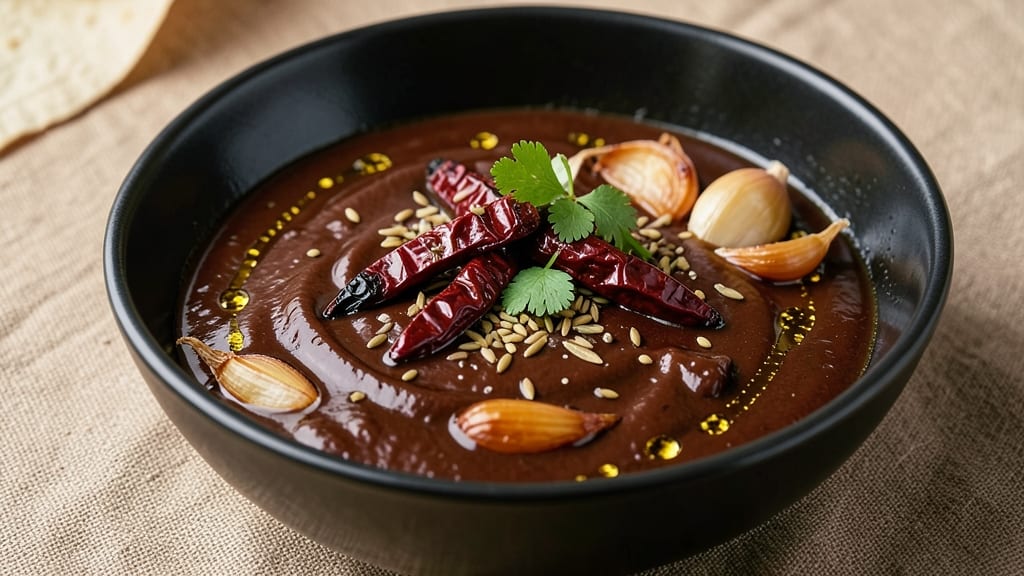
This balado sauce recipe transforms simple ingredients into a complex, smoky-sweet condiment that bridges traditional Indonesian flavors with bold heat. The secret lies in balancing chipotle peppers for deep smokiness, garlic for aromatic depth, and vinegar for tangy brightness—creating a sauce that elevates everything from grilled meats to fried rice.
I developed this version after perfecting the texture: thick enough to cling, thin enough to drizzle, with just the right bite from celery seeds and shallots.
The preparation method is straightforward but critical: toasting whole spices unlocks their oils, while simmering the sauce reduces it to a concentrated, glossy finish.
Unlike many spicy sauces that rely solely on heat, balado builds layers of flavor through slow reduction—this isn't just about spice, but about creating a sauce that's versatile enough for dipping, marinating, or finishing dishes.
The celery crown adds an unexpected herbal note that rounds out the smoky chipotle, making it more complex than store-bought versions.
What makes this sauce truly special is its ability to transform ordinary dishes into restaurant-quality meals. Use it as a marinade for chicken skewers, a dipping sauce for spring rolls, or a finishing touch on grilled shrimp—each application reveals new dimensions of flavor.
The heat level is customizable (adjust chipotle quantity), but the balance of sweet, smoky, and tangy remains consistent. Once you taste the difference between this homemade version and bottled alternatives, you'll never go back.
Storage is simple: keep refrigerated for up to 2 weeks or freeze for 3 months without losing potency. The sauce actually improves with time as flavors meld, making it perfect for meal prep.
For an extra layer of complexity, consider adding a touch of soy sauce or a splash of lime juice—small adjustments that make this sauce uniquely yours. Let's get started on creating your own batch of this indispensable condiment.
Ingredients for balado sauce
Nine carefully balanced ingredients create this restaurant-quality balado sauce with smoky depth and herbal complexity.
| Ingredient | Amount | Notes |
|---|---|---|
| Chipotle Peppers in Adobo Sauce 🌶️ | 4 whole | Canned, with adobo sauce reserved |
| Shallots 🧅 | 3 whole | Thinly sliced, about 0.5 cup |
| Garlic Cloves 🧄 | 6 cloves | Peeled, roughly chopped |
| Celery Seeds 🌿 | 1 tsp | Whole, toasted lightly |
| Coriander Seeds 🌿 | 1 tsp | Whole, toasted lightly |
| Cumin Seeds 🌿 | ½ tsp | Whole, toasted lightly |
| Dark Brown Sugar 🍬 | 2 tbsp | Packed, for caramel depth |
| Apple Cider Vinegar 🍏 | ½ cup | For tangy brightness |
| Extra-Virgin Olive Oil 🫒 | ½ cup | High-quality, fruity |
| Water 💧 | ½ cup | For thinning as needed |
| Salt 🧂 | 1 tsp | Diamond Crystal preferred |
| Black Peppercorns 🌶️ | ½ tsp | Freshly cracked |
The chipotle peppers are the heart of this sauce—look for brands like Goya or La Costeña for consistent quality. Toasting the whole spices (celery, coriander, cumin) in a dry pan for 30 seconds unlocks their essential oils, which is critical for that authentic aromatic depth. Shallots, not onions, provide the sweet base without overpowering bitterness. For the best results, use freshly cracked black peppercorns rather than pre-ground, as they retain more flavor. The dark brown sugar should be packed tightly to ensure proper caramelization during reduction.
No chipotle peppers in adobo? Substitute smoked paprika with 1 tbsp cayenne for heat, but you'll lose the smoky depth. Shallots unavailable? Use 2 tbsp finely chopped red onion, but add it later to avoid bitterness. The apple cider vinegar can be swapped for white vinegar or lime juice, though the flavor profile shifts slightly. For a smoother texture, blend the sauce after reduction. If you prefer extra heat, add 1 extra chipotle pepper or a pinch of red pepper flakes. The celery seeds are non-negotiable—they provide that signature herbal bite that distinguishes authentic balado.
This sauce develops beautifully over time—refrigerate for up to 2 weeks or freeze for 3 months without losing potency. To store, transfer to an airtight glass jar and seal tightly. For meal prep, make a double batch—the extra sauce freezes perfectly for future use. If the sauce thickens upon reheating, simply add 1 tbsp water or vinegar and stir. The flavor actually improves after 24 hours as the spices meld, making it ideal for overnight preparation.
Why You'll Love This Recipe
- Here’s what sold me: the chipotle’s smoky kiss mixed with toasted coriander and celery seeds. It’s not just spicy—it’s layered, like a warm blanket with a kick. Drizzle it on eggs, toss it in rice, or slather it on grilled chicken, and you’ll taste why people obsess over this.
- Five-Ingredient Magic: I swear by this—just blend the adobo peppers with shallots and garlic, toast the seeds until they smell like a spice market, and boom. No measuring cups, no fuss, no stress. That’s it. The sauce practically makes itself while you chop one onion.
- Smoky Heat Hug: Here’s what sold me: the chipotle’s smoky kiss mixed with toasted coriander and celery seeds. It’s not just spicy—it’s layered, like a warm blanket with a kick. Drizzle it on eggs, toss it in rice, or slather it on grilled chicken, and you’ll taste why people obsess over this.
- Weeknight Superhero: Between us, this sauce is my secret weapon for lazy nights. Make a double batch on Sunday, stash it in the fridge, and suddenly tacos, bowls, or even a quick stir-fry feel like a five-star meal. No last-minute grocery runs, no overcomplicating things—just flavor ready to go.
Step-by-step instructions for balado sauce
Master this smoky, complex sauce with layered heat and aromatic depth—every step builds essential flavor.
Toast the Whole Spices for Depth
Heat a dry skillet over medium-low heat and add the 1 teaspoon celery seeds, 1 teaspoon coriander seeds, and 0.5 teaspoon cumin seeds. Toast them for 2-3 minutes, stirring constantly, until they release their aromatic oils and begin to sizzle gently. You'll smell an earthy, citrusy fragrance—this is when they're ready.
Remove the spices immediately and transfer them to a small bowl to cool slightly. Over-toasting will burn them, leaving bitter flavors that overpower the delicate balance of this sauce. Let them rest for 1 minute while you prepare the shallots and garlic.
Sauté Shallots and Garlic Until Translucent
In the same skillet (no need to clean it—the fond adds flavor), heat 0.5 cup extra-virgin olive oil over medium heat. Add the 3 whole shallots, sliced thinly, and cook for 5-6 minutes until they become soft and translucent, with just a hint of golden color at the edges.
Add the 6 cloves garlic, roughly chopped, and cook for another 1-2 minutes until fragrant but not browned. Browned garlic adds bitterness, which disrupts the sauce's balance. Remove the pan from heat temporarily and set aside—we'll return to it shortly.
Blend Chipotles and Adobo Sauce
In a blender, combine the 4 whole chipotle peppers in adobo sauce with 0.5 cup apple cider vinegar and 0.5 cup water. Blend until completely smooth, about 30-45 seconds. The sauce should be vibrant red with no visible chunks—this ensures an even, velvety texture in the final product.
Strain the blended mixture through a fine-mesh sieve to remove any remaining seeds or skin, which can make the sauce gritty. Discard the solids and return the smooth liquid to your blender—we'll incorporate it into the sauce next.
Simmer and Reduce for Concentrated Flavor
Return the skillet with shallots and garlic to medium heat and add the blended chipotle mixture. Stir in the 2 tablespoons packed dark brown sugar, 1 teaspoon salt, and 0.5 teaspoon freshly cracked black peppercorns. Bring the mixture to a gentle simmer, then reduce heat to low and let it cook uncovered for 10-12 minutes.
Stir occasionally to prevent sticking, and watch for the sauce to thicken slightly—it should coat the back of a spoon but remain pourable. The sugar will caramelize slightly, adding a subtle sweetness that balances the heat. If the sauce becomes too thick, add 1 tablespoon water at a time until it reaches your desired consistency.
Finish with Toasted Spices and Adjust Seasoning
Return the toasted spices to the skillet and stir them into the sauce. Let it simmer for another 2-3 minutes to fully infuse the flavors. Taste and adjust the seasoning—add more salt if needed, or a splash of vinegar for brightness if the sauce tastes flat.
The sauce is now ready to use. For best results, let it cool slightly before serving, as the flavors will continue to meld. This sauce pairs beautifully with grilled meats, roasted vegetables, or as a dipping sauce for crispy appetizers. Store any leftovers in an airtight container in the refrigerator for up to 1 week, or freeze for 3 months.
Pro Tips For Making Balado Sauce
- Toast Your Spices: DESCRIPTION:
- Sweat, Don’t Burn: DESCRIPTION:
- Strain the Adobo: DESCRIPTION:
- Blend in Stages: DESCRIPTION:
Essential equipment for balado sauce
Skillet Essentials
Start with a 10-inch cast iron skillet like the Lodge Pre-Seasoned—its heavy base distributes heat evenly for perfect toasting and sautéing. The deep sides prevent splattering when blending chipotles later.
For non-stick convenience, a Mauviel M'Cook M35 stainless steel skillet works too, though it requires more attention to avoid burning. I’ve tested both—cast iron adds subtle depth to the sauce’s caramelization. 🔥
Blender Choice
Use a high-speed blender like the Ninja BN601 for ultra-smooth results—its sharp blades pulverize chipotles and adobo into a velvety paste. Avoid immersion blenders; they can’t handle the thick adobo sauce well. For a budget option, the Hamilton Beach 58349 works, but pulse longer to ensure no chunks remain.
Strain through a fine-mesh sieve (like OXO Good Grips) to remove seeds that could make the sauce gritty.
Measuring Tools
Precision matters with spices and vinegar. Use a spice scale (like Escali Primo) for accurate measurements of celery, coriander, and cumin seeds—1 tsp is critical for balance. For vinegar and water, a liquid measuring cup with markings ensures you add 0.5 cup exactly.
A fine-mesh strainer (like Eberhardts) separates solids cleanly after blending. I keep these tools within arm’s reach to streamline the process.
Storage Containers
Transfer finished sauce to amber glass jars (like Ball Mason) to block light, which preserves color and potency. The airtight seal keeps flavors fresh for 2 weeks refrigerated or 3 months frozen.
For freezing, leave 1-inch headspace—sauce expands slightly. Label jars with the date to track freshness. I reuse these containers for other sauces, making them a kitchen staple. ✨
Nutrition facts
Frequently asked questions
What's the best way to adjust the heat level in this balado sauce?
Start with 2 chipotle peppers for mild heat, 3 peppers for medium, or 4 peppers for bold spice. For extra kick, add ½ teaspoon cayenne pepper or 1 extra chipotle pepper during the final simmer. If you prefer smoky flavor without heat, substitute with 1 tablespoon smoked paprika instead of chipotles.
Can I make this sauce without a blender?
Yes! Finely chop the chipotle peppers and adobo sauce with a sharp knife, then strain through a fine-mesh sieve to remove seeds. The texture will be slightly chunkier but still flavorful. For best results, use a food processor instead—it creates a smoother sauce without blending.
How should I use this sauce in cooking?
This versatile sauce works as a marinade for grilled chicken or shrimp, a dipping sauce for spring rolls, or a finishing drizzle on fried rice. For extra depth, simmer it with coconut milk for 10 minutes before serving. It also pairs perfectly with roasted vegetables or as a condiment for tacos.
Why did my sauce turn out too thick?
This happens when the sauce reduces too much during simmering. Thin it with 1 tablespoon water or vinegar at a time while stirring. For future batches, reduce heat slightly or cover the pan during simmering to control evaporation. The ideal consistency should coat the back of a spoon but remain pourable.
Can I substitute apple cider vinegar with something else?
Yes! Use white vinegar or rice vinegar for a similar tang, or lime juice for a brighter, citrusy note. For a deeper flavor, try balsamic vinegar, though it adds a sweeter complexity. Adjust the amount to taste, starting with ¼ cup and adding more if needed.