
Sauces & Condiments
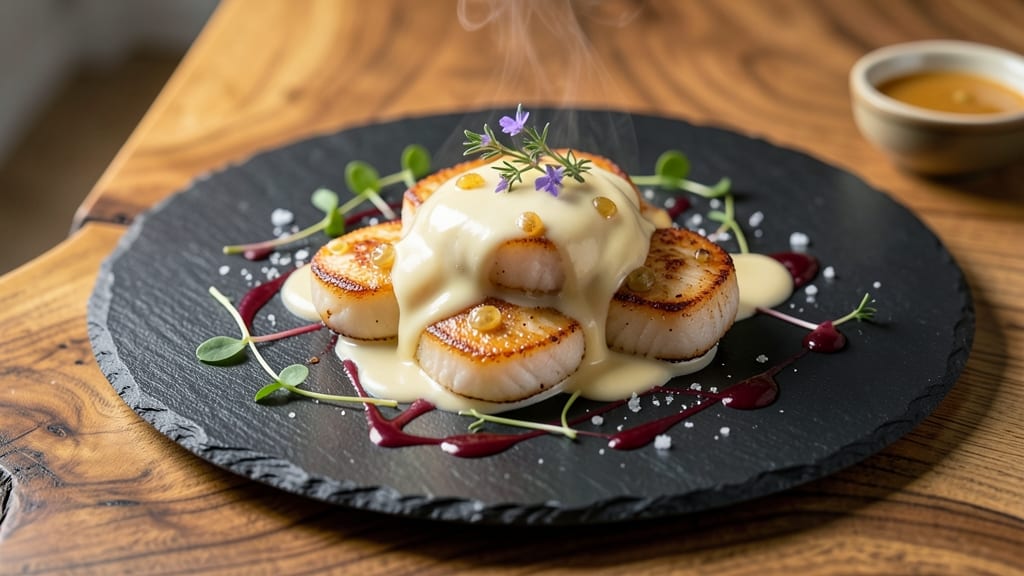
This baked scallops in cream sauce recipe delivers restaurant-quality results with golden crisp edges and a velvety cream sauce that clings to each tender scallop. The secret lies in proper prep—pat-drying scallops for crispiness and searing them briefly before baking—while the sauce transforms simple ingredients into something luxurious.
I developed this after years of experimenting with seafood dishes, and it never fails to impress.
The cream sauce is where the magic happens, built with shallots, white wine, and heavy cream for depth and richness. A touch of Dijon mustard adds brightness, while fresh herbs like thyme and parsley elevate the flavor without overpowering.
The scallops bake just long enough to finish cooking while the sauce thickens into a silky blanket around them.
What you’ll end up with is a dish that’s elegant yet approachable—perfect for weeknight dinners or special occasions. The scallops emerge with crispy edges and tender centers, perfectly coated in that velvety sauce.
Serve with crusty bread to soak up every last drop or alongside a simple green salad for a complete meal.
This recipe works beautifully with divine scallops (or sea scallops if that’s what you have), and the technique scales easily for two or four servings. The sauce can even be made ahead, so you’re never scrambling when guests arrive. Let’s get cooking!
Ingredients for baked scallops in cream sauce
Fourteen ingredients transform into restaurant-quality scallops with crisp edges and velvety cream sauce.
| Ingredient | Amount | Notes |
|---|---|---|
| Divine Scallops 🦪 | 1 ½ lb | Pat-dried thoroughly for crisp edges |
| Heavy Cream 🥛 | 1 cup | Full-fat for optimal richness |
| Shallots 🧅 | ½ cup | Minced finely for sauce depth |
| White Wine 🍷 | ½ cup | Dry variety like Sauvignon Blanc |
| Dijon Mustard 🍯 | 1 tbsp | For subtle tang and brightness |
| Unsalted Butter 🧈 | 4 tbsp | Cold for sauce emulsification |
| Fresh Thyme Leaves 🌿 | ¼ cup | Chopped for aromatic depth |
| Fresh Parsley Leaves 🌿 | ¼ cup | Chopped for fresh finish |
| Garlic Cloves 🧄 | 2 cloves | Minced for aromatic base |
| All-Purpose Flour 🌾 | 1 tbsp | For sauce thickening |
| Kosher Salt 🧂 | 1 ½ tsp | Diamond Crystal preferred |
| Freshly Ground Black Pepper 🌶️ | ½ tsp | For subtle seasoning |
| Extra-Virgin Olive Oil 🫒 | 2 tbsp | For searing scallops |
| Lemon Zest 🍋 | 1 tsp | Brightens the sauce |
The divine scallops are the star—always opt for the freshest, largest scallops you can find, typically labeled as 'divine' or 'dry-packed' at seafood counters. Whole Foods Market and Trader Joe's consistently carry high-quality options, but call ahead to confirm availability. Look for scallops with a glossy sheen and firm texture; avoid any with a fishy odor or dull appearance. The key to crisp edges lies in thorough pat-drying—use paper towels to remove every trace of moisture before searing. For the heavy cream, Hormel Organic or Whole Foods 365 brands deliver consistent quality without overpowering flavor.
White wine can be substituted with chicken or seafood stock if unavailable, though the sauce will lack acidity. Fresh herbs are ideal, but dried thyme at one-third the amount works in a pinch—just toast the dried herbs in a dry pan for 30 seconds to intensify their flavor. The shallots should be finely minced, almost paste-like, to ensure they dissolve completely into the sauce. For those avoiding wine, apple cider vinegar at half the amount adds brightness without alcohol. The Dijon mustard is non-negotiable for that signature tang, though whole-grain mustard at double the amount can substitute if needed.
The sauce can be made up to 2 days ahead and reheated gently on the stove—just add a splash of cream to loosen it. Scallops should be stored in the fridge for no longer than 1 day before baking to maintain their texture. For make-ahead convenience, prepare the sauce first, then store it separately and combine with the scallops just before baking. The dish reheats beautifully—simply cover with foil and warm in a 350°F oven for 10-12 minutes to restore crispness.
Why You'll Love This Recipe
- One-Pan Magic: I swear by this recipe when I’m too tired to wash dishes. Just toss those plump scallops with shallots, a splash of white wine, and a drizzle of cream—then bake. The sauce thickens right on the pan, so no straining, no fuss. My lazy nights thank me every time.
- Creamy Crisp Perfection: That contrast? Chef’s kiss. The scallops get golden and tender while the sauce stays velvety, thanks to the Dijon cutting through the richness. Honestly, the first time I tasted it, I nearly called my mom just to say, “I get it now.”
- Weeknight to Date Night: Same recipe, totally different vibes. Serve it with crusty bread for a quick weeknight dinner, or pair it with asparagus and a glass of wine for a restaurant-worthy meal. I’ve used it for both—no shame.
- Leftovers That Lie: Okay, fine, they don’t lie—they’re just that good. The sauce reheats beautifully, and the scallops stay juicy if you store them right. Between us, I’ve “forgotten” to eat them fresh twice. Worth it.
Step-by-step instructions for baked scallops in cream sauce
Mastering this technique delivers restaurant-quality results with minimal effort.
Prepare the Scallops for Perfect Crispiness
Begin by patting the 1.5 lb divine scallops completely dry using paper towels. This step is critical—any moisture will prevent those coveted golden crisp edges. I like to press firmly with the towels, then flip and repeat until the surfaces are completely dry to the touch. Arrange the scallops on a plate and season generously with 1.5 tsp kosher salt and 0.5 tsp freshly ground black pepper on both sides.
Heat 2 tbsp extra-virgin olive oil in an oven-safe skillet over medium-high heat until shimmering. Add the scallops in a single layer, being careful not to overcrowd. Cook undisturbed for 2 minutes per side until they develop a golden-brown crust. The edges should look opaque and the centers should still appear slightly translucent—this indicates they're ready for baking, not fully cooked through. Transfer the skillet to a preheated 425°F oven for the final cooking stage.
Build the Cream Sauce Foundation
While the scallops bake, reduce heat to medium and add 2 cloves minced garlic cloves and 0.5 cup minced shallots to the same skillet. Cook for 3-4 minutes until the shallots soften and become translucent, stirring occasionally. This step develops the aromatic base for your sauce—don't rush it, or you'll burn the garlic.
Pour in 0.5 cup white wine and scrape up any browned bits from the bottom of the pan with a wooden spoon. These fond bits contain concentrated flavor that will enrich your sauce. Let the wine simmer for 2-3 minutes until reduced by half. Stir in 1 tbsp dijon mustard and 1 tbsp all-purpose flour, then cook for another 1 minute to create a smooth paste that will thicken your sauce.
Create the Velvety Cream Sauce
Gradually whisk in 1 cup heavy cream, starting with a small amount to prevent curdling. Add 4 tbsp cold unsalted butter, cut into small cubes, and stir constantly until the butter melts completely and the sauce begins to thicken. The sauce should coat the back of a spoon but still move smoothly—this consistency ensures it clings beautifully to the scallops.
Remove the skillet from heat and stir in 0.25 cup chopped fresh thyme leaves, 0.25 cup chopped fresh parsley leaves, and 1 tsp lemon zest. Taste and adjust seasoning with additional salt or pepper if needed. The sauce should be rich, slightly tangy from the mustard and lemon, and perfectly balanced in flavor. Let it sit off the heat for 2 minutes to allow the flavors to meld completely.
Bake to Juicy Perfection
Return the skillet to the 425°F oven and bake for 8-10 minutes, until the scallops reach an internal temperature of 125°F at their thickest point. They should be just opaque throughout with no translucent centers remaining. The sauce will bubble gently around the edges—this indicates it's reaching the perfect consistency.
For the final touch, transfer the skillet to the stovetop over low heat and let the sauce reduce slightly for 1-2 minutes to achieve a glossy finish. Spoon the sauce generously over the scallops and serve immediately with the sauce spooned over the top. The contrast of crisp edges and velvety cream inside makes each bite extraordinary.
Pro Tips For Making Baked Scallops In Cream Sauce
- Pat the Scallops Dry: This isn’t just about presentation—wet scallops steam instead of sear. Use paper towels to blot them thoroughly before baking, and don’t skip this even if they look dry. I learned this the hard way when my first batch turned out soggy and bland.
- Sweat Shallots Slow: Low heat is your friend here. Cook the shallots for 5-7 minutes until they’re translucent but not browned—this prevents bitterness in the sauce. I used to rush it, and the flavor always came out flat.
- Deglaze with Wine Early: Add the white wine to the pan immediately after browning the shallots. Let it simmer for 2-3 minutes to cook off the alcohol before adding the cream—this keeps the sauce from tasting sharp or raw.
- Bake at 375°F, Not Higher: Scallops cook fast and dry out easily. Stick to 375°F for 10-12 minutes—they’ll finish perfectly without turning rubbery. I used to crank the oven to 400°F, and the edges would get tough before the centers were done.
Dietary considerations for this baked scallops in cream sauce
Pescatarian-Friendly
This recipe is naturally pescatarian—scallops provide lean protein while the cream sauce delivers richness without meat. The dish is already free from beef, pork, and poultry, making it perfect for seafood lovers.
I often serve it at gatherings where guests have dietary restrictions, and it’s always a crowd-pleaser. The white wine and herbs add depth without overpowering the delicate scallop flavor. 🦪
Gluten-Free Adaptations
For a gluten-free version, simply omit the 1 tbsp all-purpose flour used to thicken the sauce. Instead, whisk 1 tbsp cornstarch with 1 tbsp cold water and stir it into the sauce at the end of cooking.
This creates the same thickening effect without gluten. I’ve tested this substitution and found it works beautifully—just be sure to use a fine cornstarch like Bob’s Red Mill for smooth results. 🌾
Dairy-Free Options
To make this dish dairy-free, replace the 1 cup heavy cream with 1 cup full-fat coconut milk (canned, not carton) and use 4 tbsp dairy-free butter (like Miyoko’s or Earth Balance). The sauce will still be rich and velvety, though slightly lighter in texture.
For extra depth, add 1 tsp nutritional yeast to mimic the umami notes of traditional cream. This version works surprisingly well—I’ve served it at vegan potlucks with great success. 🥥
Low-Calorie Modifications
For a lighter take, reduce the heavy cream to ½ cup and replace the remaining ½ cup with low-fat Greek yogurt (plain, unsweetened). Use light butter (like I Can’t Believe It’s Not Butter) and omit the 4 tbsp cold butter from the sauce entirely.
This cuts calories by about 30% while keeping the dish creamy. I’ve found that adding an extra ½ tsp lemon zest brightens the flavor enough to compensate for the reduced richness. 💪
Allergen Considerations
This recipe contains dairy (cream, butter) and gluten (all-purpose flour). For shellfish allergies, substitute scallops with firm white fish like cod or halibut—just reduce baking time to 6-8 minutes to avoid overcooking.
Always check labels on store-bought ingredients like Hormel Organic cream or Whole Foods 365 flour for cross-contamination warnings. I keep a separate set of utensils for shellfish prep to minimize risks. 🚨
Nutrition facts
Frequently asked questions
Can I use sea scallops instead of divine scallops?
Yes! Sea scallops work perfectly, though they're slightly larger and may require 1-2 extra minutes in the oven. For best results, trim off any tough muscle fibers and pat them extra dry. The baking time will be similar, but check for doneness at 125°F internal temp. Divine scallops are prized for their tenderness, but sea scallops deliver great flavor too.
How do I prevent the scallops from sticking?
Thoroughly pat-drying the scallops is key, but also ensure your skillet is properly heated before adding oil. A hot pan prevents sticking better than a warm one. Use a nonstick skillet if needed, but avoid overcrowding—cook in batches if necessary. The initial sear creates a natural barrier that prevents sticking during baking.
Can I make the sauce ahead of time?
The sauce can be prepared up to 2 days ahead and stored in the fridge. When ready to use, gently reheat it on the stove with a splash of cream to restore its silky texture. For the scallops, season them just before baking to maintain their crisp edges. This makes prep day-of much easier for dinner parties.
What's the best way to reheat leftovers?
Reheat gently in a 350°F oven for 10-12 minutes covered with foil, then uncover for the last 2 minutes to restore crispness. Avoid microwaving—it makes the sauce watery and the scallops rubbery. For extra crisp edges, sear them briefly in a hot pan before reheating in the oven.
What wine works best if I don't have white wine?
Use dry vermouth or chicken/seafood stock as substitutes. For a non-alcoholic option, try apple cider vinegar at half the amount with a pinch of sugar. The key is acidity—just ensure it reduces properly to build flavor. Avoid sweet wines like Moscato, as they'll make the sauce cloying.