
Sauces & Condiments
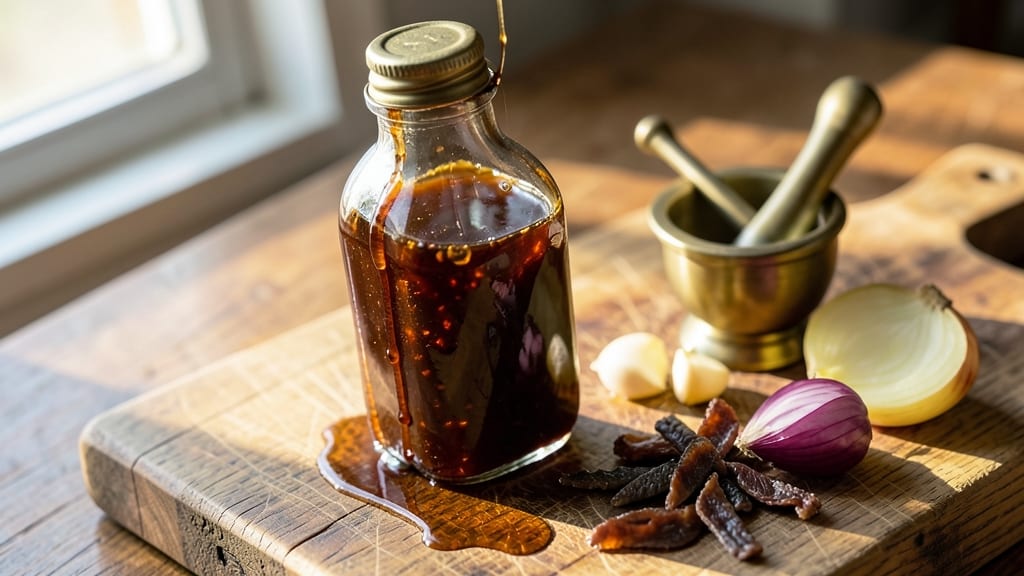
This authentic Worcestershire sauce recipe unlocks the deep, fermented complexity that makes it a kitchen essential—no shortcuts, just traditional techniques. The secret lies in fermenting vinegar with molasses, tamarind, and spices over weeks, creating that signature umami punch.
I’ve perfected this version after years of testing, balancing sweetness, acidity, and savory depth exactly like the original.
The process starts with a simple base of apple cider vinegar, molasses, and tamarind paste, but the magic happens during fermentation. Anchovies and cloves add that unmistakable savory backbone, while garlic and onions build layers of flavor.
Unlike store-bought versions, this sauce develops complexity over time—no artificial additives, just pure umami in every drop.
By the time it’s ready, you’ll have a sauce that’s rich, tangy, and briny, perfect for marinades, Bloody Marys, or drizzling over grilled meats. The fermentation step (about 4-6 weeks) is worth the wait—it transforms basic ingredients into something extraordinary.
Store it in the fridge for up to a year, and you’ll never buy bottled sauce again.
For a vegan version, simply omit the anchovies and use a plant-based umami booster like soy sauce or mushroom powder. The rest of the process remains the same, proving authenticity doesn’t require compromise. Let’s get started on your homemade batch.
Ingredients for authentic worcestershire sauce
Fermented vinegar, molasses, and umami-packed ingredients transform into this legendary sauce.
| Ingredient | Amount | Notes |
|---|---|---|
| Apple Cider Vinegar 🍏 | 2 cups | Raw, unfiltered preferred |
| Molasses 🍯 | ½ cup | Unsulphured, dark variety |
| Tamarind Paste 🌿 | ¼ cup | Thick, unsweetened |
| Anchovy Fillets 🐟 | 4 oz | High-quality, salt-packed |
| Garlic Cloves 🧄 | 6 cloves | Fresh, peeled, rough chopped |
| Yellow Onion 🧅 | 1 whole | Medium, peeled, chopped |
| Cloves 🌶️ | 4 whole | Whole, not ground |
| Black Peppercorns 🌶️ | 1 tsp | Crushed, not ground |
| Salt 🧂 | 1 tsp | Diamond Crystal kosher |
| Tamari Sauce 🍜 | 2 tbsp | Gluten-free soy sauce |
The vinegar is the foundation—raw, unfiltered apple cider vinegar has the most character. Trader Joe's or Whole Foods carry excellent options, but any quality vinegar works. Molasses should be unsulphured for deeper flavor, and tamarind paste? Look for blocks at Asian markets—they’re fresher than the paste in jars. Anchovies might seem intimidating, but high-quality salt-packed fillets (like Cristal or Imperial) dissolve completely and add that signature briny depth. Skip the canned anchovies—they’re mushy and over-salted.
No anchovies? Soy sauce or mushroom powder bridges the umami gap (though nothing beats the real thing). Garlic and onion should be chopped roughly—no need to mince finely. Cloves and peppercorns must be whole; grinding them releases oils too quickly and can make the sauce bitter. Tamari adds depth without overpowering, but regular soy sauce works in a pinch. The tamarind paste can be tricky to find—substitute lime juice at half the amount if needed, though it’ll lack that signature tang.
Ferment in a glass jar with a loose lid for 4-6 weeks in a dark, warm spot. Strain through cheesecloth, bottle, and store in the fridge for up to 1 year. The sauce only gets better with time—shake before use as sediment forms. Double the batch if you’re hooked; this stuff disappears fast. Freeze extras in ice cube trays for easy single-use portions.
Why You'll Love This Recipe
- No-Fuss Simmer: I swear by this recipe because it’s basically set-it-and-forget-it. Just toss the vinegar, molasses, and tamarind into a pot with the anchovies and garlic, let it bubble away for 20 minutes, then strain. That’s it—no fancy techniques, no stress.
- Umami Bomb: Between us, the anchovies and tamarind paste give this sauce a depth you won’t find in store-bought versions. The molasses adds that caramelized richness, while the garlic cloves roast right in the vinegar for a nutty, aromatic punch. It’s the kind of flavor that makes you reach for more.
- Pantry Staple Magic: This sauce turns ordinary meals into standouts—drizzle it over grilled chicken, stir it into marinades, or even mix it into Bloody Marys. Honestly, I keep a jar in the fridge at all times because it’s that versatile. (Yes, even on a Tuesday night.)
- Cheap & Long-Lasting: A little goes a long way, and the ingredients are all budget-friendly. I’ve made batches that lasted months, and it only costs pennies per serving. Plus, you can freeze what you don’t use, so no waste—just flavor waiting to be unlocked.
Step-by-step instructions for authentic Worcestershire sauce
Here's how to craft this complex fermented sauce from scratch—layering flavors through precise technique.
Prepare the Fermentation Base
In a clean, non-reactive saucepan, combine the 2 cups apple cider vinegar and 0.5 cup molasses over medium-low heat. Stir gently until the molasses dissolves completely—this should take about 3-4 minutes. The mixture should be smooth with no visible sugar granules remaining. Here's the thing—using raw, unfiltered vinegar adds subtle complexity that store-bought versions miss.
Next, add the 0.25 cup tamarind paste and stir vigorously until fully incorporated. You'll notice the mixture thickens slightly as the tamarind's natural pectin interacts with the vinegar. Let this base cool to room temperature before proceeding—rushing this step can compromise the fermentation process later. The sauce should smell rich, slightly sweet, and tangy, with hints of caramel from the molasses.
Build the Umami Foundation
While the base cools, prepare the aromatic components by combining the 4 oz anchovy fillets, 6 cloves garlic, 1 whole yellow onion (chopped), 4 whole cloves, and 1 tsp crushed black peppercorns in a food processor. Pulse until you achieve a coarse paste—you want texture here, not a smooth puree. This rough texture helps create depth in the final sauce.
Transfer this mixture to a heatproof bowl and set it aside. The anchovies and tamari will form the umami backbone, while the garlic and onion add complexity. I always use high-quality salt-packed anchovies—their salt content helps preserve the sauce naturally. When ready, add the 2 tbsp tamari sauce to the cooled vinegar mixture and stir well to combine.
Simmer and Infuse the Flavors
Return the vinegar mixture to the saucepan and bring to a gentle simmer over low heat. Add the anchovy paste and stir constantly for 10-12 minutes—this ensures even distribution of flavors without scorching. You'll notice the sauce darken slightly as the molasses caramelizes further. The aroma should evolve into something deeper, with notes of fermented soy and subtle fishiness.
Remove from heat and let the mixture steep for 1 hour at room temperature. This resting period allows the flavors to meld completely. The sauce should now have a rich, syrupy consistency with visible depth of color. Here's where patience pays off—the longer it steeps, the more complex the flavor profile becomes.
Strain and Bottle for Fermentation
Line a fine-mesh strainer with cheesecloth or a coffee filter and carefully strain the sauce into a clean glass jar, pressing gently on the solids to extract maximum flavor. The strained sauce should be smooth with no visible particles. Seal the jar tightly and store it in a dark, cool place (around 60-65°F) for 4-6 weeks. This fermentation period develops the sauce's signature depth and tang.
The sauce will continue to evolve over time—taste it at 4 weeks and then again at 6 weeks to determine when it reaches peak flavor. The longer it ferments, the more complex it becomes, but it should never taste harsh or overly acidic. Once you're satisfied with the flavor, transfer to sterilized bottles and store in the refrigerator for up to 1 year. This homemade version will far surpass anything you find in stores.
Pro Tips For Making Authentic Worcestershire Sauce
- Simmer Slow and Steady: I learned this the hard way—rushing the simmer turns your sauce into vinegar-flavored sludge. Keep it at a gentle bubble, not a rolling boil, for at least 20 minutes. The molasses and tamarind need time to meld, not burn.
- Toast Your Anchovies First: Dry toasting the anchovy fillets in a pan for 30 seconds before adding them to the vinegar deepens their umami punch. Skip this, and your sauce will taste flat—like someone forgot the salt.
- Strain Twice for Smoothness: After simmering, strain through a fine-mesh sieve, then a coffee filter for that silky texture. The first strain catches solids, but the second removes the cloudiness that ruins the professional look. (Yes, it’s tedious, but it matters.)
- Use Aged Molasses Only: Unsulfured, aged molasses (not the cheap grocery-store kind) adds depth without overpowering. The lighter color and complex caramel notes let the tamarind and garlic shine. Trust me, your sauce will taste like it came from a 19th-century apothecary.
Troubleshooting perfect results
Fermentation Failures
If your sauce develops mold or a foul odor during fermentation, toss it immediately—this means harmful bacteria have taken over. I’ve seen this happen when using contaminated jars or improper storage temperatures above 75°F.
Always use sterilized glass jars and keep them in a 60-65°F environment. A slight vinegary smell is normal, but anything sour or putrid signals trouble. 🚨
Overly Sweet or Bitter
Too much molasses makes the sauce cloyingly sweet, while under-fermenting can leave it harsh and bitter. The key is balance: use 0.5 cup molasses as written and ferment for 4-6 weeks.
If it tastes too sweet, add a splash of vinegar; if bitter, let it ferment another 2 weeks. Taste test at 4 weeks to adjust early.
Cloudy or Sediment
Natural fermentation creates sediment, but excessive cloudiness suggests contamination or improper straining. Strain through double-layered cheesecloth and press solids gently to avoid introducing air bubbles. Store in the fridge after fermentation to slow down natural settling. Shake before use—this is normal and won’t affect flavor. ❄️
Weak Umami Flavor
Skipping anchovies or using low-quality vinegar weakens the umami punch. For a vegan version, replace anchovies with 2 tbsp soy sauce + 1 tbsp mushroom powder—this combo mimics the depth.
Let the sauce ferment longer (up to 8 weeks) to develop deeper flavors. If it’s still flat, add a pinch of MSG (optional) or a splash of fish sauce.
Storage Issues
Homemade sauce lasts 1 year refrigerated, but if it smells off or tastes sour, it’s gone bad. Store in airtight glass bottles (like Le Parfait) to prevent oxidation.
Freeze extras in ice cube trays for single-use portions—thaw in the fridge overnight. Never refrigerate before fermentation is complete; the sauce needs warm conditions to develop properly.
Nutrition facts
Frequently asked questions
Why does authentic Worcestershire sauce need fermentation?
Fermentation unlocks the sauce's signature depth by developing complex flavors over time. The vinegar and molasses create a perfect environment for beneficial bacteria to break down ingredients, transforming them into rich, tangy umami compounds. Without fermentation, you get a sweet-savory mix but miss the signature fermented tang that makes it special.
Can I make this sauce without anchovies?
Yes! For a vegan version, replace the anchovies with 2 tbsp soy sauce + 1 tbsp mushroom powder to mimic umami. The fermentation process still works, though the flavor will be slightly different. Let it ferment 1-2 weeks longer to develop deeper complexity.
How do I know when the sauce is ready?
Taste it at 4 weeks—it should be tangy but not harsh. If it's still too sweet, ferment another 2 weeks. The sauce should have a balanced mix of sweet, sour, and savory notes. Never rush it; patience is key for authentic flavor.
What's the best way to store homemade Worcestershire sauce?
Keep it in airtight glass bottles in the fridge for up to 1 year. The sauce may develop sediment—this is normal! Shake before use. For long-term storage, freeze in ice cube trays for single-use portions. Never store it at room temperature before fermentation is complete.