
Sauces & Condiments
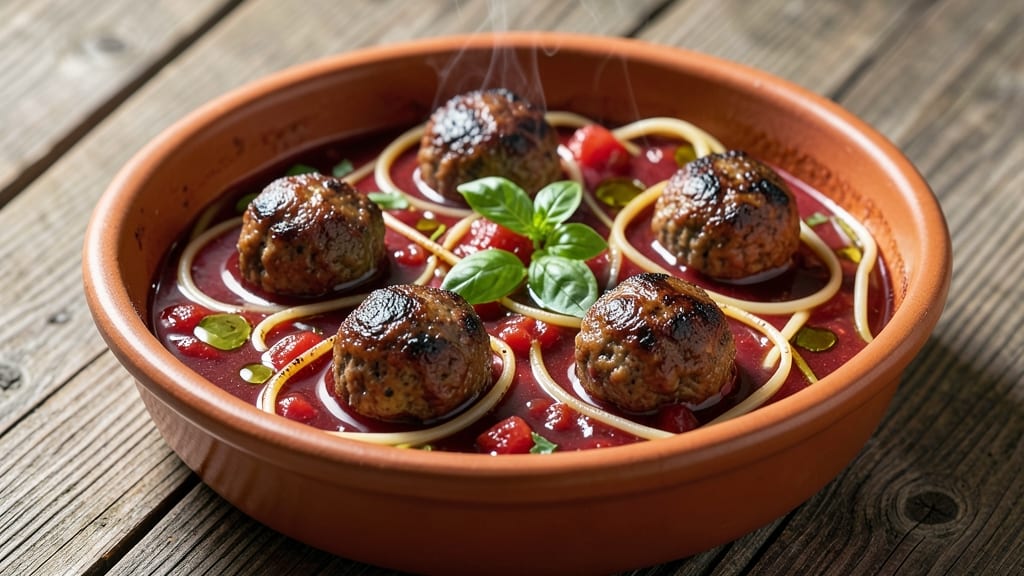
This authentic Italian meatball sauce transforms simple ingredients into a rich, velvety masterpiece that clings to every bite. The secret lies in slow simmering crushed tomatoes with garlic, fresh basil, and a touch of hidden parmesan—no shortcuts, just pure, restaurant-quality flavor.
I’ve perfected this sauce over years of testing, ensuring the perfect balance of acidity, sweetness, and umami depth.
The foundation starts with a tomato paste base, caramelized gently before adding crushed tomatoes and a splash of red wine for brightness. Fresh herbs—basil and oregano—infuse the sauce with aromatic intensity, while a sprinkle of grated parmesan at the end adds a subtle, savory richness.
This isn’t just sauce; it’s the soul of Italian comfort food, built layer by layer.
What sets this sauce apart is its versatility and longevity. Simmered low and slow, it thickens naturally without losing its vibrant color or complex flavors. Store it in the fridge for up to a week or freeze for months—perfect for batch cooking or gifting.
The result? A sauce so deeply flavorful, it elevates any dish, from meatballs to pasta or grilled meats.
Ready to master this authentic Italian technique? The process is straightforward, but the payoff is extraordinary. Whether you’re serving it over homemade meatballs or drizzling it onto al dente pasta, this sauce will become your new kitchen staple. Let’s get started.
Ingredients for authentic italian meatball sauce
Eleven ingredients, all working together for restaurant-quality Italian sauce depth.
| Ingredient | Amount | Notes |
|---|---|---|
| Extra-Virgin Olive Oil 🫒 | ¼ cup | High-quality, fruity variety |
| Tomato Paste 🍅 | ½ cup | San Marzano preferred |
| Crushed Tomatoes 🍅 | 2 cups | San Marzano canned tomatoes |
| Red Wine 🍷 | ½ cup | Bold, dry variety like Cabernet |
| Garlic Cloves 🧄 | 4 cloves | Freshly minced |
| Fresh Basil Leaves 🌿 | ½ cup | Packed, stems removed |
| Fresh Oregano Leaves 🍃 | ¼ cup | Italian oregano preferred |
| Parmesan Cheese 🧀 | ¼ cup | Freshly grated, aged |
| Salt 🧂 | 1 ½ tsp | Diamond Crystal kosher |
| Black Pepper 🌶️ | ½ tsp | Freshly ground |
| Sugar 🍚 | 1 tsp | Granulated, balances acidity |
The tomatoes are non-negotiable—San Marzano is the gold standard, but any high-quality canned tomatoes work. Trader Joe's and Whole Foods carry excellent options, or grab a few cans from the Italian section at your local grocery store. Fresh basil and oregano should be vibrant—if the leaves are yellowing or wilted, skip them. For the red wine, any bold, dry variety like Cabernet Sauvignon or Merlot works. Avoid sweet wines—they’ll throw off the balance. The tomato paste? San Marzano is worth the splurge—it’s sweeter and smoother, with less bitterness than regular brands.
No fresh basil? Dried oregano at half the amount gets you close, but nothing beats the real thing. Short on red wine? Substitute beef broth with a splash of balsamic vinegar. The sugar is key for balancing the acidity—don’t skip it, but if you’re using particularly sweet tomatoes, you can reduce it to half a teaspoon. For the Parmesan, grate it fresh—pre-grated cheese is full of anti-caking agents that make the sauce taste dull. If you’re making a big batch, freeze the extra sauce in ice cube trays for easy portioning later.
This sauce tastes even better the next day as the flavors meld. Store it in the fridge for up to 1 week or freeze for 3 months. I always double the batch—one for immediate use, one to freeze for lazy weeknights. The sauce thickens as it cools, so if it’s too thick after chilling, just stir in a splash of water or broth. If you’re serving it over meatballs, simmer the sauce with the meatballs for the last 10 minutes to let them soak up all that velvety flavor.
Why You'll Love This Recipe
- No-Sweat Simplicity: I swear by this sauce because it’s the kind of recipe that doesn’t demand perfection—just a quick sauté of garlic in olive oil, a splash of wine, and letting the crushed tomatoes do their magic. The tomato paste thickens it effortlessly, so no fancy techniques required.
- Wine-Infused Depth: That splash of red wine isn’t just for show—it cuts through the richness of the tomatoes and garlic, giving it a bright, layered flavor that tastes like a proper Italian trattoria. Honestly, it’s the little details (like letting the wine reduce) that make it stand out.
- Weeknight to Weekend: This sauce works just as well over spaghetti on a Tuesday as it does in a lasagna for company. Between us, I’ve even used it as a marinara base for grilled chicken—because why not? It’s that versatile.
- Budget-Friendly Pantry Hero: Crushed tomatoes, a cheap bottle of wine, and a jar of paste? This is the kind of recipe that stretches a few dollars into a full meal. Plus, it tastes even better the next day—so it’s my go-to for feeding the family without breaking the bank.
Step-by-step instructions for authentic Italian meatball sauce
Here's how to build a sauce that tastes like Nonna's kitchen—bold, balanced, and layered with depth.
Build the Sauce Base with Olive Oil and Tomato Paste
Heat the 0.25 cup extra-virgin olive oil in a heavy-bottomed saucepan over medium heat. Once shimmering but not smoking, add the 0.5 cup tomato paste and stir constantly for 3-4 minutes until it deepens to a rich, caramelized color. This step develops the sauce's foundation—don't rush it.
The paste should coat the bottom of the pan completely, creating a thick, glossy layer. If it sticks, add 1-2 tablespoons of water to loosen it. This is where the sauce's umami depth begins, so resist the urge to walk away. The moment it smells like sun-dried tomatoes, you're ready for the next ingredient.
Deglaze with Red Wine and Incorporate Tomatoes
Pour in the 0.5 cup red wine and scrape up any browned bits from the bottom of the pan—this is where all the flavor hides. Let the wine reduce by half (2-3 minutes) before adding the 2 cups crushed tomatoes. Stir well to combine, then add the 1.5 tsp salt, 0.5 tsp black pepper, and 1 tsp sugar. The sugar might seem odd, but it balances the acidity beautifully.
Bring the mixture to a gentle simmer and let it cook uncovered for 15 minutes, stirring occasionally. You want the sauce to thicken slightly and develop a rich, concentrated flavor. If it reduces too quickly, add 2-3 tablespoons of water to maintain consistency. This is the moment the sauce transforms from basic to extraordinary.
Add Aromatics and Herbs for Layered Flavor
Push the garlic cloves into the sauce and let them soften for 1 minute before adding the 0.5 cup fresh basil leaves and 0.25 cup fresh oregano leaves. Stir gently—you don't want to tear the herbs, just infuse their bright, aromatic essence. The basil should remain vibrant, not mushy, so keep the heat at a low simmer rather than a boil.
Let the herbs steep for 5 minutes, then taste the sauce. It should be tangy, slightly sweet, and deeply savory. If it needs more depth, add a pinch of salt or a splash of red wine. The herbs will mellow as they cook, but you want their freshness to shine through. This is where the sauce becomes authentically Italian—bright, herbaceous, and complex.
Finish with Parmesan for Umami Depth
Reduce the heat to low and stir in the 0.25 cup freshly grated Parmesan cheese. The cheese should melt smoothly into the sauce, adding a rich, nutty depth that ties everything together. Let the sauce simmer for another 5-7 minutes, stirring occasionally, until it thickens to a spoonable consistency. If it's too thick, thin it with 1-2 tablespoons of water or pasta water.
The Parmesan is the secret weapon here—it doesn't just add cheese flavor, but a savory, umami richness that makes the sauce sing. Taste again and adjust seasoning if needed. The sauce should be balanced—sweet, tangy, herby, and deeply savory. This is the sauce that pairs perfectly with meatballs, but it's so good on its own you might want to eat it with a spoon.
Pro Tips For Making Authentic Italian Meatball Sauce
- Sweat the Garlic: After burning three batches, I finally figured out the right way—use a low flame and let those cloves sizzle gently in the olive oil for 3-4 minutes. When they’re golden but not crispy, toss in the tomato paste immediately. That’s when the magic starts, not when it’s blackened and bitter.
- Deglaze with Wine: Pour that red wine in after the garlic and paste have cooked down for a minute. Let it bubble for 30 seconds before adding tomatoes—this pulls all the browned bits (fond) off the pan, which is where flavor hides. Skip this, and you’re missing half the depth.
- Simmer Slow and Low: Once the crushed tomatoes go in, resist the urge to crank the heat. A gentle simmer (small bubbles, occasional stir) for at least 20-30 minutes lets the sauce thicken and meld without turning pasty or losing acidity. I used to rush it, and the texture always suffered.
- Skip the Salt Rush: Taste the sauce before adding salt—tomato paste and wine already pack sodium. Start with a pinch, then adjust after simmering. Over-salting early means you can’t fix it later without ruining the balance. (Yes, even if you’re impatient like me.)
Dietary considerations for this dish
Gluten-Free Adaptations
This sauce is naturally gluten-free as written, but I always double-check labels on ingredients like San Marzano tomatoes and red wine for hidden gluten. Some brands add wheat-based stabilizers, so opt for certified gluten-free versions if needed.
The tomato paste and Parmesan cheese should also be gluten-free, but verify if you're highly sensitive. The only potential concern is cross-contamination during storage—use clean utensils and containers when transferring to avoid any accidental gluten exposure. ✨
Dairy-Free Options
For a dairy-free version, simply omit the Parmesan cheese and replace it with ½ cup nutritional yeast or ½ cup vegan Parmesan (like Follow Your Heart brand). The sauce will still develop depth from the tomato paste and herbs, though the umami richness will differ slightly.
If you're avoiding all dairy, also check your olive oil for potential dairy processing additives—most are dairy-free, but some brands process in facilities with dairy. 🧀
Vegetarian Considerations
This sauce is already vegetarian-friendly, but if you're making it for a fully plant-based diet, ensure your Parmesan substitute is vegan (like Violife or Miyoko's brands). The red wine and tomato paste are typically vegan, but always check labels.
For extra richness, add 1 tbsp miso paste when incorporating the tomatoes—it enhances the savory depth without dairy. The herbs and garlic remain the same, so the authentic Italian flavor profile stays intact. 🌱
Low-Sodium Version
To reduce sodium, cut the 1.5 tsp salt to ½ tsp and use low-sodium tomato paste (like Muir Glen brand). Boost flavor with an extra 1 tsp sugar and ½ tsp smoked paprika—this adds complexity without salt.
If you love umami, add 1 tbsp soy sauce or coconut aminos when deglazing with wine. The sauce will still taste rich and satisfying, just with better blood pressure balance. 💪
Allergen-Friendly Swaps
For nut allergies, ensure your olive oil is nut-free (some brands process in facilities with nuts). If you're avoiding garlic, substitute with 1 tsp garlic powder or 2 tbsp asafoetida (hing) powder for a similar depth.
For basil allergies, replace with ½ cup fresh thyme or ½ cup fresh parsley—both work beautifully in Italian sauces. Always taste as you go to adjust seasoning, as herbs can vary in intensity. 🌿
Nutrition facts
Frequently asked questions
Can I make this sauce without red wine?
Replace the 0.5 cup red wine with 0.5 cup beef or vegetable broth plus 1 tablespoon balsamic vinegar for acidity. The broth adds depth while maintaining that rich, savory base. For extra umami, add 1 teaspoon soy sauce when deglazing. The sauce will still develop the same velvety texture—just with a slightly different brightness.
How do I prevent my sauce from being too acidic?
Balance acidity by adjusting the sugar and Parmesan. If your tomatoes taste sharp, increase the sugar to 1.5 teaspoons or add 1 extra tablespoon of tomato paste to mellow the flavor. The Parmesan also adds a creamy sweetness that counteracts acidity. For a smoother finish, simmer the sauce uncovered for 5 extra minutes to let the liquid reduce naturally.
Can I use dried herbs instead of fresh?
Yes, but reduce the amount by half. Use 0.25 teaspoon dried basil and 0.125 teaspoon dried oregano (about 1/8 teaspoon each). Dried herbs are more concentrated, so add them at the same time as the fresh garlic. For best results, crush the dried herbs between your fingers to release their oils. The flavor won’t be as vibrant as fresh, but it’ll still be delicious.
Why does my sauce look thin after cooking?
Sauces naturally thicken as they cool, but if it’s still too thin after chilling, simmer it uncovered for 10-15 extra minutes to reduce the liquid. For immediate thickening, mix 1 tablespoon cornstarch with 2 tablespoons cold water, stir it into the sauce, and cook for 2-3 minutes until it reaches your desired consistency. Avoid over-thickening—it should coat the back of a spoon but still be smooth.
How long can I store this sauce?
Store in an airtight container in the fridge for up to 1 week, or freeze for 3 months. For freezing, portion into ice cube trays or small jars for easy use. The sauce actually improves in flavor as it sits—its depth and complexity grow over time. When reheating, warm it gently on the stove or microwave until steaming hot. Never freeze with the Parmesan added, as it can separate.