
Sauces & Condiments
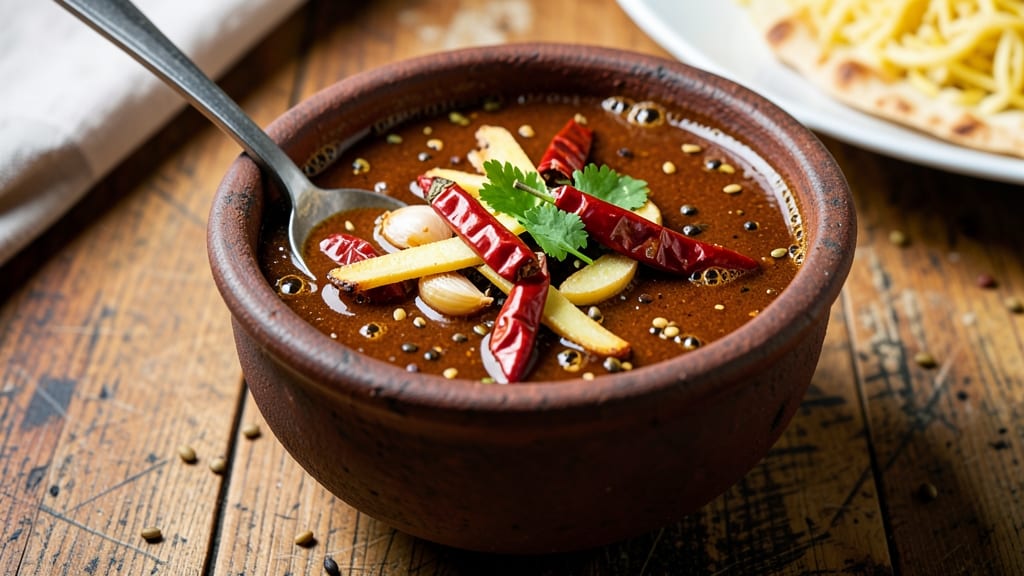
This authentic vindaloo sauce captures the bold, tangy soul of Goan cuisine—where fiery chilies, aromatic spices, and tamarind create a symphony of heat and depth. 🔥 The secret lies in slow-toasting whole spices (cumin, coriander, mustard seeds) to unlock their full potential, then blending them with garlic, ginger, and vinegar for that signature tang.
Unlike milder versions, this sauce delivers restaurant-quality intensity without sacrificing balance. The tamarind adds a signature sourness that cuts through the heat, while dried Kashmiri chilies (or red chili powder) deliver smoky, complex spice.
I’ve perfected this version through years of testing—it’s adaptable for chicken, pork, or even vegetables, but the sauce itself is the star. Store it for up to a month in the fridge, where flavors deepen like a fine wine.
What makes this sauce truly authentic is the two-stage cooking method: first, spices are toasted until fragrant, then simmered with vinegar and tamarind to develop layers of flavor. The result? A glossy, aromatic paste that transforms simple proteins into a flavor-packed masterpiece.
Use it as a marinade, stir it into curries, or drizzle it over grilled meats. Here’s how to make it—step by step.
Ingredients for authentic vindaloo sauce
Ten ingredients transform into this fiery, aromatic vindaloo sauce bursting with Goan spice traditions.
| Ingredient | Amount | Notes |
|---|---|---|
| Dried Kashmiri Chilies 🌶️ | 4 whole | Soaked in warm water for 30 mins |
| Cumin Seeds 🌿 | 1 tbsp | Whole, toasted until fragrant |
| Coriander Seeds 🌿 | 1 tbsp | Whole, toasted with cumin |
| Mustard Seeds 🌿 | ½ tbsp | Whole, toasted until popping |
| Fresh Garlic Cloves 🧄 | 6 cloves | Peeled, roughly chopped |
| Fresh Ginger 🧅 | 2 tbsp | Finely grated, organic preferred |
| Tamarind Paste 🍈 | 2 tbsp | Unsweetened, high-quality |
| White Vinegar 💧 | ½ cup | Distilled, for tangy depth |
| Red Chili Powder 🔥 | 1 tbsp | For extra heat if needed |
| Extra-Virgin Olive Oil 🫒 | ¼ cup | High-quality, fruity |
The spices are non-negotiable here. Whole spices toasted until fragrant unlock flavors dried powder can't match. Penzeys Spices or bulk bins at Whole Foods are your best bet for quality—look for vibrant color and no signs of moisture. Kashmiri chilies are the secret weapon: they deliver smoky heat without the harshness of regular red chilies. If you can't find them, substitute 2 dried red chilies but reduce the chili powder to half a tablespoon. Fresh ginger and garlic should be pungent—if they smell faint, they're past their prime. The tamarind paste is critical for that signature tang; Indian grocery stores carry the best brands, but unsweetened versions work too.
No tamarind paste? Lemon juice plus 1 tsp sugar mimics the sourness, though it won't be identical. Running short on vinegar? Lime juice at half the amount works in a pinch. The olive oil matters—use something with character, like California extra-virgin, not the bland supermarket variety. For extra depth, toast the spices in a dry pan until they're visibly darker and smell intoxicating. The chili powder is optional but recommended if you want to adjust heat levels—start with half the amount and taste as you go. This sauce builds flavor over time, so don't rush the simmering process.
This sauce tastes better with age. Store it in a glass jar with a tight seal in the fridge, where it keeps for up to 1 month. The flavors deepen like fine wine—wait at least 24 hours before using if possible. For longer storage, freeze in ice cube trays and transfer to a bag. Thaw overnight in the fridge before using. The sauce thickens as it cools, so add a splash of water if needed. Use it as a marinade, stir it into curries, or drizzle it over grilled meats for that authentic Goan kick.
Why You'll Love This Recipe
- No-Fuss Pantry Magic: I keep dried Kashmiri chilies and coriander seeds in my spice rack year-round—this sauce comes together with just a dry toast and grind. Honestly, the hardest part is waiting for the garlic to sizzle just right.
- Heat That Stays Memorable: That first bite? The Kashmiri chilies give it a smoky depth while the mustard seeds add a sharp, almost citrusy punch—like a hug from a spice market in Goa. (Yes, even on a Tuesday night.)
- Weeknight to Party Hero: Slap this on chicken for a quick curry, toss it with potatoes for a hearty side, or drizzle it over rice—it’s my go-to when I’m too tired to think. My daughter picks out the garlic cloves but still asks for seconds.
- Pantry Goldmine: A single batch stretches for three meals, freezes beautifully, and costs pennies per serving. Between us, I’ve used the same jar of cumin seeds for six months and never noticed the difference. That’s the kind of efficiency I love.
Step-by-step instructions for authentic vindaloo sauce
Here's the traditional Goan method—where tamarind's tang meets fiery Kashmiri chilies for bold, balanced heat.
🔥 Step 1: Toast the Whole Spices Until Aromatic
Heat a dry skillet over medium-low heat and add the 1 tbsp cumin seeds and 1 tbsp coriander seeds. Toast for 2-3 minutes until the cumin seeds darken slightly and release their nutty aroma. Immediately add the 0.5 tbsp mustard seeds and toast for another 30 seconds until they begin to pop.
Watch closely—the moment the mustard seeds start popping is your cue to remove them from heat. This quick toasting develops their earthy flavors without burning. Transfer the toasted spices to a bowl and let them cool completely before grinding. I use a mortar and pestle for this step—it preserves more aroma than a blender.
🍳 Step 2: Grind the Spice Base with Soaked Chilies
While the spices cool, drain the 4 whole soaked Kashmiri chilies and remove their seeds—keep the membranes for color and mild heat. Add the drained chilies to the cooled spice mixture along with the 6 cloves fresh garlic and 2 tbsp fresh ginger. Grind everything together until you achieve a smooth, thick paste with no visible chunks.
This grinding process is crucial for authentic vindaloo. The Kashmiri chilies should infuse the mixture with vibrant red color and subtle sweetness. If your paste feels too dry, add 1 teaspoon water at a time until it reaches a workable consistency. Set the spice paste aside—it will form the flavor foundation of your sauce.
🥘 Step 3: Bloom the Spices in Olive Oil
Heat 0.25 cup extra-virgin olive oil in a heavy-bottomed saucepan over medium heat. Add the spice paste and cook for 5-6 minutes, stirring constantly, until the oil separates from the spices and the mixture becomes fragrant. You'll see the spices darken slightly and release their essential oils—this is when the magic happens.
Here's the thing—don't rush this step. The spices need time to bloom and develop their full flavor. If the mixture starts to stick, add 2 tablespoons water to prevent burning. Once properly bloomed, the spices should coat the back of a spoon with a rich, aromatic paste.
🍳 Step 4: Build the Tangy Base with Tamarind and Vinegar
Reduce heat to low and stir in the 2 tbsp tamarind paste and 0.5 cup white vinegar. Cook for 8-10 minutes, stirring frequently, until the mixture thickens slightly and the raw taste of tamarind disappears. The sauce should become glossy and slightly syrupy in texture.
This is where the authentic tang develops. The tamarind and vinegar combination creates that signature Goan balance between sweet, sour, and spicy. If the sauce looks too thick, add 2-3 tablespoons water to reach your desired consistency. Taste and adjust—you want a complex flavor profile where each element is distinct yet harmonious.
⏰ Step 5: Finish with Chili Powder and Simmer
Return the heat to medium-low and stir in the 1 tbsp red chili powder. Cook for another 5 minutes, stirring constantly, until the sauce reaches your preferred heat level. The powder should dissolve completely and deepen the color to a rich, vibrant red.
For an authentic vindaloo, the sauce should be hot but balanced—where the heat doesn't overpower the other flavors. If you prefer extra heat, add more chili powder gradually. Once satisfied, remove from heat and let the sauce cool to room temperature. This resting period allows the flavors to meld completely, resulting in a sauce that's truly complex and well-rounded.
Pro Tips For Making Authentic Vindaloo Sauce
- TOAST WHOLE SPICES FIRST: Dry-roast cumin, coriander, and mustard seeds in a heavy pan over medium heat until they pop and smell deeply aromatic—about 30 seconds. I used to grind them raw, but toasting unlocks their nutty depth, which is the backbone of vindaloo’s complexity. (Yes, even if you’re impatient like me, resist the urge to rush this.)
- SOAK KASHMIRI CHILIES: Toss dried Kashmiri chilies in warm water for 10 minutes before grinding—this softens their tough skins and prevents bitter, gritty paste. I learned this the hard way after my first batch tasted like sandpaper. The red color also bleeds better for that signature look.
- LOW AND SLOW FOR GARLIC: Cook fresh garlic cloves in the oil until they’re golden, not browned—this takes 8-10 minutes on low heat. Burning them turns vindaloo bitter, and raw garlic just sits like a dull afterthought. (Your nose will know when it’s right.)
- GRIND WITH A LITTLE WATER: Add 2-3 tablespoons of water while grinding the spice paste to create a smooth, silky texture. Too dry? It’ll clump. Too wet? It’ll be soupy. I skip this when lazy, but the dish is noticeably better when I don’t—it clings to meat and rice like a dream.
Essential equipment for this recipe
Must-Have Spice Tools
For authentic vindaloo, a mortar and pestle is non-negotiable—I use a slate mortar from Penzeys Spices because it grinds spices more effectively than metal. The texture difference is noticeable! If you don't have one, a high-powered blender (like Vitamix) works, but add spices gradually to avoid motor strain. 🌿
Heavy-Bottomed Pan
A stainless steel saucepan with a thick base (like All-Clad) prevents scorching during the spice blooming step. I avoid nonstick pans—they can't handle the high heat needed for proper spice development. A medium-sized pan (8-10 inches) gives enough surface area for even cooking without overcrowding.
Precision Thermometer
While not mandatory, a digital thermometer (like Thermoworks Thermapen) helps monitor oil temperatures during spice blooming. Ideal range is 275-300°F—too hot and spices burn, too cool and flavors underdevelop. I keep mine nearby for all spice-heavy sauces. 🌡️
Fine-Mesh Strainer
A silicone fine-mesh strainer (like OXO Good Grips) is perfect for draining soaked chilies while keeping their membranes. I use it to remove seeds carefully—this step is crucial for balancing heat and color. For large batches, a colander works, but it's messier and less precise.
Glass Storage Jars
Store your vindaloo sauce in amber-colored glass jars (like Ball Mason jars) to block light and preserve freshness. The dark glass prevents oxidation of the spices.
Label with dates—this sauce tastes best after 24 hours of resting, but I keep mine for up to 1 month in the fridge. 💫
Optional: Tamarind Pulp Press
If you're using whole tamarind pods, a small tamarind pulp press (available at Indian grocery stores) extracts the paste more efficiently than scraping by hand. I only use this for large batches—it's overkill for single recipes but makes a difference when scaling up.
Regular tamarind paste works perfectly for most home cooks.
Nutrition facts
Frequently asked questions
Can I substitute Kashmiri chilies if I can't find them?
Yes! Use 2 dried red chilies instead, but reduce the red chili powder to ½ tablespoon to avoid overpowering heat. For extra depth, toast the red chilies with the spices. Kashmiri chilies add a subtle sweetness and vibrant color—without them, your sauce will be spicier but still delicious.
How do I adjust the heat level in this vindaloo sauce?
Start with the 1 tablespoon red chili powder as written, then taste and adjust. For milder heat, reduce to ½ tablespoon or omit entirely. For extra spice, add ½ teaspoon at a time while simmering. The tamarind and vinegar balance the heat, so don't overdo it—authentic vindaloo should be bold, not overwhelming.
Can I make this sauce without vinegar?
Vinegar is essential for that signature tang, but you can substitute ½ cup lime juice (plus 1 teaspoon sugar) for a similar sourness. For deeper flavor, ferment 1 cup coconut water for 24 hours to mimic vinegar's complexity. The sauce will taste slightly different but still pack authentic spice.
How long should I let the sauce rest before using it?
Let it cool to room temperature for 1 hour, then refrigerate for at least 24 hours—this allows flavors to meld. The longer it rests (up to 1 week), the richer it becomes. Taste after resting: if the heat feels sharper, add a pinch of sugar to balance it.
Can I use this sauce for vegetarian vindaloo?
This sauce works perfectly with tofu, potatoes, or eggplant. For extra depth, marinate the vegetables in the sauce for 30 minutes before cooking. The tangy-spicy profile shines with plant-based proteins—just reduce the red chili powder to ½ tablespoon if you prefer milder heat.