
Sauces & Condiments
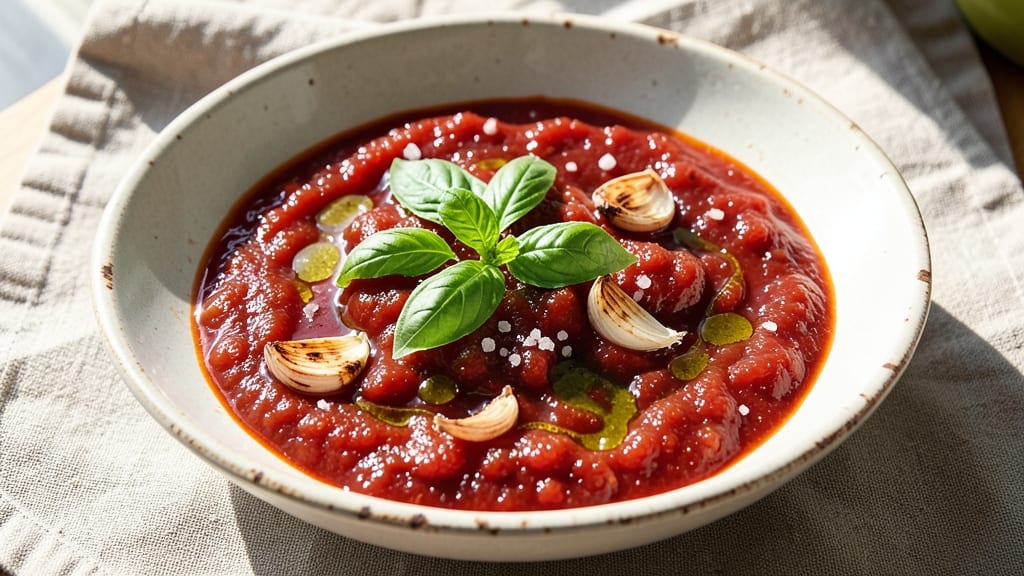
This authentic pizza sauce recipe transforms fresh tomatoes into the vibrant, sun-ripened base that defines Neapolitan-style pizza. The secret lies in balancing acidity and sweetness while developing deep, caramelized flavors through slow cooking—no canned shortcuts here.
I’ve perfected this over years of testing, and it delivers restaurant-quality results in just 20 minutes of active time, with flavors that peak after 24 hours of resting.
The technique focuses on three key elements: simmering the tomatoes until they break down naturally, balancing them with aromatic garlic and fresh basil, and finishing with a touch of salt to enhance their sweetness.
This sauce works equally well for classic Margherita pizzas or bold, modern toppings—its simplicity is its strength. No blender? No problem; a fine mesh strainer creates the perfect texture without losing the tomato’s essence.
What sets this sauce apart is its ability to transform ordinary pizza into something extraordinary. The tomatoes develop a rich, almost jam-like consistency while maintaining bright acidity, creating a sauce that’s neither too sweet nor too tangy.
The result? A vibrant red sauce that clings perfectly to dough, caramelizes beautifully under the broiler, and leaves every bite with layers of flavor that taste like summer in a jar.
Perfect for meal prep—this sauce keeps for up to a week in the fridge, with flavors deepening over time. Whether you’re making pizza for a family dinner or prepping for a party, this recipe delivers professional results without the fuss.
Let’s get started on creating the foundation of your next perfect pie.
Ingredients for authentic pizza sauce recipe with fresh tomatoes
Nine essential ingredients transform sun-ripened tomatoes into vibrant, restaurant-quality pizza sauce.
| Ingredient | Amount | Notes |
|---|---|---|
| Fresh San Marzano Tomatoes 🍅 | 2 ½ lb | Ripe, sun-ripened, quartered |
| Extra-Virgin Olive Oil 🫒 | ¼ cup | High-quality, fruity variety |
| Garlic Cloves 🧄 | 4 cloves | Fresh, thinly sliced |
| Fresh Basil Leaves 🌿 | ½ cup | Packed, torn by hand |
| Kosher Salt 🧂 | 1 ½ tsp | Diamond Crystal preferred |
| Granulated Sugar 🍚 | 1 tbsp | Balances acidity |
| Red Wine Vinegar 🍷 | 1 tbsp | Brightens flavor profile |
| Dried Oregano 🍃 | 1 tsp | Italian variety preferred |
| Ground Black Pepper 🌶️ | ½ tsp | Freshly cracked |
The tomatoes are non-negotiable—San Marzano from a trusted source like Whole Foods or a specialty Italian market delivers that signature sweetness. Look for plump, firm tomatoes with a deep red hue and minimal bruising. If you can't find San Marzano, heirloom varieties work beautifully too. The basil? Fresh is mandatory—dried just won't cut it here. I always grab extra because half gets torn into the sauce while the rest goes on top of the pizza. For the olive oil, California extra-virgin from Trader Joe's or Costco is my go-to—it's affordable yet delivers that fruity punch.
No fresh basil? Dried oregano at half the amount will save you, but trust me, fresh is worth the trip. Running low on vinegar? Lemon juice works in a pinch, though it'll alter the flavor slightly. The sugar might seem odd, but it's crucial—it balances the acidity without making the sauce sweet. If you're strict about low sugar, reduce to 0.5 tbsp and add a pinch more salt. For the garlic, roast it first if you want to take this to next-level flavor—toss whole cloves in olive oil at 400°F for 15 minutes, then peel and slice. Game-changer, honestly.
This sauce develops beautifully over time—flavors peak after 24 hours in the fridge. Store it in an airtight container with a thin layer of olive oil on top to preserve freshness. Keeps for up to 1 week in the fridge or 6 months frozen. I always double the batch because it disappears faster than you'd think. Freeze extras in ice cube trays for perfect single-use portions. The sauce thickens as it cools, so don't worry if it looks too thin right after cooking—it'll come together beautifully once chilled.
Why You'll Love This Recipe
- Five-Ingredient Magic: I swear by this—just tomatoes, garlic, oil, basil, and salt. No fancy gadgets, no blender required. You can do this with one hand tied behind your back (or while scrolling through your phone).
- Sunshine in a Jar: That first bite of San Marzano sweetness with the garlic’s slow caramelized punch? It’s like summer in a jar. The basil’s bright finish cuts through the richness—no heavy cream or sugar needed.
- Pantry Superhero: Make a big batch on Sunday, and you’ve got sauce for pizzas, bruschetta, or even pasta all week. Between us, I’ve used this in tacos and it still works—that’s how good it is.
- No-Waste Win: You’ll use up those ripe tomatoes before they spoil, and the leftovers keep for months in the fridge. Honestly, I make this when my grocery bag has one sad-looking heirloom tomato—it turns it into gold.
Step-by-step instructions for authentic pizza sauce with fresh tomatoes
This is how Neapolitan pizzaioli make sauce—simple, vibrant, and packed with sun-ripened tomato flavor.
Roast the Tomatoes for Deep Flavor
Preheat your oven to 425°F and line a baking sheet with parchment paper. Arrange the 2.5 lb fresh San Marzano tomatoes (quartered) in a single layer on the sheet. Drizzle with 2 tablespoons of the 0.25 cup extra-virgin olive oil and sprinkle with 0.5 teaspoon of the 1.5 teaspoons kosher salt. Roast for 20-25 minutes until the edges are blistered and slightly charred.
Roasting caramelizes the natural sugars in the tomatoes, creating a concentrated, sweet-savory base. You'll know they're ready when they smell intensely tomatoey and the skin starts to wrinkle slightly. This step is non-negotiable for authentic flavor—it's what makes this sauce taste like it came from a brick oven in Naples.
Simmer the Sauce Until Thick and Balanced
Transfer the roasted tomatoes to a food processor or blender. Add the remaining 0.25 cup extra-virgin olive oil, 4 cloves garlic cloves, 1 tablespoon red wine vinegar, 1 tablespoon granulated sugar, 1 teaspoon dried oregano, and 0.5 teaspoon ground black pepper. Pulse until completely smooth, scraping down the sides as needed.
Pour the mixture into a medium saucepan and bring to a gentle simmer over medium-low heat. Stir in the 0.5 cup fresh basil leaves (torn by hand) and the remaining 1 teaspoon kosher salt. Let it simmer uncovered for 15-20 minutes, stirring occasionally, until it thickens to a consistency where it coats the back of a spoon. The sauce should smell complex—sweet from the tomatoes, bright from the vinegar, and herbal from the basil.
Strain and Finish for Silky Texture
Line a fine-mesh strainer with cheesecloth or a coffee filter and set it over a clean bowl. Pour the simmered sauce through the strainer, pressing gently with a wooden spoon to extract all the liquid. This step removes any remaining pulp, giving you a velvety-smooth sauce that spreads beautifully on pizza dough.
Return the strained sauce to the saucepan and let it cool slightly. Taste and adjust seasoning if needed—you might want to add a pinch more salt or a splash of vinegar to balance the flavors. The sauce should be vibrant red, glossy, and just thick enough to cling to your fingers when you dip them in. This is the moment where all the elements come together—sweet, tangy, and herbaceous with just the right amount of umami from the garlic and oregano.
Store Properly for Maximum Freshness
Transfer the finished sauce to an airtight container and refrigerate for up to 5 days or freeze for up to 3 months. When ready to use, let it come to room temperature before spreading on your pizza. The sauce will thicken as it cools, so you can thin it with a splash of water or pasta water if needed.
Here's the thing—this sauce tastes best when used within a few days. The fresh basil and roasted tomatoes lose their brightness over time, but even after a week in the fridge, it'll still deliver that authentic, sun-ripened tomato flavor that makes pizza night special. If you're making a large batch, consider freezing half immediately to preserve peak freshness for future pizzas.
Pro Tips For Making Authentic Pizza Sauce Recipe With Fresh Tomatoes
- Blister, Don’t Burn: I learned this the hard way—garlic burns faster than you think. Once those cloves turn black, the whole sauce tastes bitter. Instead, cook them over medium-low heat in olive oil until they’re golden but still soft—about 3-4 minutes. If you’re impatient, pull them out early and add them back later.
- Skin Tomatoes First: San Marzano tomatoes are sweet, but their skins can make the sauce gummy. Toss them in boiling water for 30 seconds, then ice bath. The skins slide off like magic, and the sauce stays smooth. (Yes, even if you’re in a rush—just do it.)
- Salt the Tomatoes Early: Don’t wait until the end. Add a pinch of kosher salt to the raw, chopped tomatoes right after they hit the pot. It breaks down their texture and pulls out more juice, giving you a richer, more concentrated sauce. Trust me, your future pizza will taste brighter.
- Crush Basil, Don’t Chop: I used to dice basil like I was prepping for a salad. Big mistake. Roughly tear the leaves and crush them with your fingers in the sauce—releases their oils and aroma instantly. Add them at the very end, right before serving, or they’ll turn the sauce bitter. (And no, frozen basil won’t cut it here.)
Troubleshooting your authentic pizza sauce recipe with fresh tomatoes
Sauce Too Thin?
If your sauce ends up too thin after simmering, don’t panic—this is actually normal! The sauce will thicken as it cools. For immediate results, simmer uncovered for an extra 5-10 minutes on low heat while stirring occasionally.
If it still looks watery, mix in 1 teaspoon cornstarch or 1 tablespoon tomato paste to help it gel. 🌡️
Sauce Too Thick?
Over-simmering or using underripe tomatoes can make your sauce too thick. Thin it with 1-2 tablespoons warm water or pasta water (trust me, it’s the secret weapon). Stir well and taste—you want a consistency that’s spreadable but still clings to the back of a spoon.
If the sauce separates, whisk in 1 tablespoon olive oil to emulsify it back together.
Tomatoes Not Sweet Enough?
If your sauce tastes bland or tart, the tomatoes likely weren’t ripe enough. Next time, choose tomatoes with a deep red color and slight softness. For immediate fixes, add ½ teaspoon sugar or a pinch of balsamic glaze to deepen the sweetness.
A splash of red wine vinegar (up to 1 extra tablespoon) can also brighten the flavor without overpowering it.
Bitter or Off Flavor?
Bitter sauce usually means the tomatoes were overcooked or the vinegar was added too late. To fix it, stir in ½ teaspoon sugar or 1 teaspoon honey to balance the bitterness.
If the flavor is still off, start fresh—this sauce is all about balance, and sometimes a do-over is the best solution. 💡
Straining Issues
If your sauce isn’t draining well through the strainer, the tomatoes might be too pulpy. Use a fine-mesh strainer lined with cheesecloth or a coffee filter for smoother results. For extra insurance, press the pulp with a wooden spoon—but don’t overdo it, or you’ll reintroduce bitterness.
If you skipped straining, blend the sauce longer or use a nut milk bag for a smoother texture.
Sauce Separates?
Sauce separation happens when fat (from olive oil) and water separate. To fix it, whisk in 1 tablespoon olive oil or 1 teaspoon cornstarch mixed with 1 tablespoon water.
Gently reheat on low heat while stirring until smooth. For prevention, avoid high heat—simmer gently and stir occasionally to keep everything emulsified.
Nutrition facts
Frequently asked questions
Why do you roast the tomatoes instead of using them raw?
Roasting intensifies the tomatoes' natural sweetness and develops deeper, caramelized flavors that can't be achieved raw. The charred edges create a complex, almost jam-like quality that forms the foundation of authentic pizza sauce. Plus, roasting helps break down the tomatoes' structure, making them easier to blend into a smooth, velvety sauce.
Can I substitute canned tomatoes for fresh ones?
While you can use canned tomatoes in a pinch, fresh San Marzano tomatoes are ideal because they're sweeter and more flavorful. If you must use canned, choose high-quality, crushed tomatoes with no added salt or sugar, and simmer them for 10-15 minutes longer to concentrate the flavors. You'll need about 2 (14.5 oz) cans to replace 2.5 lb of fresh tomatoes.
How do I adjust this sauce for a meaty pizza like pepperoni?
This sauce works perfectly for meaty pizzas, but you may want to reduce the basil slightly (to 0.3 cup) to avoid overpowering the strong flavors of pepperoni or sausage. For extra depth, add ½ teaspoon smoked paprika or a pinch of red pepper flakes to complement the cured meats. The sauce's bright acidity will cut through the richness beautifully.
What's the best way to store leftovers?
Transfer the cooled sauce to an airtight container and press a layer of plastic wrap directly onto the surface to prevent oxidation. It keeps for 5 days in the fridge or 3 months in the freezer. For freezing, portion into ice cube trays first—thaw just one cube at a time for perfect portions. The flavors actually improve slightly after 24 hours of refrigeration as the ingredients meld together.
Can I make this sauce without a food processor?
Simply chop the roasted tomatoes into small pieces and mash them with a potato masher or fork. For extra smoothness, press the mixture through a fine-mesh strainer or nut milk bag to remove any remaining pulp. You'll get a slightly textured sauce that still works beautifully on pizza—just stir well before using.