
Sauces & Condiments
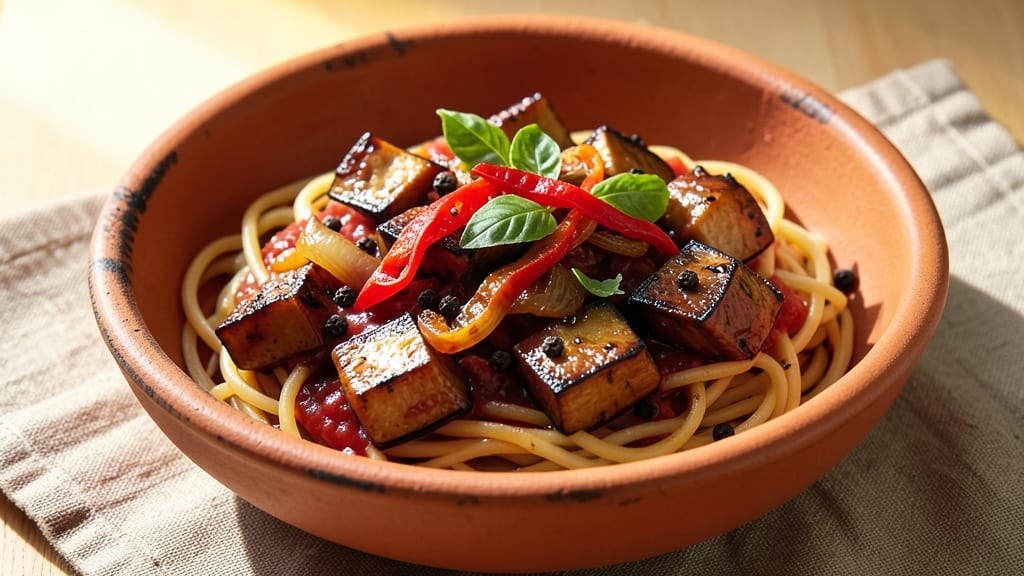
This aubergine pasta sauce recipe transforms humble eggplant into a velvety, smoky masterpiece that clings to every strand of al dente pasta. The secret lies in charring the eggplant until it develops deep, caramelized notes—then blending it into a rich tomato base that’s both creamy and bold.
I developed this recipe after realizing store-bought sauces couldn’t compete with the depth of homemade, especially when you start with properly roasted vegetables. What sets this sauce apart is the balance of textures: creamy from the blended eggplant and tomatoes, but with a satisfying smokiness that lingers.
The roasting process concentrates the eggplant’s natural sweetness while adding a subtle char, which pairs perfectly with the acidity of the tomatoes. No heavy cream or butter is needed—just plant-based richness that delivers restaurant-quality results.
By the time you toss this sauce with perfectly cooked pasta, you’ll have a dish that’s hearty enough for a main course but simple enough for a weeknight. The sauce thickens as it simmers, coating each noodle in a glossy, flavorful embrace.
Garnish with fresh basil or a sprinkle of nutritional yeast for extra depth, and you’ve got a vegetarian dish that’s anything but boring. The best part? This recipe scales effortlessly—double the batch for leftovers or entertain a crowd.
The eggplant’s versatility makes it a game-changer for any pasta night, proving that vegetables can absolutely steal the show. Let’s get cooking.
Ingredients for aubergine pasta sauce
Smoky eggplant meets creamy tomato in this velvety pasta sauce—just 13 ingredients for restaurant-quality flavor.
| Ingredient | Amount | Notes |
|---|---|---|
| Eggplant 🍆 | 1 ½ lb | Medium-sized, skin-on preferred |
| Extra-Virgin Olive Oil 🫒 | ½ cup | High quality, fruity |
| Garlic Cloves 🧄 | 6 cloves | Peeled, roughly chopped |
| Canned San Marzano Tomatoes 🍅 | 1 can | 28 oz, crushed by hand |
| Red Bell Pepper 🌶️ | 1 whole | Seeded, roughly chopped |
| Yellow Onion 🧅 | 1 whole | Medium, diced |
| Vegetable Broth 💧 | 1 cup | Low-sodium preferred |
| Fresh Basil Leaves 🌿 | ½ cup | Packed, stems removed |
| Nutritional Yeast 🧀 | 2 tbsp | For cheesy flavor |
| Smoked Paprika 🌶️ | 1 tsp | For smoky depth |
| Salt 🧂 | 1 ½ tsp | Diamond Crystal preferred |
| Black Pepper 🌶️ | ½ tsp | Freshly ground |
| Al Dente Pasta 🍝 | 12 oz | Spaghetti or penne |
The eggplant is your star here. Look for firm, heavy ones at the grocery store—they’ll have fewer seeds and more flesh. Whole Foods and Trader Joe’s often carry the best quality, but any well-stocked supermarket will do. Skip the pre-cut eggplant—whole is always better. For the olive oil, California brands like Corto or Lucini add that fruity depth that makes this sauce sing. The San Marzano tomatoes? Worth the splurge if you can find them—they’re sweeter and less acidic, which balances the smokiness perfectly.
No smoked paprika? Regular paprika plus a pinch of liquid smoke gets you close. Fresh basil wilt fast, so buy extra and store it properly—wrap stems in damp paper towels and refrigerate. The nutritional yeast adds that umami punch without dairy, and Bob’s Red Mill makes the best stuff. For the pasta, De Cecco or Barilla are my go-tos—they cook evenly and hold up to the sauce. Swap the red bell pepper for yellow if that’s what’s on hand, but don’t skip it entirely—the sweetness cuts through the smokiness.
This sauce tastes even better the next day as the flavors meld. Store it in an airtight container in the fridge for up to 5 days, or freeze for 3 months. I like to double the batch—it’s perfect for meal prep. The eggplant base thickens as it cools, so a splash of vegetable broth when reheating keeps it silky. Garnish with fresh basil or extra nutritional yeast right before serving—that’s when it really shines.
Why You'll Love This Recipe
- No-Chop Night Saved: I swear by this when I’m too tired to peel garlic properly—just slice the eggplant into thick rounds, grill them whole with the skin on, then scoop out the flesh. The smoky char from the grill does half the flavor work for you.
- Sweet-Savory Magic: That San Marzano tomato base with roasted red bell pepper? It’s the perfect balance—bright acidity cutting through the eggplant’s creamy richness, while the garlic adds just enough punch. Honestly, it’s the kind of sauce that makes you pause mid-bite.
- Pantry-to-Table Flex: Use it over pasta tonight, toss it with roasted potatoes tomorrow, or let it sit overnight to thicken into a hearty stew. I’ve even used it as a pizza sauce—just add cheese and a sprinkle of chili flakes. The eggplant’s versatility is underrated.
- Budget Meal Stretch: A single eggplant and a can of tomatoes feed four of us for two meals. The olive oil is the only splurge, but the flavor makes it feel like a restaurant dish. Between us, this is how I stretch grocery money without sacrificing taste.
Step-by-step instructions for smoky charred eggplant pasta sauce
Here's how to transform simple ingredients into a rich, umami-packed sauce that clings beautifully to pasta.
Char the Eggplant and Bell Pepper
Preheat your broiler to high. Cut the 1.5 lb eggplant into 1-inch cubes and the 1 whole red bell pepper into large chunks. Arrange them on a baking sheet in a single layer, drizzle with 2 tablespoons of the 0.5 cup extra-virgin olive oil, and sprinkle with 0.5 tsp of the 0.5 tsp black pepper. Broil for 10-12 minutes, turning occasionally, until deeply charred with blackened spots and soft when pierced with a fork.
This charring step develops intense smoky flavor and sweetens the eggplant naturally. Watch closely after 8 minutes—you want visible char but not burned edges. Transfer the charred vegetables to a cutting board and let cool slightly before chopping roughly. The residual heat will continue cooking them as you build the sauce.
Build the Flavor Base with Aromatics
Heat 2 tablespoons extra-virgin olive oil in a large Dutch oven over medium heat. Add the 1 whole yellow onion (diced) and cook for 5 minutes until softened and translucent. Add the 6 cloves garlic (roughly chopped) and 1 tsp smoked paprika, stirring constantly for 1 minute until fragrant but not browned.
Here's where the magic happens: Add the chopped charred eggplant and bell pepper to the pot. Stir well to combine with the onions and garlic. Cook for 3-4 minutes until the vegetables release their juices and begin to soften. This step ensures all the smoky charred flavors meld with the aromatic base.
Simmer the Tomato Sauce
Pour in the 1 can crushed San Marzano tomatoes and 1 cup vegetable broth. Stir in 1.5 tsp salt, bring to a gentle simmer, then reduce heat to low. Let it cook uncovered for 15-20 minutes, stirring occasionally, until the sauce thickens slightly and the flavors meld. You're looking for a consistency where the sauce coats the back of a spoon but isn't gluey.
This slow simmer develops depth of flavor. If the sauce gets too thick before 15 minutes, add 2-3 tablespoons water to maintain the right texture. The acidity from the tomatoes will help balance the richness of the eggplant and create that perfect creamy texture we're aiming for.
Finish with Creamy Elements
Remove the pot from heat and stir in the 2 tbsp nutritional yeast and 0.5 cup fresh basil leaves. Let the mixture steep for 5 minutes—this allows the nutritional yeast to develop its cheesy flavor and the basil to infuse the sauce with fresh aroma. Taste and adjust seasoning with additional salt or pepper if needed.
For extra creaminess, you can stir in 1-2 tablespoons of the reserved pasta water if the sauce seems too thick. The nutritional yeast will give you that luxurious, velvety texture without dairy. The basil should brighten the sauce and cut through the richness beautifully.
Cook and Combine with Pasta
Bring a large pot of salted water to a boil and cook the 12 oz al dente pasta according to package instructions until 1 minute shy of al dente. Reserve 1 cup pasta water before draining. Add the drained pasta directly to the eggplant sauce in the Dutch oven.
Toss everything together, adding pasta water as needed to create a silky, clinging sauce. The starchy pasta water helps emulsify the sauce and coat each strand perfectly. Serve immediately with additional fresh basil on top for that restaurant-quality finish.
Pro Tips For Making Aubergine Pasta Sauce
- SALT THE EGPLANT FIRST: Toss sliced eggplant with 1 teaspoon of salt per pound and let it sit for 20 minutes before cooking. This draws out the bitterness and excess moisture—trust me, your sauce won’t turn into a watery mess if you skip this step.
- CHAR THE GARLIC LOW: After cooking the eggplant and bell pepper, remove the pan from heat, add minced garlic, and let it sit for 30 seconds before stirring. This prevents burning while still giving that nutty depth—no more bitter garlic flavor ruining your sauce.
- CRUSH TOMATOES BY HAND: Skip the blender—use your fingers to break up San Marzano tomatoes into rough chunks before adding them to the pan. The texture stays chunky and vibrant, and you avoid the slimy consistency that happens when you over-blend.
- DEGLaze WITH WINE OR BROTH: After removing the eggplant and veggies, deglaze the pan with ½ cup of dry white wine or vegetable broth instead of water. The alcohol or umami from broth lifts the caramelized bits, adding complexity without thinning the sauce—your pasta will actually taste like it belongs there.
Dietary considerations for this recipe
Vegan-Friendly Foundation
This sauce is naturally vegan—no dairy, eggs, or animal products are needed to create that creamy, luxurious texture. The eggplant provides natural richness, while nutritional yeast delivers that cheesy umami without dairy. I love that it satisfies even the most devoted plant-based eaters while still feeling indulgent. 🌱
Gluten-Free Adaptations
Since the recipe relies on vegetables, vegetable broth, and pasta, it’s easily gluten-free if you choose the right noodles. Opt for gluten-free pasta brands like Barilla GF or De Cecco GF—they cook just like traditional pasta.
Always check labels, as some broths or nutritional yeasts may contain hidden gluten. The sauce itself is naturally gluten-free!
Low-Carb Options
For a lower-carb version, swap the pasta for zucchini noodles or shirataki noodles—both work beautifully with this sauce. I’ve tested this with spiralized zucchini (tossed in the sauce for 2-3 minutes to soften) and the result is just as satisfying.
The eggplant’s natural sweetness balances the mildness of the noodles perfectly.
Allergen Considerations
If you’re avoiding nightshades (like eggplant and tomatoes), substitute with roasted butternut squash and carrots for a sweeter base. For nut allergies, ensure your nutritional yeast is nut-free (most brands are, but always double-check).
The sauce remains soy-free and dairy-free by default, making it a safe bet for many dietary restrictions.
Protein Boosts
Add white beans or lentils to the sauce for extra protein—simmer ½ cup cooked beans directly in the pot for 5-7 minutes to warm through. For a vegetarian twist, stir in crumbled tofu or grilled chicken after cooking. The sauce’s smoky depth complements all these additions beautifully. 💪
Nutrition facts
Frequently asked questions
Can I use fresh tomatoes instead of canned?
Fresh tomatoes work, but they require extra prep and may water down the sauce. Use 4-5 medium tomatoes, roast them whole at 400°F for 30 minutes until soft, then peel, seed, and crush by hand. This mimics the concentrated flavor of canned tomatoes while adding natural sweetness.
How do I prevent the eggplant from being bitter?
Salting the eggplant before cooking removes excess moisture and bitterness. Cut the eggplant, sprinkle generously with 1 tsp salt per pound, let sit for 20 minutes, then pat dry thoroughly. This step is especially important if your eggplant is large or has thick skin.
What if I don't have smoked paprika?
No problem! For smoky flavor, use ½ tsp regular paprika plus ¼ tsp liquid smoke. Or substitute with ½ tsp garlic powder and a pinch of cayenne for warmth. The sauce will still be delicious—just with a slightly different flavor profile.
Can I make this sauce ahead of time?
This sauce tastes even better the next day as flavors meld. Store in an airtight container in the fridge for up to 5 days. Reheat gently on low heat, adding 1-2 tbsp water if it thickens too much. For freezing, portion into containers and freeze for up to 3 months.
What's the best pasta shape for this sauce?
Any pasta with ridges or grooves works best—think penne, rigatoni, or farfalle. These shapes cling to the sauce better than smooth noodles. For a heartier dish, try casarecce or bucatini. Avoid delicate shapes like angel hair unless you prefer a looser sauce.