
Sauces & Condiments
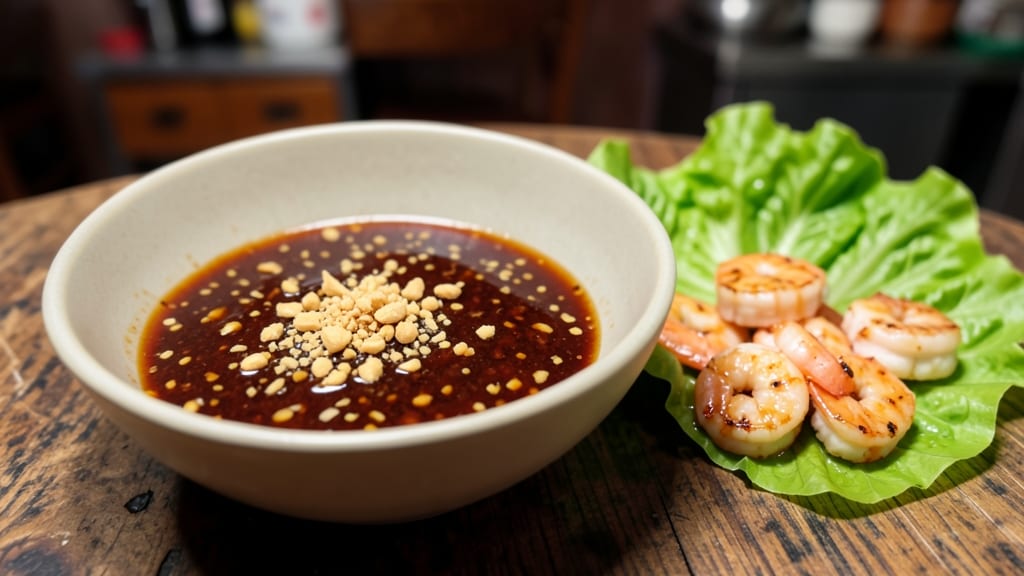
This Asian lettuce wrap dipping sauce transforms simple ingredients into a bold, tangy-sweet-spicy fusion that elevates every bite. The secret lies in balancing tamarind’s deep tang with chili heat and sesame crunch—creating a sauce that’s addictive on the first try.
What sets this apart is the 30-minute prep time, perfect for batch-making ahead of your favorite Asian-inspired dishes.
The magic happens when tamarind paste and fish sauce marry with garlic, ginger, and a touch of honey, creating a complex flavor profile that’s both familiar and exciting. Unlike store-bought versions, this recipe delivers restaurant-quality depth with just 8 simple ingredients.
The sauce thickens slightly when chilled, making it ideal for dipping, drizzling, or even as a marinade.
By the time you’re done, you’ll have a versatile sauce that works with shrimp, chicken, tofu, or fresh veggies in lettuce wraps. The tamarind adds a unique tang, while the chili and sesame oil bring heat and texture.
It keeps for up to 1 week in the fridge, so you can make a big batch and enjoy it all week.
For extra crunch, stir in crushed peanuts or toasted sesame seeds before serving. This isn’t just a dipping sauce—it’s a flavor booster that turns ordinary meals into something extraordinary. Let’s make it!
Ingredients for asian lettuce wrap dipping sauce
Eight ingredients blend into a restaurant-worthy sauce that's bold, tangy, and addictive.
| Ingredient | Amount | Notes |
|---|---|---|
| Tamarind Paste 🍯 | ½ cup | Unrefined for authentic tang |
| Red Curry Paste 🌶️ | 2 tbsp | Maesri brand preferred |
| Fish Sauce 🍶 | 2 tbsp | Red Boat brand recommended |
| Honey 🍯 | 2 tbsp | Wildflower preferred |
| Sesame Oil 🫒 | 1 tbsp | Toasted for nutty aroma |
| Garlic Cloves 🧄 | 3 cloves | Minced for aromatic base |
| Fresh Ginger 🌿 | 1 tbsp | Finely grated, peeled |
| Lime Juice 🍋 | 2 tbsp | Freshly squeezed |
| Water 💧 | ¼ cup | For thinning consistency |
| Crushed Peanuts 🥜 | ¼ cup | Toasted for extra crunch |
Tamarind paste is the flavor anchor—look for unrefined blocks at Asian markets or the paste in tubes at Trader Joe's. The Red Boat fish sauce adds umami depth, while Maesri curry paste brings the heat. Fresh ginger and garlic should smell vibrant; if they don’t, toast them lightly in a dry pan first. For honey, wildflower or clover varieties work best—they balance the tang without overpowering. Sesame oil is non-negotiable; the toasted variety adds nutty complexity that regular oil misses. Grab a small bottle of Kadoya toasted sesame oil if you're serious about flavor.
No tamarind paste? Substitute lime juice plus 1 tsp maple syrup—it won’t be identical, but it’ll work in a pinch. Short on fish sauce? Soy sauce at half the amount gives a similar salty punch, though it’ll lack the umami depth. The crushed peanuts can be swapped for toasted sesame seeds if you prefer a finer crunch. For extra heat, add a pinch of red pepper flakes or a dash of Sriracha. The water is just for thinning—adjust to your preferred consistency. If the sauce is too thick, add more water; too thin? Simmer for 2-3 minutes to reduce.
This sauce thickens beautifully when chilled, so make it a day ahead if you can. Store in an airtight jar in the fridge for up to 1 week, though it’ll likely disappear faster. For extra crunch, toast the peanuts in a dry pan until golden before adding. The sauce works as a marinade, glaze, or dipping sauce—double the batch if you’re making lettuce wraps for a crowd. Freezes well for up to 3 months if you want to prep ahead for holiday gatherings.
Why You'll Love This Recipe
- Five-Ingredient Magic: This sauce comes together with just a quick simmer—no chopping, no fuss. Honestly, I’ve made it while microwaving leftovers in the same kitchen. The tamarind paste and honey do all the heavy lifting while I stir for two minutes.
- Umami Bomb: That first tangy hit of fish sauce and red curry paste? It’s like a flavor explosion in your mouth. The sesame oil ties it all together with this nutty, toasty finish that makes every bite feel special—even with store-bought lettuce cups.
- Party or Pantry: I keep this in the fridge for lazy weeknights, but it’s also my go-to for game day or when friends drop by. Slather it on shrimp, drizzle it over rice paper, or even toss it with cold noodles. It’s the kind of sauce that makes you say, “Wait, you have more?”
- Budget-Friendly Staple: A small jar of tamarind paste and a tube of red curry go a long way—this recipe costs me pennies per serving. And the leftovers? They last for weeks, so I’m never scrambling for a last-minute dipping sauce again. (Yes, even on a Tuesday night.)
Step-by-step instructions for tangy tamarind dipping sauce
This vibrant sauce balances sweet, sour, and umami—perfect for wrapping dips or marinades.
Whisk Wet Ingredients for Smooth Base
In a medium bowl, combine the 0.5 cup tamarind paste with the 2 tablespoons red curry paste and 2 tablespoons fish sauce. Use a whisk to break up any lumps in the tamarind paste, ensuring a completely smooth texture. The tamarind should dissolve fully—this is your flavor foundation, so take your time here.
Next, stir in the 2 tablespoons honey and 1 tablespoon toasted sesame oil. The honey will help balance the tamarind's acidity while the sesame oil adds depth. If you notice the mixture thickening too much, add 1-2 teaspoons of the 0.25 cup water gradually until it reaches a pourable consistency but still coats the back of a spoon.
Infuse Aromatics and Brighten with Citrus
Add the 3 minced garlic cloves and 1 tablespoon finely grated fresh ginger to the bowl. Let these sit for 5 minutes—their oils will infuse into the mixture, creating complex layers of flavor. After the infusion period, give everything another quick whisk to distribute the aromatics evenly.
Now squeeze in the 2 tablespoons freshly squeezed lime juice. This is where the sauce comes alive—you'll see it brighten in color and become more vibrant. Taste at this stage: it should be tangy with a hint of heat from the curry paste. If it needs more acidity, add a splash more lime juice; if it's too sharp, balance with a touch more honey.
Adjust Consistency and Finish with Peanuts
Check the sauce's thickness—it should be like a thin syrup, coating a spoon but not dripping. If it's too thick, whisk in more of the 0.25 cup water, 1 tablespoon at a time, until it reaches your desired consistency. For lettuce wraps, aim for a sauce that clings but doesn't overwhelm the delicate greens.
Finally, fold in the 0.25 cup toasted crushed peanuts. These add texture and a satisfying crunch that contrasts beautifully with the sauce's smoothness. Let the mixture sit for 10 minutes before serving—this allows all the flavors to meld together perfectly. The peanuts should be evenly distributed throughout.
Chill and Serve for Optimal Flavor
Transfer the sauce to a clean jar or airtight container and refrigerate for at least 30 minutes before using. Chilling enhances the flavors and allows the tamarind's tang to develop fully. When ready to serve, give it one final stir to redistribute the peanuts.
This sauce works beautifully with fresh lettuce wraps, grilled meats, or as a marinade for tofu and shrimp. For extra authenticity, serve it slightly chilled—it maintains its vibrant color and complex flavor profile this way. The balance of sweet, sour, and umami makes it irresistibly versatile for any Asian-inspired dish.
Pro Tips For Making Asian Lettuce Wrap Dipping Sauce
- Dilute the tamarind first: I learned this the hard way—dumping tamarind paste straight into a hot pan makes it clump like glue. Instead, mix it with 2 tablespoons of warm water first, stir until smooth, then add to your sauce. This keeps the texture silky and prevents weird graininess.
- Balance heat with honey last: Add the red curry paste and fish sauce first, then let them bloom for 30 seconds before introducing honey. The honey cools the spice gradually—if you add it too early, you’ll end up with a sweet, flat sauce instead of that perfect tangy-spicy kick.
- Skip the cheap fish sauce: This isn’t the prettiest method, but it’s the tastiest: use a good-quality fish sauce (like Red Boat or Three Crabs). The umami depth makes all the difference—cheap versions add a metallic aftertaste that ruins the balance, no matter how much you adjust the rest.
- Simmer, don’t boil: Keep the sauce at a gentle simmer (tiny bubbles, occasional swirls) for 2-3 minutes after everything’s combined. Boiling burns the sesame oil and makes the tamarind taste bitter—low and slow lets the flavors meld without turning the sauce into a science experiment gone wrong.
Essential equipment for perfect results
Small Batch Essentials
For this sauce, you’ll only need a medium mixing bowl and a whisk—no fancy equipment required. I use a stainless steel bowl (like the OXO Good Grips line) because it won’t absorb flavors or react with acidic ingredients like tamarind or lime.
A small measuring cup (like the Pyrex 1-cup version) helps with precise liquid additions, especially when adjusting consistency with water.
Tamarind Paste Tools
Tamarind paste can be stubborn, so grab a small offset spatula (I love the Mercer Culinary) to scrape every last bit from the container. If you’re using blocks of tamarind, a microplane or fine grater works best to break it down into a smooth paste.
For convenience, Trader Joe’s tamarind paste comes in a tube with a squeeze top—perfect for easy dispensing.
Ginger and Garlic Prep
A microplane is my go-to for grating fresh ginger—it’s faster than a grater and yields finer, more aromatic results. For garlic, a garlic press (like the OXO Good Grips) gives you perfectly minced cloves without the mess of chopping.
If you’re short on time, pre-minced garlic from the jar works in a pinch, though fresh is always better for flavor.
Storage Containers
Transfer your finished sauce to an airtight glass jar (like the Ball Mason Jar) for fridge storage—glass preserves flavors better than plastic and won’t absorb odors. For portion control, I like small ramekins (about 4-ounce size) so I can grab just what I need for lettuce wraps.
If freezing, use silicone molds (like the EZ Freeze line) for easy scooping later.
Crunchy Add-Ins
Toast your crushed peanuts in a small nonstick skillet (I use GreenPan) over medium heat until golden—just 2-3 minutes. Keep an eye on them to avoid burning.
For extra crunch, toasted sesame seeds can be added directly to the sauce without toasting first, but they won’t have the same depth of flavor.
Optional Gadgets
If you love gadgets, a small immersion blender (like the Magic Bullet) can help emulsify the sauce if it separates. For heat control, a digital thermometer (like the Thermapen) ensures your peanuts toast to the perfect 350°F without burning.
But honestly? This sauce comes together beautifully with just the basics—no fancy tools needed!
Nutrition facts
Frequently asked questions
Can I make this sauce without tamarind paste?
Yes! For a quick substitute, mix 2 tablespoons lime juice with 1 teaspoon maple syrup to mimic tamarind's tang. The flavor won't be identical, but it'll work in a pinch. If you're feeling adventurous, try 1 tablespoon of date paste (blended dates) for a deeper caramel note.
How spicy should this dipping sauce be?
The red curry paste provides a mild heat, but you can adjust it to your taste. For extra kick, add ½ teaspoon of chili flakes or 1 teaspoon of Sriracha. If you prefer a sweeter version, reduce the honey to 1 tablespoon and add 1 teaspoon of coconut sugar instead.
Can I use this sauce for other dishes besides lettuce wraps?
This versatile sauce works as a marinade for grilled shrimp or chicken, a glaze for roasted veggies, or even a dip for spring rolls. For extra richness, drizzle it over pho or noodle bowls just before serving.
Why did my sauce separate after chilling?
This can happen if the tamarind paste wasn't fully dissolved or if the sauce was too thin. Whisk vigorously before serving, or gently reheat (don't boil) to re-emulsify. For next time, add 1 extra teaspoon of honey to help bind the ingredients better.
How long does this sauce keep in the fridge?
Store in an airtight container for up to 1 week. The flavors actually improve over time! For longer storage, freeze in ice cube trays—thaw overnight in the fridge before using. The peanuts may lose some crunch after freezing, so add them fresh when serving.