
Sauces & Condiments
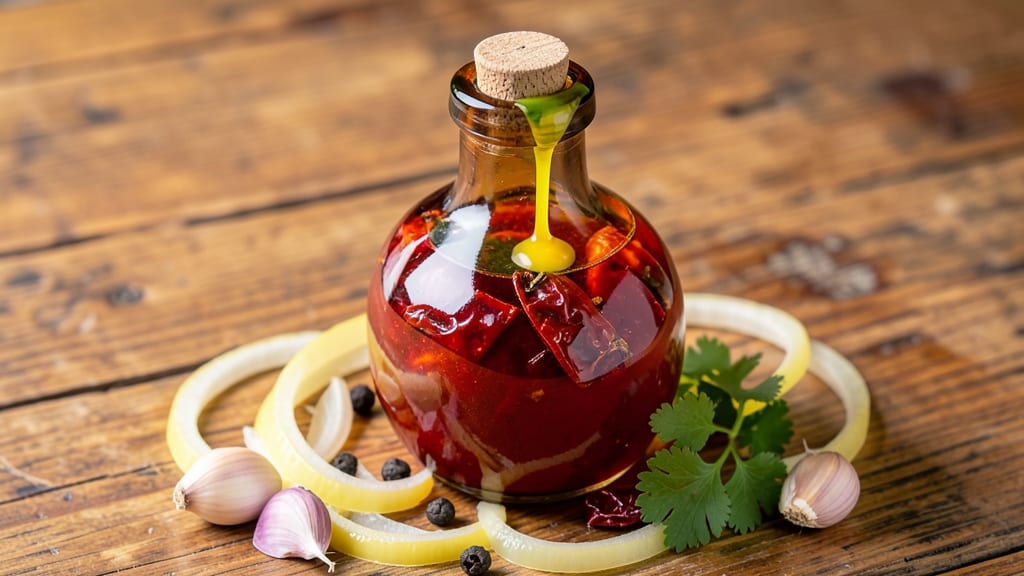
This arbol pepper hot sauce recipe delivers the bold, citrusy kick of Mexican markets without a single drop of cooking. 🔥 The secret lies in arbol peppers—small but mighty, with a smoky, fruity heat that builds slowly into a lingering finish.
I developed this version after years of experimenting with traditional Mexican hot sauces, where arbol peppers shine as the star ingredient in everything from salsas to marinades.
The process is surprisingly simple: soak dried arbol peppers in hot vinegar for 24 hours, then blend with garlic, onion, and a touch of citrus for brightness. No heat required—just time and patience to let the flavors meld.
The result is a sauce with complex layers of heat: an initial citrusy punch that gives way to smoky, peppery depth, perfect for drizzling over tacos, eggs, or grilled meats.
What sets this sauce apart is its versatility—use it sparingly for a subtle kick or generously for those who crave serious heat. The vinegar base ensures long shelf life, and the garlic-onion blend adds umami depth that balances the pepper's intensity.
Unlike store-bought versions, this recipe captures the authentic flavor profile of Mexican street food, where arbol peppers are prized for their unique smoky-citrus character.
Store it in the fridge for up to 3 months, or extend its life with a splash of alcohol. The key is letting the peppers steep fully—the longer they soak, the more nuanced the heat becomes.
This isn't just hot sauce; it's a flavor experience that transforms simple dishes into something extraordinary.
Ingredients for arbol pepper hot sauce
Eight simple ingredients transform into a fiery, smoky hot sauce with no cooking required.
| Ingredient | Amount | Notes |
|---|---|---|
| Dried Arbol Peppers 🌶️ | ½ oz | Whole or crushed, organic preferred |
| White Vinegar 💧 | 1 cup | Distilled white vinegar preferred |
| Garlic Cloves 🧄 | 4 cloves | Fresh, peeled, rough chopped |
| Yellow Onion 🧅 | ¼ cup | Diced, medium yellow preferred |
| Lime Juice 🍋 | 1 tbsp | Freshly squeezed, seeds removed |
| Orange Juice 🍊 | 1 tbsp | Freshly squeezed, no pulp |
| Granulated Sugar 🍯 | 1 tbsp | Light brown sugar for depth |
| Salt 🧂 | ½ tsp | Kosher or sea salt preferred |
Arbol peppers are the heart of this sauce—look for dried peppers at Mexican markets or specialty stores like Goya or La Tienda. If you can't find them, habanero peppers work in a pinch, but arbols deliver that signature smoky-citrus heat. The vinegar is non-negotiable; distilled white vinegar ensures clarity and balance. For extra authenticity, source your peppers from La Morita or Cholula brands, which specialize in traditional Mexican ingredients. If using whole peppers, lightly toast them first to deepen their smoky notes—though the soaking process will do most of the work.
No lime or orange juice? Fresh lemon juice works, though it lacks the citrus complexity. The sugar isn't just for sweetness—it helps balance the acidity and caramelizes slightly during blending, adding depth. Substitute maple syrup at half the amount if you prefer. For a smoother texture, strain the blended sauce through a fine-mesh sieve, but leave some pepper seeds for texture if you love that authentic kick. The garlic and onion can be roasted first for a sweeter, more complex flavor—simply wrap them in foil and broil for 10 minutes before blending.
This sauce improves with age—let it steep for 48 hours if possible for deeper flavor. Store in a clean glass jar in the fridge for up to 3 months, or extend its shelf life to 6 months by adding 1 oz of vodka or rum. The sauce thickens as it cools, so thin with a splash of vinegar or water if needed. For gifting, use small amber bottles—they protect the sauce from light and add a professional touch. Freeze in ice cube trays for single-serving portions, perfect for adding heat to dishes without overpowering them.
Why You'll Love This Recipe
- No-Stress Simmer: I swear by this recipe because it’s basically hands-off after the initial chop. Toss those dried arbol peppers into vinegar, let them steep while you dice the onion and garlic—no blender, no fuss. The heat builds naturally, and by the time you’re done, you’ve got a vibrant sauce without standing over a stove.
- Fiery Lime Zing: That lime juice is the magic touch—bright, tangy, and cutting through the smoky arbol heat like a cool breeze. Honestly, the balance of garlic’s punch, onion’s sweetness, and the pepper’s lingering burn makes it dangerously addictive. Drizzle it on eggs, tacos, or even popcorn, and you’ll see what I mean.
- Pantry Staple Power: Between us, this sauce is my go-to for everything from spicy margaritas to grilled shrimp. It’s the kind of thing that turns a basic meal into something special without needing extra ingredients. And because it uses vinegar and dried peppers, it’s cheap to make—once you’ve got the basics, you’re golden.
- Lasts Like Crazy: I make a big batch and it sits in my fridge for weeks, if not months. The vinegar preserves it perfectly, so you’re never scrambling to whip up a fresh batch. Plus, a little goes a long way—just a teaspoon can wake up a whole dish. It’s my secret weapon for lazy nights and last-minute cravings.
Step-by-step instructions for arbol pepper hot sauce
This no-cook method delivers authentic smoky heat in minutes—no stove required.
👨🍳 Step 1: Prepare the Peppers for Maximum Flavor
Place the 0.5 oz dried arbol peppers in a heatproof bowl. If using whole peppers, lightly crush them with a rolling pin or mortar and pestle to release their oils and intensify the flavor. I prefer leaving them whole for a more rustic texture, but crushing gives a smoother sauce.
Add the 1 cup white vinegar and let the mixture steep for 15 minutes at room temperature. This initial soak softens the peppers and draws out their vibrant color and fiery compounds. You'll notice the vinegar turning a deep amber hue—this is your first sign that the peppers are releasing their essence.
🍳 Step 2: Blend All Ingredients Until Smooth
Transfer the pepper-vinegar mixture to a high-powered blender along with the 4 cloves rough-chopped garlic, 0.25 cup diced yellow onion, 1 tbsp lime juice, 1 tbsp orange juice, 1 tbsp granulated sugar, and 0.5 tsp salt. The sugar and citrus juices balance the heat while the onion adds subtle sweetness.
Blend on high speed for 30-45 seconds until completely smooth. You want a silky texture with no visible chunks—this ensures every drop delivers consistent heat. If the sauce looks too thick, add 1-2 tablespoons water to reach your desired consistency. The final mixture should coat the back of a spoon with a glossy sheen.
⏰ Step 3: Steep for 24 Hours for Deep Flavor Development
Pour the blended sauce into a clean glass jar with an airtight lid. Let it steep at room temperature for 24 hours—this is where the magic happens. The acid in the vinegar continues to extract the peppers' capsaicin and smoky compounds, while the flavors meld together.
I like to store the jar in a cool, dark place during this time to prevent any potential bacterial growth. After 24 hours, the sauce will have deepened in color and intensity. You'll notice a rich, complex aroma with layers of smoky heat, citrus brightness, and subtle sweetness from the onion and sugar.
🥘 Step 4: Strain and Bottle for Serving
After steeping, strain the sauce through a fine-mesh sieve into a clean bottle or jar, pressing gently on the solids to extract all the flavorful liquid. Discard the strained solids—they've given everything they can. The strained sauce should be vibrant red-orange with a thick, syrupy consistency.
Your arbol pepper hot sauce is now ready to use! It'll keep in the refrigerator for up to 3 months, with the flavor actually improving over time. Start with small amounts—this sauce packs serious heat and complexity. I recommend using it as a finishing sauce for tacos, grilled meats, or even drizzling over avocado toast for a smoky kick.
Pro Tips For Making Arbol Pepper Hot Sauce
- STEAM THE PEPPERS FIRST: Dried arbols are stubborn—soak them in hot (not boiling) water for 10 minutes before blending. This softens their tough skins and releases more heat and flavor without turning your sauce into paste. (I used to skip this and ended up with a gritty, uneven texture every time.)
- USE A MOLCajete OR CAST-IRON: Toast the garlic and onion in a molcajete or cast-iron skillet until the garlic’s edges are just browned—this adds depth the blender can’t. Regular stainless steel won’t caramelize them enough, and you’ll miss that nutty undertone. (Yes, it’s extra work, but the sauce tastes like it’s from a Mexican abuela’s kitchen.)
- STRAIN THROUGH A FINE-MESH SIEVE: No matter how finely you blend, arbol seeds and skins sneak through. Run the sauce through a damp cheesecloth or fine-mesh sieve to remove grit—this makes the texture silky and prevents clumping later. (I learned this after serving a batch with tiny pepper specks that made guests wince.)
- FERMENT IT FOR 24 HOURS: Let the blended sauce sit at room temp for a full day before bottling—vinegar alone isn’t enough to preserve it properly. This short fermentation brightens the flavors and mellows the harshness of raw arbol heat. (I know, I know—it’s tempting to bottle immediately, but trust me on this.)
Best sauces and condiments for arbol pepper hot sauce
Citrus-Infused Brightness
This sauce's signature comes from the lime and orange juice, which cut through the arbol pepper's intensity while adding a refreshing citrus tang. I always use freshly squeezed juice—store-bought lacks the brightness—and strain out seeds to avoid bitterness.
The 1 tablespoon each ratio balances heat and acidity perfectly, but if you love tartness, bump orange juice to 1.5 tablespoons. For extra depth, add ½ teaspoon grated orange zest during blending. 🍊
Garlic-Onion Umami Base
The garlic and onion aren't just flavor boosters—they create an umami foundation that softens the pepper's sharpness. I prefer raw garlic for a sharper bite, but roasted garlic (broiled for 10 minutes) adds sweetness that pairs beautifully with the smoky arbol.
For a deeper flavor, caramelize the onion first: cook ¼ cup diced onion in 1 tablespoon oil over medium heat for 8-10 minutes until golden. This step transforms the sauce from good to restaurant-quality. 🧄
Vinegar's Dual Role
The white vinegar does double duty here—it acts as both a preservative and a flavor enhancer. Distilled white vinegar is key; apple cider vinegar adds unwanted sweetness. The 1 cup measurement ensures the sauce stays stable, but if you prefer a tangier profile, increase to 1.25 cups.
For a smoother texture, strain the blended mixture through a fine-mesh sieve after soaking. The vinegar also helps extract the arbol peppers' smoky oils during the 24-hour steep, making every drop count. 💧
Sweet Heat Balance
The 1 tablespoon sugar might seem small, but it's crucial for rounding out the sauce's edges. It caramelizes slightly during blending, adding a subtle depth that complements the pepper's heat.
For a spicier version, reduce sugar to ½ tablespoon, but I find the original ratio works best for everyday use. If you're using light brown sugar, the molasses notes enhance the sauce's complexity—just don't overdo it, or you'll mute the pepper's punch. 🍯
Salt as the Glue
Don't skip the ½ teaspoon salt—it ties all the flavors together. Kosher or sea salt dissolves more easily than table salt, so use what you have on hand. If your salt is coarse, pulse it lightly in a spice grinder for even distribution.
For a low-sodium version, reduce to ¼ teaspoon but be prepared for a less cohesive flavor. The salt also helps preserve the sauce longer, making it safe to store for up to 3 months in the fridge. 🧂
Pro Tips for Depth
For an extra layer of complexity, add ½ teaspoon ground cumin or ¼ teaspoon smoked paprika during blending. Both spices echo the arbol's smoky notes without overpowering them. If you love texture, leave 2-3 whole pepper seeds in the blend—they add a subtle crunch that elevates the sauce.
For a sweeter heat, stir in 1 teaspoon honey after blending. The possibilities are endless, but start with the basics and adjust to taste. ✨
Nutrition facts
Frequently asked questions
Why does this hot sauce need a 24-hour steep?
The 24-hour steep is what transforms this from good to extraordinary. The vinegar gradually extracts the arbol peppers' smoky compounds and capsaicin, creating layers of heat that build slowly. Without it, you'd miss the sauce's signature depth and complexity. Think of it like steeping tea—patience pays off with richer flavor.
Can I adjust the heat level?
For milder heat, reduce the arbol peppers to 0.25 oz and add 1 extra tablespoon sugar to balance. For fiery intensity, increase peppers to 0.75 oz and keep the sugar at 1 tablespoon. Remember, arbol peppers have a unique smoky-citrus heat that builds gradually—don't judge it by the initial burn!
What if I can't find arbol peppers?
Your best substitutes are habanero or chipotle peppers, but expect different flavor profiles. Habanero gives a more citrusy heat, while chipotle adds smokiness. Use half the amount (0.25 oz) since they're hotter. For authenticity, look for arbol peppers at Mexican markets or online—brands like La Morita carry them reliably.
How should I use this sauce?
Start with ½ teaspoon per serving—this sauce packs serious flavor! Drizzle over tacos, grilled meats, or eggs for an instant smoky kick. It also works as a marinade (dilute with ¼ cup oil) or in soups and stews. For a unique touch, mix 1 teaspoon into mayo for spicy sandwich spreads. The key is balance—let the sauce shine, not overpower.
Can I make this sauce without vinegar?
Not recommended—vinegar is essential for both preservation and flavor extraction. The acid helps break down the pepper's oils and creates that signature tang. If you must substitute, use lemon juice (but reduce to 0.75 cup), though the shelf life will shorten to 2 weeks in the fridge. The sauce will taste brighter but lose some depth.