
Sauces & Condiments
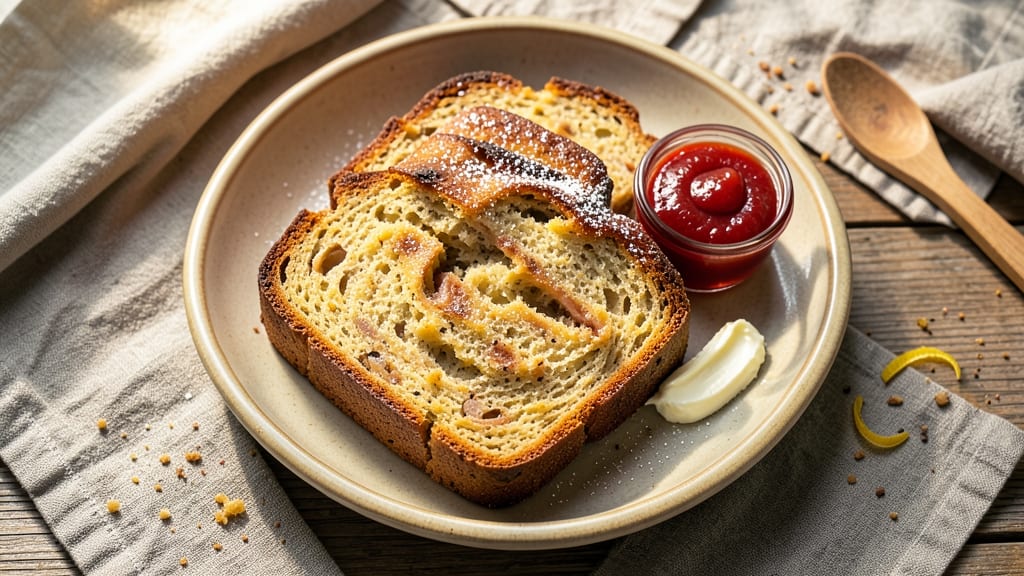
This applesauce yeast bread recipe delivers a sweetly moist loaf with warm spice notes that'll transform your dinner table. The secret ingredient—unsweetened applesauce—replaces some of the fat in traditional bread recipes, creating a tender crumb without sacrificing flavor.
I developed this recipe after years of baking dense, dry loaves, and this version stays fresh for days.
The applesauce works double duty: it keeps the bread incredibly moist while adding subtle sweetness and a hint of apple flavor that pairs beautifully with cinnamon and nutmeg. Unlike many fruit breads, this one doesn't taste overly sweet—just rich and comforting.
The dough comes together in under 10 minutes, with most of the work done during the proofing process.
What you'll end up with is a perfectly risen loaf with a golden-brown crust and a tender interior that's neither too sweet nor too dense. The warm spices create a cozy aroma that fills your kitchen, while the applesauce ensures every slice stays soft for days.
This bread is ideal for breakfast toast, sandwiches, or serving alongside soups.
The best part? You can customize it with add-ins like chopped nuts, dried fruit, or even a touch of orange zest for extra brightness. Let's get started on this foolproof recipe that delivers restaurant-quality results at home.
Ingredients for applesauce yeast bread
Sweet applesauce and warm spices create a tender loaf that stays fresh for days.
| Ingredient | Amount | Notes |
|---|---|---|
| Unsweetened Applesauce 🍎 | ¾ cup | Unsweetened for balanced sweetness |
| All-Purpose Flour 🌾 | 4 cups | Sifted for even texture |
| Active Dry Yeast 🍞 | 2 ¼ tsp | 1 packet or 0.25 oz |
| Granulated Sugar 🍚 | ¼ cup | For yeast activation |
| Warm Water 💧 | 1 cup | 110°F for yeast activation |
| Unsalted Butter 🧈 | ½ cup | Softened but not melted |
| Large Egg 🥚 | 1 whole | Room temperature preferred |
| Ground Cinnamon 🌿 | 1 ½ tsp | Freshly ground preferred |
| Ground Nutmeg 🌿 | ½ tsp | Freshly grated for warmth |
| Salt 🧂 | 1 ½ tsp | Kosher or sea salt |
| Cornmeal 🌽 | ¼ cup | For dusting bread pan |
The applesauce is the star—Mott's unsweetened is my go-to, but any plain variety works. For flour, I always grab King Arthur or Gold Medal from the grocery store's baking aisle. The yeast should be fresh (check the date—it loses potency fast). Warm the water to 110°F, then sprinkle in the sugar and yeast. Let it sit for 5 minutes until foamy. That's your cue it's ready to go. The butter? Land O'Lakes unsalted melts beautifully, but any brand will do.
No applesauce? Unsweetened applesauce from a jar is fine, but if you're desperate, blend peeled apples until smooth and strain out the pulp. Short on cinnamon? Pumpkin pie spice at half the amount works great. The nutmeg can be swapped for allspice at the same quantity. For a richer dough, add 1 tbsp sour cream—it keeps the bread extra moist. If you're feeling fancy, a pinch of orange zest adds brightness. The egg can be replaced with 1 tbsp flaxseed meal + 3 tbsp water for a vegan version, but the texture will be slightly denser.
This dough is a dream to work with—it's sticky but not unmanageable. Wet your hands slightly before handling. The bread keeps for 3-4 days in an airtight bag at room temperature, or up to 1 week in the fridge. For longer storage, freeze slices wrapped in parchment paper—they reheat beautifully in a toaster or oven. I like to wrap the whole loaf in foil and freeze it, then toast slices straight from frozen. The crust gets crispy, and the inside stays soft. Perfect for quick breakfasts or sandwiches!
Why You'll Love This Recipe
- No-Fuss Dough: I mix it in my stand mixer bowl—just flour, yeast, applesauce, and water—no kneading, no fuss. The applesauce replaces butter and oil, so the dough stays soft but never sticky, and it rises like a dream.
- Sweet But Not Cloying: That first bite? Warm, slightly tangy from the applesauce, with just enough sugar to make it irresistible. Honestly, it’s the kind of bread that disappears faster than my willpower when I’m baking.
- Lunchbox Legend: Between us, this bread is the star of my kids’ lunches—no soggy sandwiches here. The crust holds up, and the soft interior? Perfect for peanut butter or jam. (Yes, even on a Tuesday night.)
- Pantry Stash Gold: A loaf lasts me five days if I’m smart, and the leftovers? Toast it up or turn slices into French toast—no waste, all flavor. Plus, applesauce is cheaper than butter, so my wallet thanks me too.
Step-by-step instructions for applesauce yeast bread
Here's how to create a tender, sweetly spiced loaf with perfect moisture every time.
Activate the Yeast with Applesauce and Warm Water
In a large bowl, combine the 0.75 cup unsweetened applesauce, 0.25 cup granulated sugar, and 1 cup warm water (about 110°F). The water should feel warm to your wrist but not hot—too hot will kill the yeast. Sprinkle the 2.25 tsp active dry yeast over the mixture and let it sit for 5-10 minutes until it becomes frothy and bubbly. This is your signal the yeast is alive and ready to work.
I always stir gently in a circular motion to dissolve the sugar completely. The applesauce adds natural sweetness while keeping the bread moist, but it also means we need to be extra careful with yeast activation time. If it doesn't bubble within 10 minutes, your yeast might be old—start over with fresh yeast.
Mix Wet Ingredients and Combine with Dry Ingredients
Add the 0.5 cup softened unsalted butter and 1 whole large egg to the yeast mixture. Use a wooden spoon or silicone spatula to stir until the butter is fully incorporated and the egg is completely blended in. The mixture should look smooth and slightly thickened from the applesauce.
In a separate bowl, whisk together the 4 cups all-purpose flour, 1.5 tsp ground cinnamon, 0.5 tsp ground nutmeg, and 1.5 tsp salt. Gradually add the dry ingredients to the wet mixture, stirring just until combined. You'll notice the dough becomes shaggy and sticky—this is normal with applesauce. Avoid overmixing, as it develops gluten too much and makes the bread dense.
Knead the Dough Until Smooth and Elastic
Turn the dough onto a lightly floured surface and knead for 5-7 minutes until it's smooth and slightly springy. With applesauce bread, the dough won't be as elastic as traditional yeast bread—it'll be softer and stickier. Work quickly to avoid over-kneading, which can make the bread tough.
I like to use my hands for this step, pressing down and folding the dough over itself. When you press your finger into the dough and it springs back slowly (not immediately), it's ready. If it feels too sticky, wet your hands slightly to prevent sticking. The dough should be just slightly tacky but not wet.
Let the Dough Rise Until Doubled in Size
Place the dough in a lightly greased bowl, cover it with a clean kitchen towel, and let it rise in a warm place for 1-2 hours or until it has doubled in size. The warm environment helps the yeast work faster—you can place the bowl near a turned-off oven with the light on, or in a warm spot in your kitchen.
Watch for the dough to puff up noticeably and develop small bubbles on the surface. Gently press your finger into the dough—if it leaves a slight indentation that doesn't spring back, it's ready. Don't let it rise too long, or the flavor will become yeasty rather than sweet and spiced. If the dough doesn't rise well, it might need more time or a warmer environment.
Shape, Proof, and Bake to Golden Perfection
Punch down the risen dough and shape it into a loaf by folding the edges toward the center and rolling it gently into a log. Place the loaf seam-side down in a 9x5-inch loaf pan that's been lightly dusted with 0.25 cup cornmeal. This prevents sticking and adds a subtle crunch to the crust.
Let the loaf proof for another 30-45 minutes until it rises about 1 inch above the pan. Preheat your oven to 375°F while the loaf proofs. Bake the bread for 35-40 minutes until the top is golden brown and sounds hollow when tapped on the bottom. The internal temperature should reach 190-200°F.
Cool and Enjoy Your Moist, Spiced Loaf
Remove the bread from the pan and let it cool on a wire rack for at least 20 minutes before slicing. The bread will be incredibly moist and tender when warm, but it's even better the next day when the flavors have fully melded. For the best texture, slice it while still slightly warm.
Here's the thing—this bread is at its peak 2-3 days after baking. The spices deepen, and the moisture distributes evenly. Store it in an airtight container at room temperature, and slice with a serrated knife for clean cuts. You'll love how the cinnamon and nutmeg flavors shine through every bite.
Pro Tips For Making Applesauce Yeast Bread
- Test Yeast First: Stir a pinch of yeast into ¼ cup warm water (110°F) with a teaspoon of sugar—wait 5 minutes for frothy bubbles before adding to the dough. I learned this the hard way after mixing a whole batch only to find my yeast was dead, leaving me with a sad, flat loaf that tasted like flour paste.
- Chill the Dough: Let the dough rise in the fridge overnight (8–12 hours) instead of rushing it at room temp. The slow fermentation deepens the flavor and makes shaping easier—no more sticky, stubborn dough that fights you every step.
- Use Cold Applesauce: Grab the applesauce straight from the fridge—its chill helps control yeast activity and keeps the dough from rising too fast. I was skeptical until I tried it; the texture stays light and airy, not dense or gummy.
- Shape Tightly, Not Perfectly: Roll the dough into a log, tuck the ends under, and press the seam firmly to seal—even if it’s not pretty. A tight seal traps gases for a better rise, and nobody cares if your loaf looks like a lumpy sausage as long as it’s fluffy inside.
Dietary considerations for this dish
Gluten-Free Adaptation
Swap the 4 cups all-purpose flour for a 1:1 gluten-free baking flour blend like Bob's Red Mill or King Arthur. Add 1 tsp xanthan gum to mimic gluten's structure, but skip if your blend already contains it.
The dough will be stickier, so use wet hands or a dough scraper. Expect a slightly denser texture, but the applesauce keeps it moist. Proofing may take 10-15% longer—watch closely for doubling. 🌾
Dairy-Free Version
Replace the 0.5 cup unsalted butter with 0.5 cup dairy-free butter (like Miyoko's or Earth Balance) or 0.5 cup coconut oil (solid at room temp). For the egg, use 1 tbsp ground flaxseed + 3 tbsp water mixed for 5 minutes before adding.
The texture stays tender, though slightly less rich. Add 1 tsp vanilla extract to compensate for flavor loss. 🥥
Vegan Option
Combine the dairy-free swaps with 2 tbsp nutritional yeast (for cheesy flavor) and 1 tbsp apple cider vinegar in the yeast activation step. Use 0.5 cup unsweetened applesauce + 0.25 cup water instead of the egg.
The bread will be slightly denser but still moist. Brush the baked loaf with melted dairy-free butter for shine. ✨
Low-Sugar Adjustments
Reduce the 0.25 cup granulated sugar to 0.125 cup (or omit entirely) and increase cinnamon to 2 tsp. Use 100% unsweetened applesauce (no sugar added) and add 0.25 cup mashed banana for natural sweetness.
The bread will be subtly sweet but not cloying. Monitor proofing time—low sugar may slow yeast activity slightly. 🍌
Allergen-Friendly Notes
For nut allergies, omit cinnamon/nutmeg and use 1 tsp pumpkin pie spice instead. Check spice blends for cross-contamination. For egg allergies, use 1 tbsp cornstarch + 3 tbsp water as a binder.
Always verify ingredient labels—many commercial spices contain traces of nuts or dairy. When in doubt, opt for single-ingredient brands like Penzeys. 🚫
Nutrition facts
Frequently asked questions
Why does this recipe use applesauce instead of oil or butter?
The applesauce serves multiple purposes—it keeps the bread incredibly moist without adding extra fat, creates a tender crumb, and adds subtle sweetness. Unlike oil, it doesn't make the bread greasy, and compared to butter, it reduces calories while maintaining richness. The applesauce also helps balance the yeast's activity for a perfect rise.
Can I make this bread without a loaf pan?
Yes! Shape the dough into a round or oval and place it on a parchment-lined baking sheet. Brush with melted butter and sprinkle with coarse sugar or cinnamon sugar for extra flavor. Bake at 375°F for 25-30 minutes until golden. The texture will be slightly denser but still delicious.
How do I know when the dough is fully risen?
Look for the dough to double in size and develop small bubbles on the surface. Gently press your finger into the dough—if it leaves a slight indentation that doesn't spring back immediately, it's ready. The rise time varies with temperature: 1-2 hours in a warm kitchen or 30-45 minutes in a warm oven with the light on.
What if my bread turns out too dense?
Dense bread usually means over-kneading or under-proofing. For future batches, knead just until smooth (5-7 minutes) and ensure the dough doubles in size during proofing. Also, make sure your yeast is fresh—old yeast won't activate properly. If the dough feels too sticky, add 1-2 tablespoons flour at a time.
Can I add other fruits or nuts to this recipe?
Try folding in ½ cup chopped walnuts or pecans (toasted for extra flavor) or ½ cup dried cranberries or raisins during the final kneading. For extra moisture, reduce flour by 2 tablespoons if adding wet ingredients like mashed banana. Just be mindful not to overfill the pan.