
Sauces & Condiments
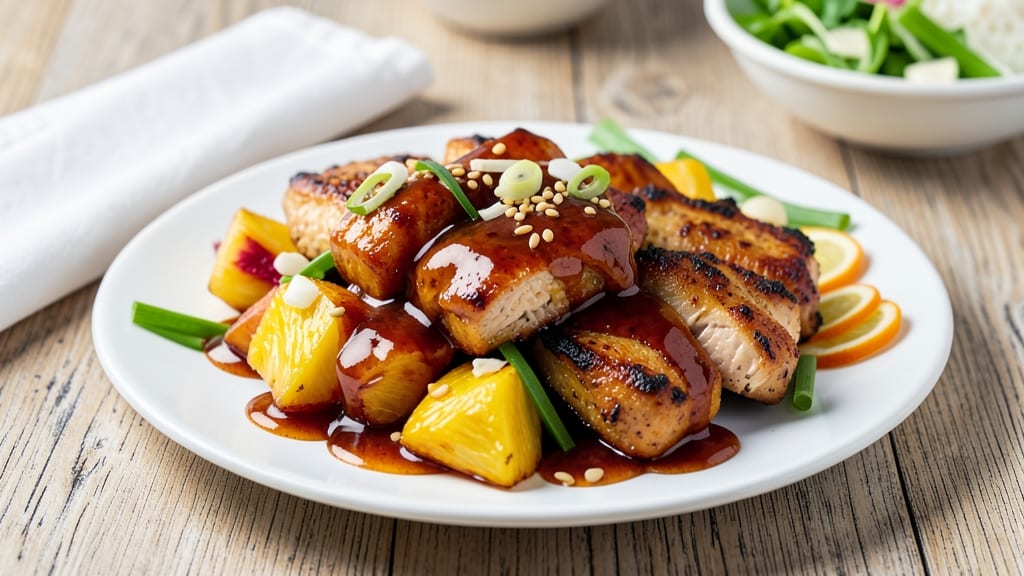
This aloha teriyaki sauce recipe transforms classic teriyaki into a tropical glaze with pineapple's sweet-tart brightness and a secret vinegar zing that cuts through richness. 🌺 The perfect balance of soy sauce, brown sugar, and pineapple juice creates a versatile sauce that works as a glaze for grilled chicken, a marinade for tofu, or a dipping sauce for spring rolls—all while keeping prep under 15 minutes.
The magic lies in the tropical twist: fresh ginger and garlic add warmth, while a splash of rice vinegar and lime juice keeps the flavor profile fresh and vibrant. Unlike traditional teriyaki, this version stays light yet bold, making it ideal for summer dishes or Hawaiian-inspired meals.
The sauce thickens beautifully when simmered, creating a glossy finish that caramelizes perfectly on grilled proteins.
What sets this sauce apart is its adaptability—use it as a quick marinade for 30 minutes before grilling, brush it on baked salmon for a sweet-savory crust, or serve it alongside sushi rolls for an instant flavor upgrade.
The pineapple and vinegar combination prevents it from being too heavy, so every bite stays bright and refreshing.
Store any leftovers in the fridge for up to 2 weeks or freeze for 3 months, making it a pantry staple for quick weeknight meals. Whether you're grilling, stir-frying, or dipping, this aloha teriyaki sauce delivers restaurant-quality flavor with minimal effort.
Ingredients for aloha teriyaki sauce
Ten ingredients. Tropical flavors. Restaurant-quality glaze in under 15 minutes.
| Ingredient | Amount | Notes |
|---|---|---|
| Soy Sauce 🍶 | ½ cup | High-quality light soy preferred |
| Pineapple Juice 🍍 | ½ cup | Freshly squeezed for brightness |
| Brown Sugar 🍚 | ½ cup | Packed firmly for accuracy |
| Rice Vinegar 🍶 | ¼ cup | Seasoned preferred for depth |
| Fresh Ginger 🌿 | 2 tbsp | Finely grated, aromatic |
| Garlic Cloves 🧄 | 4 cloves | Minced for even distribution |
| Lime Juice 🍋 | 2 tbsp | Freshly squeezed, acidic |
| Sesame Oil 🌰 | 1 tbsp | Toasted, nutty aroma |
| Cornstarch 🌾 | 1 tsp | For thickening consistency |
| Water 💧 | 2 tbsp | Room temperature for mixing |
The pineapple juice is non-negotiable—freshly squeezed delivers that vibrant sweetness traditional teriyaki lacks. Dole brand canned juice works in a pinch, but the real difference comes from freshly grated ginger and minced garlic. Whole Foods or local Asian markets carry the freshest ginger, often with more zing than grocery store versions. For the soy sauce, Kikkoman is reliable, but if you're using reduced-sodium, add a pinch of salt to compensate. The brown sugar should be packed—lightly tap the measuring cup to avoid air pockets.
No rice vinegar? Apple cider vinegar at half the amount works, though it lacks the delicate sweetness. Short on sesame oil? Toasted sesame seeds at double the amount can substitute, though texture will differ slightly. Cornstarch is crucial for thickening—arrowroot powder works 1:1 if needed. The lime juice can be bottled, but fresh is brighter. For a deeper tropical profile, add 1 tbsp of fresh pineapple purée (blend and strain). The sauce thickens as it cools, so simmer until it reaches your desired consistency—about 8-10 minutes for a glossy glaze.
This sauce thickens further when reheated, so store it in a sealed jar in the fridge for up to 2 weeks. For freezing, portion into ice cube trays—perfect for single-use applications. 3 months in the freezer maintains its vibrant color and flavor. The sesame oil should be stored separately if you prefer a neutral base flavor, adding it just before serving. For a smoother texture, strain the sauce through a fine-mesh sieve before using as a dipping sauce.
Why You'll Love This Recipe
- Five-Ingredient Magic: I swear, this sauce is the kind of recipe that makes me feel like a genius—just five pantry staples (soy sauce, pineapple juice, brown sugar, rice vinegar, and ginger) simmered together. No fancy techniques, no last-minute grocery runs. Honestly, I’ve made it while waiting for takeout to arrive.
- Sweet-Savory Balance: That first taste of the caramelized brown sugar and ginger? Pure satisfaction. The pineapple juice cuts through the richness while keeping it bright, and the rice vinegar adds this little zing that makes it way more interesting than store-bought teriyaki. My husband always asks, “What’s in this?”—then licks the spoon.
- Glazes Everything: Between us, this sauce is my secret weapon for weeknights. Slather it on grilled chicken, toss it with stir-fried veggies, or even drizzle it over baked salmon. I’ve even used it as a marinade for tofu—it’s that versatile. (Yes, even on a Tuesday night.)
- Make-Ahead Goldmine: I double the batch and keep it in the fridge for up to two weeks. The flavors deepen over time, and it’s perfect for meal prep—just reheat and go. Plus, it’s budget-friendly; you’re not buying overpriced bottles of sauce. My daughter picks out the ginger root, but still asks for seconds.
Step-by-step instructions for aloha teriyaki sauce
This vibrant sauce delivers the perfect balance of sweet, tangy, and umami richness.
🍳 Step 1: Build the Flavor Base
In a medium saucepan, combine the 0.5 cup soy sauce, 0.5 cup pineapple juice, and 0.5 cup brown sugar. Bring to a gentle simmer over medium heat, stirring constantly until the sugar fully dissolves and the mixture reaches 180°F—this ensures a smooth, glossy finish without graininess.
Here's the thing—don't rush this step. The pineapple juice needs time to infuse its bright acidity while the sugar caramelizes slightly, creating depth. You'll know it's ready when the mixture smells like a tropical sunset: sweet with a whisper of tang.
🍳 Step 2: Infuse with Aromatics
Reduce heat to low and add the 2 tbsp fresh ginger, 4 cloves garlic cloves, and 0.25 cup rice vinegar. Simmer for 5-7 minutes until the garlic becomes fragrant and the ginger softens but doesn't brown—this prevents bitterness while building complex flavor layers.
I stir constantly with a wooden spoon, scraping the bottom to release any fond that forms. That's where the magic happens—the caramelized bits dissolve into the sauce, adding a smoky depth that balances the sweetness. If it starts to smell too strong, reduce heat immediately—ginger burns faster than you think.
🥘 Step 3: Thicken the Sauce
In a small bowl, whisk together the 1 tsp cornstarch and 2 tbsp water until smooth. Slowly pour this slurry into the simmering sauce while whisking vigorously to prevent lumps. Increase heat to medium-low and continue cooking for 3-4 minutes until the sauce thickens to a glossy, coatable consistency.
The sauce should coat the back of a spoon but still flow freely. If it's too thick, add 1 tsp water at a time until you reach the perfect balance. Real talk: this is where many recipes fail—rushing the thickening leads to grainy sauce. Patience here guarantees a silky finish.
🍳 Step 4: Finish with Oil and Acid
Remove from heat and stir in the 2 tbsp lime juice and 1 tbsp sesame oil. The lime brightens the flavors while the sesame oil adds nutty complexity. Let the sauce rest for 5 minutes—this allows all the components to meld together perfectly.
Taste and adjust seasoning: if it needs more umami, add a splash of soy sauce; if it's too sweet, balance with more lime. The final sauce should sing with tropical brightness while maintaining that deep teriyaki richness. This is your aloha moment—where all the flavors come together in harmony.
Pro Tips For Making Aloha Teriyaki Sauce
- SIMMER LOW AND SLOW: After burning my first batch of sauce, I learned to keep the heat at a gentle simmer—not a rolling boil. This lets the brown sugar caramelize properly without turning the pineapple juice into syrup. If it’s bubbling hard, back it down to medium-low and let it work.
- GRATE GINGER FINE: Skip the microplane if you’re in a hurry, but don’t just chop it—grate it fine enough to dissolve into the sauce. I used to toss in thick slices, and they’d sit like rubbery chunks. A box grater or food processor does the job in seconds.
- STRAIN THE PINEAPPLE JUICE: If your juice has pulp or seeds, strain it first—trust me, you don’t want gummy bits in your sauce. I’ve made this mistake twice, and it’s a pain to fish out later. A fine-mesh sieve or cheesecloth works perfectly.
- SALT THE SOY SAUCE: Soy sauce is already salty, but if you’re using low-sodium, add a pinch of salt to the sauce before reducing. I learned this after tasting a version that was flat—now it balances the sweetness like it should. Just a quarter teaspoon does the trick.
Pro cooking tips for great aloha teriyaki sauce
Simmer Control Secrets
Keep your heat at medium-low during the aromatic stage—ginger and garlic burn quickly, turning bitter in 2-3 minutes. I use a digital thermometer to monitor the sauce temperature, aiming for 190-200°F during simmering. This prevents scorching while ensuring the pineapple juice fully infuses its bright acidity. 🌡️
Thickening Troubles
If your sauce separates or becomes grainy, immediately whisk in 1 tsp cold water and return to low heat for 1-2 minutes. The cornstarch slurry must be fully dissolved before adding—use a whisk, not a spoon, to avoid lumps.
For extra insurance, strain through a fine-mesh sieve before using as a dipping sauce.
Flavor Layering
Add the sesame oil last—its delicate aroma burns off at high heat. For deeper complexity, toast 1 tsp sesame seeds in a dry pan for 30 seconds before grinding into the sauce.
The nutty aroma becomes more pronounced when combined with the citrus notes. I also recommend adding ½ tsp red pepper flakes if you want subtle heat.
Sauce Consistency
For a glossier finish, simmer the sauce uncovered for 2-3 extra minutes—this reduces excess moisture while concentrating flavors. If it thickens too much, thin with 1 tsp water at a time. The ideal consistency should coat the back of a spoon but still drizzle smoothly from a fork. 💫
Storage Hacks
Let the sauce cool completely before storing to prevent condensation from diluting it. For freezer storage, portion into ice cube trays—perfect for single-use applications like dipping or marinating.
Label with the date and freeze for up to 3 months. When reheating, warm over low heat and stir frequently to prevent separation.
Flavor Boosts
Need more depth? Add 1 tsp fish sauce for umami richness or ½ tsp smoked paprika for a subtle smoky note. For a fruity twist, blend 2 tbsp mango purée into the finished sauce. The key is balance—adjust one element at a time to avoid overpowering the tropical profile.
Nutrition facts
Frequently asked questions
Can I make this aloha teriyaki sauce without pineapple juice?
The pineapple juice is key for that bright tropical flavor, but you can substitute with ½ cup orange juice plus 1 tbsp honey for a citrus-forward version. For a deeper umami profile, use ½ cup coconut aminos instead of soy sauce—it adds a natural sweetness that pairs well with the ginger and garlic. Just remember, the sauce will taste different without the pineapple's acidity.
How long should I marinate proteins in this sauce?
For best results, marinate chicken or tofu for 30-60 minutes in the fridge. Thin proteins like fish or shrimp only need 15-20 minutes to absorb the flavors. Pro tip: Reserve ¼ cup of the sauce for brushing during cooking—this creates a glossy crust while keeping the meat juicy. Never marinate at room temperature longer than 2 hours for food safety.
Why did my sauce turn grainy?
Graininess usually happens when cornstarch lumps form or the sauce cooks too long. Fix it by whisking in 1 tsp cold water and simmering for 1-2 minutes on low heat. To prevent this, always whisk the cornstarch slurry until completely smooth before adding to the sauce. For extra insurance, strain through a fine-mesh sieve before using as a dipping sauce.
Can I use this sauce as a dipping sauce for spring rolls?
This sauce works perfectly as a dipping sauce—just thin it slightly with 1-2 tbsp water if it's too thick. The tropical brightness pairs beautifully with spring rolls, especially when served warm. For extra appeal, garnish with toasted sesame seeds and thinly sliced green onions. The sauce's balance of sweet, tangy, and umami makes it more complex than store-bought dipping sauces.
What's the best way to reheat leftover sauce?
Gently reheat in a small saucepan over low heat, stirring constantly to prevent scorching. Add 1 tsp water if needed to restore glossiness. Microwaving can cause separation—always reheat on the stove for best results. If the sauce thickens too much, thin with ½ tsp water at a time until you reach the perfect consistency for glazing or dipping.