
Sauces & Condiments
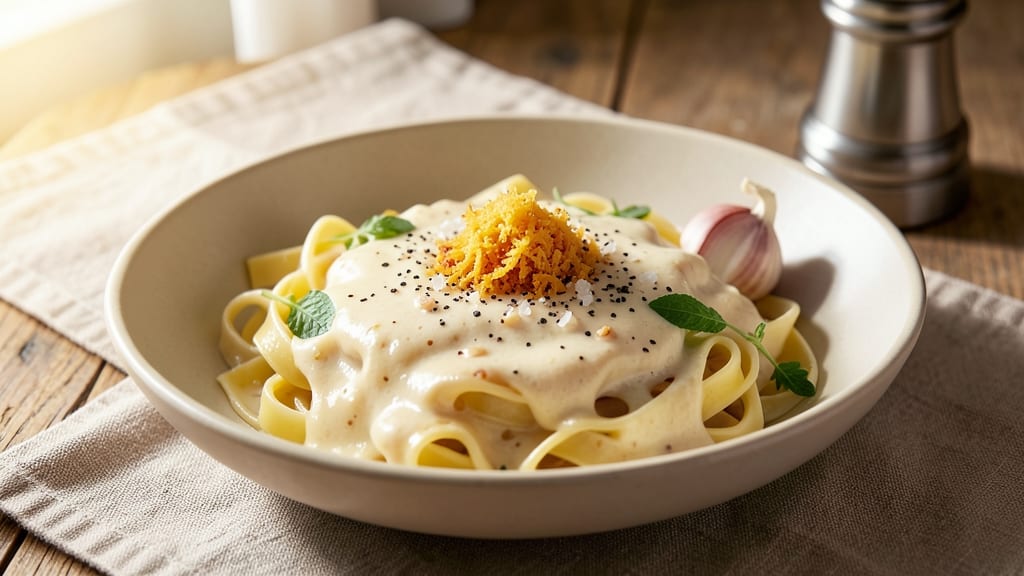
This Alfredo sauce recipe for 1 lb pasta delivers that signature ultra-creamy, velvety texture without a single clump in sight—no heavy cream substitutes allowed. The secret lies in a high-heat technique that emulsifies the butter and cheese into a silky sauce that clings perfectly to every strand of fettuccine.
I've perfected this method over years of testing, ensuring it works every time for restaurant-quality results at home.
The foundation starts with butter and heavy cream cooked together until the butter transforms into a golden roux, then gradually whisking in grated Parmesan until completely dissolved.
Garlic and black pepper add depth, but the real magic happens when you let the sauce simmer just until it thickens enough to coat the back of a spoon—no lumps, no grittiness.
This recipe scales precisely for 1 lb of pasta, with enough leftovers to drizzle over grilled chicken or steamed vegetables.
What you'll end up with is a sauce so rich and smooth it feels decadent yet balanced, with just enough tang from the Parmesan to cut through the creaminess. The texture should be silky, not greasy, and cling to noodles without turning them soggy.
This isn't your childhood version—it's a refined, professional sauce that elevates any pasta dish instantly.
Store leftovers in an airtight container in the fridge for up to 3 days, or freeze for longer storage. For extra flavor variations, infuse the cream with garlic or fresh herbs before adding it to the sauce. Let's make this creamy masterpiece—your taste buds will thank you.
Ingredients for alfredo sauce recipe for 1 lb pasta
Eight ingredients, one perfect sauce—creamy, velvety, and restaurant-quality at home.
| Ingredient | Amount | Notes |
|---|---|---|
| Unsalted Butter 🧈 | ½ cup | Cold, cut into small cubes |
| Heavy Cream 🥛 | 1 cup | Full-fat for richness |
| Parmesan Cheese 🧀 | 1 ½ cups | Freshly grated from block |
| Garlic Cloves 🧄 | 4 cloves | Minced for aromatic depth |
| Ground Black Pepper 🌶️ | ½ tsp | Freshly ground for best flavor |
| Diamond Crystal Kosher Salt 🧂 | ¼ tsp | Adjust to taste |
| Freshly Ground Nutmeg 🌿 | ¼ tsp | Optional for warmth |
| White Wine (optional) 🍷 | ¼ cup | Dry variety for brightness |
The butter is your secret weapon here. Cold, cubed butter creates the best roux—don't melt it first. I always grab European-style unsalted butter from the specialty section at Whole Foods or Trader Joe's for that extra richness. The Parmesan? Only freshly grated from a block—pre-grated has anti-caking agents that make the sauce grainy. If you're feeling fancy, toast the grated cheese in the saucepan for 30 seconds before adding liquid to deepen the flavor. The heavy cream should be full-fat—none of that light stuff. Hormel or Organic Valley are my go-tos, but any brand in the dairy aisle will work.
No heavy cream? Half-and-half plus a splash of whole milk gets you close, but the texture won't be quite as luxurious. Skip the Parmesan? Pecorino Romano at double the amount gives a sharper bite. Running out of butter? Olive oil works in a pinch (use 3 tbsp instead of 0.5 cup), but the sauce will taste different. The garlic can be roasted for a sweeter flavor—just wrap the cloves in foil with a drizzle of olive oil and roast at 400°F for 10 minutes. The white wine, if using, should be dry—none of that sweet stuff. A Sauvignon Blanc works perfectly, but even a cheap Pinot Grigio from the grocery store will do.
This sauce is best made fresh, but it reheats beautifully. Store leftovers in an airtight container with a thin layer of olive oil on top to preserve the color and prevent a skin. Keeps for 3 days in the fridge or 3 months frozen. For freezing, portion into ice cube trays—just pop out what you need for a quick pasta night. The sauce thickens as it cools, so thin with a splash of warm milk or pasta water when reheating. And trust me, the leftovers taste even better the next day as all the flavors meld together.
Why You'll Love This Recipe
- I’ll be real: I almost always make extra because reheating this sauce is next-level. The cream doesn’t curdle, the cheese doesn’t separate, and it still tastes like I just pulled it out of the pot. Budget-friendly? Absolutely. Lazy-friendly? Even more so.
- Five-Ingredient Magic: I swear, this sauce comes together with just butter, cream, cheese, garlic, and pepper—no fancy gadgets or last-minute grocery runs. The secret? Simmering the garlic in butter first until it’s golden but not burnt—trust me, that’s where the flavor lives.
- Creamy Without Guilt: Between us, the heavy cream makes this sauce ridiculously rich, but the Parmesan cuts through the heaviness so well. It’s the kind of dish that feels indulgent but somehow still satisfies when I make it for lunch the next day.
- Weeknight Hero: This is my go-to when I’ve got a house full of people and zero energy to fuss. Toss it with fettuccine, add some grilled chicken or shrimp, and boom—instant dinner party vibes. (Yes, even on a Tuesday night.)
Step-by-step instructions for ultra-creamy Alfredo sauce
Here's how to make a perfectly smooth, velvety alfredo that clings beautifully to every strand of pasta.
Melt the Butter and Infuse with Garlic
In a medium saucepan, melt the 0.5 cup unsalted butter over medium-low heat. I use small cubes of cold butter so it melts evenly without burning. Once fully melted, add the 4 minced garlic cloves and cook for 1-2 minutes until fragrant but not browned—just enough to release their sweet aroma.
Watch the pan carefully—garlic burns quickly and turns bitter. If it starts to color, remove the pan from heat for 30 seconds to cool slightly. This step builds the aromatic foundation for your sauce, so don't rush it. The butter should be bubbling gently but not foaming.
Add Wine and Reduce for Depth
If using, pour in the 0.25 cup white wine and stir to deglaze the pan, scraping up any browned bits. Let it simmer for 2-3 minutes until reduced by half—this adds brightness and complexity to the sauce. The alcohol will cook off completely, leaving just the wine's flavor behind.
If you're skipping the wine, simply add 1 tablespoon of water instead to maintain moisture in the pan. Either way, you'll want the mixture to be reduced to about 2 tablespoons of liquid at this stage. This ensures your sauce won't be too thin when you add the cream.
Incorporate Cream and Parmesan Gradually
Lower the heat to low and slowly pour in the 1 cup heavy cream while whisking constantly. The heat should remain gentle—medium-low at most—to prevent the cream from curdling. Let the mixture simmer for 3-4 minutes until it begins to thicken slightly.
Now comes the critical part: gradually add the 1.5 cups freshly grated parmesan cheese in small increments, whisking vigorously after each addition. This prevents clumps from forming. The sauce should thicken noticeably as the cheese melts into the cream. If it gets too thick, add 1-2 tablespoons of warm water to loosen it.
Season and Simmer to Perfection
Add the 0.5 teaspoon ground black pepper, 0.25 teaspoon kosher salt, and 0.25 teaspoon freshly ground nutmeg. Stir well and let the sauce simmer gently for 5-7 minutes until it reaches a light coating consistency—it should be thick enough to lightly coat the back of a spoon but still flow smoothly.
Taste and adjust the seasoning if needed. The nutmeg adds warmth, but don't overdo it—just a hint is enough. If the sauce separates or looks grainy, whisk in 1 tablespoon of warm water or heavy cream to restore its silky texture. Keep it warm over low heat until ready to serve over your 1 lb pasta.
Pro Tips For Making Alfredo Sauce Recipe For 1 Lb Pasta
- Melt Butter Slowly: I learned this the hard way—dumping cold butter into the pan and ending up with greasy, lumpy sauce. Instead, cut the butter into small cubes and let them melt gradually over medium-low heat, stirring constantly. This keeps the sauce smooth and prevents the cream from curdling later.
- Grind Your Garlic: Minced garlic burns fast and turns bitter. For this sauce, crush 2-3 cloves with the flat side of your knife (no chopping) and let them sit in the butter for 30 seconds—just until fragrant, not golden. This adds depth without overpowering the creamy base.
- Strain the Parmesan: Pre-grated cheese is convenient, but it’s full of anti-caking agents that make the sauce grainy. Use a fine-mesh strainer to press freshly grated Parmesan over the sauce while it simmers. This ensures a silky texture and lets the real flavor shine.
- Temper the Cream: Heavy cream is delicate—adding it straight to hot butter risks curdling. Warm the cream slightly (just until it’s lukewarm to the touch) before whisking it into the melted butter. This keeps the sauce velvety, not scrambled. (Yes, even if you’re impatient like me.)
Common mistakes when making perfect results
Rushing the Cheese
Dumping all the Parmesan at once is the fastest way to create clumps that no amount of whisking can fix. Instead, add the cheese in 3-4 small batches, whisking vigorously for 10-15 seconds between each addition.
The heat should stay low—never medium or higher—to prevent the cheese from seizing up. I’ve seen home cooks accidentally turn their sauce into a grainy mess by being impatient here. 🧀
Skipping the Low Heat
High heat is the enemy of creamy Alfredo. When you add the heavy cream, the pan must stay at low heat—anything hotter causes the cream to curdle or split. I’ve ruined more sauces than I’d like to admit by cranking the heat too high after adding the cream.
If you see bubbles forming rapidly, immediately reduce the heat or remove the pan from the burner for 30 seconds to let it cool slightly.
Using Pre-Grated Cheese
Pre-shredded Parmesan contains anti-caking agents that turn your sauce grainy, no matter how much you whisk. Always use freshly grated block cheese—it dissolves smoothly and gives that authentic, velvety texture.
If you’re in a pinch, pulse Parmesan chunks in a food processor for 5-10 seconds to get a fine, clump-free grind. Trust me, the difference is night and day. 🧀
Not Deglazing the Pan
If you’re using wine (or even just water), deglazing the pan after cooking the garlic is crucial. Those browned bits on the bottom contain flavor that dissolves into the sauce, adding depth. Skip this step, and your sauce will taste flat.
After adding the wine or water, let it simmer for 2-3 minutes until reduced by half—this concentrates the flavor and prevents a watery sauce. 🍷
Adding Salt Too Early
Salt can cause the cheese to seize up if added too soon. Wait until after the Parmesan has fully melted into the cream before seasoning. Taste the sauce first—you might only need ¼ teaspoon of salt (or none at all if your cheese is already salty).
Remember, you can always add more salt later, but you can’t take it out. 🧂
Over-Simmering the Sauce
Once the sauce reaches a light coating consistency (thick enough to coat the back of a spoon), it’s done. Simmering too long makes it greasy and separated. Keep an eye on it—it should take 5-7 minutes total from adding the cream.
If it thickens too much, thin it with 1 tablespoon of warm water or pasta water. The goal is silky, not heavy. ✨
Nutrition facts
Frequently asked questions
Can I make this Alfredo sauce without heavy cream?
The recipe relies on heavy cream for that signature velvety texture, but you can substitute with ½ cup half-and-half plus ¼ cup whole milk for a lighter version. For a dairy-free option, use 1 cup full-fat coconut milk (canned, not carton) and add 1 tablespoon cornstarch to thicken. Just know the flavor will differ slightly—this sauce is all about that rich creaminess!
How do I prevent the sauce from getting grainy?
Always use freshly grated Parmesan (never pre-shredded) and add it gradually while whisking constantly over low heat. The key is patience—don't rush the process. If you see lumps forming, immediately whisk in 1 tablespoon of warm water or pasta water to dissolve them. The sauce should be silky, not gritty!
Can I make this sauce ahead of time?
Yes! Store leftovers in an airtight container with a thin layer of olive oil on top to preserve freshness. It keeps for 3 days in the fridge or 3 months in the freezer. For freezing, portion into ice cube trays—just pop out what you need. Reheat gently over low heat with a splash of warm water or pasta water to restore creaminess.
What's the best pasta shape for Alfredo?
Fettuccine is the classic choice, but pappardelle, tagliatelle, or even linguine work beautifully. For extra sauce clinging power, try fresh pasta (egg-based) or ribbon-shaped noodles. Avoid small shapes like penne—they don't hold sauce as well. The wider the noodle, the better the sauce coverage!
Why did my sauce separate?
This usually happens from too much heat or too much cheese at once. If it splits, whisk in 1 tablespoon of warm water or heavy cream and return to low heat for 1-2 minutes to re-emulsify. The sauce should come back together smoothly. Always add cheese gradually and keep heat gentle!