
Sauces & Condiments
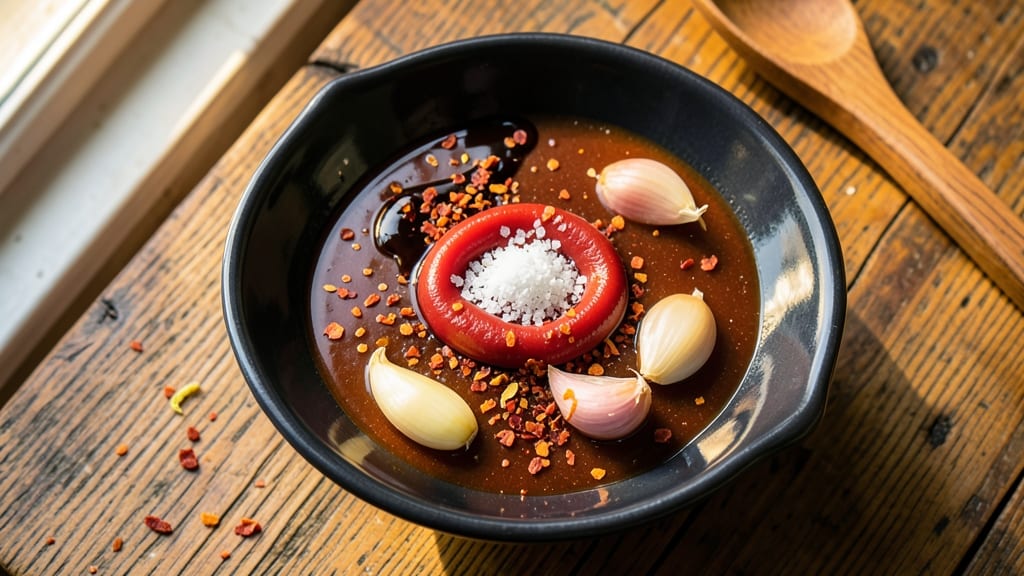
This sweet chili barbecue sauce recipe delivers the perfect balance of bold sweetness and lingering heat that transforms grilled meats into showstoppers. 🔥 The secret lies in simmering vinegar, sugar, and chili flakes until they meld into a glossy, aromatic sauce with depth from garlic and umami-rich soy sauce.
I developed this recipe after years of perfecting my pitmaster technique, ensuring every batch delivers restaurant-quality flavor at home.
The sauce begins with a simple base of vinegar and sugar, which caramelizes beautifully as it simmers, creating that signature glossy finish. Chili flakes add heat that lingers without overpowering, while garlic and soy sauce bring layers of complexity.
What sets this apart is the slow reduction process—no rushed cooking here. This method allows flavors to develop fully, resulting in a sauce that's perfect for glazing ribs, basting chicken, or serving as a dipping sauce.
By the time you're done, you'll have a versatile sauce that's sweet enough to please kids but spicy enough to satisfy adults. The balance of flavors makes it ideal for grilling, slow-cooking, or even drizzling over noodles.
Unlike store-bought versions, this recipe delivers authentic depth and a smooth, velvety texture that clings beautifully to food.
Store it in the fridge for up to two weeks, or freeze for longer shelf life. The possibilities are endless—try it on pulled pork, chicken wings, or even as a marinade. Here's how to make it perfectly every time.
Ingredients for sweet chili barbecue sauce
Nine simple ingredients transform into a restaurant-quality sauce that balances bold sweetness with lingering heat.
| Ingredient | Amount | Notes |
|---|---|---|
| White Vinegar 💧 | 1 cup | Distilled white preferred |
| Granulated Sugar 🍚 | 1 cup | White or brown works |
| Chili Flakes 🌶️ | 2 tbsp | Adjust for heat preference |
| Garlic Cloves 🧄 | 4 cloves | Minced or finely chopped |
| Soy Sauce 🍶 | 2 tbsp | Light or dark preferred |
| Tomato Paste 🍅 | ½ cup | Smooth texture preferred |
| Extra-Virgin Olive Oil 🫒 | 2 tbsp | For glossy finish |
| Honey 🍯 | 2 tbsp | Wildflower preferred |
| Salt 🧂 | 1 tsp | Kosher or sea salt |
| Ground Black Pepper 🌶️ | ½ tsp | Freshly ground preferred |
The vinegar and sugar form the sauce's backbone—white vinegar delivers acidity while the sugar caramelizes into that signature glossy finish. Trader Joe's or Whole Foods carry high-quality vinegar in glass bottles, which preserves freshness longer. For the chili flakes, Penzeys offers premium options, but any jarred flakes work if they're labeled 'hot' or 'medium.' The garlic should be fresh—smell the cloves before buying. If they're pungent, they're potent. Soy sauce matters too: Kikkoman or Lee Kum Kee are reliable choices, but any light soy will do.
No white vinegar? Apple cider vinegar works in a pinch, though it adds a subtle fruitiness. Brown sugar can replace white, but expect a deeper caramel color. Short on chili flakes? Cayenne pepper at half the amount delivers similar heat. The tomato paste can be skipped entirely if you prefer a thinner sauce—just add a splash of water. For extra depth, a pinch of smoked paprika adds complexity. The honey should be liquid—microwave solid honey 20 seconds to soften if needed.
This sauce keeps for 2 weeks in the fridge, sealed tightly in a jar. For longer storage, freeze in ice cube trays—perfect for portion control. Reheat gently on the stove or microwave until warm. The sauce thickens as it cools, so thin with a splash of water if needed. Double the batch—it disappears fast when grilling season hits.
Why You'll Love This Recipe
- Pantry Magic: I swear by this—no specialty ingredients, just vinegar, sugar, and a few pantry staples. That soy sauce and garlic punch? It’s the secret weapon I reach for when I’ve got nothing but 15 minutes and a craving.
- Sweet Heat Balance: The chili flakes give it a kick, but the sugar and vinegar mellow it into something addictive. Honestly, it’s the kind of sauce that makes you lick the spoon—no exaggeration.
- Game Day Glaze: This isn’t just for ribs. I drizzle it on baked chicken, toss it with noodles, or even slather it on fries for game night. (Yes, even on a Tuesday night when the game’s not on.)
- Budget Stretch: A single batch feeds me for days—leftovers turn into quick stir-fries or a last-minute marinade. I’ll be real: my grocery bill thanks me every time I make this.
Step-by-step instructions for sweet chili barbecue sauce
Here's how to balance sweet, tangy, and spicy flavors into a versatile sauce.
🍳 Step 1: Sauté Aromatics Until Fragrant
Heat the 2 tablespoons extra-virgin olive oil in a medium saucepan over medium heat. Add the 4 minced garlic cloves and cook for 30 seconds until just fragrant—don't let them brown or they'll turn bitter. Stir in the 2 tablespoons chili flakes and cook for another 30 seconds to toast them slightly, deepening their flavor.
Here's the thing—garlic burns fast. Watch closely and keep the heat at medium, not high. The moment you smell that toasted chili aroma, it's time to move to the next ingredient. This aromatic base forms the flavor foundation of your sauce.
🍳 Step 2: Build the Sauce Base with Vinegar and Sugar
Pour in the 1 cup white vinegar and 1 cup granulated sugar, stirring constantly. Bring the mixture to a gentle boil over medium-high heat, then immediately reduce heat to medium-low and simmer for 5-7 minutes until slightly thickened. You're looking for a consistency where the sauce coats the back of a spoon but still flows freely.
This simmering step caramelizes the sugar slightly, creating that signature sweetness while the vinegar adds tangy brightness. If you see sugar crystals forming at the edges, stir them back in—they'll dissolve as the mixture heats. Don't walk away; you want to catch any potential scorching before it happens.
🥘 Step 3: Incorporate Tomato Paste and Soy Sauce
Stir in the ½ cup tomato paste and 2 tablespoons soy sauce, mixing until completely smooth. Return to a gentle simmer and cook for another 3-4 minutes to let the tomato paste develop its rich, umami flavor. The sauce should now have a glossy sheen from the olive oil and a thick, syrupy consistency.
I like to press the tomato paste through a fine-mesh strainer at this point to eliminate any lumps. This ensures a silky texture in your finished sauce. If the mixture seems too thick, add 1-2 tablespoons water to reach your desired consistency—it should coat the back of a spoon but still be pourable.
🍯 Step 4: Finish with Honey and Seasonings
Remove the pan from heat and stir in the 2 tablespoons honey, 1 teaspoon salt, and ½ teaspoon ground black pepper. Let the sauce sit off heat for 5 minutes to allow all the flavors to meld together. Taste and adjust seasoning if needed—you might want to add more honey for sweetness or a pinch more salt for balance.
This is the moment that matters: the honey adds depth and helps balance the acidity from the vinegar. The salt and pepper round out the flavors, creating that perfect harmony of sweet, tangy, and spicy. If you find the sauce too thin after cooling, you can always simmer it longer to reduce it further.
⏰ Step 5: Cool and Store Properly
Transfer the sauce to a clean jar or airtight container and let it cool completely to room temperature. Once cooled, refrigerate for at least 1 hour before using. The flavors will continue to develop and deepen during this time, making the sauce even more complex and flavorful.
This sauce keeps well in the refrigerator for up to 2 weeks or can be frozen for up to 3 months. When reheating, do so gently over low heat to prevent skin formation. The longer it sits, the better it tastes—this is one sauce that improves with time.
Pro Tips For Making Sweet Chili Barbecue Sauce
- Simmer Slow and Steady: I learned this the hard way—dumping everything in and blistering it on high heat turns your sauce into vinegar syrup. Keep it at a gentle simmer (small bubbles, occasional swirls) for at least 20 minutes. This lets the sugar caramelize properly and the flavors meld without burning.
- Toast Your Chili Flakes: Skip the pre-ground stuff and toast your chili flakes in a dry pan for 30 seconds until fragrant. This deepens their heat and aroma—no need to go crazy, just enough to wake them up. (Yes, even if you’re impatient like me.)
- Mince Garlic Like You Mean It: Your grandmother was right: finely minced garlic (not chopped) dissolves smoothly into the sauce. Use a knife or microplane—no food processor here. Lumpy garlic means you’ll taste it instead of letting it blend into the sweet-spicy base.
- Balance the Soy Sauce Last: Add the soy sauce near the end, after the sugar has dissolved and the vinegar’s tang has softened. Too early, and it’ll make the sauce taste salty before the sweetness can shine. Taste as you go—you can always add more sugar, but you can’t un-salt it.
Pro cooking tips for perfect results
Simmer Control
This sauce thrives on gentle heat—never let it boil vigorously after adding vinegar and sugar. I use a medium-low flame and stir constantly to prevent scorching. The sugar needs time to caramelize slowly, creating that glossy finish.
If you see bubbles forming too quickly, reduce the heat immediately. A wire whisk helps distribute heat evenly and prevents sticking. 🌡️
Chili Heat Balance
Adjusting heat is all about the chili flakes. For mild heat, use 1 tablespoon instead of 2. If you love spice, add ½ teaspoon cayenne pepper at the end. I always taste as I go—start with 1 tablespoon chili flakes, simmer for 2 minutes, then taste.
The heat develops as it cools, so don’t overdo it early. For extra depth, toast ½ teaspoon smoked paprika with the garlic for a smoky note. 🌶️
Tomato Paste Tricks
Tomato paste is your flavor multiplier. Press it through a fine-mesh strainer to eliminate lumps for a silky texture. If your sauce feels too thick after adding paste, thin it with 1 tablespoon water at a time.
For a deeper umami kick, stir in 1 teaspoon fish sauce or 1 teaspoon miso paste with the soy sauce. This step makes the difference between store-bought and homemade. 🍅
Honey Timing Matters
Add honey off the heat to preserve its delicate floral notes. If you add it too early, the high heat can turn it bitter. Let the sauce sit 5 minutes after adding honey—this lets the flavors meld.
For a fruitier twist, swap honey for 2 tablespoons apricot jam (strained). The jam adds natural sweetness and a subtle tang. 🍯
Sauce Thickness Hacks
If your sauce is too thin after cooling, simmer it uncovered for 5-10 minutes to reduce. For a glossy finish, stir in 1 teaspoon cornstarch mixed with 1 tablespoon water at the end.
If it thickens too much, thin with 1 tablespoon water or vinegar. I’ve found that glass jars (like Ball Mason) preserve texture better than plastic containers. ✨
Flavor Boosting Secrets
For a restaurant-quality depth, add 1 teaspoon grated ginger with the garlic or 1 crushed bay leaf while simmering. Remove the bay leaf before serving. If you love umami, stir in 1 teaspoon Worcestershire sauce with the soy sauce.
The key is layering flavors—don’t rush the process. Patience here makes all the difference. 💡
Nutrition facts
Frequently asked questions
Can I make this sauce without vinegar?
Yes, but the flavor will change! Swap the 1 cup white vinegar with ½ cup apple cider vinegar + ½ cup water for a milder tang. For a completely vinegar-free version, use ½ cup lemon juice + ½ cup water, though the sauce will be less stable and may separate. The vinegar is key for that signature tangy-sweet balance.
How spicy should the sauce be?
The recipe starts with 2 tablespoons chili flakes for a medium heat level that lingers without overwhelming. For milder heat, reduce to 1 tablespoon. For extra kick, add ½ teaspoon cayenne pepper at the end. Always taste as you go—heat intensifies as the sauce cools, so start conservative.
Can I use this sauce as a marinade?
This sauce marries beautifully with proteins like chicken or pork. For best results, use it as a wet rub—coat the meat thoroughly and marinate for 2-4 hours (no longer, or the acidity may toughen the meat). For extra tenderness, add 1 tablespoon olive oil to the marinade before applying.
Why did my sauce turn out too thick?
Sauces naturally thicken as they cool, but if it's too stiff, thin it with 1 tablespoon water or vinegar at a time. For future batches, reduce the simmer time slightly or add 1-2 tablespoons water when incorporating the tomato paste. The ideal consistency should coat the back of a spoon but still be pourable.
What are the best ways to use this sauce?
This versatile sauce shines as a glaze for ribs or chicken, a dipping sauce for spring rolls, or a marinade for grilled meats. Try brushing it on corn on the cob during the last 5 minutes of grilling, or drizzling over noodles with sesame seeds. The balance of sweet and spicy makes it perfect for both savory and slightly sweet dishes.