
Sauces & Condiments
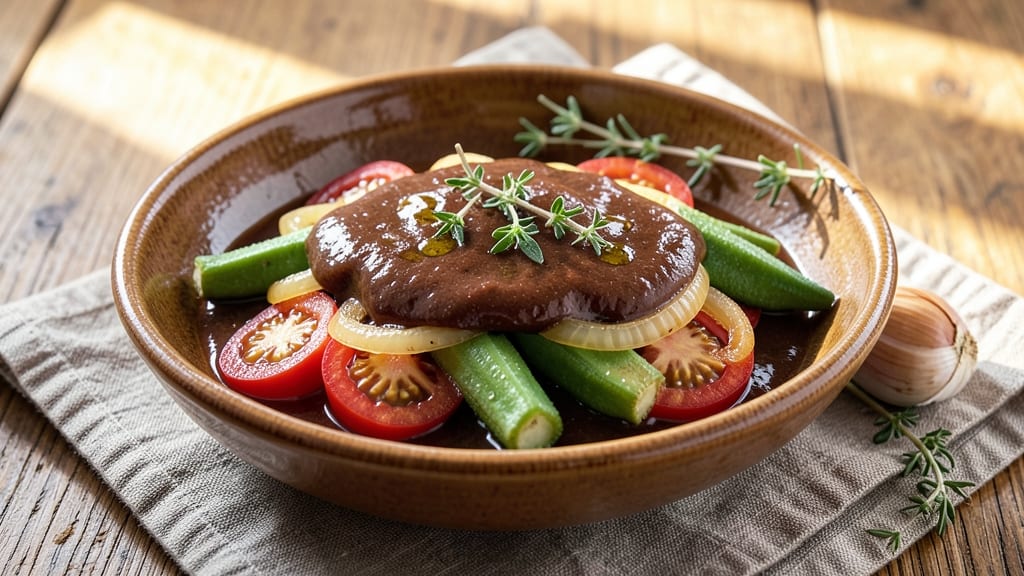
This cassareep sauce recipe unlocks the deep, earthy umami that defines Caribbean cooking—think rich stews, hearty soups, and bold marinades with just a few simple ingredients. The secret lies in simmering cassareep (a fermented cassava paste) with aromatic vegetables, creating a concentrated base that transforms ordinary dishes into something extraordinary.
I developed this version after years of working with traditional pepperpot recipes, streamlining the process without sacrificing authenticity.
The beauty of cassareep sauce is its versatility—it works as a marinade for meats, a glaze for roasted vegetables, or the star of slow-cooked stews.
What makes this recipe special is the balance of sweetness from cassareep and the savory depth of okra and tomatoes, all tied together with warm spices like thyme and garlic. The result is a sauce that's rich, complex, and packed with flavor, perfect for adding Caribbean soul to any dish.
By the time you blend and strain the simmered mixture, you'll have a thick, velvety sauce that's ready to elevate your cooking.
It keeps well in the fridge for up to a week or can be frozen for longer storage, making it a pantry staple for anyone who loves bold, umami-rich flavors. Whether you're making traditional pepperpot or experimenting with modern twists, this sauce is your secret weapon.
Modern adaptations include using it as a glaze for roasted meats or as a base for vegan stews, proving its adaptability. The instructions are straightforward, ensuring you can achieve restaurant-quality results at home. Let's get started on creating this essential Caribbean sauce!
Ingredients for cassareep sauce
Caribbean soul in a jar—just ten ingredients transform cassava's earthy depth into velvety umami richness.
| Ingredient | Amount | Notes |
|---|---|---|
| Cassareep Paste 🌿 | ½ cup | Fermented cassava paste, available at Caribbean markets |
| Okra Pods 🥒 | 1 cup | Fresh or frozen, sliced into rounds |
| Roma Tomatoes 🍅 | 4 whole | Crushed by hand for authentic texture |
| Yellow Onion 🧅 | 1 whole | Medium size, finely chopped |
| Garlic Cloves 🧄 | 4 cloves | Fresh, minced for aromatic depth |
| Fresh Thyme Leaves 🌿 | ¼ cup | Stems removed, loosely packed |
| Scotch Bonnet Pepper 🌶️ | 1 whole | Seeded for mild heat, optional |
| Vegetable Oil 🫒 | ¼ cup | Neutral flavor, like canola or avocado |
| Water 💧 | 2 cups | Filtered for best flavor |
| Sea Salt 🧂 | 1 ½ tsp | Diamond Crystal preferred |
Cassareep is the heart of this sauce, and Caribbean markets or online specialty stores are your best bet for authentic paste—look for brands like Bermuda Cassareep or Trinidadian cassareep. The okra adds that signature Caribbean thickness, so fresh pods work best, but frozen in a pinch. For tomatoes, Roma crushes beautifully by hand, releasing more flavor than canned. If you can't find Scotch bonnet, jalapeño or habanero will give you heat, just adjust the seeds. The thyme? Fresh is non-negotiable here—dried just won't cut it for that aromatic punch.
No cassareep? Substitute with 1/4 cup soy sauce plus 1 tbsp molasses for a quick umami boost, though it won't be identical. Skip the okra? Add 1 tbsp cornstarch to thicken instead. For tomatoes, San Marzano crushed is ideal, but any ripe variety works. The garlic can be roasted for 10 minutes at 400°F (425°F convection) for a sweeter base—worth the extra minute. Need to reduce heat? Remove the pepper entirely or use just the seeds. And if you're making this for a crowd, double the batch—it freezes beautifully.
This sauce is a pantry game-changer—stores for 1 week refrigerated or 3 months frozen. For freezing, portion into ice cube trays first, then transfer to a bag. The flavor actually deepens over time, so make extra. When reheating, add a splash of water to prevent thickening. Pro tip: Strain through a fine-mesh sieve for ultra-smooth results, or leave slightly chunky for rustic texture. Trust me, your slow-cooker meals will never be the same.
Why You'll Love This Recipe
- Here’s what sold me: I make a big batch, and it actually improves over three days in the fridge. The flavors meld into something richer, and I get at least five meals out of one pot. Budget-friendly? Absolutely. Waste-free? Even better.
- No Chopping Nightmare: I swear by this sauce because the okra and onions barely need dicing—just rough chop and let the heat work its magic. The cassareep paste does all the heavy lifting with its deep, earthy punch.
- Umami Bomb Combo: That first spoonful? Chef’s kiss. The cassareep’s caramelized richness meets the bright acidity of Roma tomatoes, while the garlic cloves add a slow-building warmth. It’s the kind of flavor that makes you pause mid-sip of water.
- Pot Luck Hero: Between us, this sauce is my go-to for potlucks, game days, or when I forget to plan dinner. Drizzle it over grilled chicken, toss it with rice, or serve it as a dip—it’s the MVP that never lets you down.
Step-by-step instructions for cassareep sauce
This vibrant Caribbean sauce builds layer by layer—start with aromatics, then let cassareep develop its signature depth.
Sauté Aromatics Until Fragrant
Heat the 0.25 cup vegetable oil in a medium saucepan over medium heat. Add the 1 whole yellow onion, sliced into thin half-moons, and cook for 5 minutes until translucent and just beginning to soften. The onions should release their sweetness without browning—this prevents bitterness in the final sauce.
Add the 4 cloves garlic cloves, minced, and the 1 whole Scotch bonnet pepper, seeded and finely chopped. Cook for another 2 minutes until the garlic turns golden and the pepper releases its subtle heat. Be careful not to let the garlic burn, as it will turn acrid. The pan should smell rich and aromatic—this is your flavor foundation.
Incorporate Okra and Tomatoes
Add the 1 cup okra pods, sliced into ½-inch rounds, and the 4 whole Roma tomatoes, crushed by hand. Stir well to combine with the aromatics. Cook for 8-10 minutes over medium-low heat, stirring occasionally, until the okra softens and the tomatoes break down into a chunky purée. The sauce should thicken slightly as the okra releases its natural gum, creating a velvety texture.
Here's the thing—if the mixture looks too dry, add 2 tablespoons water to keep it moving. You want a loose, saucy consistency at this stage, not a thick paste. The okra will continue to break down as it simmers, so don’t rush this step. The tomatoes should meld into the aromatics, creating a bright, tangy base.
Build Depth with Cassareep and Thyme
Lower the heat to low and stir in the 0.5 cup cassareep paste, breaking up any lumps with a wooden spoon. The sauce will darken immediately as the cassareep’s deep umami flavor infuses. Add the 0.25 cup fresh thyme leaves and the 1.5 tsp sea salt, stirring to distribute evenly. Let the mixture simmer gently for 10 minutes, uncovered, to allow the flavors to meld.
This is where the magic happens—the cassareep’s fermented notes marry with the okra’s natural sliminess and the tomatoes’ acidity. You’ll notice the sauce thicken slightly as it reduces. If it becomes too thick, whisk in 1 tablespoon water at a time until it reaches a smooth, spoonable consistency. The sauce should coat the back of a spoon but still flow freely.
Simmer to Perfection
Continue simmering for an additional 5-7 minutes until the sauce reaches your desired thickness. It should be rich, glossy, and deeply flavorful, with a balance of sweetness from the tomatoes, earthiness from the cassareep, and a hint of spice from the Scotch bonnet. Taste and adjust the seasoning—you may need a touch more salt or a squeeze of lime juice to brighten the flavors.
Remove from heat and let the sauce rest for 5 minutes before using. This resting period allows the flavors to fully integrate, ensuring a cohesive, restaurant-quality result. The sauce will thicken slightly as it cools, so don’t over-reduce it now. Serve warm over grilled fish, in stews, or as a dipping sauce for plantains or jerk chicken.
Pro Tips For Making Cassareep Sauce
- Simmer Cassareep Low: Cassareep paste burns faster than you think—keep the heat at a gentle simmer once it’s dissolved. I learned this the hard way when my sauce turned bitter after a single distracted minute. Stir constantly and resist the urge to crank the heat.
- Slice Okra Thin: Thinly sliced okra (about 1/8-inch) cooks faster and blends seamlessly into the sauce. Thick slices stay crunchy and ruin the texture—no one wants okra chunks in a smooth cassareep base.
- Char the Onion: Sauté the yellow onion until it’s deep golden, almost caramelized, before adding garlic. This step adds depth that raw onion can’t match—skip it, and your sauce tastes flat.
- Blend Tomatoes Cold: Pulse Roma tomatoes in the food processor before adding them to the pot—they’ll break down more evenly and prevent clumping. Warm tomatoes turn to mush too quickly, making the sauce gloppy.
Wine and beer pairings for this dish
Caribbean Rum Pairings
This sauce’s deep umami and subtle heat make it a perfect match for dark rum-based cocktails. A 1:1 mix of dark rum and ginger beer (like Appleton Estate Rum or Bacardi Dark) cuts through the sauce’s richness while highlighting its spicy notes.
For a non-alcoholic twist, try ginger-infused sparkling water with a squeeze of lime—it brightens the flavors beautifully. 🍹
Light-Bodied White Wines
For wine lovers, a crisp, citrusy white like Sauvignon Blanc from New Zealand or Trinidadian white wines (such as Trinidadian Sauvignon Blanc) balances the sauce’s earthiness. The wine’s acidity refreshes your palate between bites of rich stews or grilled meats. Avoid heavy whites—they’ll clash with the sauce’s bold flavors.
Craft Beer Complements
A hoppy IPA (like Trinidadian craft beers or Stone Ruination) works surprisingly well with cassareep sauce. The beer’s bitterness contrasts the sauce’s sweetness, while its maltiness complements the cassareep’s depth. For a smoother option, try a light lager—it won’t overpower the sauce’s complexity. 🍺
Non-Alcoholic Options
For those skipping alcohol, sparkling hibiscus tea (like aguas frescas) adds a floral, tangy note that pairs perfectly. Alternatively, a cucumber-mint infused water with a splash of lime keeps the dish refreshing. These options let the sauce’s flavors shine without competing for attention.
Modern Twist: Spiced Rum Glaze
Take your pairings to the next level by glazing grilled meats with spiced rum (like Havana Club 7) mixed with a spoonful of this sauce. The rum’s caramelized sweetness enhances the sauce’s umami, creating a sticky, flavorful crust. Serve with roasted plantains for a Caribbean-inspired feast. ✨
Nutrition facts
Frequently asked questions
What exactly is cassareep and where can I find it?
Cassareep is a fermented cassava paste with a deep, earthy umami flavor—it's the heart of Caribbean cooking! You'll find it in Caribbean markets, specialty Latin food stores, or online (brands like Bermuda Cassareep or Trinidadian cassareep work best). If unavailable, substitute with ¼ cup soy sauce + 1 tbsp molasses for a quick umami boost, though it won't be identical.
Can I make this sauce without okra?
Yes! Okra adds thickness, but you can substitute with 1 tbsp cornstarch or 1 tbsp tomato paste to maintain body. The sauce will be slightly thinner but still flavorful. For extra richness, add 1 tbsp coconut milk at the end of cooking.
How long does this sauce keep and can I freeze it?
Store in an airtight container in the fridge for 1 week or freeze for 3 months. For freezing, portion into ice cube trays first—this makes it easy to thaw just what you need. The flavor actually improves over time, so make extra!
What are the best ways to use cassareep sauce?
This versatile sauce shines in pepperpot stews, marinades for grilled meats, or as a glaze for roasted vegetables. Try it drizzled over black beans, mixed into jerk seasoning, or simmered with coconut milk for a rich curry base.
Why did my sauce turn too thick/thin?
If too thick, whisk in 1 tbsp water at a time. Too thin? Simmer uncovered for 5-10 more minutes to reduce. The okra naturally thickens as it cooks—if you skipped it, reduce heat slightly and cook longer. For instant thickening, blend in 1 tsp cornstarch mixed with water.