
Sauces & Condiments
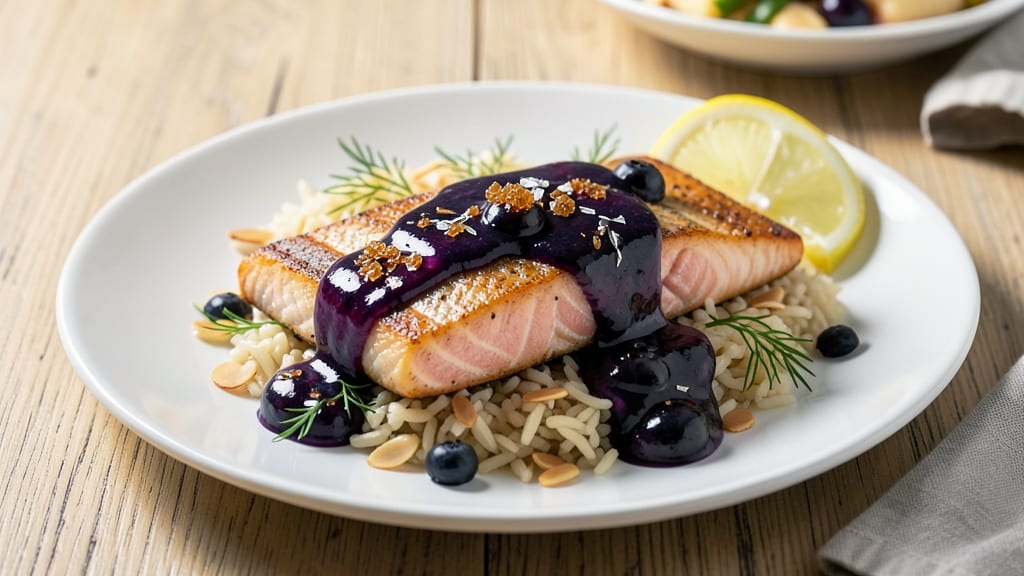
This blueberry sauce recipe transforms ordinary fish into an extraordinary meal with its perfect balance of tart and sweet flavors. The secret lies in simmering fresh blueberries with just the right amount of sugar, a splash of vinegar, and a touch of cornstarch to create a glossy, velvety glaze.
I developed this sauce after years of testing pairings with salmon, trout, and cod—each bite becomes richer, more vibrant, and deeply flavorful when drizzled with this bright, fruity accompaniment.
The process is straightforward but yields restaurant-quality results. You’ll start by combining blueberries, sugar, and a splash of lemon juice to create a natural sweet-tart foundation. A cornstarch slurry thickens the sauce just enough to coat the fish beautifully without overwhelming its delicate flavor.
The vinegar adds a subtle brightness that cuts through the richness of the fish, ensuring every spoonful is perfectly balanced.
What makes this sauce truly special is its versatility—it elevates grilled, baked, or pan-seared fish equally well, turning a simple weeknight dinner into something memorable. The glossy finish not only looks stunning but also clings to the fish, delivering bursts of juicy blueberry flavor with every bite.
Once made, it keeps beautifully in the refrigerator for up to five days, making it a perfect make-ahead option for special occasions.
Whether you’re serving this sauce over flaky salmon or pairing it with buttery cod, the result is a harmonious blend of sweet, tart, and savory notes that complements the fish’s natural elegance.
The sauce’s simplicity belies its impact—just a few ingredients, minimal effort, and a transformative effect on any fish dish. Let’s dive into the recipe and bring this bright, fruity glaze to your table.
Ingredients for blueberry sauce recipe for fish
Fresh blueberries and sugar create this restaurant-worthy fish glaze with minimal effort.
| Ingredient | Amount | Notes |
|---|---|---|
| Fresh Blueberries 🫐 | 1 ½ cups | Pitted if frozen, fresh preferred |
| Granulated Sugar 🍚 | ½ cup | Adjust to taste for tartness |
| Cornstarch 🌾 | 1 tbsp | For glossy, velvety texture |
| White Vinegar 💧 | 1 tbsp | Brightens flavor beautifully |
| Lemon Juice 🍋 | 1 tbsp | Freshly squeezed preferred |
| Water 💧 | ¼ cup | For thinning if needed |
| Extra-Virgin Olive Oil 🫒 | 1 tbsp | For glossy finish, optional |
| Salt 🧂 | ¼ tsp | Kosher or sea salt |
| Fresh Thyme Leaves 🌿 | 2 tsp | Optional, for herbal depth |
Blueberries are the star here—fresh is ideal, but frozen works too (just thaw and drain). I always buy organic blueberries from the grocery store's refrigerated section—they keep their vibrant color and flavor longer. For sugar, granulated works best since it dissolves smoothly, but brown sugar adds a subtle caramel note if you prefer. The cornstarch is non-negotiable for that glossy finish—it's what makes this sauce cling to fish like a dream. If you're using frozen blueberries, pat them completely dry before adding to prevent a watery sauce.
No fresh thyme? Dried thyme at half the amount works in a pinch. Short on vinegar? Substitute lemon juice at 1:1 ratio, but you'll lose that subtle tang. The olive oil is optional but adds a luxurious sheen—Trader Joe's or Whole Foods carry great extra-virgin options. For extra tartness, add 1/4 tsp of lemon zest. If your sauce thickens too much, just whisk in a splash of water or extra lemon juice. The key is balance—taste as you go!
This sauce keeps beautifully in the fridge for 5-7 days in an airtight container. For longer storage, freeze portions in ice cube trays—just thaw overnight in the fridge before using. The sauce reheats perfectly—simmer gently for 2-3 minutes until glossy again. I always make extra because it disappears fast. Perfect for drizzling over grilled salmon, baked cod, or even as a topping for fish tacos. The flavors actually improve after sitting overnight—trust me on this!
Why You'll Love This Recipe
- Five-Ingredient Magic: I swear by this—just berries, sugar, cornstarch, vinegar, and lemon. That’s it. No fancy gadgets, no stress. The sauce thickens like a dream while you’re flipping the fish, and the tangy-sweet balance comes together faster than you can say "dinner’s ready."
- Bright Tangy Kick: The white vinegar and lemon juice cut through the richness of fish like a knife. Honestly? It’s the secret weapon that turns a simple pan-seared fillet into something special—no one expects (or resists) that perfect balance of sweet and sharp.
- Weeknight Wonder: I make this when I’m prepping meals for the week—it keeps for days in the fridge and pairs with baked, grilled, or even canned fish. (Yes, even on a Tuesday night when you’re too tired to think.) The cornstarch slurry makes it thick and glossy, so it doesn’t get watery when reheated.
- Budget Brightener: Fresh blueberries might seem pricey, but a single pint stretches across multiple meals. The sugar and vinegar are pennies, and the sauce stretches over fish, chicken, or even pancakes. Between us? It’s the kind of recipe that makes groceries go further without sacrificing flavor.
Step-by-step instructions for blueberry sauce recipe for fish
This tart-sweet glaze comes together in minutes and transforms simple fish into something extraordinary.
Combine Blueberries and Sugar in a Saucepan
Place the 1.5 cups fresh blueberries in a medium saucepan and add the 0.5 cup granulated sugar. I like to use fresh blueberries here—they burst beautifully when heated and give a brighter flavor than frozen. Stir to make sure the sugar coats the berries evenly, then add the 1 tbsp white vinegar and 1 tbsp lemon juice.
This acidity balance is key—it cuts through the sweetness and brightens the blueberries. If you're using frozen blueberries, don't thaw them first. The cold berries help prevent scorching while they cook. Keep the heat at medium-low for now—you want gentle cooking to preserve the berries' natural flavors.
Cook Until Blueberries Break Down
Bring the mixture to a gentle simmer and let it cook uncovered for 8-10 minutes, stirring occasionally. You'll see the blueberries begin to soften and release their juices, creating a thick, jam-like consistency. The sauce should smell intensely fruity with a hint of vinegar—this is when you know it's working.
Here's the thing—don't walk away. The sauce can burn quickly once the berries break down. If it starts to bubble too vigorously, reduce the heat slightly. You're aiming for a smooth, velvety texture, not a thick jam. When the blueberries have mostly disintegrated and the sauce looks thickened, it's time for the next step.
Thicken with Cornstarch Slurry
In a small bowl, whisk together the 1 tbsp cornstarch with the 0.25 cup water until completely dissolved. This creates a smooth slurry that will help thicken your sauce beautifully. Pour this mixture into the simmering blueberry sauce while stirring constantly.
The cornstarch will immediately begin to thicken the sauce, creating that glossy, velvety texture perfect for drizzling over fish. Keep stirring for 2-3 minutes until the sauce reaches your desired consistency—it should coat the back of a spoon but still be pourable. If it's too thick, add 1-2 tablespoons more water to loosen it.
Finish with Olive Oil and Seasonings
Remove the sauce from heat and stir in the 1 tbsp extra-virgin olive oil, 0.25 tsp salt, and 2 tsp fresh thyme leaves (if using). The olive oil adds richness and gives the sauce a beautiful sheen, while the thyme adds an herbal depth that pairs perfectly with fish. If you're not using thyme, a pinch of cinnamon or a splash of vanilla would work beautifully too.
Let the sauce sit for 5 minutes off the heat—this allows all the flavors to meld together. Taste and adjust the seasoning if needed. You might want to add a bit more sugar if you prefer it sweeter or a touch more lemon juice if it needs more brightness. The sauce should be perfectly balanced between tart and sweet.
Strain and Serve Warm
For a completely smooth sauce, strain it through a fine-mesh sieve into a clean bowl, pressing gently on the blueberry solids to extract all the juices. If you prefer a slightly rustic texture with small blueberry pieces, you can skip this step. The strained version looks particularly elegant when drizzled over perfectly cooked fish.
Keep the sauce warm in a small saucepan over very low heat while you cook your fish. This blueberry glaze works beautifully with pan-seared trout, grilled salmon, or even baked cod. Just spoon it over the fish right before serving—it'll create an instant showstopper that makes every bite taste like a gourmet restaurant experience.
Pro Tips For Making Blueberry Sauce Recipe For Fish
- Simmer Low and Slow: I learned this the hard way—boiling blueberry sauce too fast turns it into a mushy, watery mess. Keep it at a gentle simmer (tiny bubbles, not rolling) for 10-12 minutes after thickening, or those berries will burst and ruin the texture. Trust me, your sauce will thank you.
- Rinse and Strain Berries: Fresh blueberries hide tiny stems and grit—skip rinsing, and you’ll end up with a gritty sauce. Give them a quick rinse in cold water, then drain and pat dry (seriously, no soggy sauce here). This also removes that weird waxy coating some store-bought berries have.
- Mix Cornstarch Wet First: Dumping dry cornstarch into the pot and stirring like crazy? You’re asking for lumps. Whisk it with a splash of cold water or lemon juice first, then pour it in slowly while stirring constantly. I’ve seen this go wrong more times than I’d like to admit—don’t be that person.
- Balance the Vinegar: White vinegar cuts through the sweetness, but too much and your sauce tastes like you’re pickling the fish. Start with 1 tablespoon, taste as you go, and add another only if needed. Lemon juice is your backup—it brightens without overpowering. (Yes, even if you’re impatient like me.)
Storing and reheating your blueberry sauce recipe for fish
Fridge Storage Tips
Transfer your blueberry sauce to an airtight glass container—I use Pyrex with a tight-sealing lid—to keep it fresh for up to 5-7 days. The sauce actually improves in flavor overnight as the sugars and acids meld together beautifully.
Store it in the back of your fridge where it's coolest, and always let it cool completely before sealing to prevent condensation. 💛
Freezing for Later
For longer storage, freeze the sauce in ice cube trays—this makes it easy to thaw just what you need. Once frozen, transfer the cubes to a freezer-safe bag and flatten to save space.
Thaw overnight in the fridge before using, then reheat gently on the stove for 2-3 minutes until glossy again. The texture remains perfect, though you might need to add 1 tsp water if it thickens during freezing.
Reheating Methods
I always reheat my sauce on the stovetop—it's the gentlest method that preserves the glossy finish. Pour the chilled sauce into a small saucepan and warm over low heat for 3-5 minutes, stirring occasionally.
If it thickens too much, whisk in 1 tsp water or lemon juice to restore its silky consistency. Avoid microwaving—it can make the sauce grainy and lose its shine. ✨
Make-Ahead for Meals
Double the recipe and store half for later—this sauce disappears fast! I like to make a big batch on Sundays and keep it in the fridge for the week. It pairs perfectly with grilled salmon or baked cod, turning a simple weeknight dinner into something special.
Just reheat and drizzle over your fish right before serving for that restaurant-quality touch.
Reviving Day-Old Sauce
If your sauce has thickened overnight, don't worry—just whisk in 1-2 tsp water to loosen it up. For extra brightness, add ½ tsp lemon juice to refresh the tartness. The sauce's texture should be smooth and pourable again, ready to elevate your next fish dish.
A quick stir on low heat for 1 minute ensures it's warm and glossy for serving.
Portioning for Serving
Use small ramekins or shot glasses to portion the sauce for serving—it looks elegant and makes plating effortless. Keep one ramekin warm on the stove while you cook your fish, then simply spoon it over the plate.
The warm sauce will melt beautifully over the fish, creating a stunning presentation that tastes just as good as it looks. 💫
Nutrition facts
Frequently asked questions
Can I use frozen blueberries for this sauce?
Yes, but with one key tip: don't thaw them first! The cold berries help prevent scorching while they cook. Just pat them completely dry before adding to avoid a watery sauce. For best results, use organic frozen blueberries from the grocery store—they hold their color and flavor better than non-organic varieties.
What's the best fish to pair with this blueberry sauce?
This sauce shines with rich, flaky fish that can handle its sweet-tart brightness. Try it with pan-seared salmon, grilled trout, or baked cod. For extra contrast, pair it with buttery white fish like halibut or mahi-mahi. The sauce's glossy texture clings beautifully to cooked fish, making every bite feel luxurious.
How do I fix a sauce that's too thick or too thin?
For a thick sauce, whisk in 1 tsp water or lemon juice while warm. For a thin sauce, simmer uncovered for 2-3 minutes to reduce it or add ½ tsp cornstarch slurry (mix ½ tsp cornstarch with 1 tsp water). The key is patience—let it simmer gently rather than rushing the thickening process.
Can I make this sauce ahead of time?
This sauce actually improves overnight as the flavors meld. Make it 1-2 days ahead and store in an airtight container in the fridge. Reheat gently on the stove for 3-5 minutes until warm and glossy. The longer it sits, the more balanced the sweet-tart flavors become—perfect for make-ahead meals.
What if I don't have cornstarch?
Use arrowroot powder as a 1:1 substitute—it works just as well for thickening. In a pinch, you can also try ½ tsp tapioca starch, but cornstarch or arrowroot will give you the smoothest, glossiest finish. If you're completely without thickeners, the sauce will still be delicious but slightly runnier—just drizzle it generously over your fish.