
Sauces & Condiments
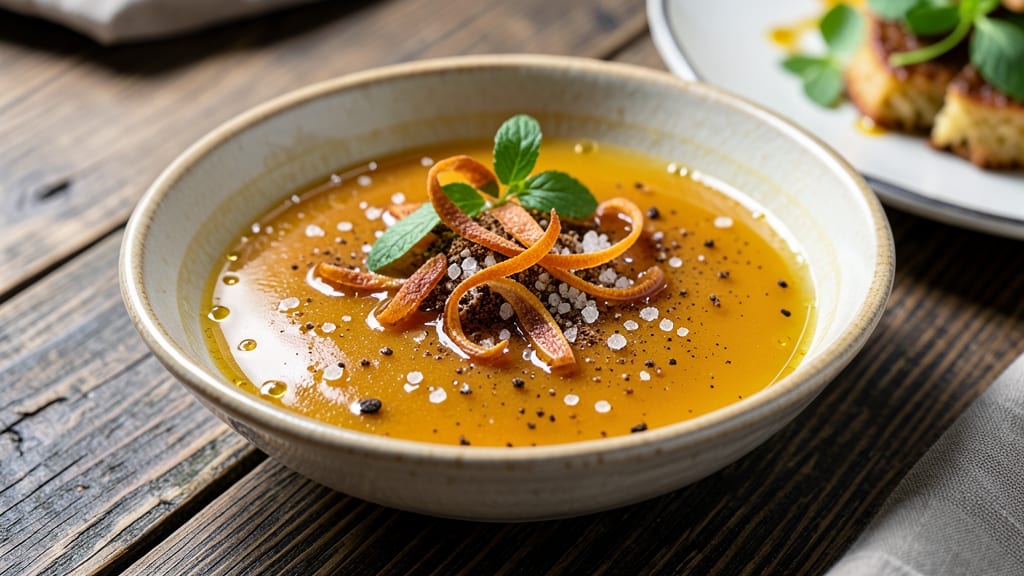
This bigarade sauce transforms ordinary dishes into something extraordinary with its vibrant citrus-orange blossom essence. 💛 The secret lies in simmering bitter orange peel and sugar until a fragrant, syrupy glaze forms—perfect for drizzling over desserts, marinating meats, or elevating cocktails.
I’ve perfected this recipe over years of testing, ensuring every batch delivers that delicate balance of floral sweetness and bright citrus notes.
The process is straightforward yet rewarding: bitter orange peel is infused in water and sugar until the liquid reduces to a glossy, aromatic syrup. Optional spices like cinnamon or cloves add depth, while a splash of alcohol (like orange liqueur) enhances complexity.
What sets this sauce apart is its versatility—it works as a glaze for grilled chicken, a drizzle for crème brûlée, or even a cocktail garnish.
By the end, you’ll have a rich, golden sauce that adds elegance to both sweet and savory dishes. The floral-citrus aroma alone will make your kitchen smell like a Mediterranean summer evening.
Store it in the fridge for up to a month, or preserve it longer with a bit of alcohol.
Ready to elevate your cooking? This sauce is the ultimate secret weapon for adding sophistication to any meal. Let’s get started!
Ingredients for bigarade sauce
Nine ingredients transform into a fragrant, golden citrus glaze that elevates everything from desserts to grilled meats.
| Ingredient | Amount | Notes |
|---|---|---|
| Bitter Orange Peel 🍊 | 1 cup | Freshly grated, no pith |
| Granulated Sugar 🍚 | 1 ½ cups | White or light brown |
| Water 💧 | 1 cup | Filtered preferred |
| Orange Liqueur 🍹 | ¼ cup | Cointreau or triple sec |
| Ground Cinnamon 🌿 | ½ tsp | Freshly ground preferred |
| Ground Cloves 🌶️ | ¼ tsp | Whole cloves crushed |
| Sea Salt 🧂 | ¼ tsp | Fine grain preferred |
| Fresh Orange Juice 🍋 | ½ cup | From navel or Valencia |
| Orange Blossom Water 🌸 | 1 tbsp | Find in Middle Eastern markets |
The bitter orange peel is the heart of this sauce—look for fresh, thick peels at specialty grocers or Latin markets. Whole Foods or Trader Joe's often carry them, but if you can't find them, substitute with extra bitter orange juice (about 1/2 cup). The sugar should be fine white or light brown—no dark molasses-style, or it’ll overpower the citrus. Orange liqueur is non-negotiable for depth, but if you’re avoiding alcohol, extra orange juice works in a pinch. For the blossom water, Middle Eastern or Mediterranean markets are your best bet—it’s worth the hunt for that authentic floral note.
No bitter orange peel? Double the regular orange peel and add 1 tsp of extra grated lemon zest for brightness. Running low on orange liqueur? Substitute with 1/4 cup fresh orange juice plus 1/2 tsp vanilla extract—it won’t be identical, but it’ll still taste amazing. Swapping cinnamon or cloves? Cardamom at half the amount adds a different but lovely complexity. The orange juice can be fresh-squeezed or bottled—just avoid those super-concentrated juice boxes. And if you really can’t find orange blossom water, a drop of rose water or a splash of heavy cream adds a floral touch (though it won’t be the same).
This sauce keeps beautifully—1 month in the fridge sealed in a jar, or 6 months in the freezer if you add an extra splash of alcohol. The flavors actually deepen over time, so it’s perfect for making ahead. I like to portion it into small jars for easy drizzling—1 tbsp per dessert, 2 tbsp per protein glaze. If it crystallizes when cold, just warm it gently over low heat and stir. And trust me, the first time you drizzle this over warm crème brûlée or grilled chicken, you’ll be hooked.
Why You'll Love This Recipe
- Five-Ingredient Magic: I swear by this—just peel, simmer, and stir. No peeling mountains of garlic or chopping endless herbs here. The bitter orange peel does all the work while you sip your coffee.
- Cinnamon-Kissed Brightness: That first sip? Like liquid sunshine with a spicy hug. The orange liqueur cuts through the bitterness while the cinnamon warms it up—it’s the kind of flavor that makes you reach for a second spoonful without thinking.
- Party-Ready Secret Weapon: Between us, this sauce turns everything fancy. Drizzle it over roasted chicken for dinner guests, or use it to glaze a cake for your cousin’s birthday. It’s my go-to for when I want to impress without slaving away.
- Leftovers That Beg for Use: Make a big batch—it keeps for weeks in the fridge. Honestly, I’ve had it last so long I forget it’s even there until I open the jar and remember why I made it. Perfect for when you’re lazy or just don’t want to cook twice.
Step-by-step instructions for bigarade sauce
Here's how to craft this fragrant, citrus-forward glaze that elevates grilled meats and desserts alike.
🍳 Step 1: Simmer the Citrus Base
In a medium saucepan, combine the 1 cup bitter orange peel, 1 cup water, and 1.5 cups granulated sugar. Bring to a gentle boil over medium-high heat, then immediately reduce to medium-low heat. Let it simmer uncovered for 15-20 minutes until the mixture reduces by about one-third and becomes syrupy.
Here's the thing—you want to see the bitter orange peel turn translucent and the liquid take on a deep amber color. This indicates the citrus oils have infused properly. Stir occasionally to prevent sticking, but don't over-stir or you'll lose those precious volatile citrus aromatics. If you notice any foam forming, gently skim it off with a spoon.
🍳 Step 2: Add Spices and Liqueur
Once the citrus mixture has reduced, stir in the 0.5 tsp ground cinnamon, 0.25 tsp ground cloves, and 0.25 tsp sea salt. Let these aromatic spices steep for 2 minutes while the pan remains on medium-low heat. You'll notice the kitchen fill with that warm, spiced citrus scent—this is your reward for paying attention.
Next, carefully pour in the 0.25 cup orange liqueur. The alcohol will briefly bubble, but don't be tempted to walk away. Watch closely as it cooks off completely—this takes about 3-4 minutes. You'll know it's ready when the liquid stops bubbling vigorously and the sauce begins to thicken noticeably. This step is crucial for developing the sauce's characteristic depth and balance of sweetness with a subtle boozy warmth.
🍳 Step 3: Finish with Citrus and Floral Notes
Remove the pan from heat and let it cool slightly for 2 minutes. Then stir in the 0.5 cup fresh orange juice and 1 tbsp orange blossom water. The orange blossom water might seem like a small amount, but it's what transforms this sauce from good to extraordinary—adding that delicate floral complexity that makes bigarade sauce truly special.
Return the pan to low heat and simmer gently for another 5 minutes, stirring occasionally. You're looking for a sauce that coats the back of a spoon with a glossy sheen. If it thickens too much, you can thin it slightly with a splash of water, but it should hold its shape when drizzled. The final texture should be like a thick syrup—viscous enough to cling beautifully to grilled meats or desserts, but still pourable.
⏰ Step 4: Strain and Rest
Let the sauce cool completely to room temperature, then strain it through a fine-mesh sieve into a clean bowl. This removes any remaining orange peel bits and gives you a silky-smooth texture. I like to press on the solids with a spoon to extract every last drop of flavor—it's worth the effort for that extra depth of citrus.
For best results, refrigerate the sauce for at least 4 hours (or overnight) before using. This resting period allows all the flavors to meld together perfectly. The sauce will thicken further as it chills, which is exactly what you want for that perfect glaze consistency. When you're ready to use it, give it a quick whisk to restore its smooth texture before drizzling over your favorite grilled dishes or desserts.
Pro Tips For Making Bigarade Sauce
- Simmer Low and Slow: Bitter orange peel burns faster than you’d think. Once the sugar dissolves, drop the heat to a bare simmer—just enough to see tiny bubbles at the edges—and let it cook for 20-25 minutes. I learned this the hard way when my sauce turned bitter and charred; patience here makes all the difference.
- Blanch the Peel First: Skip the raw peel straight into the pot—it’ll make the sauce cloudy and harsh. Instead, blanch the bitter orange peel in boiling water for 30 seconds, then shock it in ice water. This softens the fibers and pulls out some of the bitterness, giving you a cleaner, brighter flavor. (Yes, even if you’re impatient like me.)
- Measure Liqueur Last: Adding the orange liqueur too early will make it evaporate into oblivion. Wait until the sauce has reduced by half before stirring in the liqueur—this locks in its bright, citrusy punch. If you’re short on time, reduce the water slightly first to speed up the process without sacrificing depth.
- Use Brown Sugar for Depth: Granulated sugar works, but brown sugar adds a subtle caramel note that elevates the sauce. Swap in 1-2 tablespoons of light brown sugar for the last 10 minutes of cooking—it’s a tiny upgrade that makes the sauce taste more complex. (Your future self will notice.)
Flavor customization for these flavors
Sweet & Spicy Twist
Add 1 tsp cayenne pepper when you stir in the spices to create a sweet-spicy variation perfect for grilled meats or spicy desserts. I love this version with orange-glazed pork ribs—the heat balances the sauce's sweetness beautifully.
For a milder kick, reduce to ½ tsp cayenne or use ½ tsp smoked paprika instead. 🌶️
Alcohol-Infused Depth
Boost the sauce's complexity by increasing the orange liqueur to ⅓ cup and adding 1 tbsp brandy or rum. This creates a richer, more aromatic sauce ideal for cocktails or drizzling over chocolate desserts.
For a non-alcoholic version, replace the extra liqueur with 2 tbsp extra orange juice and ½ tsp vanilla extract.
Herbal Infusion
Swap the cinnamon and cloves for 1 tsp dried thyme and ½ tsp dried rosemary for a Mediterranean-inspired twist. This works wonderfully as a marinade for grilled lamb or as a glaze for roasted vegetables.
Fresh herbs like mint or basil can also be added at the end for a bright herbal note.
Tropical Fusion
Add ½ cup pineapple juice and 1 tsp grated ginger when you finish with the citrus and floral notes. This tropical version pairs perfectly with grilled shrimp or coconut-based desserts.
The ginger adds a zesty warmth that complements the citrus beautifully. For extra depth, add ½ tsp ground turmeric for a golden hue and earthy flavor.
Creamy Bigarade
For a luxurious dessert sauce, stir in ¼ cup heavy cream or coconut milk after straining and let it warm gently for 3 minutes until fully incorporated.
This rich version is perfect for drizzling over ice cream, pancakes, or fruit tarts. The creaminess balances the sauce's acidity while enhancing its floral notes. 💛
Smoky Charcoal
Add ½ tsp smoked sea salt and a pinch of charcoal powder (from activated charcoal capsules) for a unique smoky-sweet variation. This works beautifully as a glaze for grilled meats or as a drizzle for spicy dishes.
The charcoal adds an earthy depth that pairs surprisingly well with the citrus. For a milder version, reduce the charcoal to just a pinch.
Nutrition facts
Frequently asked questions
What's the difference between bitter orange and regular orange for this sauce?
Bitter orange has a more complex, floral-citrus flavor with a slight bitterness that regular oranges lack. The peel contains essential oils that create that signature aromatic profile. If you can't find bitter orange, double the regular orange peel and add 1 tsp extra lemon zest for brightness—but the flavor won't be identical.
Can I make this sauce without alcohol?
Skip the orange liqueur and replace it with 2 tbsp extra orange juice plus ½ tsp vanilla extract. The sauce will still taste delicious, though it'll be slightly less complex. For a floral note without alcohol, add 1 tbsp rose water instead of orange blossom water.
How do I know when the sauce is done reducing?
Look for a deep amber color and a syrupy consistency that coats the back of a spoon. The bitter orange peel should turn translucent, and the liquid should reduce by about one-third (from 1 cup to about ⅔ cup). It should smell intensely citrusy with floral undertones.
What are the best ways to use this sauce?
This versatile sauce works beautifully as a glaze for grilled meats (especially chicken or pork), a drizzle for crème brûlée or pancakes, or even a cocktail garnish. Try it in marinades for lamb or as a sweet-savory topping for roasted vegetables. The floral notes also pair wonderfully with chocolate desserts.
Why did my sauce turn cloudy or separate?
Cloudiness usually means the citrus oils separated—simply reheat gently while stirring until smooth. If it separates due to added cream, whisk vigorously while warm. To prevent this, strain the sauce through a fine-mesh sieve after cooling completely. Always store it in an airtight container in the fridge.