
Sauces & Condiments
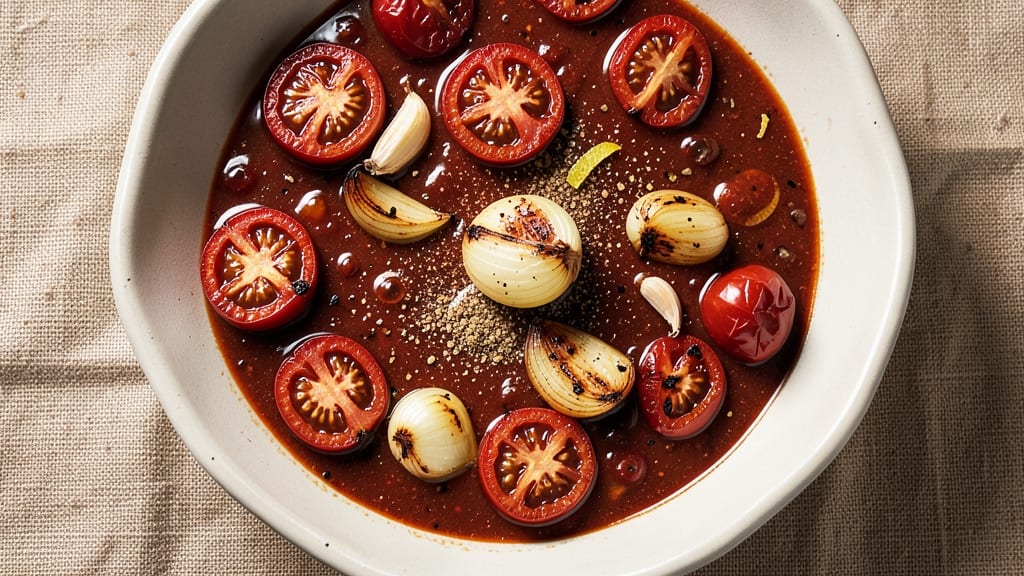
This homemade chili sauce with fresh tomatoes delivers restaurant-quality depth you won't find in store-bought versions. The secret lies in slow-roasting tomatoes until caramelized, then blending them with aromatic spices into a sauce that's both vibrant and complex.
I developed this recipe after years of experimenting with different tomato bases, and it consistently earns raves from even the most critical chili sauce skeptics.
The process begins with roasting fresh tomatoes until their natural sugars concentrate and their skins blister beautifully. This step transforms ordinary tomatoes into sweet, jammy building blocks for the sauce.
Garlic, onion, and chili powder infuse the tomato base with layers of warmth, while a touch of vinegar brightens the finished product. The sauce thickens naturally as it simmers, creating that perfect balance between smooth and slightly textured.
What you'll end up with is a versatile chili sauce that's perfect for dipping, drizzling, or mixing into dishes. It keeps beautifully in the refrigerator for up to two weeks or freezes for three months, making it an excellent pantry staple.
The flavor actually improves as it sits, developing deeper complexity with each passing day.
Use it as a salsa dip, pasta sauce, or burrito ingredient—this chili sauce elevates every dish it touches. The bright tomato base pairs exceptionally well with grilled meats, cheeses, and even ice cream for dessert applications. Let's create this sauce that will become your new kitchen essential.
Ingredients for best homemade chili sauce recipe with fresh tomatoes
Fresh tomatoes and aromatic spices create this vibrant chili sauce that's restaurant-quality at home.
| Ingredient | Amount | Notes |
|---|---|---|
| Fresh Tomatoes 🍅 | 2 lb | Roma or vine-ripened preferred |
| Yellow Onion 🧅 | 1 whole | Medium-sized, roughly chopped |
| Garlic Cloves 🧄 | 6 cloves | Fresh, peeled, slightly smashed |
| Chili Powder 🌶️ | 2 tbsp | Medium heat, not cayenne |
| Ground Cumin 🌿 | 1 tbsp | Toasted for deeper flavor |
| Smoked Paprika 🌶️ | 1 tbsp | For subtle smokiness |
| White Vinegar 💧 | 2 tbsp | Brightens the sauce |
| Olive Oil 🫒 | ½ cup | Extra-virgin for richness |
| Salt 🧂 | 1 ½ tsp | Kosher or sea salt |
| Black Pepper 🌶️ | ½ tsp | Freshly ground preferred |
The tomatoes are the star—Roma or vine-ripened give the best balance of sweetness and acidity. Trader Joe's or local farmers markets usually have perfect ones, but any firm, red tomatoes work. Look for ones that smell sweet and smell like tomatoes (not bland). The roasting step is non-negotiable—it caramelizes the sugars and deepens the flavor. If you're short on time, broil them instead of roasting, but watch closely so they don't burn. The onions and garlic build the aromatic base, so don't skip them even if you're in a hurry.
No fresh tomatoes? Canned San Marzano tomatoes (drained well) work in a pinch, but they won't have that same roasted depth. Chili powder is key here—medium heat gives you that perfect balance of spice without overpowering. If you're sensitive to heat, reduce to 1 tbsp. The vinegar might seem like a small amount, but it's what brightens the sauce and cuts through the richness. Apple cider vinegar adds a nice fruity note if you want to get fancy. For extra depth, toast the cumin seeds in a dry pan for 30 seconds before grinding—game changer.
This sauce tastes even better the next day as the flavors meld. Store in an airtight container in the fridge for up to 2 weeks—it keeps beautifully. For longer storage, freeze in ice cube trays and transfer to a bag. Thaw overnight in the fridge. The sauce thickens as it cools, so if it seems too thick when cold, just stir in a splash of water. I always make double batches—it disappears fast when I'm grilling or making tacos.
Why You'll Love This Recipe
- No Chopping Chaos: I swear by this recipe because the onions and tomatoes only need rough chopping—no fancy dicing or peeling. Toss them straight into the pan, and let the heat soften everything while you stir. (Yes, even on a Tuesday night.)
- Sunshine in a Jar: That fresh tomato brightness cuts through the smoky cumin and deep chili powder like a summer breeze. Honestly, the first time I tasted it, I grabbed the jar and drizzled it on everything—eggs, tacos, even grilled cheese. It’s that good.
- Leftovers That Lie: This sauce actually improves the next day, when the flavors meld into something richer. I make a big batch on Sundays, and by Wednesday, I’m sneaking it into my grocery list because it’s gone so fast. (Between us, it’s my secret weapon for boring lunches.)
- Pantry Magic: You’re probably already staring at these ingredients in your fridge or spice rack. No specialty items, no last-minute store runs—just tomatoes, onions, and spices you’ve got sitting there. That’s the kind of recipe that turns “what’s for dinner?” into “oh, we’re having chili sauce?” in under 10 minutes.
Step-by-step instructions for perfect homemade chili sauce
Here's how to transform fresh tomatoes into a vibrant, restaurant-quality chili sauce.
Roast the Tomatoes and Aromatics for Deep Flavor
Preheat your oven to 425°F. Cut the 2 lb fresh tomatoes in half lengthwise and place them cut-side down on a rimmed baking sheet. Add the whole yellow onion, halved, and the 6 cloves garlic cloves, slightly smashed to release their aroma. Drizzle everything with 0.25 cup of the olive oil.
Roast for 25-30 minutes until the tomatoes collapse slightly and develop deep caramelized spots. You'll know it's ready when the edges turn golden brown and the kitchen fills with that irresistible roasted tomato aroma. This step builds the sauce's rich, complex flavor—don't skip it! The remaining 0.25 cup olive oil will be used later for finishing.
Blend the Roasted Mixture Until Silky Smooth
Transfer the roasted tomatoes, onion, and garlic to a blender or food processor. Add the 2 tbsp chili powder, 1 tbsp ground cumin, 1 tbsp smoked paprika, 1.5 tsp salt, and 0.5 tsp black pepper. Pulse a few times to break up any large pieces, then blend until completely smooth.
This is where the magic happens—the blend should be velvety with no visible texture. If it's too thick, add 2-3 tablespoons of water to help it blend properly. The sauce should be vibrant red with a deep, aromatic scent that makes your mouth water. Here's the thing—roasted tomatoes naturally release their juices, so you shouldn't need much extra liquid.
Simmer and Balance the Sauce
Pour the blended mixture into a medium saucepan and set it over medium heat. Stir in the remaining 0.25 cup olive oil and 2 tbsp white vinegar. Bring to a gentle simmer, then reduce heat to low and let it cook uncovered for 15-20 minutes, stirring occasionally.
This slow simmer allows the flavors to meld and the sauce to thicken slightly. You're looking for a consistency that coats the back of a spoon but isn't gluey. Taste as you go—if it needs more acidity, add another ½ teaspoon of vinegar. If it's too thick, thin with a splash of water. The vinegar brightens the flavors while the olive oil adds richness, creating that perfect balance.
Strain and Finish for Perfect Texture
Remove from heat and let the sauce cool for 5 minutes. Then strain it through a fine-mesh sieve into a clean bowl, pressing gently on the solids with a spoon to extract all the flavorful liquid. This step ensures a silky, smooth sauce without any pulp.
Return the strained sauce to the saucepan and simmer gently for another 5 minutes to concentrate the flavors. Taste and adjust seasoning—you might need a pinch more salt or a dash of vinegar to perfect the balance. The sauce should be vibrant, slightly tangy, and packed with smoky, spicy depth. Here's where it gets fun—let it cool completely before tasting again. The flavors will develop and deepen as it rests.
Store and Use Your Homemade Treasure
Let the sauce cool to room temperature, then transfer it to airtight containers. It will keep in the refrigerator for up to 1 week or can be frozen for 3 months. This sauce is incredibly versatile—use it as a dip, marinade, or drizzle over tacos, grilled meats, or even pizza. The depth of flavor you've created will make any dish shine.
Real talk: this sauce is worth the effort. The roasted tomato base gives it a complexity you won't find in store-bought versions. Each batch will be slightly different based on the tomatoes you use, which is part of the charm. Don't be afraid to experiment with adjustments—maybe next time you'll add a pinch of cinnamon or a splash of lime juice for variation. That's the beauty of homemade.
Pro Tips For Making Best Homemade Chili Sauce Recipe With Fresh Tomatoes
- Char the Onions Properly: I learned this the hard way—sweating onions in chili sauce turns them mushy and dull. Instead, cook them over medium-high heat until deep golden brown, almost caramelized, stirring constantly. That’s where the sweet depth comes from, not just the raw onion flavor.
- Remove Tomato Skins First: Blanching tomatoes in boiling water for 30 seconds, then shocking in ice water makes peeling skins effortless. Skip this, and you’ll end up with a gritty, uneven texture in your sauce—no matter how finely you chop.
- Toast the Spices Together: Dry-toast the chili powder and cumin in a separate pan for 30 seconds until fragrant before adding them to the sauce. This wakes up their flavors and prevents that bitter, raw spice taste that ruins homemade chili sauce.
- Simmer Low and Slow: After adding tomatoes and aromatics, reduce heat to a bare simmer and let it cook uncovered for at least 20 minutes. Rushing this step leaves the sauce thin and one-dimensional—patience gives you rich, concentrated flavor.
Pro cooking tips for best homemade chili sauce recipe with fresh tomatoes
Roast for Caramelization
The roasting step is where the magic happens—don't rush it! Cut tomatoes in half and roast at 425°F for 25-30 minutes until edges darken and skins blister. This caramelization concentrates natural sugars, creating that deep, jammy flavor. I use a rimmed baking sheet lined with parchment for easy cleanup. 🔥
Blend to Perfection
After roasting, blend until completely smooth—no visible texture should remain. A high-powered blender like Vitamix handles this best, but any blender works if you pulse well. If the mixture seems too thick, add 2-3 tablespoons of water to help it blend properly.
The sauce should be vibrant red with an intense tomato aroma that makes your mouth water.
Simmer for Depth
Simmer the blended sauce uncovered for 15-20 minutes on low heat to develop flavors. Stir occasionally to prevent sticking. This slow cooking allows the spices to infuse fully and the sauce to thicken naturally.
Taste halfway through—if it needs brightness, add another ½ teaspoon of vinegar. The olive oil adds richness that balances the acidity perfectly.
Strain for Smoothness
Straining through a fine-mesh sieve removes any remaining pulp, giving you that silky texture. Press gently on the solids with a spoon to extract all the flavorful liquid.
This step ensures a restaurant-quality finish. After straining, return the sauce to the pan and simmer gently for another 5 minutes to concentrate the flavors even more.
Adjust Seasonings
Taste the sauce after cooling completely—flavors develop as it rests. Adjust with salt, vinegar, or even a pinch of sugar if needed. I often add a final touch of smoked paprika for extra depth.
The perfect chili sauce should be vibrant, slightly tangy, and packed with smoky, spicy notes that make every dish shine.
Storage Secrets
Let the sauce cool to room temperature before storing in airtight containers. It keeps beautifully in the fridge for 1-2 weeks or freezes for 3 months. For freezing, use ice cube trays to portion out just what you need.
Thaw overnight in the fridge—never microwave directly from frozen to preserve texture. The flavors actually improve over time, so make a double batch! ✨
Nutrition facts
Frequently asked questions
Can I use canned tomatoes instead of fresh?
Yes, but the flavor will be less complex. For best results, use San Marzano canned tomatoes (drained well) and skip the roasting step. Add an extra ½ cup tomato paste to compensate for the lost caramelization. The sauce will still be delicious, just with a slightly different texture and depth.
How do I make this sauce spicier?
Increase the chili powder to 2.5-3 tbsp or add ½ tsp cayenne pepper for heat. For smoky depth, add ½ tsp chipotle powder. Always taste as you go—you can adjust heat after simmering, but you can't take it out once added.
Can I make this sauce without a blender?
Yes, but the texture will be chunkier. After roasting, mash the tomatoes, onion, and garlic with a fork or potato masher. Then simmer with spices until thickened. For extra smoothness, press the mixture through a fine-mesh sieve after simmering. The flavor will still be amazing!
What are the best ways to use this chili sauce?
This versatile sauce works as a dip for chips, a marinade for grilled meats, or a drizzle over tacos, nachos, and pizza. It's also perfect for adding depth to soups, stews, or even as a glaze for roasted vegetables. The bright tomato base pairs especially well with cheeses like queso fresco or cotija.
Why does my sauce look too thick after cooling?
Chili sauce naturally thickens as it cools. To thin it, stir in 1-2 tablespoons of water or white vinegar while warm. If you prefer a chunkier texture, reduce simmering time to 10-12 minutes instead of 15-20. The sauce should coat the back of a spoon but still be pourable.