
Sauces & Condiments
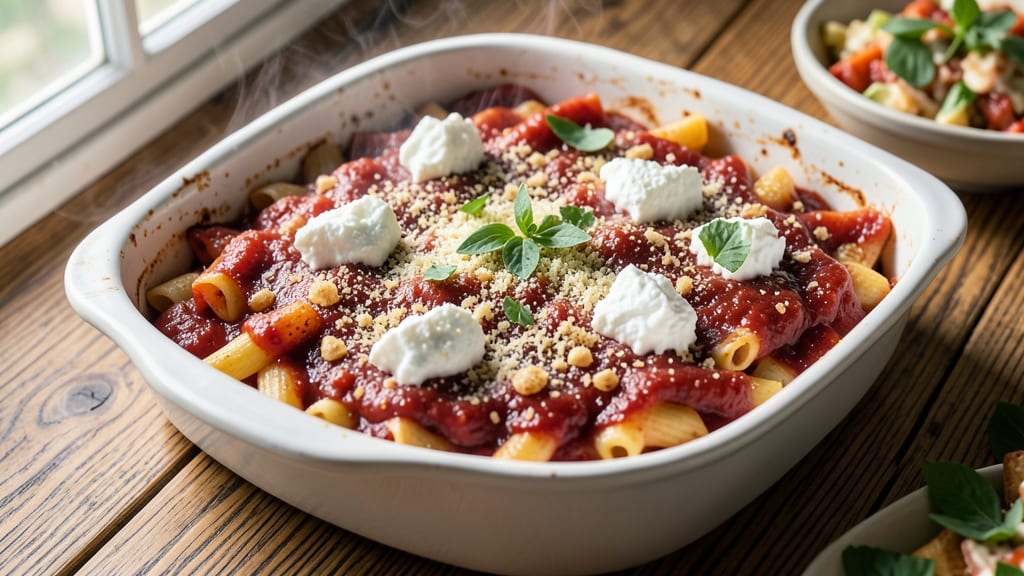
This baked ziti sauce recipe delivers the perfect balance of rich tomato depth and velvety creaminess that transforms ordinary pasta into a restaurant-worthy dish. The secret lies in a slow simmer that develops complex flavors while vinegar adds a subtle tang that brightens every layer.
I've perfected this sauce over years of testing, ensuring it's foolproof whether you're prepping for a family dinner or freezing for busy nights.
The foundation begins with high-quality tomato sauce and garlic, simmered until the flavors meld into a smooth, velvety base. Cream cheese and ricotta blend in to create that signature creamy texture without making the sauce heavy, while Parmesan adds a sharp, nutty finish.
The sauce is designed to be versatile—equally at home in baked ziti, lasagna, or even as a rich pasta sauce.
What sets this sauce apart is its ability to stay cohesive and flavorful even after baking, thanks to a careful balance of starch from the ricotta and acidity from the vinegar.
The result is a sauce that's rich yet balanced, with layers of tomato sweetness, creamy smoothness, and a hint of tang that keeps every bite interesting. It reheats beautifully, making it perfect for meal prep.
Store leftovers in an airtight container in the refrigerator for up to 5 days or freeze for up to 3 months. When reheating, warm gently on the stove or in the microwave until bubbly. This sauce is the heart of any Italian meal—let's get cooking!
Ingredients for baked ziti sauce
Nine ingredients, endless flavor—this sauce turns simple ziti into a showstopper.
| Ingredient | Amount | Notes |
|---|---|---|
| High-Quality Tomato Sauce 🍅 | 2 ½ cups | San Marzano tomatoes preferred |
| Garlic Cloves 🧄 | 4 cloves | Fresh, minced for depth |
| Cream Cheese 🧈 | 8 oz | Full-fat for creaminess |
| Ricotta Cheese 🧀 | 1 cup | Whole milk preferred |
| Parmesan Cheese 🧀 | 1 cup | Freshly grated, nutty |
| White Vinegar 💧 | 1 tbsp | For subtle tang balance |
| Extra-Virgin Olive Oil 🫒 | ¼ cup | For richness and finish |
| Salt 🧂 | 1 tsp | Diamond Crystal preferred |
| Black Pepper 🌶️ | ½ tsp | Freshly cracked |
| Fresh Basil Leaves 🌿 | ¼ cup | Chopped for fresh finish |
The tomato sauce is your flavor foundation. San Marzano cans from Trader Joe's or Whole Foods give the sweetest, smoothest base—no watery aftertaste. Garlic? Fresh is non-negotiable here (the pre-minced stuff loses punch fast). For the cheeses, full-fat cream cheese gives that velvety texture, while ricotta adds body without heaviness. I always grab block Parmesan from the deli counter—pre-grated tastes like sawdust. Pro tip: Toast your garlic in olive oil for 30 seconds before adding—it deepens the flavor without burning.
No ricotta? Cottage cheese blended smooth works in a pinch (strain out lumps). Short on basil? Dried oregano at half the amount mimics that Italian vibe. Vinegar hating the tang? Swap for lemon juice at the same ratio. For a richer sauce, add 1/4 cup heavy cream at the end. Storage tip: Keep your tomato sauce sealed until ready to use—opening it early makes it watery. The vinegar balances the richness, but if you're sensitive to acidity, cut it to 1/2 tbsp.
This sauce keeps beautifully. Pour it into a glass jar with a layer of olive oil on top to preserve freshness—lasts 5 days in the fridge. For freezing, portion into single-serving containers with a splash of water to prevent browning. Thaw overnight in the fridge, then reheat gently on low heat. The ricotta and cream cheese blend makes it perfect for layering—just don't overmix or it gets gluey. Double the batch and freeze half; you'll thank me later.
Why You'll Love This Recipe
- No-Fuss Assembly: This recipe lets you layer everything in one dish—no fancy techniques, just dump-and-bake. I swear, the only "chopping" is the garlic, and even that’s optional if you use pre-minced.
- Creamy-Garlicky Magic: That blend of ricotta and cream cheese with the tomato sauce? It’s like a hug in your mouth. The garlic doesn’t overpower—it just lingers in the best way, especially when the Parmesan melts on top.
- Weeknight Workhorse: Make a double batch on Sunday, and you’ve got lunch for Tuesday and dinner for Thursday. Honestly, it’s my go-to when I’m tired of takeout but don’t want to slave over a meal.
- Budget-Friendly Luxury: You’re getting restaurant-quality richness without the price tag—ricotta and cream cheese stretch the sauce, and Parmesan adds that fancy touch. Plus, leftovers taste just as good reheated as they do fresh.
Step-by-step instructions for baked ziti sauce
This creamy tomato sauce delivers the perfect balance of rich, tangy, and herby flavors for your ziti.
Sauté the Garlic for Depth of Flavor
Heat the 0.25 cup extra-virgin olive oil in a medium saucepan over medium-low heat. Add the 4 cloves minced garlic cloves and cook for 1-2 minutes until fragrant but not browned—this prevents bitterness. I like to stir constantly so the garlic doesn't burn, which would ruin the delicate flavor we're building.
The key here is patience. Garlic should smell amazing but not smell like it's burning your nose. If it starts to turn golden, you've gone too far. Once fragrant, remove the pan from heat temporarily—we'll return to it after adding the vinegar to stop any further cooking.
Build the Sauce Base with Vinegar and Tomato
Return the pan to medium heat and add the 1 tablespoon white vinegar. Stir for 30 seconds to let it bloom and cut through the richness of the garlic. Then, pour in the 2.5 cups high-quality tomato sauce and bring to a gentle simmer. Reduce heat to low and let it cook uncovered for 10 minutes to develop deeper flavors.
This simmering step is crucial—it allows the vinegar to mellow and the tomato sauce to concentrate slightly, creating a more complex base. You'll notice the sauce thicken just a bit and the acidity soften. If it reduces too much, we'll fix that in the next step with our cheeses.
Incorporate Cream Cheese and Ricotta
Reduce heat to lowest setting and gradually add the 8 oz cream cheese, stirring constantly until completely melted. Then, fold in the 1 cup ricotta cheese until smooth. The sauce will look thick and luxurious—this is where the magic happens. Keep stirring gently for 2-3 minutes to ensure even distribution.
I like to use a silicone spatula here for gentle folding. The ricotta adds that signature creamy texture while the cream cheese brings richness. If the sauce looks too thick, you can add 1-2 tablespoons of pasta water later, but it should be smooth enough now for perfect layering.
Finish with Cheese and Herbs
Remove the sauce from heat and stir in the 1 cup freshly grated parmesan cheese, 1 teaspoon salt, and 0.5 teaspoon freshly cracked black pepper. Let it sit for 1 minute to meld the flavors. Finally, fold in the 0.25 cup chopped fresh basil leaves for that bright, fresh finish.
The basil should wilt slightly but still retain some texture. Taste and adjust seasoning—you might need a pinch more salt or pepper depending on your tomato sauce's saltiness. This sauce is now ready to layer with your ziti for that perfect creamy, cheesy finish.
Optional - Thicken for Layering
If you find the sauce too thin for layering, return it to low heat and simmer uncovered for 3-5 minutes until it reaches your desired consistency. For extra richness, you can also stir in 1 tablespoon of the extra-virgin olive oil we set aside earlier.
This sauce should coat the back of a spoon but still be pourable enough to layer beautifully. The perfect texture ensures it doesn't slide off your ziti when baking, creating that signature creamy, saucy top layer we all love.
Pro Tips For Making Baked Ziti Sauce
- Sauté Garlic Low: I learned this the hard way—crisping garlic in tomato sauce burns faster than you think. Cook it over medium-low heat until just fragrant (about 2 minutes), then remove it before it turns golden. That way, your sauce stays bright and doesn’t taste bitter.
- Mix Cream Cheese Cold: Sounds weird, but it works: fold in the cream cheese when it’s still cool, not melted. If you add it too early, the sauce can turn greasy; if you add it too late, it won’t blend smoothly. Stir in the last 5 minutes of simmering—just until it disappears.
- Don’t Overmix Ricotta: This isn’t the prettiest method, but it’s the tastiest: mix the ricotta with a fork until it’s just combined, leaving little lumps. Overworking it makes the sauce grainy, and nobody wants that. A few streaks of smoothness are fine—it’s supposed to be creamy, not pureed.
- Bake Covered First: Start with the lid on for 20 minutes to let the sauce and cheese meld without drying out. Then uncover for the last 10 minutes to get that golden crust—your future self will thank you when the top isn’t soggy. (Yes, even if you’re impatient like me.)
Troubleshooting your baked ziti sauce
Sauce Too Thin?
If your sauce looks too runny after adding cheeses, don't panic—this is an easy fix. Return the sauce to low heat and let it simmer uncovered for 3-5 minutes, stirring occasionally.
The ricotta and cream cheese will naturally thicken as moisture evaporates. For extra insurance, stir in 1 tablespoon of cornstarch mixed with 2 tablespoons water—simmer for 1-2 minutes until thickened. 🌡️
Cheese Clumps?
When adding cream cheese or ricotta, stir vigorously over lowest heat until completely melted and smooth. If lumps persist, strain the sauce through a fine-mesh sieve for a silky texture. For extra insurance, cut the cream cheese into ½-inch cubes before adding—this melts faster and more evenly. 🧈
Sauce Separates?
If your sauce splits or looks oily after baking, it means the fat (from cheese) separated from the liquid. To fix this, whisk in 1 tablespoon of cold water per cup of sauce and reheat gently until emulsified.
For prevention, always add cheeses gradually while stirring constantly over low heat. 🔄
Bland Flavor?
If your sauce tastes flat, it likely needs more acidity or salt. Boost brightness with an extra ½ teaspoon white vinegar or lemon juice. For salt, add ¼ teaspoon at a time—taste as you go. Freshly cracked black pepper also adds depth. 🌶️
Sauce Too Thick?
If your sauce is gluey after baking, it likely over-reduced. Thin with 1-2 tablespoons warm water or pasta water, stirring gently. For future batches, reduce heat to lowest setting when simmering and avoid stirring too vigorously. 💧
Preventing Browning?
To keep your sauce vibrant after baking, cover the dish loosely with aluminum foil during the final 15-20 minutes of baking. For extra insurance, brush the top with a thin layer of olive oil before baking. This simple trick preserves color and prevents a burnt crust. 🍅
Nutrition facts
Frequently asked questions
Can I make this sauce without ricotta?
Yes! For a creamy alternative, blend 1 cup cottage cheese until completely smooth and strain through a fine-mesh sieve to remove any lumps. The texture will be slightly different but still delicious. You can also use ½ cup sour cream mixed with ½ cup heavy cream for a lighter option.
How do I adjust this sauce for a dairy-free version?
Replace the cream cheese with 8 oz dairy-free cream cheese (like Kite Hill or Violife) and use 1 cup dairy-free ricotta (made from cashews or store-bought options). For richness, stir in 2 tablespoons nutritional yeast and 1 tablespoon olive oil at the end. The vinegar still balances the flavors beautifully!
Can I use this sauce for other dishes besides baked ziti?
This versatile sauce works perfectly for lasagna, manicotti, or even as a creamy pasta sauce. For stuffed shells, spread it between layers of cheese, and for baked penne, toss cooked pasta in the sauce before baking with breadcrumbs. The ricotta-cream cheese blend keeps it rich without being too heavy.
What's the best way to reheat leftover sauce?
Gently reheat on the stovetop over low heat for 3-5 minutes, stirring occasionally, until bubbly. Avoid microwaving as it can make the ricotta separate. For extra smoothness, add 1 tablespoon water or pasta water while reheating. If the sauce thickens too much, thin with a splash of warm water or broth.
Why does my sauce get watery after baking?
This usually happens when the sauce isn't thickened enough before layering or if the pasta releases too much starch. To fix it, simmer the sauce uncovered for 5-7 minutes before baking to reduce it more. For future batches, add 1 tablespoon cornstarch mixed with 2 tablespoons water and stir until thickened.