
Sauces & Condiments
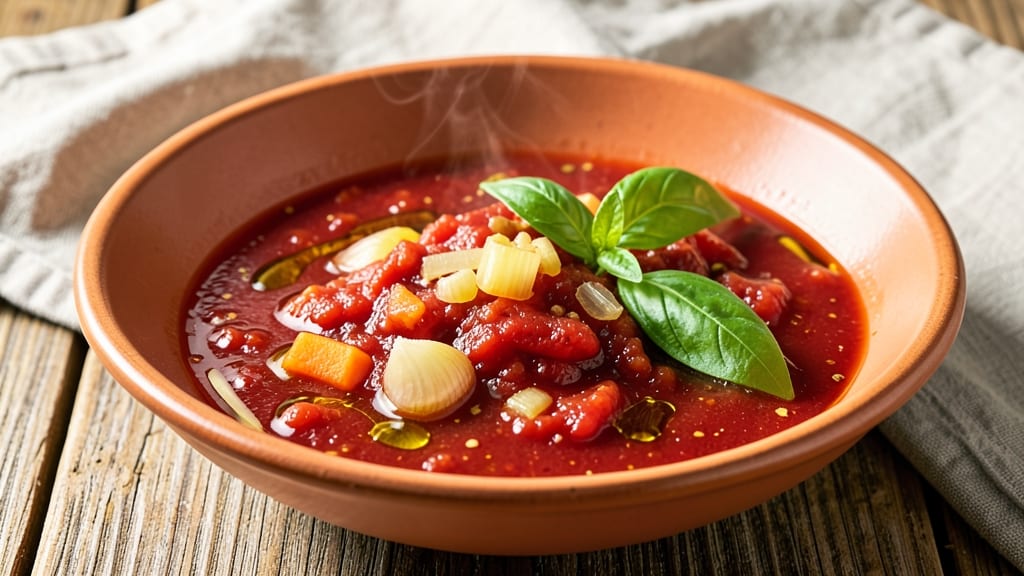
This authentic Italian tomato sauce recipe from scratch transforms simple ingredients into a rich, umami-packed masterpiece that tastes like Nonna’s kitchen. The secret lies in slow-simmering canned tomatoes with garlic, onion, and olive oil until they break down into a velvety, deeply flavorful base—no shortcuts, just tradition.
Every spoonful carries layers of caramelized sweetness and earthy depth that store-bought sauces can’t replicate.
What sets this sauce apart is the soffritto technique—sautéing aromatic vegetables until they melt into the tomatoes, creating a flavor foundation that builds complexity over time.
A splash of red wine and a pinch of sugar balance acidity, while fresh basil added at the end brightens the sauce without overpowering its natural richness. This is the kind of sauce that elevates any Italian dish, from handmade pasta to grilled meats.
The result is a slow-simmered tomato sauce with a glossy sheen and a texture that clings perfectly to noodles or absorbs into crusty bread. The aroma alone will transport you to a bustling trattoria, where every bite feels like a taste of Italy.
Whether you’re feeding a family or prepping for the week, this sauce delivers restaurant-quality depth without the fuss.
Perfect for meal prepping—it tastes even better the next day as flavors meld. Pair it with al dente spaghetti, hearty meatballs, or grilled chicken for a meal that feels like a celebration. Let’s get cooking.
Ingredients for authentic italian tomato sauce recipe from scratch
Eleven ingredients, slow simmering, and the essence of Italian tradition in every spoonful.
| Ingredient | Amount | Notes |
|---|---|---|
| San Marzano Whole Canned Tomatoes 🍅 | 28 oz | Crushed by hand for authenticity |
| Extra-Virgin Olive Oil 🫒 | ½ cup | High-quality, fruity variety |
| Yellow Onion 🧅 | 1 whole | Finely chopped, about 1 cup |
| Garlic Cloves 🧄 | 4 cloves | Minced for aromatic depth |
| Carrots 🥕 | 1 whole | Diced small for soffritto |
| Celery Stalks 🥬 | 1 whole | Diced small for soffritto |
| Dry Red Wine 🍷 | ¼ cup | Bold, dry variety preferred |
| Granulated Sugar 🍚 | 1 tbsp | Balances acidity naturally |
| Fresh Basil Leaves 🌿 | ¼ cup | Torn, not chopped |
| Diamond Crystal Kosher Salt 🧂 | 1 ½ tsp | Adjust to taste |
| Freshly Ground Black Pepper 🌶️ | ½ tsp | Freshly cracked preferred |
The tomatoes are non-negotiable—San Marzano delivers the sweet, meaty texture that defines authentic Italian sauce. Whole canned tomatoes are crushed by hand for better control over texture, and you'll find them in the Italian or canned goods aisle at Whole Foods or Eataly. For the soffritto, equal parts onion, carrot, and celery create the aromatic base that builds complexity. Organic produce adds subtle sweetness, but conventional works too. The olive oil should be extra-virgin with fruity notes—none of that cheap, bitter stuff that ruins everything. Look for Italian imports at specialty stores or the olive oil section of Trader Joe's.
No San Marzano tomatoes? High-quality crushed tomatoes in a glass jar (not can) work in a pinch, but the flavor won't be the same. Substituting red wine? Dry vermouth at half the amount adds herbal depth, though it's not identical. Fresh basil is ideal, but dried basil at one-third the amount gets you close—just add it at the end. For a deeper umami punch, a splash of fish-free Worcestershire sauce (like Annie's) works wonders. The sugar balances acidity, but honey or maple syrup can substitute if you prefer. And if you're short on time, pre-minced garlic from a jar is fine—just rinse it first to remove excess moisture.
This sauce develops best over time, so simmer uncovered for at least 45 minutes to let flavors meld. Store in glass jars with a layer of olive oil on top to preserve freshness. Keeps for 5 days in the fridge or 3 months in the freezer. Portion into ice cube trays for single-use servings—perfect for quick pasta meals. For extra richness, stir in a pat of vegan butter before serving, though traditionalists will scoff. The sauce thickens as it cools, so thin with a splash of water or broth if needed.
Why You'll Love This Recipe
- No-Fuss Simplicity: I swear by this sauce because it’s the kind of recipe that doesn’t demand your full attention—just a pot, a knife, and 15 minutes. The San Marzano tomatoes do all the heavy lifting; you just peel, crush, and let them simmer while you chop a single onion and a couple of carrots. That’s it. No blenders, no fancy gadgets, just honest, old-school cooking.
- Umami Bomb: Between us, the garlic and carrots caramelizing in that olive oil? It’s where the magic happens. The San Marzano tomatoes add a natural sweetness that balances the acidity, and the slow simmer lets all those flavors meld into something rich and deep. Honestly, it’s the kind of sauce that makes you pause mid-bite—like, how is this so good?
- Weeknight Wonder: This isn’t just for Sunday suppers. I use it on pasta, toss it with grilled chicken, or even slather it on toast with a sprinkle of cheese. The carrots add a subtle sweetness that works in everything, and the sauce keeps well for days, so I make a big batch and freeze portions. (Yes, even on a Tuesday night.)
- Budget-Friendly Staple: A single can of San Marzano tomatoes and a few pantry basics stretch into meals for days. The carrots and onion bulk it up, so you’re not just paying for tomatoes—you’re getting a full, hearty sauce. And because it freezes so well, I rarely buy jarred sauce again. Between us, this is how I feed my family without breaking the bank.
Step-by-step instructions for slow-simmered Italian tomato sauce
Mastering this sauce comes down to patience and technique—every step builds the rich, balanced flavor nonna would recognize.
Build the Soffritto Base
Heat the 0.5 cup extra-virgin olive oil in a heavy-bottomed pot over medium-low heat. Add the 1 whole yellow onion, 1 whole carrot, and 1 whole celery stalk, all diced small. Cook for 10-12 minutes until softened and translucent, stirring occasionally. This aromatic trio forms the foundation of your sauce—don't rush this step or you'll miss the deep, sweet flavors.
Once the vegetables are tender, add the 4 cloves minced garlic and cook for another 1 minute until fragrant. The garlic should smell pungent but not burn—watch carefully as it darkens quickly. This is where the authentic Italian flavor begins to develop, so resist the urge to walk away. The soffritto should be a golden, jammy consistency when properly cooked.
Deglaze and Incorporate Tomatoes
Pour in the 0.25 cup dry red wine and scrape up any browned bits from the bottom of the pot with a wooden spoon. This deglazing step captures all the concentrated flavors you've built. Let the wine simmer for 3-4 minutes until reduced by half, allowing the alcohol to cook off and intensify the flavor.
Add the 28 oz San Marzano whole canned tomatoes (crushed by hand) and 1 tbsp granulated sugar. Stir well to combine, then add 1.5 tsp diamond crystal kosher salt and 0.5 tsp freshly ground black pepper. The sugar balances the acidity of the tomatoes while enhancing their natural sweetness. Bring the mixture to a gentle simmer over medium heat—you're looking for small bubbles breaking the surface, not a vigorous boil.
Slow-Simmer for Deep Flavor Development
Partially cover the pot and let the sauce simmer gently for 45-60 minutes. This slow cooking time is crucial—it allows the flavors to meld and develop complexity. Stir occasionally to prevent sticking, and if the sauce becomes too thick, add 1-2 tablespoons of water to maintain the proper consistency. The sauce should reduce by about one-third by the end of this time.
After 45 minutes, taste the sauce and adjust the seasoning if needed. The acidity of the tomatoes should be balanced by the sweetness of the carrots and the richness of the olive oil. If it needs more depth, you can add a pinch of salt or a splash of red wine. The sauce should coat the back of a spoon with a velvety texture, not be watery or overly thick.
Finish with Fresh Basil
Remove the pot from heat and stir in the 0.25 cup fresh basil leaves, torn by hand. The basil should be added at the very end to preserve its bright, aromatic qualities. Let the sauce sit off the heat for 5-10 minutes to allow the flavors to fully integrate. The basil will infuse the sauce with its signature freshness, creating a perfect balance between the slow-cooked depth and bright finish.
Taste one final time and adjust the seasoning if necessary. The sauce should be rich, balanced, and full of layered flavors. Serve immediately over pasta, or store in an airtight container in the refrigerator for up to 5 days or freeze for up to 3 months. This sauce is the heart of any Italian meal—simple yet deeply satisfying when made with care.
Pro Tips For Making Authentic Italian Tomato Sauce Recipe From Scratch
- CRUSH THE TOMATOES FIRST: Grab a wooden spoon and smash those San Marzano tomatoes right in the can before pouring—no blender needed. This breaks down the skins and seeds naturally, giving you that silky, restaurant-quality texture without turning your sauce into a puree. (Yes, even if you're impatient like me, resist the urge to skip this.)
- SWEAT THE AROMA BASE LOW: Cook your onion, garlic, and carrots in olive oil over medium-low heat until the onion is translucent and the carrots soften—about 10-12 minutes. Rushing this step burns the garlic and turns your sauce bitter, and trust me, you’ll taste the difference. (The carrots add sweetness, but don’t let them caramelize.)
- SALT THE TOMATOES BEFORE SIMMERING: Toss the crushed tomatoes with a generous pinch of salt (about ½ teaspoon per can) and let them sit for 10 minutes before adding them to the pot. This draws out excess water, concentrates the flavor, and prevents a watery sauce later. (I learned this the hard way after making a pot that tasted like tomato soup.)
- STIR AND DEGLAZE: After browning your onion and garlic, splash in ¼ cup of water or white wine, then scrape up all the browned bits from the bottom of the pot with a wooden spoon. This adds depth of flavor that dry scraping misses—it’s the thing that makes homemade sauce taste professional. (Does it look weird? Yes. Does it work? Every single time.)
Essential equipment for great authentic italian tomato sauce recipe from scratch
Heavy-Bottomed Pot
Your sauce needs a heavy-bottomed pot—I swear by my All-Clad 5-quart Dutch oven—to distribute heat evenly and prevent scorching. The sauce simmers for 45-60 minutes, so a thin pot will create hot spots that burn your soffritto.
If you don’t have one, a stainless steel saucepan with a thick base works too. Avoid nonstick—it won’t handle the slow simmer as well, and the flavor suffers. 🔥
Wooden Spoon
A wooden spoon is non-negotiable for stirring and scraping up those flavorful browned bits from the pot. I use a silver maple one because it’s sturdy and gentle on my Dutch oven.
Avoid metal utensils—they can scratch the pot’s surface and react with acidic tomatoes. A heat-resistant silicone spatula also works if you prefer, but wooden spoons are traditional for a reason.
Fine-Mesh Strainer
If you’re straining your sauce for a smoother texture (like a classic ragù), a fine-mesh strainer or cheesecloth is essential. I like the OXO Good Grips model—it’s durable and easy to clean. For a marinara-style sauce, skip this step and let the soffritto bits add texture.
Pro tip: Line your strainer with cheesecloth for an even finer finish, but don’t overdo it—some texture is good!
Timer
This sauce demands precision timing, especially the soffritto and slow simmer. A smart kitchen timer (like the OXO Good Grips) with alerts ensures you don’t burn the garlic or over-reduce the sauce.
Set it for 10 minutes during the soffritto stage, then again for 45-60 minutes of simmering. Trust me, your sauce will thank you—no more burnt garlic or underdeveloped flavors. ⏰
Olive Oil Dispenser
Measuring 0.5 cup extra-virgin olive oil by the spoonful is messy and imprecise. A glass olive oil dispenser (like La Cucina Italiana) lets you pour directly into the pot without spills.
Plus, it keeps your oil fresh and prevents oxidation. If you’re using a bottle, pour the oil into a small bowl first, then transfer—this avoids waste and keeps your counter clean.
Cheesecloth or Coffee Filter
For an ultra-smooth sauce, strain it through cheesecloth or a coffee filter after simmering. This removes even the finest bits of soffritto, leaving a silky texture. I keep a roll of unbleached cheesecloth in my pantry for this exact purpose.
If you’re short on time, a fine-mesh sieve works, but it won’t be as refined. The choice depends on how smooth you want your sauce—traditionalists might skip this, but it’s worth it for special occasions. 💫
Nutrition facts
Frequently asked questions
Why does this sauce need a soffritto base?
The soffritto—onion, carrot, and celery—creates a flavor foundation that builds depth over time. These vegetables caramelize slowly, releasing natural sugars that balance the acidity of the tomatoes and create a rich, sweet base. Skipping this step results in a flat, one-dimensional sauce that lacks the complexity of traditional Italian cooking.
Can I use fresh tomatoes instead of canned?
Fresh tomatoes work, but they require extra prep and won't deliver the same consistent results. You'd need to peel, seed, and chop 4-5 pounds of ripe tomatoes, then cook them down to concentrate their flavors. Canned San Marzano tomatoes are ideal because their sweet, meaty texture and lower acidity make them perfect for slow simmering without adding water or vinegar.
What if my sauce gets too thick?
Add 1-2 tablespoons of water or tomato juice while simmering to adjust the consistency. If the sauce thickens too much after cooling, stir in a splash of water or broth when reheating. The sauce should coat the back of a spoon but remain pourable—traditional Italian sauces are never gluey or overly thick.
How do I know when the garlic is done?
Garlic is ready when it's golden brown and smells pungent but not burnt. Cook it just until fragrant (1 minute after adding) and watch carefully—it darkens quickly. Overcooked garlic turns bitter and ruins the sauce. If you notice it browning too fast, reduce the heat immediately and stir constantly.
Can I make this sauce in a slow cooker?
Yes, but with adjustments! Cook the soffritto in a skillet first, then transfer everything to the slow cooker and simmer on low for 4-5 hours instead of 45-60 minutes. The low-and-slow method works well, though you may need to add a splash of water to prevent sticking. Taste frequently to monitor flavor development.