
Sauces & Condiments
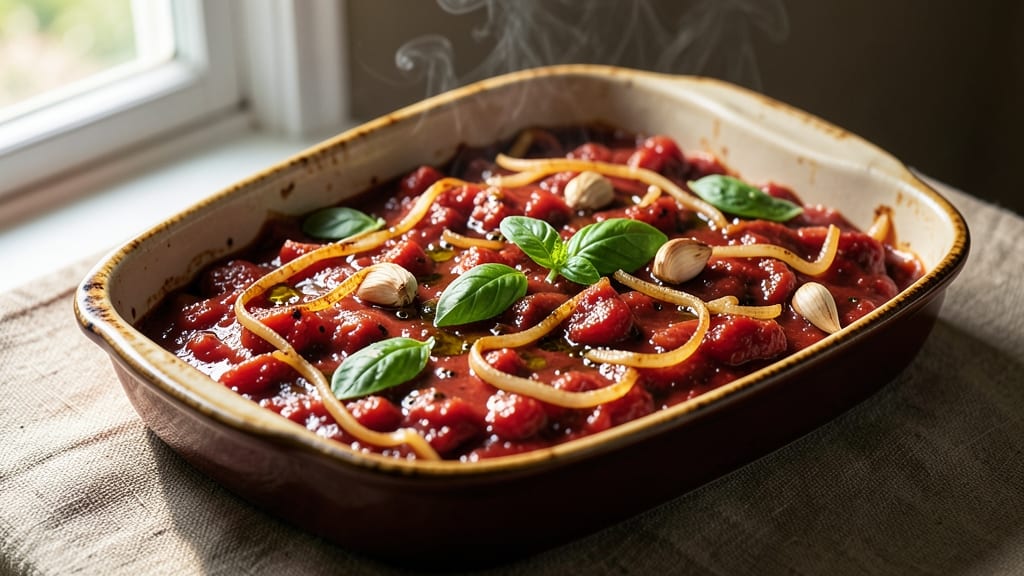
This baked spaghetti sauce recipe delivers restaurant-quality depth with a secret ingredient that transforms ordinary tomato sauce into something extraordinary.
The combination of crushed tomatoes, aromatic herbs, and a touch of vinegar creates layers of flavor that simmer into a rich, velvety sauce with just the right balance of tang and sweetness.
What makes this sauce special is its ability to develop complex flavors while maintaining a thick, spoonable consistency—perfect for tossing with pasta or serving over meatballs.
The process is simpler than you might think, requiring just a few key ingredients and about 45 minutes of hands-off time.
You'll start with a base of crushed tomatoes and garlic, then build flavor through slow simmering with herbs, onions, and that hidden vinegar zing that cuts through richness while adding brightness.
The baking step at the end intensifies the flavors and thickens the sauce to an ideal texture—no lumps, no wateriness, just pure, comforting depth.
What you'll end up with is a sauce that tastes like it's been simmering all day, even though it only takes 45 minutes to make. The vinegar adds a subtle tang that enhances every other flavor—tomato, garlic, basil—without overpowering them.
This isn't just any spaghetti sauce; it's the kind that makes people ask for seconds and saves leftovers for days. The best part? It freezes beautifully, so you can make a big batch and enjoy it all week.
Whether you're serving it over spaghetti, using it as a pizza sauce, or pairing it with grilled chicken, this baked spaghetti sauce brings comfort to any meal. The rich, layered flavors make it worth the effort, and the versatility means you'll find plenty of ways to use it up.
Let's get started on creating this sauce that's equal parts comforting and exciting.
Ingredients for baked spaghetti sauce
Nine simple ingredients transform into rich, velvety sauce that tastes like it simmered all day.
| Ingredient | Amount | Notes |
|---|---|---|
| Crushed Tomatoes (46 oz can) 🍅 | 1 can | San Marzano preferred for sweetness |
| Red Wine Vinegar 🍷 | 2 tbsp | White vinegar works too |
| Garlic Cloves 🧄 | 4 cloves | Freshly minced for best flavor |
| Yellow Onion 🧅 | 1 whole | Diced, medium-sized |
| Fresh Basil Leaves 🌿 | ¼ cup | Packed, stems removed |
| Extra-Virgin Olive Oil 🫒 | ½ cup | High quality, fruity |
| Dried Oregano 🍃 | 1 tsp | Mexican oregano preferred |
| Salt 🧂 | 1 ½ tsp | Diamond Crystal preferred |
| Black Pepper 🌶️ | ½ tsp | Freshly ground preferred |
| Granulated Sugar 🍚 | 1 tsp | Balances acidity |
The crushed tomatoes are the foundation—San Marzano gives the sweetest, most balanced flavor, but any quality canned tomatoes work. I always grab the Mueller's brand at Whole Foods when I'm feeling fancy, but the store brand at Walmart is fine for weeknight cooking. Fresh basil is ideal (I use about half the bunch for garnish later), but dried oregano at half the amount gets you close. The vinegar is where the magic happens—red wine vinegar adds depth, but white vinegar works in a pinch. Just don't skip it entirely; that tang is what makes this sauce special.
No fresh garlic? Garlic powder at double the amount works, but it won't have the same punch. The onion can be swapped for 1/2 cup onion powder, but fresh is better. Running low on basil? Dried basil at one-third the amount or even parsley will keep the green color. The sugar balances the acidity—skip it if you're using very sweet tomatoes, but add more if your vinegar is particularly sharp. Olive oil matters here too—low-quality oil can make the sauce taste bitter, so splurge on the good stuff. Pre-grated Parmesan is a no-go; grate your own from a wedge for that real cheesy flavor.
This sauce gets better with time—let it sit at room temperature for 30 minutes before serving so flavors meld. Keeps in the fridge for 5-7 days in an airtight container, and freezes beautifully for up to 3 months. I always make a double batch because it disappears fast. The baking step is key—don't skip it. The sauce thickens and deepens in flavor, becoming rich and velvety without any lumps. Leftovers reheat perfectly; just add a splash of water if it gets too thick.
Why You'll Love This Recipe
- One-Pot Magic: I swear by this—just dump the crushed tomatoes, toss in the onion and garlic, and let the oven do the work. No blender, no stove burning your kitchen down.
- Wine Vinegar Trick: Honestly, that splash of red wine vinegar? It brightens the whole thing—cuts through the richness while adding this subtle tang that makes it taste restaurant-level (yes, even with canned tomatoes).
- Meal Prep MVP: Between us, this sauce only gets better after a day in the fridge. Double the batch, freeze half, and you’ve got a weeknight dinner saved—just reheat and toss with pasta.
- Budget Hero: A big can of tomatoes, a few cloves of garlic, and fresh basil (or dried in a pinch) cost pennies but taste like you slaved over it. My wallet thanks me every time.
Step-by-step instructions for baked spaghetti sauce
This layered sauce delivers deep flavor with minimal effort—perfect for busy weeknights.
Sauté Aromatics Until Fragrant
Heat the 0.5 cup extra-virgin olive oil in a large skillet over medium heat. Add the diced yellow onion and cook for 5 minutes until softened and translucent. I like to press down gently with a wooden spoon to help it caramelize slightly—this builds sweetness that carries through the sauce.
Add the 4 minced garlic cloves and cook for another 30 seconds until fragrant but not browned. Garlic burns quickly, so keep an eye on it. The moment you smell that aromatic punch, it's ready. Remove the skillet from heat and let it cool for 2 minutes—this prevents the oil from cooking the tomatoes too quickly later.
Combine and Season the Tomato Mixture
In a large bowl, combine the 1 can crushed tomatoes, 2 tbsp red wine vinegar, 1 tsp dried oregano, 1.5 tsp salt, 0.5 tsp black pepper, and 1 tsp granulated sugar. The vinegar might seem unusual, but it brightens the tomatoes and balances their natural acidity. Stir well to distribute the seasonings evenly.
Add the sautéed onion and garlic mixture to the tomato blend. Stir in the 0.25 cup packed fresh basil leaves, reserving a few for garnish if desired. The basil adds freshness that cuts through the richness of the tomatoes. Taste the mixture now—you'll notice the vinegar gives it a subtle tang that deepens as it bakes.
Layer and Bake for Rich Flavor Development
Transfer the tomato mixture to a 9x13-inch baking dish and spread it evenly. The dish should be about ¾ full—this gives the sauce room to bubble without overflowing. Cover the dish tightly with aluminum foil and bake at 350°F for 1 hour.
Here's the secret: the foil traps steam, which helps break down the tomatoes' texture and develop their natural sweetness. After 1 hour, remove the foil and bake for another 30 minutes uncovered. This final step lets the sauce thicken and develop a slightly caramelized top—watch for it to turn a deep, glossy red.
Finish and Serve with Confidence
Let the sauce cool for 10 minutes before serving. This resting time allows flavors to meld and the texture to set slightly. The sauce should be thick enough to coat the back of a spoon but still fork-tender. If it's too thick, stir in 1-2 tablespoons of water to loosen it.
Taste and adjust seasoning if needed—sometimes the vinegar needs a touch more salt to balance it. Serve warm over spaghetti or use as a base for lasagna. The vinegar adds a bright, unexpected zing that makes this sauce stand out from basic tomato sauces. Store leftovers in the fridge for up to 5 days or freeze for 3 months—it only gets better with time!
Pro Tips For Making Baked Spaghetti Sauce
- Simmer Low and Slow: Baked spaghetti sauce isn’t a race—after dumping in the crushed tomatoes, drop the heat to a gentle simmer and let it bubble away for at least 45 minutes uncovered. I used to rush it, and the sauce would taste flat and underdeveloped. Patience here lets the acidity mellow and flavors meld.
- Sweat the Onion First: Chop that yellow onion into ¼-inch dice and cook it in olive oil over medium heat until it’s soft and translucent—about 8 minutes. No need to brown it; just get it sweating. Skipping this step leaves the sauce raw-tasting and sharp, especially with the vinegar cutting through.
- Deglaze with Vinegar Early: Right after sautéing the garlic (but before adding tomatoes), splash in 1 tablespoon of red wine vinegar and let it sizzle for 30 seconds. This brightens the base flavor and balances the acidity later. I learned this after my first batch tasted too one-note—now it’s the first move, not an afterthought.
- Add Basil Late and Whole: Tuck a handful of fresh basil leaves into the sauce after baking, not before. Their aroma fades fast when cooked too long, and chopping them releases bitterness. Just tear a few leaves and let them steep for the last 10 minutes—your sauce will smell like a Tuscan summer.
Make-ahead tips for this recipe
Prep Ahead
Make this sauce a day ahead for even deeper flavor development. After baking, let it cool completely, then transfer to an airtight container and refrigerate. The flavors meld beautifully overnight, and the texture becomes perfectly balanced—no thin spots or undercooked bits.
I always double the batch because it disappears so quickly. 💪
Freezer-Friendly
Freeze in quart-sized freezer bags with all the air squeezed out to prevent freezer burn. Label with the date—this sauce stays delicious for up to 3 months.
When ready to use, thaw in the fridge overnight, then reheat gently on the stovetop with a splash of water to restore its velvety texture. No microwave needed!
Bulk Baking
For large gatherings, bake two 9x13-inch pans simultaneously at 350°F for 1 hour 15 minutes (covered), then 30 minutes uncovered. This ensures even cooking and maximum flavor extraction. Store in glass jars for easy portioning—just grab what you need without thawing the whole batch. Perfect for meal prep Sundays!
Thawing Tips
For quick use, transfer frozen sauce to a heatproof bowl and submerge in warm water for 15-20 minutes. Stir occasionally to distribute heat evenly. Avoid boiling water—it can make the sauce split or develop a skin.
If the texture seems too thick after reheating, add 1-2 tablespoons of water or pasta water while warming. 🔥
Reheating Leftovers
Stovetop reheating is best—simmer on low heat for 5-7 minutes, stirring occasionally. For microwave reheating, use 50% power in 1-minute intervals, stirring between each. The vinegar helps preserve freshness, so reheated sauce retains its bright tang. Always taste and adjust salt before serving—reheating can concentrate flavors.
Sauce Storage
Keep refrigerated in an airtight container for up to 5 days. The vinegar acts as a natural preservative, keeping the sauce vibrant. For longer storage, freeze in ice cube trays for single-serving portions—just pop out what you need and toss into simmering pasta.
This method works surprisingly well for quick meals! ✨
Nutrition facts
Frequently asked questions about baked tomato sauce
Why does this recipe use vinegar in tomato sauce?
The 2 tablespoons of red wine vinegar brightens the tomatoes and balances their natural acidity, creating a more complex flavor profile. It prevents the sauce from tasting flat while adding a subtle tang that enhances other ingredients like garlic and basil. Think of it as a secret weapon for depth!
Can I make this sauce without baking it?
Yes, but you'll miss the deep flavor development. Simmer the sauce on the stovetop for 45-60 minutes instead, stirring occasionally. The baking step caramelizes the tomatoes and thickens the sauce naturally, but stovetop works in a pinch. Just expect slightly less richness.
How do I adjust the thickness of the sauce?
If it's too thick after baking, stir in 1-2 tablespoons of water or pasta water while warm. For thinner sauce, add more crushed tomatoes before baking. The baking process naturally reduces the sauce, but starting with 46 oz of tomatoes gives you flexibility. Always taste as you go!
Can I add meat to this sauce?
Brown 1 pound of ground beef or Italian sausage first, drain excess fat, then proceed with the recipe. For best results, add the meat to the sautéed onions and garlic before mixing with tomatoes. The baking time remains the same.
What's the best way to reheat this sauce?
Stovetop reheating gives the best results—simmer on low heat for 5-7 minutes while stirring occasionally. For microwave reheating, use 50% power in 1-minute intervals, stirring between each. The vinegar helps preserve texture, so reheated sauce stays velvety. Always adjust salt after reheating!