
Sauces & Condiments
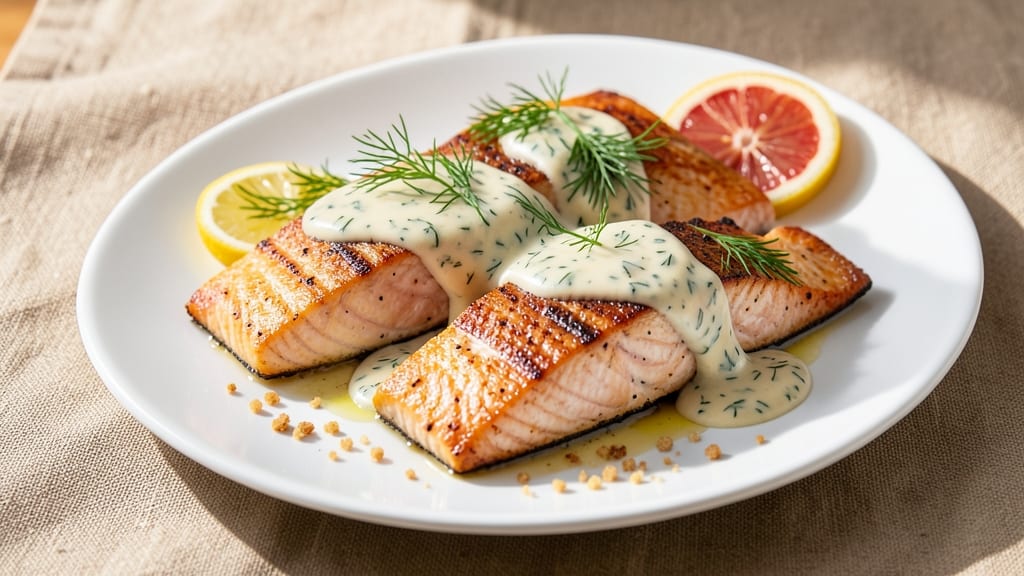
This baked salmon with creamy dill sauce delivers restaurant-quality results in just 20 minutes—perfectly flaky fillets paired with a velvety, herby sauce that elevates every bite.
The secret lies in baking the salmon at the right temperature (400°F) to lock in moisture while creating a crispy skin, then finishing with a bright, tangy sauce that balances the richness of the fish.
What sets this recipe apart is the foolproof technique for achieving tender, moist salmon every time—no guessing about doneness. The creamy dill sauce, made with just 5 simple ingredients, adds a luxurious touch without overpowering the natural flavor of the fish.
It’s the kind of dish that feels special yet comes together effortlessly, making it ideal for weeknight dinners or weekend entertaining.
The result? Golden, flaky salmon with a delicate texture, topped with a luscious sauce that clings to each piece. The combination of buttery fish and herby richness creates a harmonious balance that’s both comforting and refined. This recipe ensures you’ll never settle for store-bought again—it’s that good.
Serve with roasted vegetables or a fresh salad for a complete meal, or pair it with crusty bread to soak up every last bit of that creamy dill sauce. The best part? Leftovers reheat beautifully, making it a practical choice for meal prep. Let’s get started!
Ingredients for baked salmon with creamy dill sauce
The secret to restaurant-quality salmon lies in these 13 ingredients—simple yet transformative.
| Ingredient | Amount | Notes |
|---|---|---|
| Salmon Fillets 🐟 | 4 whole | Skin-on, center-cut preferred |
| Unsalted Butter 🧈 | ½ cup | Cold, cut into cubes |
| Fresh Dill 🌿 | ½ cup | Finely chopped, stems removed |
| Sour Cream 🥛 | ½ cup | Full-fat for creaminess |
| Lemon Juice 🍋 | 2 tbsp | Freshly squeezed |
| Garlic Cloves 🧄 | 2 cloves | Minced for sauce |
| Olive Oil 🫒 | 1 tbsp | Extra-virgin for richness |
| Salt 🧂 | 1 tsp | Kosher or sea salt |
| Black Pepper 🌶️ | ½ tsp | Freshly ground preferred |
| Lemon Zest 🍋 | 1 tsp | For bright flavor |
| Heavy Cream 🥛 | ¼ cup | For sauce consistency |
| Plain Greek Yogurt 🥛 | ¼ cup | For tangy depth |
| Fresh Parsley 🌿 | 2 tbsp | Chopped for garnish |
The salmon is everything here. Wild-caught, skin-on fillets deliver the best texture—ask your fishmonger for center-cut pieces if possible. Trader Joe's or Whole Foods have excellent selections, but any grocery store's frozen section works in a pinch. Look for vibrant color (pink, not gray) and firm flesh that springs back when pressed. The butter matters too—European-style melts more smoothly, but any unsalted will do. For the dill, fresh is non-negotiable—dried just won't cut it here. I buy bunches from the market and use half, freezing the rest for future sauces.
No fresh dill? Dried at one-third the amount works, but the flavor won't be the same. Substituting sour cream? Greek yogurt at the same quantity keeps it tangy. The lemon juice can be bottled, but freshly squeezed adds that restaurant-quality brightness. For a lighter sauce, reduce the heavy cream to 2 tablespoons. The Greek yogurt adds depth—Fage or Chobani brands work perfectly. Want extra richness? Add 1 tablespoon of crème fraîche to the sauce. The olive oil should be extra-virgin—anything less and you'll taste it.
Store the salmon in the coldest part of your fridge, wrapped in parchment paper, for up to 2 days. The dill keeps best in a jar with a damp paper towel for 5 days. Once you've made the sauce, it stays fresh in an airtight container for 4 days—though it's best used within 2 days for peak flavor. For meal prep, bake the salmon ahead and refrigerate, then reheat gently with the sauce. The leftovers reheat beautifully—just warm through in a skillet with a splash of water to maintain that creamy texture. Portion the sauce into small containers for easy use.
Why You'll Love This Recipe
- Five-Ingredient Magic: I swear, this recipe is the kind of thing that makes me feel like a chef without the fuss. Butter, dill, sour cream, lemon, and salmon—that’s it. No chopping, no blending, no stressing over measurements. Just melt butter, mix herbs, and let the oven do the work while I sip my coffee.
- Creamy-Dill Bliss: That sauce—oh, that sauce. The way the sour cream and fresh dill marry with the bright lemon juice? It’s like a hug for your taste buds. The salmon comes out tender, the sauce clings perfectly, and honestly? I’ve never met a creamy dill sauce I didn’t love.
- Weeknight to Dinner Party: Between us, this is my go-to for lazy Mondays and when my in-laws show up unannounced. The salmon bakes hands-off, the sauce takes two minutes to whip, and it looks fancy enough to impress. (Yes, even on a Tuesday night.)
- Leftovers That Don’t Suck: Most salmon leftovers turn into sad, dry fish. Not this. The creamy sauce keeps it moist, and I’ve reheated portions for days—wrapped in foil, tossed in salads, or even stuffed into wraps. Budget-friendly? Absolutely. Reliable? Even more so.
Step-by-step instructions for baked salmon with creamy dill sauce
This method delivers perfectly flaky salmon with a velvety dill sauce that complements every bite.
Prepare the Salmon Fillets
Preheat your oven to 375°F and line a baking sheet with parchment paper. Pat the 4 whole salmon fillets dry with paper towels—this ensures crispy skin. Place them skin-side down on the prepared sheet, leaving about ½ inch between each fillet for even cooking.
Drizzle lightly with 1 tablespoon olive oil, then season both sides generously with 1 teaspoon salt and ½ teaspoon black pepper. Sprinkle 1 teaspoon lemon zest over each fillet for brightness. Let them sit uncovered for 10 minutes at room temperature—this prevents uneven cooking.
Bake the Salmon to Flaky Perfection
Bake the salmon for 12-15 minutes until the edges turn opaque and the internal temperature reaches 145°F when measured at the thickest part. You'll know it's done when the flesh flakes easily with a fork and the skin is golden brown.
I press down gently on the fillets during the last minute of baking—this helps the skin crisp while keeping the inside tender. Remove from the oven and let rest for 5 minutes before serving. This resting time is crucial for redistributing juices and preventing dryness.
Make the Creamy Dill Sauce
While the salmon bakes, melt ½ cup unsalted butter in a saucepan over medium-low heat. Add the 2 cloves minced garlic and cook for 30 seconds until fragrant—don't let it brown or it'll turn bitter.
Stir in ½ cup finely chopped fresh dill, ½ cup sour cream, ¼ cup heavy cream, and ¼ cup plain Greek yogurt. Simmer gently for 3-4 minutes until the sauce thickens slightly, then remove from heat and stir in 2 tablespoons lemon juice. The sauce should be smooth and glossy with a bright herby flavor.
Assemble and Serve
Spoon the warm dill sauce over the rested salmon fillets, allowing it to pool around the edges. Garnish with 2 tablespoons chopped fresh parsley for color and freshness. Serve immediately with steamed vegetables or crusty bread to soak up the creamy sauce.
The combination of flaky salmon and rich dill sauce creates a restaurant-quality dish that's surprisingly simple to make at home. The acidity from the lemon zest and juice cuts through the richness of the butter and cream, balancing each bite perfectly.
Pro Tips For Making Baked Salmon With Creamy Dill Sauce
- Pat the salmon dry: Wet skin sticks to the pan and steams instead of browning. Grab paper towels and press firmly—this isn’t about being gentle, it’s about making sure every inch is dry. I used to skip this and end up with sad, limp salmon that looked like it was crying.
- Use room-temperature butter: Cold butter clumps into lumps in the sauce and won’t melt evenly. Take it out of the fridge 15 minutes before you need it—yes, even if you’re impatient like me. The sauce will be silky, not grainy, and the flavor will coat the salmon perfectly.
- Don’t overmix the sauce: The second you start folding in the dill, stop. Rough chop it first, then just combine gently—overworking it turns the sauce into a paste. I learned this the hard way when my sauce ended up looking like glue. A few visible dill pieces make it taste fresher.
- Bake at 375°F, not higher: Salmon cooks fast and dries out when you crank the heat. Stick to 375°F—it’s the sweet spot for even cooking without turning the fish into rubber. If you’re nervous, use an instant-read thermometer; pull it out at 125°F internal temp, no guessing.
Serving suggestions for this dish
Classic Pairings
Serve your baked salmon with steamed asparagus—toss fresh spears with 1 tablespoon olive oil, ½ teaspoon salt, and a squeeze of lemon juice before steaming for 5 minutes. The bright green color and crisp texture contrast beautifully with the creamy dill sauce. 🌿
For a heartier option, try roasted baby potatoes tossed in 1 tablespoon olive oil, ½ teaspoon garlic powder, and ¼ teaspoon smoked paprika. Roast at 400°F for 25 minutes until golden and crispy. The earthy flavor balances the salmon’s richness perfectly.
Bread Options
Offer crusty sourdough bread or fresh baguette slices on the side—these soak up the creamy dill sauce effortlessly. Warm the bread in the oven for 3-5 minutes at 350°F to enhance its texture. I love sprinkling flaky sea salt over the bread before serving for an extra touch of sophistication.
Salad Accompaniments
A simple arugula salad with 1 tablespoon lemon vinaigrette (mix 2 tablespoons olive oil, 1 tablespoon lemon juice, ½ teaspoon Dijon mustard, and ¼ teaspoon salt) adds a peppery crunch.
Top with ¼ cup toasted pine nuts for added texture and depth. The salad’s acidity cuts through the richness of the salmon and sauce.
Wine and Beverage Pairings
Pair your salmon with a crisp Sauvignon Blanc—its citrus notes complement the dill sauce beautifully. For a non-alcoholic option, try sparkling water with a splash of lemon juice or iced hibiscus tea for a refreshing contrast. The effervescence helps cleanse the palate between bites. 🍷
Make-Ahead Serving Tips
If prepping ahead, bake the salmon and store it in an airtight container in the fridge for up to 2 days. Reheat gently in the oven at 300°F for 8-10 minutes to maintain moisture.
The dill sauce can be made 1 day ahead and stored separately—just warm it gently before serving to preserve its creamy texture.
Nutrition facts
Frequently asked questions
Can I use frozen salmon for this recipe?
Yes, but thaw it properly first! Place frozen salmon in the refrigerator for 24 hours or use the quick thaw method: seal the package and submerge in cold water for 30-60 minutes. Never thaw at room temperature—this can promote bacterial growth. Pat the fillets completely dry before seasoning to ensure crispy skin.
How do I adjust the recipe for fewer/more servings?
For 2 servings, halve all ingredients—use 2 fillets and ¼ cup butter. For 6 servings, multiply by 1.5: 6 fillets and ¾ cup butter. The sauce scales perfectly, but keep the ratio of 1:1 dill to sour cream for best flavor balance. Adjust baking time by 2-3 minutes per extra fillet.
What if my salmon skin isn't crispy?
This usually happens from two issues: overcrowding on the pan or under-seasoning. For next time, leave ½ inch space between fillets and press down gently with a spatula during the last 2 minutes of baking. Also, ensure the skin is completely dry before seasoning—moisture prevents crispiness. A quick fix: broil for 1-2 minutes at the end.
Can I make this sauce ahead of time?
The sauce keeps well in an airtight container in the fridge for 4 days, but it's best used within 2 days for peak freshness. Before serving, warm it gently over low heat for 1-2 minutes, stirring occasionally, until just heated through. For extra richness, stir in 1 tablespoon crème fraîche when reheating.
What's the best way to reheat leftovers?
Reheat salmon gently in the oven at 300°F for 8-10 minutes to maintain moisture—never microwave directly. For the sauce, warm it in a small saucepan over low heat with 1 teaspoon water to prevent scorching. If the sauce separates, whisk vigorously while heating. Serve with fresh herbs like parsley or extra lemon zest to revive the flavors.