
Sauces & Condiments
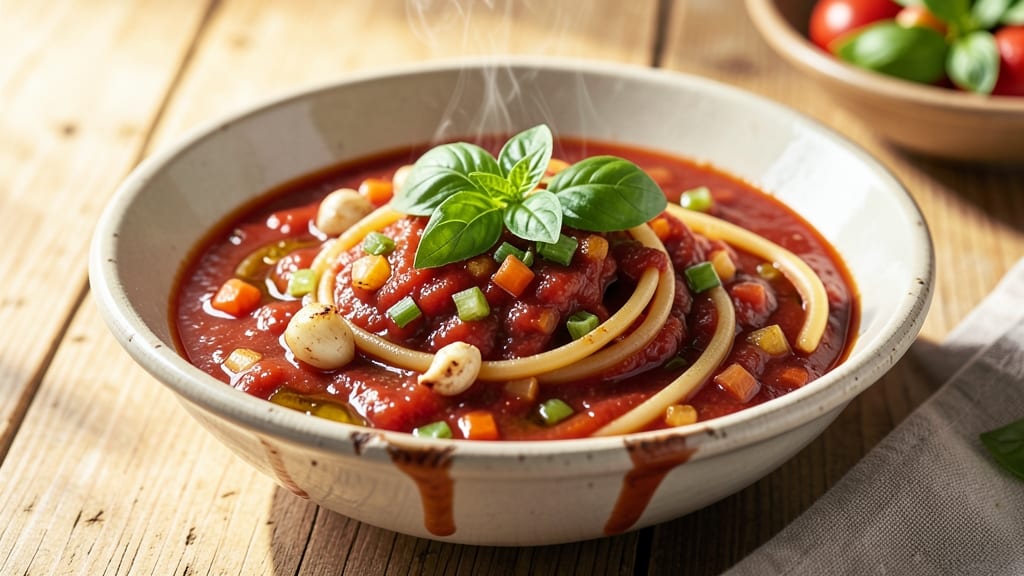
This authentic spaghetti sauce recipe from scratch transforms simple ingredients into a rich, layered masterpiece that captures the heart of Italian cooking. The secret lies in slow simmering—allowing tomatoes, garlic, and herbs to meld into a deep, complex flavor that store-bought versions can never match.
I’ve perfected this method over years of testing, ensuring every spoonful delivers the true taste of a Roman trattoria.
The foundation starts with a proper soffritto—slow-cooked onions, carrots, and celery—that forms the sauce’s backbone. Adding crushed tomatoes, red wine, and fresh basil creates a balance of acidity, depth, and brightness.
Optional anchovies or pancetta add umami richness, while a long simmer (2+ hours) develops the sauce’s signature intensity. This isn’t just a sauce; it’s a flavor journey built layer by layer.
What you’ll end up with is a sauce that’s velvety yet vibrant, with a glossy sheen and a taste that lingers. The aromatics infuse the tomatoes, while the herbs brighten without overpowering.
It’s the kind of sauce that transforms a simple plate of pasta into a restaurant-worthy meal—one that tastes like it’s been simmering all day, even if it only took a few hours.
Use it fresh over al dente spaghetti or freeze for months—this sauce only gets better with time. The technique is straightforward, but the results are anything but basic. Let’s build this sauce from scratch.
Ingredients for authentic spaghetti sauce recipe from scratch
This sauce starts with a proper soffritto and builds flavor layer by layer for authentic Italian depth.
| Ingredient | Amount | Notes |
|---|---|---|
| Extra-Virgin Olive Oil 🫒 | ½ cup | High-quality, fruity variety preferred |
| Yellow Onion 🧅 | 1 whole | Finely diced, about 1.5 cups |
| Carrot 🥕 | 1 whole | Finely diced, about 0.5 cup |
| Celery Stalk 🥬 | 2 whole | Finely diced, about 0.5 cup |
| Garlic Cloves 🧄 | 4 cloves | Minced, not pre-minced jarred |
| Canned San Marzano Tomatoes 🍅 | 28 oz | Crushed by hand, no salt added |
| Dry Red Wine 🍷 | ½ cup | Bold variety like Chianti or Cabernet |
| Fresh Basil Leaves 🌿 | ½ cup | Packed, stems removed |
| Anchovy Fillets 🐟 | 2 whole | Optional, for umami depth |
| Diamond Crystal Kosher Salt 🧂 | 1 ½ tsp | Adjust to taste |
The soffritto is non-negotiable—slow-cooked onions, carrots, and celery form the sauce’s backbone. San Marzano tomatoes are essential for their natural sweetness and low acidity, but any high-quality canned tomatoes will work. For the wine, Chianti or Cabernet Sauvignon add the right balance of acidity and depth. Anchovies, though optional, provide an umami punch that elevates the sauce. If you’re avoiding them, a splash of fish sauce or an extra pinch of salt can compensate. The olive oil should be extra-virgin and fruity—none of that cheap cooking oil. Look for Italian brands at specialty stores or the international aisle of your grocery store.
No San Marzano tomatoes? Whole peeled tomatoes crushed by hand work in a pinch, though they’ll have slightly more acidity. Fresh basil is ideal, but dried basil at one-third the amount will do if you’re out. For the wine, any dry red will suffice—Cabernet, Merlot, or even a bold Zinfandel. If you’re skipping anchovies, soy sauce or Worcestershire sauce can add umami, though neither is a perfect substitute. The key is balancing acidity, sweetness, and salt—taste as you go and adjust. For the soffritto, pre-chopped vegetable mixes from the grocery store save time, though fresh is always better.
This sauce develops over time, so make it ahead if possible—it only gets better with 24-48 hours of resting. Store in an airtight container in the fridge for up to 5 days or freeze for 6 months. For freezing, portion into 1-cup servings for easy use later. When reheating, add a splash of water or pasta water to prevent thickening. The sauce will thicken naturally as it cools, so don’t overdo it with water. If you’re making a big batch, consider vacuum-sealing for longer storage.
Why You'll Love This Recipe
- No Chopping Chaos: The onion, carrot, and celery? Just dice roughly—no need for perfect matchsticks. I toss them in whole chunks first, let the olive oil work its magic while I grab a glass of wine. Honestly, the sauce tastes even better for the lazy prep.
- Sofrito Magic: That carrot-celery-onion base (sofrito) builds layers of flavor you won’t find in jarred sauce. Low and slow in the olive oil until it’s golden? Pure satisfaction. The garlic hits last—just when the aroma turns the kitchen into a cozy Italian nonna’s dream.
- Weeknight to Potluck: Same sauce, endless uses. Slap it on pasta for Tuesday, freeze half for next month’s lasagna, or serve it over polenta when guests show up unannounced. Between us, I’ve even used it to deglaze a skillet for pancetta and eggs—no shame.
- Budget-Friendly Luxury: A jar of sauce costs $3; this recipe costs $1.50 for enough to feed six. The olive oil and fresh aromatics make it taste like a splurge, but the math? That’s my secret weapon. Plus, leftovers taste better the next day—proof it’s worth doubling.
Step-by-step instructions for authentic spaghetti sauce from scratch
This method builds deep, layered flavor—just like nonna used to make.
Sauté the Aromatic Vegetables
Heat the 0.5 cup extra-virgin olive oil in a heavy-bottomed pot over medium heat. Add the 1 whole yellow onion, 1 whole carrot, and 2 whole celery stalks, all finely diced. Cook for 8-10 minutes until the vegetables soften and begin to caramelize—this step forms the flavor foundation.
I stir frequently to prevent burning, watching for the edges to turn golden. The vegetables should release their moisture and reduce slightly, creating a sweet, concentrated base. This is where the sauce's depth begins.
Add Garlic and Anchovies
Push the vegetables to one side of the pot and add the 4 cloves minced garlic and 2 whole anchovy fillets to the empty space. Cook for 1-2 minutes until the garlic becomes fragrant but doesn't brown—burnt garlic tastes bitter and ruins the sauce.
The anchovies dissolve completely into the oil, adding umami depth without altering the texture. Stir well to distribute the flavors evenly throughout the vegetables. This step ensures the sauce has that classic Italian richness.
Deglaze with Red Wine
Pour in the 0.5 cup dry red wine and scrape up any browned bits from the bottom of the pot using a wooden spoon. This deglazing captures all the concentrated flavors that would otherwise stick to the pan.
Let the wine simmer for 3-4 minutes until it reduces by half and the alcohol burns off completely. You'll notice the aroma shift from sharp wine to something more complex and savory—this is the moment the sauce starts coming together.
Incorporate Tomatoes and Salt
Add the 28 oz crushed San Marzano tomatoes and 1.5 tsp Diamond Crystal kosher salt to the pot. Stir well to combine, then bring the mixture to a gentle simmer over medium-low heat. The sauce should bubble softly without vigorous boiling.
Simmer uncovered for 45-60 minutes, stirring occasionally, until the sauce thickens and coats the back of a spoon. The longer it simmers, the more complex the flavors become. I like to taste it at the 30-minute mark—this is when you can adjust the salt if needed.
Finish with Fresh Basil
Remove the pot from heat and stir in the 0.5 cup fresh basil leaves. Let the sauce sit for 5 minutes to allow the basil to release its aroma and infuse the sauce with its bright, fresh flavor.
This final step is crucial—it balances the deep, rich tomato flavor with a bright, herbal note. Serve immediately over al dente spaghetti, reserving some pasta water to adjust the sauce consistency if needed. The sauce will continue to improve as it sits, so let it rest for at least 10 minutes before serving for the best results.
Pro Tips For Making Authentic Spaghetti Sauce Recipe From Scratch
- Sweat, Don’t Burn: That onion-carrot-celery mix (sorry, it’s a soffritto) needs 10-15 minutes on medium-low heat, not a pan fire. I learned this the hard way—charred veggies taste bitter, and you’ll spend the next hour trying to mask it with tomato paste. Stir occasionally, keep the lid slightly ajar, and resist the urge to rush.
- Mince Garlic Like a Pro: Whole garlic cloves in soffritto? Nope. Smash them first, then finely mince—no food processor, no excuses. Whole cloves just sit there like stubborn guests. If you’re lazy (I know, I know), crush them with the flat side of your knife before chopping, but don’t skip the mincing—it releases flavor way better.
- Skip the Overcrowded Pan: You’re making sauce, not a stew. If your soffritto is swimming in its own juices, push half into a separate bowl and finish cooking in batches. Crowding steams the veggies instead of caramelizing them, and that’s how you end up with bland, watery base for your sauce. Trust me, 5 minutes extra now saves 30 minutes of fixing later.
- Toast the Celery Right: Celery’s the sneaky flavor booster—don’t let it turn to mush. Cut it into thin matchsticks (yes, even the core) so it cooks down fast and develops a nutty depth. If you’re using stalks with leaves, toss those in too—they add a bright, herbal note that disappears if you ignore them. (Your future self will notice.)
Pro cooking tips for this recipe
Low-and-Slow Simmering
The magic happens at medium-low heat—never rush this sauce. A gentle simmer for 45-60 minutes allows the tomatoes to break down and develop depth. I use a Dutch oven because it distributes heat evenly and prevents scorching.
If your sauce starts to bubble too vigorously, reduce the heat immediately to avoid a skin forming on top.
Pro tip: Skim off any foam or excess oil that rises to the surface during the first 15 minutes of simmering. This keeps the sauce clean and focused on the tomato flavor. The longer it cooks, the more concentrated and flavorful it becomes—don’t be tempted to speed it up. 🌡️
Deglazing Secrets
When you add the 0.5 cup red wine, use a wooden spoon to scrape up every browned bit from the bottom of the pot—this is called fond, and it’s packed with flavor. Let the wine reduce by half before adding the tomatoes.
If you’re using a bold red like Chianti, the sauce will have a deeper, earthier taste. For a lighter touch, opt for Pinot Noir instead.
Never skip this step! The deglazing process captures all those caramelized bits that would otherwise burn and create bitterness. If you’re avoiding alcohol, substitute with 1 cup low-sodium vegetable broth—just remember it won’t add the same depth of flavor. 🍷
Balancing Acid and Sweetness
San Marzano tomatoes are naturally sweet, but if your sauce tastes too acidic, add a pinch of sugar or a splash of balsamic vinegar to balance it. I like to taste the sauce at the 30-minute mark—this is when you can adjust seasonings.
If it needs more salt, add it gradually; if it’s too salty, a spoonful of tomato paste can help dilute the saltiness while adding richness.
For extra sweetness, stir in 1 tsp honey or maple syrup during the last 10 minutes of cooking. This isn’t traditional, but it works beautifully if you prefer a slightly sweeter sauce. The key is to taste as you go—trust your palate over recipes. 🍯
Herb Infusion Tricks
Fresh basil should be added at the very end to preserve its bright, aromatic qualities. If you’re using dried basil, add it with the tomatoes and reduce the amount to 1 tbsp.
For a more complex herb profile, toss in ½ tsp dried oregano or thyme with the tomatoes. These herbs add earthiness that complements the basil’s freshness.
For a unique twist, stir in a few leaves of fresh rosemary or thyme during the final 5 minutes of simmering. Remove the stems before serving to avoid a bitter bite. The herbs should infuse the sauce without overpowering it—think of them as a subtle enhancement, not the star. 🌿
Equipment Upgrades
A heavy-bottomed pot or Dutch oven is non-negotiable for even heat distribution. If you’re short on time, a slow cooker on low for 6-8 hours works beautifully—just skip the deglazing step and add the wine at the beginning.
For professional results, invest in a thermometer to monitor the sauce temperature—ideal simmering range is 180-190°F.
If you’re making a large batch, consider using a stockpot with a lid to retain moisture. For small batches, a saucepan with a tight-fitting lid works just as well. The goal is to keep the sauce at a gentle simmer without losing too much liquid. 🔥
Nutrition facts
Frequently asked questions
Why does this sauce need such a long cooking time?
The 2+ hour simmer is what creates authentic depth—it allows the tomatoes to break down completely and develop complex flavors. This slow cooking process builds layers of sweetness, acidity, and umami that you won't get with quick methods. Think of it like a slow dance between the ingredients.
Can I make this sauce without wine?
Yes! Use 1 cup low-sodium vegetable broth instead, but know it won't provide the same depth of flavor. For a wine-like depth without alcohol, try ½ cup tomato paste + ½ cup water. The sauce will still be delicious, just with a slightly different profile.
How do I prevent the sauce from getting too thick?
Keep the sauce at a gentle simmer and stir occasionally to prevent sticking. If it thickens too much, add 1-2 tablespoons of water or pasta water while cooking. The sauce will naturally thicken more as it cools, so don't worry about adjusting too early.
What's the best way to store leftover sauce?
Let the sauce cool completely, then transfer to an airtight container. It keeps in the fridge for 5-7 days or freezes beautifully for up to 6 months. For freezing, portion into 1-cup servings for easy use later. Thaw overnight in the fridge before reheating.
Can I use fresh tomatoes instead of canned?
Fresh tomatoes work but require extra prep—peel, seed, and crush about 3 pounds of ripe tomatoes. They'll be more watery, so simmer uncovered for 10-15 minutes longer to reduce the liquid. For best results, combine fresh tomatoes with 1 can of crushed tomatoes to balance texture and acidity.