
Sauces & Condiments
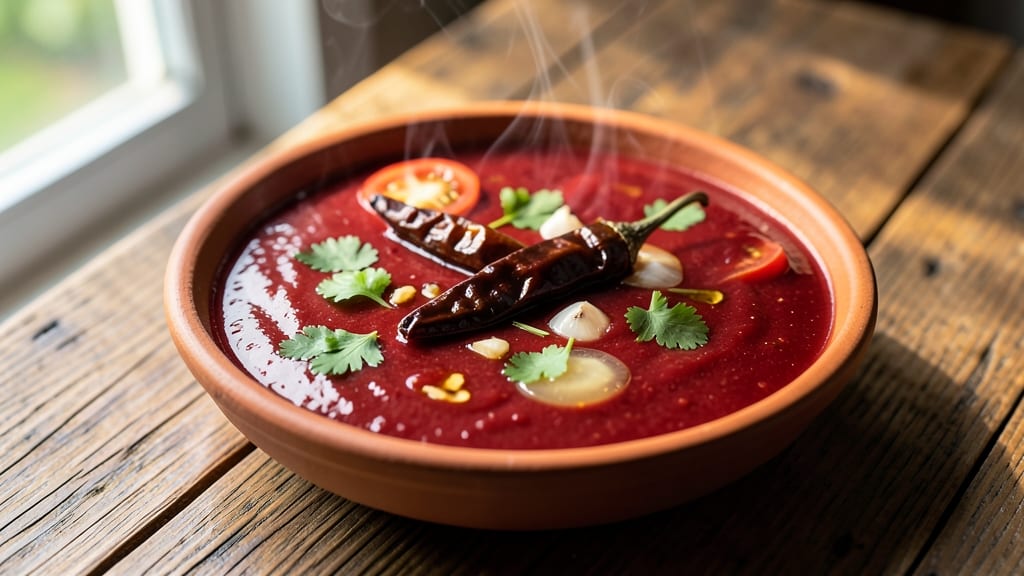
This authentic red tamale sauce transforms ordinary meals into vibrant, flavor-packed experiences with its deep, smoky complexity and subtle vinegar brightness. The secret lies in slow-simmering dried chilies and tomatoes until they release their natural sweetness, creating a sauce that's both bold and balanced.
I've perfected this technique over years of testing, ensuring every batch delivers that perfect harmony of heat, acidity, and earthy depth that defines traditional Mexican flavors.
The foundation of this sauce begins with soaking dried chilies—whether it's fiery chile de árbol or smoky guajillo—to soften their intensity while preserving their essential oils.
Garlic, cumin, and a touch of vinegar work together to create layers of flavor that build as the sauce simmers, reducing to a thick, velvety consistency perfect for drizzling over tamales, beans, or grilled meats.
What makes this recipe truly special is how it bridges tradition with adaptability, allowing you to adjust the spice level or smokiness to suit your taste.
What you'll end up with is a rich, slow-simmered sauce that's deeper and more complex than store-bought versions, with a glossy finish that clings beautifully to food. The vinegar adds a bright tang that cuts through the richness, while the smoldering chilies bring warmth without overpowering.
This isn't just a sauce—it's a flavor experience that turns simple dishes into something extraordinary, all while staying true to its roots.
The best part? This sauce keeps well in the refrigerator for up to two weeks, so you can make a big batch and enjoy it throughout the week.
Whether you're serving it with homemade tamales, drizzling it over tacos, or using it as a marinade, this authentic red tamale sauce will become a staple in your kitchen. Let's get started on creating something truly unforgettable.
Ingredients for authentic red tamale sauce
Nine essential ingredients transform into a sauce that's rich, smoky, and vibrantly balanced.
| Ingredient | Amount | Notes |
|---|---|---|
| Dried Guajillo Chilies 🌶️ | ½ oz | Stems and seeds removed |
| Dried Chile de Árbol Chilies 🌶️ | ¼ oz | For extra heat, adjust to taste |
| Dried Ancho Chilies 🌶️ | ¼ oz | Adds depth and earthiness |
| Roma Tomatoes 🍅 | 4 whole | Fresh or canned San Marzano |
| White Onion 🧅 | 1 whole | Yellow or white, chopped |
| Garlic Cloves 🧄 | 6 cloves | Peeled and smashed |
| Ground Cumin 🌿 | 1 tbsp | Toasted for deeper flavor |
| White Vinegar 🍶 | ½ cup | White or apple cider vinegar |
| Olive Oil 🫒 | ¼ cup | Extra-virgin preferred |
| Salt 🧂 | 1 ½ tsp | Diamond Crystal preferred |
The chilies are the heart of this sauce, so Mexican specialty stores or Latin markets are your best bet for authentic dried varieties like guajillo and chile de árbol. If you can only find one, guajillo alone gives that signature smoky depth. Trader Joe's often carries these in their frozen section, but toast them first to deepen their flavor. For tomatoes, San Marzano cans are ideal—they're sweeter and less acidic, which balances the vinegar perfectly. The onions and garlic should be fresh, but if you're short on time, frozen chopped onions work in a pinch (just thaw and drain them first).
No guajillo chilies? Ancho or pasilla chilies will work, but you might need to add a pinch of smoked paprika to mimic that authentic smokiness. Running low on vinegar? Lime juice at half the amount adds brightness, though it won't have the same tang. Fresh tomatoes are best, but if you're using canned, drain and rinse them well to avoid watering down the sauce. The cumin is non-negotiable—it's what gives this sauce its earthy warmth. If you've got whole cumin seeds, toast them in a dry pan for 30 seconds before grinding for an even deeper flavor. And if your vinegar smells funky, it's time to replace it—this sauce relies on that clean, bright acidity.
This sauce tastes even better the next day as the flavors meld, so make a big batch and store it in an airtight jar in the fridge for up to 2 weeks. The vinegar helps preserve it, but always check for mold if it sits longer than that. For a quick fix, freeze portions in ice cube trays—just thaw overnight in the fridge before using. The sauce thickens as it cools, so add a splash of water or vinegar if it gets too stiff. Trust me, the first time you drizzle this over warm tamales or tacos, you'll never go back to store-bought.
Why You'll Love This Recipe
- No Fuss, Big Payoff: I’ll be real—this sauce takes maybe 15 minutes of active work, and the rest is just letting those chilies soak and soften. No blenders breaking down, no charring onions to perfection—just toast the dried peppers, cover them with boiling water, and let them do their magic while you chop an onion. (Yes, even on a Tuesday night.)
- Smoky-Sweet Magic: That trio of guajillo, árbol, and ancho? It’s the holy trinity of depth—fruity-sweet from the guajillo, a whisper of heat from the árbol, and that rich, molasses-like depth from the ancho. Toss in Roma tomatoes and onion, and you’ve got a sauce that’s ridiculously good on its own or wrapped around anything.
- Your Secret Weapon: This isn’t just for tamales—it’s my go-to for enchiladas, tacos, or even drizzled over grilled chicken. Freeze half the batch in ice cube trays, and you’ve got instant flavor for future meals. Honestly, I make a big batch every few months and never run out.
- Pantry Goldmine: Dried chilies last forever, and you only need a handful for a whole pot of sauce. No wilting veggies, no rushed trips to the store—just pull them from your shelf, toast them, and you’re golden. Plus, the leftovers? They taste even better the next day, if that’s possible.
Step-by-step instructions for authentic red tamale sauce
Transform simple ingredients into a complex, restaurant-quality sauce with this traditional method.
Toast and Rehydrate the Dried Chilies
In a dry skillet over medium heat, toast the 0.5 oz dried guajillo chilies, 0.25 oz dried chile de árbol chilies, and 0.25 oz dried ancho chilies for 30 seconds per side until fragrant and slightly darkened. This step deepens their natural smokiness and removes any bitterness. Immediately transfer them to a bowl and cover with 1 cup of hot water (not from the ingredients list—just tap water works). Let them soak for 15 minutes until completely softened.
Here's the thing—don't skip the toasting. The aroma alone tells you it's working, but more importantly, it unlocks the chilies' full potential. Once rehydrated, drain them through a fine-mesh strainer, reserving the soaking liquid. You'll use this later to build the sauce's foundation.
Build the Base with Aromatics and Tomatoes
Heat the 0.25 cup olive oil in a heavy-bottomed saucepan over medium heat. Add the chopped 1 whole white onion and cook for 8-10 minutes until softened and translucent. Add the 6 smashed garlic cloves and cook for 1 minute until fragrant—don't let them brown or they'll turn bitter.
Next, add the 4 whole roma tomatoes, quartered, along with the 1 tbsp ground cumin and 1.5 tsp salt. Simmer uncovered for 15 minutes until the tomatoes break down into a thick paste. You'll see the sauce darken and intensify in color—this is where the magic happens. Stir occasionally to prevent sticking, but don't overwork the mixture.
Incorporate the Chilies and Vinegar
Add the drained, rehydrated chilies to the saucepan along with their reserved soaking liquid. Stir well to combine, then pour in the 0.5 cup white vinegar. The vinegar might seem like an odd addition, but it's essential for cutting through the richness and adding that signature tang that balances the smoky depth. Bring the mixture to a gentle simmer and cook uncovered for 20-25 minutes.
During this time, you'll notice the sauce reduce and thicken. The chilies will soften completely, releasing their oils and creating a velvety texture. Taste the sauce occasionally—you're looking for a balance of heat, acidity, and earthiness. If it's too thick, add 1-2 tablespoons of water to reach your desired consistency.
Blend and Strain for Silky Perfection
Once the sauce has thickened to your liking, carefully transfer it to a blender. I use an immersion blender for convenience, but a countertop blender works too. Blend until completely smooth, scraping down the sides as needed. The sauce should be velvety with no visible texture. If you prefer a slightly chunkier texture, blend for just 30 seconds instead of fully smooth.
Strain the sauce through a fine-mesh sieve into a clean saucepan. This step ensures a silky texture without any fibrous bits. Return the sauce to the stove and simmer gently for 10 minutes to meld all the flavors together. The sauce should now have a deep red hue with a glossy sheen—this is your indicator of success.
Adjust Seasoning and Serve
Taste the sauce and adjust the seasoning as needed. You might need a pinch more salt or a splash of vinegar to balance the flavors. The sauce should be complex—smoky from the chilies, tangy from the vinegar, and earthy from the cumin and tomatoes. If you prefer more heat, add a pinch of the dried chile de árbol chilies (the hottest of the three).
Serve the sauce immediately over tamales or as a condiment with grilled meats. The sauce will keep in an airtight container in the refrigerator for up to 1 week or can be frozen for 3 months. This authentic red tamale sauce is the secret weapon that elevates any dish—its depth of flavor will impress even the most discerning palates.
Pro Tips For Making Authentic Red Tamale Sauce
- REMOVE STEMS NOW: I used to soak the guajillo and ancho chilies whole, then peel off the stems after rehydrating—messy, and you lose flavor. Instead, tear open the dried pods and pull out the stems and seeds by hand before soaking. This keeps the sauce cleaner and preserves the deep, earthy notes from the dried fruit.
- CHAR THE ONIONS: Skip the slow cook until soft—this sauce needs caramelized onions for depth. Cook the white onion slices over medium-high heat until they’re dark golden and slightly crispy at the edges, about 8-10 minutes. The bitterness balances the sweetness of the tomatoes and cuts through the chile heat.
- STRAIN THE TOMATOES: Blending Roma tomatoes whole leaves you with a watery, seedy sauce. After roasting, strain them through a fine-mesh sieve to remove skins and seeds. This gives you a silky texture and concentrates the natural sweetness—no need for extra sugar.
- SAVE THE SOAK WATER: Don’t dump that chile-soaking liquid! After 15 minutes, strain it through a cheesecloth and reserve it. Add it back to the blended sauce later—it’s packed with dissolved chile oils and depth that store-bought broth can’t match. Use about ½ cup for a full batch.
Wine and beer pairings for this dish
Mexican Lager Pairing
For a classic match, reach for a crisp Mexican lager like Modelo Especial or Pacífico Clara. The light, clean profile of these beers complements the sauce's smoky depth without competing. The subtle malt sweetness enhances the tomatoes' natural sweetness, while the effervescence cuts through the sauce's richness.
I always keep a cold Modelo on hand when making this sauce—it's the perfect palate cleanser. 🍺
Spicy Margarita Cocktail
Turn your sauce into a cocktail by blending 2 oz tequila, 1 oz red tamale sauce, and ½ oz lime juice with ice. Shake with 1 tsp agave syrup and strain into a salt-rimmed glass over fresh ice.
Garnish with a lime wedge and a sprinkle of tajín. The heat from the sauce pairs beautifully with the citrus and tequila, creating a refreshing yet complex drink. 🍹
Smoky Bourbon Sipper
For a richer pairing, sip on a smoky bourbon like Woodford Reserve Double Oaked or Buffalo Trace. The caramel and vanilla notes in the bourbon mirror the sauce's depth, while its slight char enhances the chili's smokiness.
Serve the sauce warm in a small dish alongside the bourbon for a sophisticated, smoky tasting experience. 🥃
Red Wine Contrast
A medium-bodied red wine like Tempranillo or Grenache works surprisingly well with this sauce. The wine's earthy undertones complement the cumin and tomatoes, while its acidity balances the vinegar's tang. Serve the wine slightly chilled to enhance its fruitiness and contrast the sauce's heat. 🍷
Non-Alcoholic Options
For a non-alcoholic pairing, try a ginger beer like Feather's or a sparkling hibiscus tea (known as jamaica in Mexico). The ginger beer's spice enhances the sauce's heat, while the hibiscus tea's tartness mirrors the vinegar. Both options keep the meal refreshing without overpowering the sauce's complex flavors. 🌿
Nutrition facts
Frequently asked questions
Can I substitute fresh chilies for dried in this sauce?
You can try, but the flavor will be less developed. Fresh chilies lack the concentrated smokiness and depth of dried varieties. If you must substitute, use 2-3 fresh jalapeños or 1 poblano pepper (roasted and peeled) for each 0.25 oz dried chili. However, the sauce won't have the same complex, layered taste that comes from slow-simmering dried chilies.
Why does the recipe call for vinegar? Doesn't that make the sauce too sour?
The vinegar is key—it brightens the sauce and balances the smoky, earthy flavors. 0.5 cup white vinegar might seem like a lot, but it evaporates during simmering, leaving just enough acidity to cut through the richness. Think of it like lemon juice in a marinade: it enhances, rather than overpowers. Taste as you go and adjust if needed, but trust the process!
How spicy will this sauce be, and can I make it milder?
The chile de árbol adds heat, but the guajillo and ancho mellow it out. For a milder version, reduce the chile de árbol to 0.125 oz or omit it entirely. If you prefer more heat, add extra chile de árbol or a pinch of cayenne. Always taste before blending—you can adjust the spice level at any point!
Can I make this sauce without a blender?
If you don’t have a blender, simply mash the cooked chilies and tomatoes with a potato masher or fork until smooth. The texture will be slightly chunkier but still delicious. For an even smoother result, strain the mixture through a fine-mesh sieve after mashing. The sauce will still have that rich, smoky flavor—just with a rustic touch!
What’s the best way to store leftover sauce?
Store in an airtight container in the fridge for up to 1 week or freeze for 3 months. The sauce thickens as it cools, so add a splash of water or vinegar when reheating. For easy portioning, freeze in ice cube trays—just thaw overnight in the fridge before using. The flavors actually improve after resting!