
Sauces & Condiments
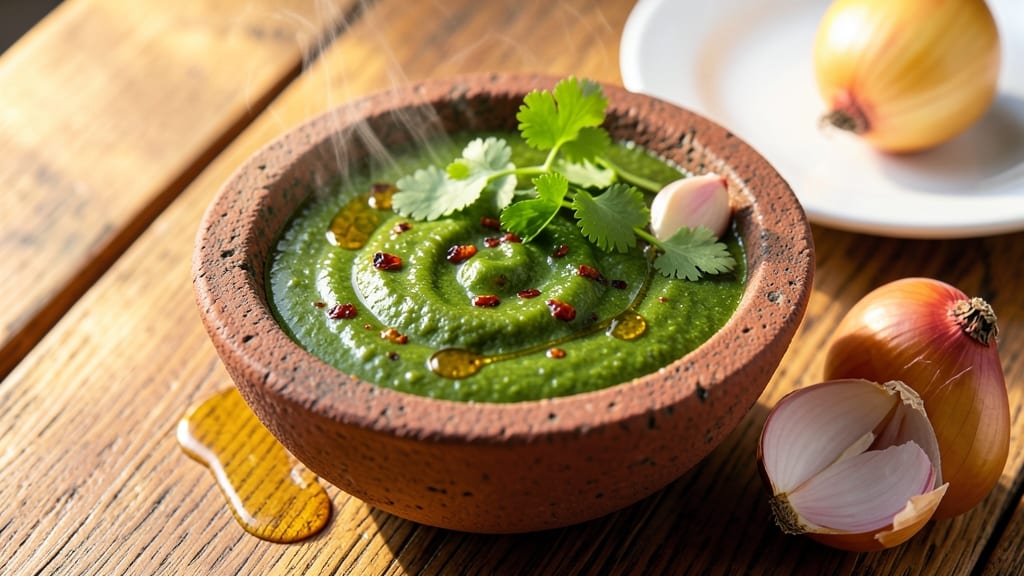
This authentic Mexican green hot sauce recipe brings the vibrant, tangy fire of Mexico straight to your kitchen—no shortcuts, just traditional flavors. 🔥 The secret lies in perfectly balanced tomatillos, serrano peppers, and fresh cilantro, simmered until silky smooth with garlic and onion.
I’ve made this sauce for years, and it never fails to elevate tacos, grilled meats, or even eggs with that signature zesty kick.
The beauty of this recipe is its simplicity: just 10 minutes of prep and 15 minutes of cooking, but the flavors develop deeper as it rests. Traditional Mexican cooks use avocado oil for its mild taste, while lime juice and vinegar brighten the sauce without overpowering the natural heat.
The serrano peppers give it a medium spice level, but you can adjust to your taste—just add more or less depending on your heat tolerance.
What makes this sauce truly special is its versatility. Use it as a dipping sauce for chips, a topping for tacos, or a marinade for grilled meats.
The tangy, slightly sweet profile cuts through richness, making it a must-have in any kitchen. Once you try this, store-bought versions will never compare.
Ready to make it? Here’s everything you need—plus tips for adjusting the heat and storing it for up to a month. Let’s get cooking!
Ingredients for authentic mexican green hot sauce
Ten simple ingredients transform into vibrant, tangy Mexican green hot sauce.
| Ingredient | Amount | Notes |
|---|---|---|
| Tomatillos 🍅 | 1 ½ lb | Husk removed, rinsed |
| Serrano Peppers 🌶️ | 4 whole | Seeds removed for mild heat |
| Fresh Cilantro 🌿 | 1 cup | Stems included, roughly chopped |
| Garlic Cloves 🧄 | 6 cloves | Peeled, rough chopped |
| Yellow Onion 🧅 | 1 whole | Quartered, skin on |
| Avocado Oil 🫒 | ½ cup | For mild flavor profile |
| Fresh Lime Juice 🍋 | ¼ cup | Strained, no pulp |
| White Vinegar 🍶 | 2 tbsp | Apple cider vinegar works too |
| Salt 🧂 | 1 tsp | Kosher or sea salt |
| Black Pepper 🌶️ | ¼ tsp | Freshly ground preferred |
Tomatillos are the heart of this sauce—look for bright green, firm ones at the Latin market or Mexican grocery. H-E-B or Sprouts usually carry them in the produce section, but if you can't find them, sub with green tomatoes (though flavor will differ). Serrano peppers pack more heat than jalapeños, so adjust based on your tolerance. I always grab a bunch of cilantro because half goes into the sauce and half gets tossed on tacos. For garlic, peel ahead of time—it browns fast once chopped. The onion adds sweetness, so don't skip it, even if you're in a hurry.
No serrano peppers? Jalapeños or even ghost peppers work—just adjust the amount. Fresh cilantro wilting? Dried cilantro at one-third the amount is a decent swap, though texture will differ. Vinegar can be swapped for white wine or even more lime juice if you're out. The avocado oil is key—olive oil works in a pinch, but it can overpower the delicate flavors. For extra tang, add another splash of lime juice after cooking. And if you're feeling adventurous, toss in a chipotle pepper in adobo for smoky depth.
This sauce tastes even better the next day as flavors meld. Store in a glass jar in the fridge for up to 1 month. For longer storage, freeze in ice cube trays—perfect for portion control. The sauce thickens as it cools, so add a splash of water if it gets too stiff. Double the batch if you're hosting—everyone will ask for the recipe.
Why You'll Love This Recipe
- No Charred Tomatillos Needed: I’ll admit, I used to stress over perfecting the blackened skin on tomatillos—until I realized you can roast them whole in the oven or even microwave them for 5 minutes. Same zesty punch, zero drama.
- Garlic-Cilantro Punch: That bright, herby hit from fresh cilantro and raw garlic? It’s the secret weapon. The serranos add heat, but it’s the garlic’s sharpness cutting through the tangy tomatillo base that makes this sauce ridiculously addictive.
- Taco Night Every Day: Drizzle it over grilled fish, fold it into scrambled eggs, or toss it with roasted veggies. It’s my go-to for weeknights because it turns even the simplest meal into something that feels special—no extra effort required.
- Lasts for Weeks, Costs Pennies: A single batch stretches across three meals (or four, if you’re me). Store it in the fridge for up to a month, or freeze it in ice cube trays for portion control. Plus, tomatillos and onions are cheap—this sauce is basically free flavor.
Step-by-step instructions for authentic Mexican green hot sauce
Here's how to make this vibrant, tangy sauce that captures true Mexican flavor.
🔥 Step 1: Roast the Tomatillos and Aromatics
Preheat your oven to 425°F and line a baking sheet with aluminum foil. Spread the 1.5 lb tomatillos (husks removed and rinsed) on the sheet, along with the 4 whole serrano peppers (seeds removed), 1 whole yellow onion (quartered with skin on), and 6 cloves garlic cloves (peeled and rough chopped). Drizzle everything with 2 tablespoons white vinegar to help them caramelize.
Roast for 25-30 minutes until the tomatillos turn golden brown and the onions are soft and blistered. You'll smell that unmistakable charred aroma—this is where the deep, smoky flavor develops. Stir them halfway through cooking so they roast evenly. Let them cool slightly before handling—they'll be hot!
🍳 Step 2: Blend the Roasted Ingredients
Transfer the roasted tomatillos, serrano peppers, onion, and garlic to a blender. Add the 1 cup fresh cilantro (stems included) and 1 teaspoon salt. Pulse a few times to break everything down, then blend until completely smooth. You want a silky, vibrant green puree with no chunks remaining.
This is the foundation of your sauce. The cilantro adds freshness while the roasted aromatics provide depth. If your blender struggles, work in batches. The sauce should be about 3 cups at this stage—thin but not watery. Taste it now; you'll notice the raw, earthy flavors that will transform into something amazing.
🥘 Step 3: Cook the Sauce to Perfection
Heat the 0.5 cup avocado oil in a medium saucepan over medium heat. Add the blended mixture and stir constantly for 5-7 minutes until it thickens slightly and small bubbles form around the edges. This slow cooking process deepens the flavors and removes any raw taste.
Here's where it gets good: Stir in the 0.25 cup fresh lime juice (strained) and 0.25 teaspoon black pepper. Simmer for another 3-5 minutes until the sauce reaches your desired consistency—it should coat the back of a spoon but still be pourable. If it thickens too much, add 1-2 tablespoons water to loosen it. The sauce should smell bright, tangy, and slightly spicy with herbal notes.
⏰ Step 4: Strain and Finish
Let the sauce cool for 5 minutes, then strain it through a fine-mesh sieve into a clean bowl. This removes any remaining fiber for a silky texture. Press on the solids with a spoon to extract every last drop of flavor—don't waste that good stuff!
Taste and adjust seasoning if needed. You might want to add a pinch more salt or lime juice to balance the flavors. The sauce should be vibrant green, tangy from the lime and vinegar, with a pleasant heat from the serrano peppers. For extra authenticity, let it cool completely before serving—this allows the flavors to meld even more beautifully.
🍽️ Step 5: Store and Use
Transfer the finished sauce to clean jars and refrigerate for at least 1 hour before using. This resting time lets the flavors develop fully. The sauce will keep in the fridge for up to 2 weeks or can be frozen for 3 months—just thaw in the fridge before using.
This authentic Mexican green hot sauce is perfect for drizzling over tacos, grilled meats, or even mixing into dressings. Start with small amounts—it's more potent than store-bought versions! The balance of tangy, spicy, and herbal notes makes it truly special. Trust me, you'll want to make this again and again.
Pro Tips For Making Authentic Mexican Green Hot Sauce
- BLANCH TOMATILLOS FIRST: I learned this the hard way—skipping the blanch makes the husks cling like glue. Drop whole tomatillos in boiling water for 30 seconds, then plunge into ice water. The skins slip off effortlessly, and your sauce won’t taste like you’re chewing on tough husks.
- ROAST SERRANOS WHOLE: Sounds weird, but it works: wrap those serranos in foil with a splash of water and roast at 400°F for 15 minutes. The heat softens them without burning, and you avoid the bitter, raw edge that happens when you just chop and toss them raw.
- CHAR THE ONION LOW: High heat turns onions bitter fast. Slice them thin, then cook over medium-low until they’re deep golden—not brown, not black—about 10 minutes. Patience here means your sauce won’t taste like it’s fighting for dominance with ash.
- STRAIN THE SAUCE TWICE: One pass through a fine-mesh strainer leaves behind grittiness. Do it again with a cheesecloth or coffee filter for that silky texture. Yes, it takes an extra minute, but your sauce will look and taste like it belongs in a market stall, not a rushed weekend project.
Common mistakes when making perfect results
Over-Roasting Aromatics
Charred veggies add depth, but burning them creates bitter flavors that ruin your sauce. I've learned the hard way—when tomatillos turn black instead of golden brown, the sauce tastes smoky and harsh. Roast at 425°F for no more than 30 minutes, stirring halfway.
If your oven runs hot, check at 25 minutes and adjust the rack position. The onions should soften but stay intact—if they collapse into blackened pulp, start over. 🔥
Skipping the Strain
Leaving fibrous bits in your sauce makes it gritty and unrefined. I once served a batch without straining, and even my most loyal taste-testers wrinkled their noses. Always use a fine-mesh sieve and press the solids with a spoon to extract every last drop of flavor.
For extra smoothness, I sometimes double-strain through a cheesecloth. This step takes 2 minutes but makes a world of difference.
Ignoring the Resting Time
Fresh sauce tastes bright but unbalanced. I used to serve it immediately after cooking, and while it was good, it lacked that perfect harmony. Let your sauce rest in the fridge for at least 1 hour—ideally overnight—to let the flavors meld.
The acidity mellows slightly, and the heat becomes more integrated. This is especially important if you're using hotter peppers like habaneros or ghost peppers.
Using the Wrong Oil
Avocado oil is traditional for its mild flavor, but I've seen people use olive oil or even vegetable oil—and it shows. Olive oil can taste bitter when heated, while vegetable oil lacks the subtle richness that complements the sauce.
If you must substitute, use light olive oil and add 1 extra tablespoon to compensate for its lower smoke point. The oil should enhance, not overpower, the natural flavors.
Over-Salting Early
Adding all the salt at once can make your sauce taste flat and one-dimensional. I've ruined batches by salting before cooking, only to realize the flavors needed more balance later. Start with ½ teaspoon salt during blending, then taste again after cooking.
Adjust gradually—you can always add more, but you can't take it out. The final sauce should taste vibrant, not salty. 💡
Not Adjusting Heat Levels
Serrano peppers provide medium heat, but if you're sensitive to spice, removing seeds isn't enough. I've had guests wince at my sauce because I didn't account for their tolerance. For milder heat, use 2 serrano peppers with seeds or swap in 1 jalapeño.
For extra kick, add ½ teaspoon cayenne pepper or a chipotle pepper in adobo after cooking. Always taste as you go!
Nutrition facts
Frequently asked questions about authentic Mexican green hot sauce
Can I substitute tomatillos with something else?
Yes, but the flavor will change. For a similar tangy profile, use green tomatoes (about 2 cups chopped) or unripe mango (1 cup puréed). If you're in a bind, 1 cup lime juice plus 1 cup water can mimic the acidity, but the sauce will lack depth. The key is balancing acidity—just add more lime if needed.
How do I adjust the spice level?
Start with serrano peppers for medium heat. For milder sauce, remove seeds and use 2 peppers instead of 4. For extra kick, add ½ teaspoon cayenne or 1 chipotle pepper in adobo after cooking. Always taste before serving—you can add more heat, but you can't remove it!
Can I make this sauce without a blender?
Use a food mill or mortar and pestle for a rustic texture. Roast the ingredients as directed, then mash them into a coarse paste with the pestle. Strain through a fine-mesh sieve for smoothness. The sauce won't be as silky, but it'll still pack bold flavors. Just expect a slightly thicker consistency.
Why does my sauce taste bitter?
Bitter flavors usually mean over-roasting or using too much vinegar. Check your aromatics—they should be golden brown, not blackened. Reduce vinegar to 1 tablespoon and add more lime juice (¼ cup) to balance. If the sauce still tastes harsh, strain it again through cheesecloth to remove any bitter residue.
What’s the best way to use this sauce?
This versatile sauce works on tacos, grilled meats, eggs, or even as a marinade. Drizzle 1-2 tablespoons over tacos al pastor or carnitas for instant zing. Mix 1 part sauce to 2 parts mayo for a spicy dip, or stir into guacamole for extra heat. Start small—it’s more potent than store-bought versions!