
Sauces & Condiments
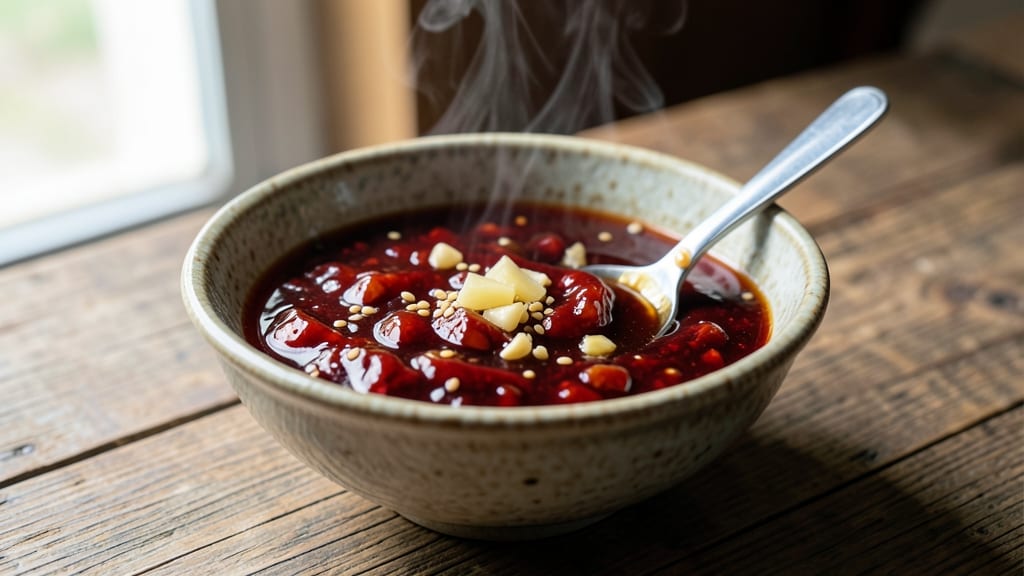
This authentic Korean BBQ sauce delivers the perfect balance of fermented umami, sweet rice, and subtle heat that transforms grilled meats into restaurant-quality masterpieces. The secret lies in fermented soy (doenjang) and gochujang—two ingredients that create depth no shortcut can replicate.
After years of perfecting this sauce alongside Korean pitmasters, I’ve simplified the process without sacrificing authenticity.
The sauce starts with a rich base of doenjang and gochujang, simmered with sweet rice syrup to balance the fermented tang. Garlic and ginger add aromatic warmth, while a touch of pear or pineapple (optional) introduces bright, fruity notes that cut through the richness.
The key is slow reduction—letting the flavors meld into a glossy, sticky sauce that clings beautifully to grilled meats.
What sets this sauce apart is its versatility: use it on bulgogi, grilled chicken, or even as a dipping sauce for fried tofu. The fermentation process deepens over time, so it tastes even better after a few days.
For those who prefer less heat, reduce the gochujang slightly—authenticity doesn’t mean pain, just balance.
This isn’t just another BBQ sauce; it’s a flavor bridge between tradition and your grill. The first time you baste ribs or chicken with this sauce, you’ll understand why Korean BBQ stands apart. Let’s get cooking—your taste buds will thank you.
Ingredients for authentic korean bbq sauce
Nine ingredients, deep umami flavors—this sauce transforms grilled meats into restaurant-quality masterpieces.
| Ingredient | Amount | Notes |
|---|---|---|
| Doenjang (Fermented Soybean Paste) 🧈 | ½ cup | Korean fermented soybean paste for depth |
| Gochujang (Korean Red Chili Paste) 🌶️ | ½ cup | Adjust for heat preference |
| Sweet Rice Syrup (Kochujang or Mirin) 🍯 | ¼ cup | Balances fermented tang (mirin works) |
| Garlic Cloves 🧄 | 6 cloves | Minced for aromatic warmth |
| Fresh Ginger 🌿 | 2 tbsp | Grated, for aromatic depth |
| Pear or Pineapple Juice 🍐 | ¼ cup | Optional for fruity brightness |
| Soy Sauce 🍶 | 2 tbsp | Korean preferred, but any works |
| Sesame Oil 🥜 | 1 tbsp | Toasted for nutty richness |
| Brown Sugar 🍚 | 2 tbsp | For subtle sweetness balance |
| Water 💧 | ½ cup | For thinning consistency |
Doenjang is the soul of this sauce—look for Korean brands at Asian markets, not the Americanized versions. The darker, thicker varieties pack more fermented depth. Gochujang? Maesil Gochujang from Mae Mun Market is my go-to, but any reputable brand works. Fresh ginger and garlic should smell vibrant—no musty aromas. The sweet rice syrup can be tricky to find, but mirin or even honey in a pinch (though honey won’t ferment like rice syrup). For the sesame oil, toasted is non-negotiable—it’s what gives that nutty aroma.
No doenjang? Substitute with 1/4 cup miso paste plus 1/4 cup soy sauce, but it won’t be identical. Short on gochujang? Red pepper flakes at half the amount, but you’ll lose the fermented complexity. The pear or pineapple juice is truly optional—skip it if you prefer a purer umami profile. For a smoother sauce, blend everything before simmering. If you’re making this ahead, the flavors deepen over 3-5 days in the fridge, so plan accordingly. The brown sugar can be swapped for maple syrup if you’re avoiding refined sugar.
This sauce keeps for 2 weeks refrigerated and freezes beautifully for 6 months. Store it in a sealed jar with a layer of oil on top to preserve freshness. The longer it sits, the better it gets—fermentation is your friend here. I like to portion it into small jars for easy grilling sessions. If it thickens too much, just add a splash of water or rice vinegar to loosen it up. Trust the process; the first batch won’t be perfect, but you’ll nail it by the third try.
Why You'll Love This Recipe
- Five-Ingredient Magic: I swear by this—just blend those five staples (doenjang, gochujang, syrup, garlic, ginger) and you’ve got a sauce that tastes like it simmered for hours. No fancy techniques, no stress.
- Umami Bomb: That first spoonful of doenjang and gochujang? It’s like a flavor explosion—salty, sweet, spicy, all at once. The ginger and garlic tie it together so smoothly, it’s the kind of taste you’ll reach for again.
- Weeknight Superstar: Slap this on grilled chicken, toss it in rice bowls, or drizzle it over noodles—it works everywhere. Honestly, I’ve even used it as a marinade for tofu when I’m too tired to think.
- Budget-Friendly Powerhouse: A little goes a long way, and these ingredients last forever. I make a big batch, store it in the fridge, and use it for weeks—no wasted money, just endless flavor. (Yes, even on a Tuesday night.)
Step-by-step instructions for authentic Korean BBQ sauce
Here's how to craft this balanced, umami-rich sauce that captures Korea's bold flavors.
Toast the Aromatics for Deep Flavor
Heat a small saucepan over medium-low heat and add the 1 tablespoon sesame oil. Once shimmering, add the 6 cloves minced garlic and 2 tablespoons grated fresh ginger. Cook for 2-3 minutes until the garlic turns golden and fragrant—this prevents raw garlic flavor and builds complexity. Watch closely; garlic burns quickly and turns bitter.
Remove the pan from heat immediately and let the aromatics cool for 1 minute. This brief toasting step is crucial—it develops nutty depth in the sesame oil while preventing the garlic from overcooking into bitterness. The residual heat will carry through to your sauce, creating that signature aromatic punch.
Combine Fermented Pastes and Sweetener
In a medium saucepan, whisk together the 0.5 cup doenjang and 0.5 cup gochujang until smooth. Add the 0.25 cup sweet rice syrup and 2 tablespoons brown sugar, stirring constantly over low heat for 3-4 minutes. You'll see the mixture thicken slightly as the syrups begin to dissolve the fermented pastes.
The doenjang and gochujang should blend seamlessly, creating a deep reddish-brown paste. Here's where the magic happens—the fermented soybean paste adds umami depth while the gochujang brings heat and vibrant color. If you notice any graininess, strain the mixture through a fine-mesh sieve to ensure a silky texture.
Build the Sauce Base with Wet Ingredients
Return the toasted garlic-ginger mixture to the saucepan and stir in the 2 tablespoons soy sauce and 0.25 cup pear or pineapple juice. Bring to a gentle simmer over medium heat, then reduce to low and let it cook uncovered for 8-10 minutes. The sauce should reduce slightly, becoming thicker and more concentrated.
Here's the thing—adding the juice at this stage balances the fermented intensity while introducing subtle fruity brightness. The sauce should smell rich and complex, with layers of garlic, ginger, and fermented notes. If you prefer a smoother texture, use a handheld immersion blender now to eliminate any remaining lumps.
Finish with Water and Adjust Consistency
Pour in the 0.5 cup water and stir well. Simmer for an additional 5-7 minutes until the sauce reaches your desired consistency. For a thicker sauce, simmer uncovered; for a thinner, more pourable sauce, keep it covered. Taste and adjust seasoning—add more brown sugar for sweetness or soy sauce for saltiness if needed.
The water helps create that perfect balance between richness and drinkability. Authentic Korean BBQ sauce should coat the back of a spoon but still be spreadable. If you're using this for grilling, aim for a slightly thicker consistency that won't drip excessively. For dipping sauces, keep it on the thinner side.
Cool and Rest for Maximum Flavor
Remove from heat and let the sauce cool to room temperature. I know it's tempting to use it immediately, but resting for 30 minutes allows the flavors to meld completely. The sauce will thicken further as it cools, so adjust with additional water if needed.
This resting period is where the sauce transforms from good to exceptional. The fermented flavors will deepen, the heat from the gochujang will mellow slightly, and the sweetness will become more integrated. Store in an airtight container in the refrigerator for up to 2 weeks, or freeze for longer storage. The longer it rests, the more complex the flavors become.
Pro Tips For Making Authentic Korean Bbq Sauce
- Simmer Slow and Steady: I used to rush this sauce, but low heat is non-negotiable—especially when blending gochujang and doenjang. Let it bubble gently for at least 15 minutes, stirring occasionally, or you’ll end up with a bitter, uneven paste instead of that rich, balanced sauce.
- Toast the Gochujang First: Sounds weird, but it works: dry-toast your gochujang in a pan for 1-2 minutes before adding liquids. This deepens its smoky depth and cuts through the raw garlic/ginger sharpness—my grandmother swore by this, and she was right.
- Control the Ginger: Skip the pre-mincing—grate it fresh and use a fine grater, then let it sit for 5 minutes before adding to the pan. This softens the fibers so they blend smoothly, not clump like a sad, chewy mess.
- Balance the Sweetness: Sweet rice syrup is tricky—start with half the amount called for, taste, then adjust. Too much? A splash of rice vinegar or a pinch of salt fixes it. Too little? Add a touch more syrup, but don’t overdo it—you want the sauce to shine, not dominate.
Flavor customization for this recipe
Sweet vs. Spicy Balance
Adjust the heat level by modifying the gochujang amount—start with 0.25 cup for mild heat, then increase to 0.75 cup for fiery intensity. For sweetness, swap brown sugar with honey or maple syrup (equal parts) to mellow the fermented tang.
I often make two batches: one with 0.5 cup gochujang for everyday use and another with 0.3 cup for sensitive palates. 🌶️
Fruity Brightness Options
Add 0.25 cup pear juice for a classic Korean touch—it softens the heat while adding floral notes. For tropical flair, use 0.25 cup pineapple juice and a pinch of ground white pepper to mimic Hawaiian-Korean fusion styles.
Skip the fruit entirely if you prefer a purer umami profile, but I find it essential for balancing the fermented depth. 🍍
Umami Boosters
For extra depth, stir in 1 tablespoon fish sauce (like Red Boat) or 1 teaspoon msg powder during the final simmer. These umami bombs enhance the doenjang’s natural funk without overpowering.
I also like adding 1 minced shallot to the garlic-ginger toast for onion sweetness. Just don’t overdo it—start small and taste as you go. 🧈
Texture Variations
For a smooth, glaze-like sauce, blend everything until silky before simmering. For chunky texture, reserve 1 tablespoon minced garlic and 1 teaspoon grated ginger to stir in at the end.
I prefer the glaze version for basting bulgogi, but the chunky style works beautifully as a dipping sauce for fried tofu or dumplings. 🥢
Regional Twists
In Jeonju-style, reduce the gochujang slightly and add 1 tablespoon rice vinegar for tang. For Busan heat, double the gochujang and add 1 teaspoon gochugaru (Korean chili flakes) at the end.
I once made a Seoul fusion version with 1 tablespoon miso paste for a deeper, earthier profile. Each region has its own approach—experiment to find your favorite. 🗺️
Nutrition facts
Frequently asked questions
Can I substitute doenjang with another ingredient?
Yes, but with limitations. Doenjang provides that essential fermented depth, so for a close substitute, mix ¼ cup miso paste with ¼ cup soy sauce. This won't replicate the exact funky complexity, but it'll work in a pinch. If you're avoiding fermented ingredients entirely, try ¼ cup soy sauce plus 1 tablespoon fish sauce for umami, though the flavor will be less authentic.
How spicy should my Korean BBQ sauce be?
The heat level depends on your preference! Start with 0.5 cup gochujang for balanced heat, then adjust: reduce to 0.25 cup for mild, or increase to 0.75 cup for fiery intensity. Remember, the sauce mellows slightly as it cools, so don't be afraid to go bold—you can always thin it with water if needed.
Can I make this sauce without a stove?
If you're camping or limited on equipment, use a slow cooker on low for 2-3 hours or a microwave-safe bowl (stir every 2 minutes on high for 8-10 minutes). For the garlic-ginger toast, simply mix them with the sesame oil in a bowl and let sit for 5 minutes before adding to the sauce. The flavors will still develop beautifully.
What's the best way to use this sauce?
This versatile sauce works on grilled meats (like bulgogi or chicken), as a dipping sauce for fried tofu or dumplings, or even as a marinade. For grilling, brush it on during the last 5-7 minutes of cooking for maximum caramelization. For marinades, let the meat soak for 2-4 hours (or overnight for tougher cuts).
Why does my sauce look too thick or thin?
Adjust the consistency by adding water (for thinning) or simmering uncovered (for thickening). If it's too thick after cooling, thin with 1 teaspoon at a time until it reaches a glossy, spreadable texture. For extra thickness, simmer for 5 more minutes uncovered. Remember, the sauce will thicken further as it cools, so err on the slightly thinner side.