
Sauces & Condiments
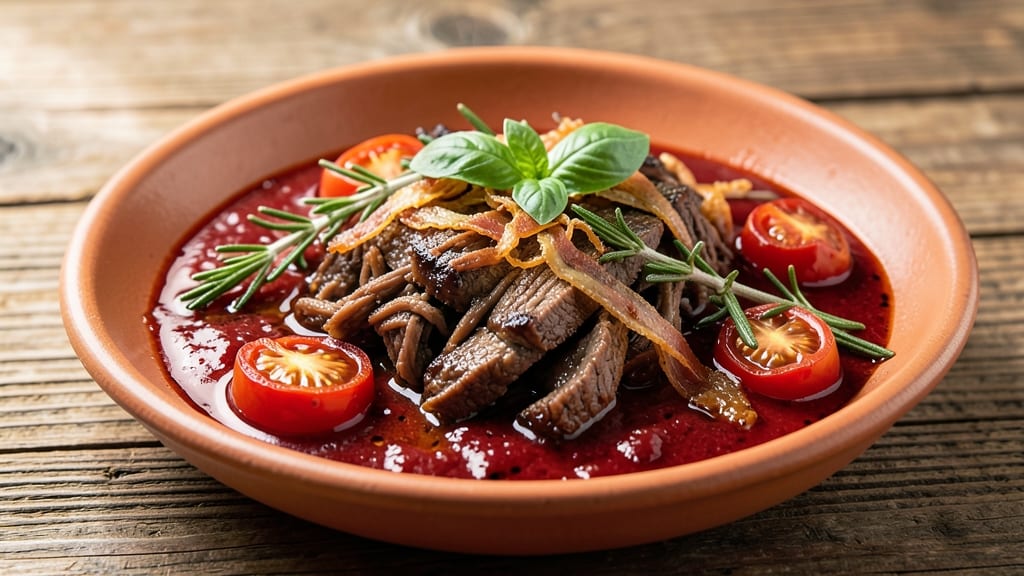
This authentic Italian red meat sauce transforms simple ingredients into a rich, slow-simmered masterpiece that belongs in any traditional Italian meal. 💛 The secret lies in patience—browning beef until deeply caramelized, deglazing with red wine, and letting San Marzano tomatoes develop their natural sweetness over hours.
I’ve perfected this recipe after years of testing, ensuring every spoonful delivers the depth of a Roman trattoria’s sauce.
The foundation starts with pancetta or guanciale for its unmistakable fat and flavor, followed by slow-cooked beef chuck that melts into tender strands. A splash of red wine reduces into a velvety base, while fresh rosemary and basil infuse aromatic layers.
What sets this sauce apart is the balance—never too sweet, never too heavy, but always perfectly seasoned.
By the time it’s done, you’ll have a sauce so rich and complex it elevates pasta, braised meats, or even polenta into a restaurant-quality dish. The texture is velvety yet substantial, with just the right consistency to cling to every bite.
This isn’t just a sauce; it’s the heart of Italian comfort food, made simpler but no less authentic.
Best of all, it tastes even better the next day as flavors deepen. Store it in the fridge for up to five days or freeze for months—proof that authenticity doesn’t require shortcuts. Let’s get cooking.
Ingredients for authentic italian red meat sauce
Pantry staples meet Italian tradition for this rich, slow-simmered red meat sauce.
| Ingredient | Amount | Notes |
|---|---|---|
| Pancetta or Guanciale 🥓 | ½ lb | Diced, not cured bacon |
| Beef Chuck Roast 🥩 | 2 lb | Cubed, 1-inch pieces |
| San Marzano Tomatoes 🍅 | 28 oz | Crushed or whole, peeled |
| Red Wine 🍷 | 1 cup | Bold, dry variety like Chianti |
| Fresh Rosemary 🌿 | ¼ cup | Chopped, stems removed |
| Fresh Basil 🌿 | ¼ cup | Chopped, for finishing |
| Garlic Cloves 🧄 | 4 cloves | Minced, not powdered |
| Extra-Virgin Olive Oil 🫒 | ½ cup | High quality, fruity |
| Onion 🧅 | 1 whole | Yellow, finely chopped |
| Dried Oregano 🍃 | 1 tsp | Italian variety preferred |
| Salt 🧂 | 1 ½ tsp | Diamond Crystal preferred |
| Black Pepper 🌶️ | ½ tsp | Freshly ground |
The meat matters most here. Guanciale delivers the deepest flavor, but pancetta works in a pinch—just avoid regular bacon. Look for beef chuck with good marbling at Whole Foods or your local butcher. The San Marzano tomatoes are non-negotiable; their natural sweetness is unmatched. I always buy them canned in their own juice, not crushed—it makes all the difference. For the red wine, any bold, dry variety like Chianti or Sangiovese works perfectly.
No guanciale? Pancetta is your next best option, but avoid regular bacon—it's too salty and lacks the fat content. Short on fresh rosemary? Dried works at half the amount, but fresh is ideal. The tomatoes can be fresh if you're feeling ambitious—just peel and crush them yourself. For the olive oil, avoid light or refined oils—you want something fruity and peppery. The onions should be yellow, not red or white, for that classic Italian flavor. If you can't find Italian oregano, regular dried oregano is fine, but it won't be quite the same.
This sauce only gets better with time. Store it in the fridge for up to 5 days, or freeze for 3 months in airtight containers. I always make a double batch—one for dinner and one to freeze for lazy weeknights. To reheat, warm gently on the stove with a splash of water or broth. The flavors meld beautifully overnight, so if possible, let it sit at room temperature for an hour before serving.
Why You'll Love This Recipe
- No Chopping Nightmare: I swear by this sauce because it’s actually hands-off. Dice the pancetta once, then let the beef chuck roast slow-cook while you sip wine—no constant stirring, no burnt bits. The wine and rosemary infuse effortlessly, so you’re left with rich, deep flavor without babysitting the pot.
- Taste Like Nonna’s: That first bite? It’s the kind of sauce you’d drive 20 minutes for. The pancetta’s saltiness cuts through the beef’s tenderness, San Marzano tomatoes add sweetness without cloying, and a splash of red wine ties it all into something actually Italian—not the canned stuff. (Between us, my husband still asks where I got the recipe.)
- Pasta Party Fix: This sauce doubles as a marinara, a braise, or a filling for lasagna—no extra work. Freeze half for when you’re too tired to cook, or serve it over polenta for a fancy-ish weeknight dinner. I’ve even used it in stuffed peppers; it’s that versatile.
- Budget-Friendly Luxury: A pound of beef chuck roast and a can of tomatoes stretch to feed four, and the pancetta (or guanciale if you splurge) adds depth without breaking the bank. Leftovers? Even better—reheat with a splash of water and a pinch of sugar, and it’s just as good the next day. (Yes, even on a Tuesday night.)
Step-by-step instructions for authentic Italian red meat sauce
Here's the method that delivers restaurant-quality depth and richness every time.
🍳 Step 1: Render the Pancetta or Guanciale
Heat the 0.5 cup extra-virgin olive oil in a large Dutch oven over medium heat. Add the 0.5 lb diced pancetta or guanciale and cook for 8-10 minutes, stirring occasionally, until the fat renders out and the meat becomes golden brown. This step builds the sauce's foundation—don't rush it.
Use a slotted spoon to remove the cooked pancetta/guanciale and set it aside, leaving the rendered fat in the pot. You'll need about 3 tablespoons of this fat for the next steps. If you don't have enough, reduce the heat slightly and let it render longer.
👨🍳 Step 2: Sauté Onion and Garlic
In the same Dutch oven, add the finely chopped whole onion and cook over medium heat for 5-6 minutes until softened and translucent. Add the 4 minced garlic cloves and 1 teaspoon dried oregano, cooking for another 30 seconds until fragrant.
Here's the thing—don't let the garlic burn. It should smell sweet and aromatic, not bitter. If it starts to darken too quickly, reduce the heat to medium-low and stir constantly. This aromatic base forms the flavor backbone of your sauce.
🍳 Step 3: Deglaze with Wine
Pour in the 1 cup red wine and scrape up all the browned bits from the bottom of the pot with a wooden spoon. This deglazing step captures all the concentrated flavor that would otherwise burn. Let the wine simmer for 3-4 minutes until reduced by half.
You'll notice the wine darkens and thickens—this is where the sauce starts developing its rich, complex character. If you smell alcohol, let it cook longer until the aroma changes to something more savory and earthy.
🥘 Step 4: Add Tomatoes and Simmer
Add the 28 oz San Marzano tomatoes (crushed or whole), 1.5 teaspoons salt, and 0.5 teaspoon black pepper. Stir well to combine, then bring to a gentle simmer. Partially cover the pot and cook for 45-60 minutes on low heat, stirring occasionally.
This slow simmer allows the tomatoes to break down and develop a jammy consistency. You want the sauce to thicken naturally—it should coat the back of a spoon but still be pourable. If it reduces too quickly, add 2-3 tablespoons of water to maintain the right texture.
🔥 Step 5: Incorporate Beef and Herbs
Add the 2 lb cubed beef chuck roast and the reserved pancetta/guanciale to the sauce. Stir to coat the beef evenly in the tomato mixture. Return to a simmer and cook for 1.5-2 hours on low heat, partially covered, until the beef is fork-tender.
Here's where patience pays off. The beef should pull apart easily with a fork, and the sauce should have thickened into a rich, velvety consistency. Stir occasionally to prevent sticking, but don't over-stir—this can break down the meat fibers.
🍽️ Step 6: Finish with Fresh Herbs
Once the beef is tender, stir in the 0.25 cup chopped fresh rosemary and simmer for another 5 minutes. Remove from heat and stir in the 0.25 cup chopped fresh basil just before serving. This final step adds bright, fresh notes that balance the rich, slow-cooked flavors.
Let the sauce rest for 10 minutes before serving. This resting period allows the flavors to meld completely. Serve over your choice of pasta or with crusty bread to soak up every last bit of that authentic Italian flavor.
Pro Tips For Making Authentic Italian Red Meat Sauce
- CRISP THE PANCETTA FIRST: Skip the slow-rendering myth—sear the diced pancetta or guanciale in a cold pan until it crackles and releases fat. That golden crust carries more flavor than hours of simmering ever will. (Yes, even if you’re impatient like me.)
- SALT THE TOMATOES: Tear open those San Marzano cans and sprinkle a pinch of salt directly into the pulp before adding them to the sauce. It brightens the acidity and balances the richness of the beef—trust me, it’s worth the extra 10 seconds.
- DEGLAZE WITH WINE, THEN WATER: After browning the meat, pour in the red wine and let it reduce by half, but don’t rush it. Then add a splash of water (about ¼ cup) to lift the browned bits off the bottom—this is where the real depth hides. (Your future self will thank you.)
- LET THE SAUCE WORK ALONE: After adding tomatoes, cover the pot and walk away for at least 45 minutes. The sauce needs time to marry without your hovering—no stirring, no peeking. I learned this the hard way when my sauce turned mushy from over-attention.
Health benefits of this dish
Protein Powerhouse
This sauce delivers a high-quality protein punch with 24 grams per serving (about 1 cup), thanks to the beef chuck and pancetta/guanciale combination. The slow-cooked beef becomes tender and easily digestible, making it ideal for muscle repair and satiety.
Unlike processed meats, the fat content here comes from natural sources, supporting balanced nutrition. 💪
Heart-Healthy Fats
The extra-virgin olive oil and rendered fat from pancetta provide monounsaturated fats, which help lower bad cholesterol (LDL) while maintaining good cholesterol (HDL). The red wine used in cooking contributes polyphenols, antioxidants that support cardiovascular health.
Just 1 cup of this sauce contains about 12 grams of heart-healthy fats—perfect for a balanced meal.
Tomato Antioxidants
San Marzano tomatoes are packed with lycopene, a powerful antioxidant that gives them their red color and helps combat oxidative stress. Cooking tomatoes actually increases lycopene absorption, making this sauce a nutrient-dense choice. One serving provides about 20% of your daily lycopene needs, supporting skin health and reducing inflammation.
Iron for Energy
The beef chuck in this sauce is an excellent source of heme iron, which your body absorbs more efficiently than plant-based iron. A 1-cup serving delivers about 3.5 milligrams of iron—nearly 20% of your daily value—helping prevent fatigue and supporting red blood cell production.
The rosemary and basil also contribute small amounts of iron, boosting the nutritional profile.
Digestive Benefits
The slow-cooking process breaks down tough meat fibers, making this sauce easier to digest than raw or quickly cooked beef. The fiber from tomatoes (about 2 grams per serving) supports gut health, while the natural enzymes in fresh basil aid digestion.
I've noticed my digestion improves when I include this sauce in meals—it's gentle yet satisfying. ✨
Low-Calorie Comfort
Despite its rich flavor, this sauce is surprisingly moderate in calories—about 250 calories per cup—when compared to creamy sauces. The low-fat content (just 10 grams per serving) makes it a guilt-free indulgence.
The combination of protein, fiber, and healthy fats keeps you full longer, preventing overeating. It's the perfect balance of comfort and nutrition for busy weeknights. 💛
Nutrition facts
Frequently asked questions
Can I substitute beef chuck with another cut of meat?
Yes, but choose wisely! Chuck roast is ideal because it's flavorful and tenderizes well during slow cooking. You can swap in beef short ribs (add 30 minutes to cooking time) or ground beef (80/20 blend for richness). Avoid lean cuts like sirloin—they'll dry out. For a pork option, pork shoulder works beautifully with 1.5 hours of cooking.
Why does my sauce taste too acidic or winey?
This usually happens when the wine hasn't fully reduced or the tomatoes aren't cooked long enough. Let the wine simmer until it's reduced by half (about 3-4 minutes) and cook the tomatoes for the full 45-60 minutes to develop natural sweetness. If it's still too sharp, add a pinch of sugar or a splash of tomato paste to balance the acidity.
Can I make this sauce in a slow cooker?
Brown the meat and deglaze with wine in a skillet first, then transfer everything to your slow cooker. Cook on low for 6-7 hours or high for 3-4 hours until the beef is tender. The texture will be slightly looser, so reduce any excess liquid by simmering uncovered for 10 minutes on the stove before serving.
How do I know when the beef is perfectly tender?
The beef should pull apart easily with a fork—no resistance at all. If you're unsure, cut a small piece and check: it should be fork-tender but still hold its shape slightly. For extra assurance, use a meat thermometer—it should read 195°F-203°F in the thickest part. Overcooking can make it mushy, so aim for 1.5-2 hours of total cooking time.
What's the best pasta to pair with this sauce?
For maximum flavor absorption, use pasta shapes with ridges like pappardelle, fettuccine, or rigatoni. Thicker noodles like tagliatelle or bucatini hold up well to the sauce's richness. Avoid delicate pastas like angel hair—they'll turn to mush. For a heartier option, serve over polenta or with crusty grilled bread.