
Sauces & Condiments
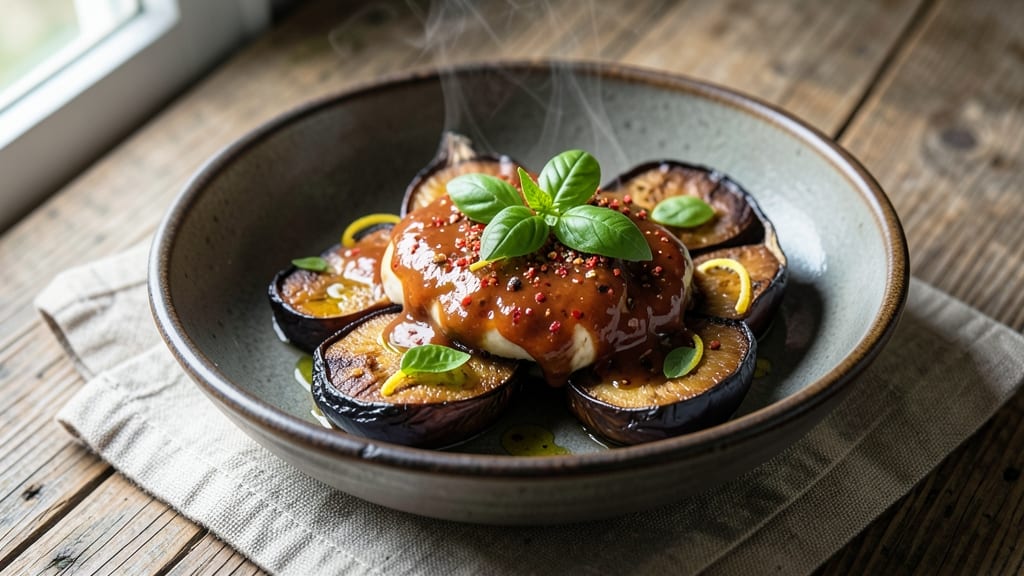
This smoky roasted eggplant sauce transforms humble aubergines into a velvety, aromatic condiment that elevates everything from pasta to grilled meats. The secret lies in slow-roasting whole eggplants until their flesh collapses into rich, caramelized chunks—no bitterness, just deep umami sweetness.
I developed this recipe after discovering how restaurant-quality sauces often start with simple, patient techniques rather than complex ingredients.
The result is a sauce that balances smoky char, creamy texture, and bright Mediterranean flavors—thanks to garlic, lemon zest, and a touch of chili flakes. Unlike watery eggplant preparations, this version blends into a thick, clingy consistency that coats perfectly.
Perfect for drizzling over bruschetta, spooning alongside roasted vegetables, or even mixing into hummus for extra depth.
What makes this sauce truly special is its versatility—it keeps beautifully in the fridge for up to 5 days, developing even more complex flavors over time. The roasting process removes any bitterness while concentrating the eggplant’s natural sweetness, creating a base that’s both elegant and approachable.
Whether you’re a home cook or a seasoned chef, this sauce will become a staple in your kitchen.
Ready in about 45 minutes with minimal hands-on time, this recipe proves that simple ingredients—when treated with care—can yield restaurant-worthy results. The key steps are roasting the eggplants just right and blending them with enough olive oil to create that signature silky texture.
Let’s get started on creating your new favorite sauce.
Ingredients for aubergine sauce
Nine simple ingredients transform roasted eggplant into a velvety sauce with restaurant-worthy depth.
| Ingredient | Amount | Notes |
|---|---|---|
| Eggplants 🍆 | 2 whole | Medium-sized, unpeeled, halved lengthwise |
| Extra-Virgin Olive Oil 🫒 | ¾ cup | High-quality, fruity, cold-pressed |
| Garlic Cloves 🧄 | 6 cloves | Peeled, halved horizontally |
| Lemon Zest 🍋 | 1 tbsp | From 1 organic lemon |
| Red Chili Flakes 🌶️ | 1 tsp | Adjust for heat preference |
| Fresh Basil Leaves 🌿 | ½ cup | Packed, stems removed |
| Salt 🧂 | 1 ½ tsp | Diamond Crystal kosher salt |
| Black Pepper 🌶️ | ½ tsp | Freshly cracked |
| Smoked Paprika 🌶️ | 1 tsp | For authentic smoky flavor |
| Fresh Lemon Juice 🍋 | 1 tbsp | From same lemon as zest |
Eggplants are the star here—look for firm, glossy-skinned ones at the grocery store. Whole Foods or your local farmers market usually carry the best quality. Avoid any with soft spots or wrinkled skin. The key is roasting them until their flesh is completely tender and caramelized, which removes any bitterness. I like to use Italian eggplants if available—they're smaller and more flavorful, but regular eggplants work perfectly fine too. If you can't find whole ones, ask the produce department to cut them for you.
No smoked paprika? Liquid smoke at half the amount works in a pinch, though it won't have the same depth. Fresh basil is ideal, but dried basil at one-third the amount gets you close—just make sure it's labeled as sweet basil, not Italian seasoning. The lemon zest should be freshly grated from an organic lemon if possible; pre-grated zest often contains preservatives. For extra richness, you could add 1 tablespoon of tahini to the finished sauce. And if you're feeling adventurous, swap the chili flakes for crushed dried oregano for a different Mediterranean twist.
This sauce keeps beautifully in an airtight container in the fridge for up to 5 days, with flavors actually improving over time. For longer storage, freeze it in ice cube trays—perfect for single-use portions. The texture will be slightly thicker after refrigeration, so give it a quick whisk with a splash of water if needed. I love using this sauce as a pasta sauce, drizzled over grilled fish, or even mixed into hummus for extra depth. The smoky flavor pairs especially well with grilled meats or roasted vegetables. Make extra—you'll want seconds.
Why You'll Love This Recipe
- No-Chop Nightmare: I swear by this—just slice the eggplant into thick rounds, roast them whole until caramelized, then smash them with a fork. No dicing, no peeling, no mess. That lemon zest? It’s the secret that brightens everything in two seconds.
- Umami Bomb: The moment the garlic hits the olive oil, your kitchen smells like a Mediterranean sunset. Roasted eggplant soaks up all that richness, while the chili flakes add just enough heat to make it dangerously good with crusty bread or over pasta.
- Budget Stretch: Eggplants are cheap, and this recipe turns one into a whole week’s worth of flavor. A little olive oil, a few garlic cloves, and that lemon zest? You’re getting restaurant-quality depth without breaking the bank. Honestly, it’s my go-to when I’m trying to feed everyone without stress.
Step-by-step instructions for smoky roasted eggplant velvety richness
Here's how to transform simple eggplants into a luxurious, velvety sauce with deep smoky notes.
Roast the Eggplants Until Charred and Tender
Preheat your oven to 425°F and line a baking sheet with parchment paper. Place the halved eggplants cut-side down on the sheet, leaving space between each half. Drizzle generously with 0.5 cup of the extra-virgin olive oil, rubbing it into the flesh to prevent sticking. Sprinkle with 0.5 tsp smoked paprika and 1 tsp salt.
Roast for 30-35 minutes until the edges are deeply charred and the flesh collapses slightly when pressed with a fork. The eggplants should be soft enough to mash easily but still hold their shape. Rotate the pan halfway through for even browning. Real talk: this charring step is what builds the sauce's smoky depth—don't rush it.
Blend the Roasted Eggplants with Aromatics
Transfer the roasted eggplants to a food processor or high-powered blender. Add the 6 cloves garlic cloves, 1 tbsp lemon zest, 1 tsp red chili flakes, 0.5 tsp black pepper, and remaining 0.25 cup extra-virgin olive oil. Pulse until the mixture is completely smooth, scraping down the sides as needed. You want a silky, homogeneous texture without any visible chunks.
Here's the thing—this is where the magic happens. The roasted eggplants should create a thick, almost paste-like consistency. If it's too thick, add 1-2 tablespoons of water to help it blend smoothly. The garlic and chili should be fully incorporated, giving the sauce its aromatic punch.
Simmer and Develop the Sauce's Depth
Transfer the blended mixture to a medium saucepan and place it over medium-low heat. Stir in the 0.5 cup fresh basil leaves and 1 tbsp fresh lemon juice, then bring to a gentle simmer. Let it cook for 8-10 minutes, stirring occasionally, until the flavors meld and the sauce thickens slightly. You're looking for a velvety texture that coats the back of a spoon.
The sauce should smell rich and complex—smoky from the eggplants, bright from the lemon, and with a subtle heat from the chili. If it's too thick, thin it with a splash of water or reserved pasta water. This simmering step is crucial for developing the sauce's depth and ensuring all the flavors integrate perfectly.
Finish and Adjust Seasoning
Remove the sauce from heat and taste immediately. This is your chance to adjust the seasoning—add more salt if needed, or a touch more lemon juice for brightness. The sauce should be rich but not overpowering, with a perfect balance of smokiness and acidity. Let it cool slightly before serving, as it will continue to thicken as it sits.
For the best results, serve this sauce immediately over pasta, drizzled with an extra thread of olive oil and a sprinkle of fresh basil. The contrast between the velvety sauce and al dente pasta is what makes this dish truly special. If you're serving it later, store it in an airtight container in the refrigerator for up to 3 days, rewarmed gently before serving.
Pro Tips For Making Aubergine Sauce
- Char the Eggplant Properly: Skip the oven—direct flame is faster and deeper. Hold the eggplant over a gas burner (cut-side down) until the skin blackens in spots. It’ll peel easier and add smoky depth that no other method matches. (Yes, it’s messy, but worth it.)
- Salt the Eggplant Twice: First salt the grated eggplant and let it sit for 15 minutes—this pulls out bitterness. Rinse and drain thoroughly, then salt again before cooking. The second round ensures the sauce stays bright, not murky. (I learned this after a sauce tasted like a swamp.)
- Crush the Garlic, Don’t Mince: Use the flat side of your knife to smash the garlic cloves into a paste before cooking. This releases more flavor and prevents burning. (Mincing makes it turn bitter faster—trust me.)
- Finish with Lemon Zest, Not Juice: Toss in the zest last, right after the chili flakes, to brighten the sauce without overpowering it. Juice adds moisture and dilutes the richness. (A squeeze of juice sounds good, but it ruins the texture.)
Essential equipment for perfect results
Blender Essentials
Your high-powered blender is the unsung hero here—I use my Ninja BN601 for its sheer power to break down roasted eggplant into velvety perfection.
A standard blender might struggle with the fibrous texture, so if yours isn’t high-powered, pulse in batches or add 1-2 tablespoons of water to help it blend smoothly. The goal is a completely smooth, almost paste-like consistency—no visible chunks. 💫
Oven and Baking Sheet
A heavy-duty baking sheet (like All-Clad Stainless Steel) is key for even roasting and deep charring. Preheat your oven to 425°F—this high heat is what caramelizes the eggplant’s sugars, creating that smoky depth.
Line the sheet with parchment paper for easy cleanup, but leave space between eggplant halves to ensure even browning. If your oven runs hot, reduce to 400°F to avoid burning.
Food Processor Alternative
No blender? A food processor works just as well—just pulse the roasted eggplant and aromatics in short bursts, scraping down the sides as needed. For extra smoothness, strain the blended mixture through a fine-mesh sieve to remove any lingering fibers.
I’ve also used a handheld immersion blender in a pinch, but it requires more attention to avoid overfilling the container. 🔥
Smoke and Char Tools
For that authentic smoky flavor, I recommend a cast-iron skillet to sear the eggplant flesh before roasting—just toss the halved eggplants in the skillet for 2-3 minutes per side before transferring to the oven.
No skillet? A grill pan works too. The char from the skillet adds an extra layer of depth that’s hard to replicate with oven-roasting alone.
Storage Containers
Store your finished sauce in glass airtight containers (like Le Parfait or OXO) for up to 5 days in the fridge. For longer storage, freeze in ice cube trays—perfect for single-use portions.
The sauce thickens as it cools, so give it a quick whisk with 1 tablespoon of water if needed before serving. Glass containers also help preserve the sauce’s vibrant color and flavor over time. ✨
Nutrition facts
Frequently asked questions
Can I use this eggplant sauce as a pasta sauce?
This velvety sauce coats pasta beautifully. For best results, toss it with al dente pasta like penne or fusilli, then finish with fresh basil and a drizzle of olive oil. The smoky depth pairs perfectly with rich tomato sauces or creamy Alfredo. Start with ½ cup sauce per serving—you can always add more.
How do I prevent the sauce from being watery?
The key is proper roasting and blending. Make sure your eggplants are deeply charred and tender before blending—they should collapse easily when pressed. If the sauce seems too thick after blending, add just 1 tablespoon of water at a time. For extra richness, simmer it longer on medium-low heat to reduce naturally.
What if my eggplant sauce tastes bitter?
Bitter flavor usually means the eggplant wasn't roasted enough. For next time, roast until the flesh is completely soft and caramelized (about 35-40 minutes). If it's already made, balance the bitterness with more lemon juice or a pinch of sugar. The roasting process should remove bitterness—if not, try using younger, smaller eggplants next time.
Can I make this sauce without a blender?
Yes! Use a food processor instead—just pulse in short bursts. For extra smoothness, press the mixture through a fine-mesh sieve to remove any fibers. If you don't have either, a potato masher works in a pinch, though the texture will be slightly chunkier. Just blend harder during the simmering step to help it emulsify.
How can I use up leftover eggplant sauce?
This versatile sauce keeps for 5 days in the fridge! Use it as a dip with pita, drizzle over grilled meats, or mix into hummus. For longer storage, freeze in ice cube trays—perfect for adding to soups or stews later. The flavors actually deepen when reheated gently, making it even more delicious the next day.