
Sauces & Condiments
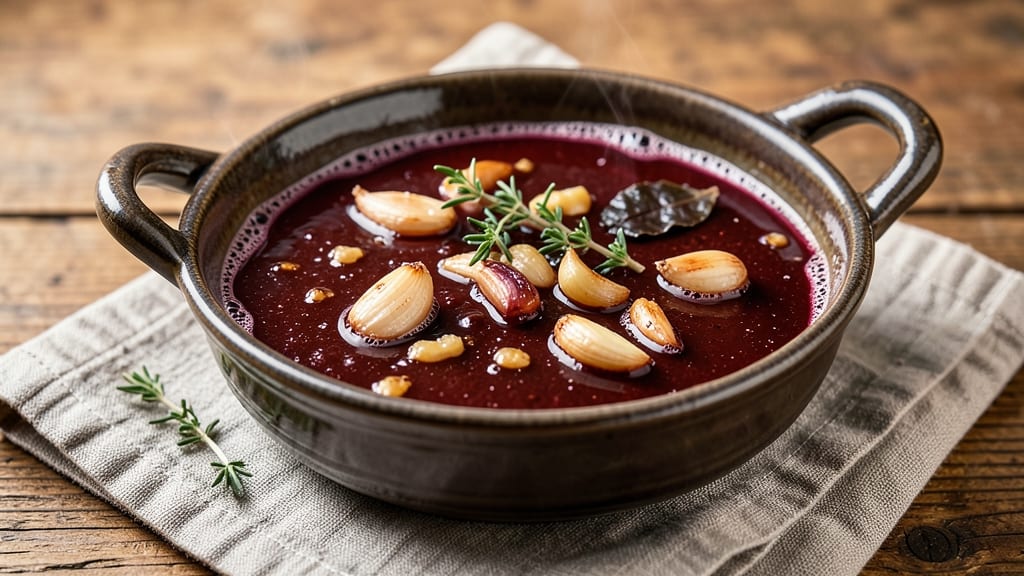
This au jus sauce recipe with beef broth transforms simple ingredients into a velvety, umami-rich sauce that elevates any beef dish. The secret lies in slow reduction—letting the broth concentrate into a glossy, flavor-packed liquid that clings perfectly to roasts or steaks.
I developed this recipe after years of testing, and it never fails to deliver that restaurant-quality depth without complicated techniques.
The foundation is high-quality beef broth, but it's the aromatics and reduction that make all the difference. A splash of red wine adds brightness, while thyme and bay leaf build complexity.
The sauce reduces until it coats the back of a spoon, creating a glossy finish that's perfect for drizzling or dipping. What you'll end up with is a sauce that's rich, balanced, and full of savory depth—ideal for finishing roasts, basting steaks, or serving as a dipping sauce.
This recipe is designed for flexibility—use it immediately or store it for up to a week. The slow reduction process means you can prepare it ahead of time, letting the flavors deepen even more.
Whether you're cooking for a special occasion or a weeknight dinner, this au jus sauce will take your beef dishes to the next level. Here's how to make it.
The beauty of this sauce is its versatility—it works as a finishing touch for grilled meats, a dipping sauce for crusty bread, or even a base for other dishes. The key is patience; the longer you reduce, the more concentrated and flavorful the sauce becomes.
Trust the process, and you'll have a sauce that's worth every minute of effort.
Ingredients for au jus sauce recipe with beef broth
Eight simple ingredients transform into a restaurant-worthy sauce with just patience and heat.
| Ingredient | Amount | Notes |
|---|---|---|
| Beef Broth 🍲 | 4 cups | High-quality, homemade preferred |
| Red Wine 🍷 | ½ cup | Bold dry variety like Cabernet |
| Fresh Thyme 🌿 | 1 tbsp | Or 1 tsp dried thyme |
| Bay Leaves 🍃 | 2 whole | Fresh preferred, remove before serving |
| Garlic Cloves 🧄 | 4 cloves | Minced for depth of flavor |
| Shallots 🧅 | 2 whole | Minced, or substitute with onions |
| Unsalted Butter 🧈 | 2 tbsp | Cold, cut into small cubes |
| All-Purpose Flour 🌾 | 1 tbsp | For thickening, optional |
| Salt 🧂 | 1 tsp | Adjust to taste |
| Black Pepper 🌶️ | ½ tsp | Freshly ground preferred |
The beef broth is non-negotiable—homemade is ideal, but high-quality store-bought like Kettle & Fire or Pacific Foods works too. Look for deep color and rich aroma; watery or pale broth won't cut it. Fresh thyme and bay leaves add layers of flavor that dried spices can't match, but if you're in a pinch, dried works at one-third the amount. Garlic and shallots? Freshly minced makes all the difference—pre-minced from jars tastes flat. I always grab extra shallots—they're sweeter and more aromatic than onions for this sauce.
No red wine? Beef broth with a splash of balsamic vinegar mimics the acidity. Fresh thyme out of stock? Dried thyme at one-third the amount is fine, but toast it first in a dry pan for 30 seconds to wake up the flavor. The butter adds richness, but vegan butter works just as well if needed. For a quicker version, skip the flour—just reduce the sauce longer. The sauce thickens naturally as it reduces, so don't rush it. Patience here is key to that glossy, velvety finish.
This sauce tastes even better the next day—store in the fridge for up to 1 week, or freeze for 3 months. I like to portion it into ice cube trays before freezing, then pop out just what I need for a quick reheat. To reheat, warm gently on the stove or microwave until just hot. The sauce thickens as it cools, so add a splash of broth if it seems too stiff. Perfect for drizzling over roasts, basting steaks, or serving with crusty bread.
Why You'll Love This Recipe
- No Wine Waste: I always have a bottle of red wine lingering in my fridge—this recipe turns it into liquid gold. Just a splash deepens the flavor without overpowering, and the thyme and bay leaves make even a cheap bottle taste intentional.
- Weeknight Magic: Simmer it while you prep dinner—no chopping, no fuss. The garlic cloves and beef broth build rich layers in 20 minutes, and honestly? It’s the kind of sauce that makes a simple roast feel like a restaurant dish.
- Leftovers That Shine: This sauce doesn’t just disappear after one meal. Strain and store it for up to five days—perfect for dipping, drizzling, or tossing with grains. (Yes, even on a Tuesday night.)
- Budget Booster: A few dollars’ worth of broth and herbs stretch into meals for days. Between us, this is how I feed a crowd without breaking the bank—just add whatever protein you’re cooking and call it a win.
Step-by-step instructions for au jus sauce with beef broth
Here's how to build rich, velvety au jus that clings to every bite.
Build the Flavor Base with Aromatics
Heat the 2 tablespoons unsalted butter in a medium saucepan over medium heat until it melts completely and begins to foam. Add the 2 whole shallots and 4 cloves garlic cloves, mincing them directly into the pan as they hit the butter. Cook for 3-4 minutes until the shallots soften and become translucent, and the garlic releases its fragrant aroma.
Don't rush this step—the aromatic compounds need time to meld with the butter. You'll know it's ready when the shallots are tender and the garlic no longer looks raw. Add the 1 tablespoon fresh thyme and 2 whole bay leaves next, stirring for 30 seconds to infuse their flavors into the butter. This aromatic foundation is what transforms simple beef broth into something extraordinary.
Deglaze with Red Wine for Depth
Pour in the ½ cup red wine and immediately scrape up any browned bits from the bottom of the pan using a wooden spoon. These bits, called fond, pack intense umami flavor. Let the wine simmer for 2-3 minutes until it reduces by about half, evaporating its alcohol and concentrating its rich fruitiness.
Watch the wine carefully—it reduces quickly. You're looking for a syrupy consistency where the liquid coats the back of a spoon. If it reduces too fast, lower the heat slightly. This step is crucial for balancing the richness of the butter with bright acidity from the wine.
Incorporate the Beef Broth
Pour in the 4 cups beef broth all at once, stirring to combine with the wine and aromatics. Bring the mixture to a gentle simmer over medium heat, then reduce the heat to low to maintain a steady, barely-there bubble. Let it cook uncovered for 15-20 minutes, allowing the liquid to reduce by about one-third—this concentrates the flavors and creates that signature au jus thickness.
Skimming off any foam that rises to the surface helps keep the sauce clean. Taste occasionally—you'll notice the flavors deepening as the liquid reduces. The sauce should coat the back of a spoon but still be pourable. If it reduces too quickly, lower the heat to prevent scorching.
Thicken and Season to Perfection
In a small bowl, whisk together the 1 tablespoon all-purpose flour with ½ teaspoon black pepper to create a smooth paste. Slowly whisk this mixture into the simmering sauce, stirring constantly for 1-2 minutes to prevent lumps from forming. The sauce will begin to thicken immediately.
Continue simmering for another 5-7 minutes until the sauce reaches your desired consistency—it should coat the back of a spoon but still flow smoothly. Stir in the 1 teaspoon salt, adjusting to taste. The sauce should be rich, velvety, and deeply flavorful with layers of umami from the beef broth, bright acidity from the wine, and aromatic complexity from the thyme and bay leaves.
Strain and Finish
Remove the sauce from heat and let it sit for 2-3 minutes to settle. Line a fine-mesh strainer with cheesecloth or a coffee filter and strain the sauce into a clean saucepan, pressing gently on the solids to extract every last drop of flavor. Discard the bay leaves and thyme stems—they've done their job.
Return the strained sauce to the stove over low heat and let it warm through for 1-2 minutes. Taste and adjust the seasoning one final time, adding a pinch more salt or pepper if needed. Serve immediately over sliced roasts, grilled steaks, or alongside your favorite beef dishes. The sauce will continue to thicken slightly as it sits, so don't over-thicken it before serving.
Pro Tips For Making Au Jus Sauce Recipe With Beef Broth
- Deglaze Immediately: As soon as you remove the meat from the pan, pour in that red wine right away—don’t let it sit or you’ll end up scraping burnt bits off the bottom. A wooden spoon helps scrape up those fond bits, which pack serious flavor into your au jus.
- Toast the Garlic: Crush those garlic cloves first, then toss them in the pan with the beef broth for 30 seconds before adding wine. The color turns golden, and the flavor deepens—no more bland, raw garlic notes ruining your sauce.
- Strain the Broth: Skip the straining, and you’ll get a cloudy, bitter sauce. Line a fine-mesh strainer with a coffee filter or cheesecloth for crystal-clear results—worth the extra 30 seconds of effort.
- Simmer, Don’t Boil: Keep the heat low once the wine’s reduced. Boiling turns your rich au jus into a sad, alcohol-free broth—simmer gently for 10-15 minutes to let flavors meld without losing depth.
Creative variations of these flavors
Red Wine Variations
Swap the bold red wine for other liquids to match what you have on hand. A ½ cup dry sherry adds nutty depth perfect for Chinese-inspired dishes, while ½ cup apple cider creates a sweet-tart twist that pairs beautifully with pork roasts.
For a non-alcoholic version, use ½ cup beef broth + 1 tbsp balsamic vinegar—the acidity still brightens the sauce. 🍷
Herb Swaps
Fresh thyme is my go-to, but rosemary adds piney notes that work well with lamb, while tarragon brings an anise-like sweetness perfect for veal. If you love heat, add ½ tsp smoked paprika with the flour for a subtle smokiness.
Dried herbs work at one-third the amount, but toast them first in a dry pan for 30 seconds to wake up their flavor.
Umami Boosters
For extra depth, stir in 1 tsp Worcestershire sauce with the wine or add 1 tbsp soy sauce when thickening. A splash of fish sauce (just ½ tsp) transforms this into a Thai-inspired pan sauce.
I also love adding 1 tsp miso paste with the broth for a fermented richness that pairs perfectly with grilled meats. 🌶️
Thickening Alternatives
Skip the flour for a gluten-free version by whisking in 1 tbsp cornstarch instead. For a dairy-free option, use vegan butter and thicken with 1 tbsp arrowroot powder.
If you prefer no thickener, reduce the sauce longer—it will naturally thicken as the liquid evaporates. Just watch closely to avoid scorching.
Global Twists
Turn this into a French-inspired demi-glace by adding 1 tbsp tomato paste with the wine and reducing longer. For an Italian touch, stir in ½ cup San Marzano crushed tomatoes at the end.
A Mexican-inspired version swaps red wine for ½ cup beef broth + 1 tbsp adobo sauce, then finishes with cilantro and lime. Each variation keeps the core technique but adapts to your flavor preferences.
Nutrition facts
Frequently asked questions about rich beef broth sauces
Can I make this au jus sauce without red wine?
For a non-alcoholic version, use ½ cup beef broth + 1 tablespoon balsamic vinegar instead. The acidity from the vinegar will still brighten the sauce and balance the richness. If you prefer something sweeter, ½ cup apple cider works beautifully too—it adds a subtle fruitiness that pairs perfectly with beef dishes.
How do I prevent the sauce from getting too thick?
If your sauce thickens too much, simply whisk in 1-2 tablespoons of warm beef broth to loosen it up. The key is patience during reduction—keep the heat at low-medium and stir occasionally. For extra insurance, reduce the flour to ½ tablespoon or skip it entirely and rely on longer simmering to achieve the right consistency.
What's the best way to store leftover au jus sauce?
Store in an airtight container in the fridge for up to 1 week, or freeze for 3 months. For easy reheating, portion into ice cube trays before freezing—just pop out what you need and warm gently on the stove. Remember, the sauce thickens as it cools, so add a splash of broth when reheating if needed.
Can I use chicken or vegetable broth instead of beef broth?
While beef broth is ideal for authentic flavor, you can use chicken broth for a lighter version or vegetable broth for a vegetarian adaptation. Just boost the umami by adding 1 teaspoon soy sauce or ½ teaspoon miso paste with the wine. The sauce will still work, though the depth of beefy flavor will be noticeably different.
How can I use this sauce beyond beef dishes?
This versatile sauce works beautifully with lamb, pork, or even mushrooms for a rich umami boost. Try drizzling it over grilled vegetables or using it as a dipping sauce for crusty bread. For a creative twist, mix it with mashed potatoes or use it as a base for stuffing. The wine and herb flavors make it surprisingly adaptable beyond traditional beef pairings!