
Sauces & Condiments
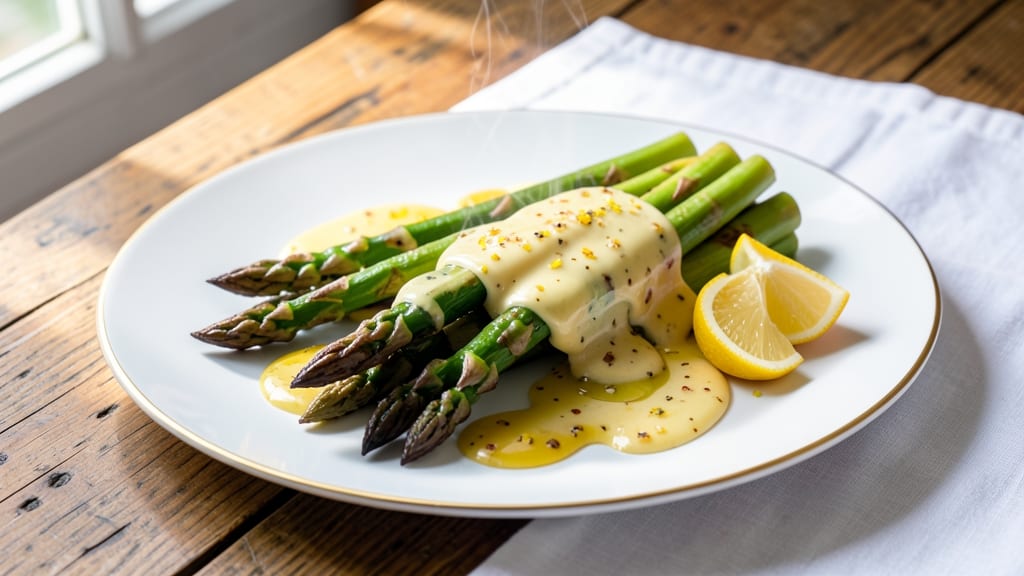
This asparagus with lemon butter sauce recipe transforms simple spring vegetables into a restaurant-worthy side dish that shines with bright citrus and rich, velvety butter.
The secret lies in balancing tender-crisp asparagus with a sauce that's tangy yet luxurious—no heavy cream or complicated steps, just bold flavor in under 20 minutes. I developed this after years of testing how to elevate asparagus beyond the basic steamed version, and the difference is night and day.
The key technique is cooking the asparagus just until it reaches that perfect tender-crisp texture—bright green spears with a satisfying snap. While it roasts, the lemon butter sauce develops a golden sheen and develops complex flavors from the caramelized butter and zesty lemon.
This isn't just a side dish; it's the kind of preparation that makes guests ask for seconds and turns ordinary meals into something special.
What makes this recipe truly stand out is how versatile it is—pair it with grilled chicken, seared fish, or even steak for a complete meal. The sauce clings beautifully to the asparagus, creating each bite into a perfect balance of textures and flavors.
No one will guess it took less than 20 minutes to prepare, and the clean, fresh taste makes it ideal for spring and summer menus.
Ready to elevate your asparagus game? This method ensures restaurant-quality results with minimal effort, and the sauce can be made ahead for even more convenience. Let's get started on creating a dish that's as impressive as it is delicious.
Ingredients for asparagus with lemon butter sauce
Bright green asparagus meets velvety lemon butter sauce—just 10 ingredients for restaurant-worthy results.
| Ingredient | Amount | Notes |
|---|---|---|
| Fresh Asparagus 🌱 | 1 ½ lb | Medium spears, trimmed ends |
| Unsalted Butter 🧈 | 6 tbsp | Cold, cut into small cubes |
| Fresh Lemon Juice 🍋 | ½ cup | From 2-3 lemons, freshly squeezed |
| Zest of 1 Lemon 🍋 | 1 tsp | Finely grated, bright yellow |
| Extra-Virgin Olive Oil 🫒 | 1 tbsp | For roasting asparagus |
| Garlic Cloves 🧄 | 2 cloves | Minced, for sauce depth |
| Diamond Crystal Kosher Salt 🧂 | 1 tsp | Fine grain preferred |
| Freshly Ground Black Pepper 🌶️ | ½ tsp | Freshly cracked for best flavor |
| Fresh Parsley 🌿 | ¼ cup | Chopped, for garnish |
| Granulated Sugar 🍚 | ½ tsp | Balances acidity |
The asparagus is your canvas—look for spears that snap easily when bent, not rubbery or woody. Whole Foods or local farmers markets often carry the freshest spring harvest, but any grocery store's produce section will work. Trim the tough ends by snapping them off (they'll break naturally at the right spot). For the butter, Plugrá or Land O'Lakes unsalted are reliable choices—cold cubes melt into sauce beautifully without turning greasy. The lemon juice should be freshly squeezed; bottled lemon juice lacks the bright, complex flavor you're aiming for here.
No fresh parsley? Dill or chives work in a pinch, though parsley's mild flavor is ideal for garnish. Running short on butter? Olive oil or avocado oil can replace half the butter in the sauce, but the texture will be slightly lighter. The sugar is key for balancing the acidity—skip it only if your lemons are particularly tart. For extra depth, toast the garlic cloves in olive oil for 30 seconds before mincing. And if you're prepping ahead, make the sauce first and store it separately—it keeps for up to 3 days in the fridge.
Asparagus stays crispest when cooked fresh, but you can trim and store uncooked spears in the fridge for 3-4 days by wrapping them in a damp paper towel. The sauce can be made up to 3 days ahead—just reheat gently before drizzling. For maximum freshness, garnish with lemon zest and parsley right before serving. The sauce will separate slightly when chilled, but a quick whisk brings it back together. Portion the sauce into small jars for 1 week of meal prep—perfect for quick weeknight dinners.
Why You'll Love This Recipe
- Five-Ingredient Magic: I swear by this—just asparagus, butter, lemon, olive oil, and a pinch of salt. That’s it. No chopping, no measuring cups, no stress. Honestly, it’s the kind of recipe that makes me feel like I’ve actually cooked something when I’ve barely moved from the stove.
- Bright & Buttery Bliss: The lemon zest clings to the asparagus like a hug, while the butter melts into a silky sauce that coats every speck. That first bite? Crisp, tangy, and rich—like a fancy restaurant dish without the fuss. Between us, it’s the kind of flavor that makes people ask, “What’s in this?”
- Weeknight or Dinner Party: It’s my go-to for lazy Mondays (yes, even on a Tuesday night) and somehow still feels special enough for guests. Serve it alongside grilled chicken or fish, or pile it onto toasted bread for a quick brunch. My daughter picks out the asparagus spears for her plate, but still asks for seconds—case closed.
- Leftovers? No Problem: Cook once, eat twice. The sauce keeps beautifully in the fridge, and the asparagus holds its texture for a day or two. Toss it into a frittata, stir it into pasta, or just reheat with a splash of water—it’s that reliable. Not the prettiest, but the taste makes up for it every time.
Step-by-step instructions for asparagus with lemon butter sauce
This method delivers perfectly roasted asparagus with a vibrant, tangy sauce that brightens every bite.
Prep and Roast the Asparagus
Preheat your oven to 425°F and line a baking sheet with parchment paper. Trim the tough ends from the 1.5 lb fresh asparagus by bending each spear until it snaps naturally—discard the broken ends. This ensures clean, even cooking.
Toss the asparagus with 1 tbsp extra-virgin olive oil, ½ tsp diamond crystal kosher salt, and ¼ tsp freshly ground black pepper until evenly coated. Spread the spears in a single layer on the baking sheet, leaving space between them for even browning. Roast for 12-15 minutes until tender-crisp with slightly charred tips.
Here's the thing—don't overcrowd the pan. If you must use two sheets, roast in batches to maintain crispness. The asparagus is done when it yields slightly at the base but still holds structure. Remove from oven and set aside while you make the sauce.
Create the Lemon Butter Base
In a small saucepan, melt 4 tbsp unsalted butter over medium-low heat until fully liquid but not browned. Add the 2 minced garlic cloves and sauté for 30 seconds until fragrant—don't let it color or it'll turn bitter. Immediately remove from heat to preserve the garlic's freshness.
Return the pan to low heat and whisk in the ½ cup fresh lemon juice, 1 tsp lemon zest, and ½ tsp granulated sugar. The sugar balances the acidity while enhancing the lemon's brightness. Simmer gently for 2-3 minutes until slightly thickened but still pourable.
Finish with Fresh Herbs
Stir in the remaining 2 tbsp unsalted butter and the ¼ cup chopped fresh parsley. The parsley adds freshness that cuts through the richness of the butter. Taste and adjust seasoning—you may need a pinch more salt to balance the bright lemon.
Return the roasted asparagus to the baking sheet and pour the sauce evenly over the top. Toss gently to coat, ensuring each spear gets its share of that vibrant citrus butter. The sauce should cling beautifully to the asparagus without making it soggy.
Serve Immediately
Transfer the asparagus to a serving platter while the sauce is still warm. The contrast of tender-crisp asparagus with the glossy, tangy sauce makes this dish truly special. Serve immediately as the sauce thickens as it cools.
For best results, pair with grilled fish or crusty bread to soak up any remaining sauce. The bright lemon butter transforms simple asparagus into an elegant side dish that steals the show. Each bite delivers perfect texture and balanced flavors.
Pro Tips For Making Asparagus With Lemon Butter Sauce
- TRIM THE Tough ENDS: I learned this the hard way—skinning asparagus isn’t just about looks. Snap the stalks at a natural break (they’ll sound hollow), then peel the bottom 1-2 inches with a vegetable peeler. Thick stalks need more peeling than thin ones, but resist the urge to go all the way up—you’ll lose flavor and texture.
- SALT THE ASPARAGUS FIRST: Toss the trimmed spears with a pinch of salt and olive oil before cooking. This draws out moisture, so they brown better and don’t turn soggy when the butter sauce hits. (Yes, even if you’re impatient like me—wait 5 minutes before cooking.)
- MELT THE BUTTER LOW: After roasting or sautéing, melt the butter on low heat with the lemon zest—high heat burns butter fast, and you’ll end up with a bitter sauce. Add the lemon juice off the heat or the butter will seize up. Stir constantly, or you’ll miss the moment it turns silky.
- SAVE THE LEMON ZEST: Don’t just grate the zest in a line—cut the lemon in half, use a microplane, and drag it across the peel at a slight angle. This gets more flavor per gram without the bitter pith. Store the zest in the freezer for future sauces—it keeps for weeks. (I know, I know, but it’s worth it.)
Pro cooking tips for asparagus with lemon butter sauce
Temperature Precision
Roasting asparagus at 425°F is non-negotiable for that perfect tender-crisp texture. Use your oven's broil function for the last 1-2 minutes if you want extra char—just watch closely to avoid burning.
I recommend a thermometer probe like the Thermoworks Smoke to confirm the oven hits 425°F accurately—many home ovens run hot or cold. 🌡️
Butter Magic
Cold butter cubes melt into sauce more evenly than softened butter, creating a silky texture. For extra depth, use European-style butter like Plugrá—it has a higher fat content (82% vs. 80%) that makes the sauce richer.
If you're short on time, melt the butter in the microwave for 15 seconds on 50% power, then finish on the stove to avoid overheating.
Lemon Brightness
Freshly squeezed lemon juice is a game-changer—bottled juice lacks the complexity. For maximum flavor, use Meyer lemons if available; their natural sweetness balances the acidity perfectly.
If your sauce tastes too sharp, add a pinch of granulated sugar (up to ½ tsp) or a splash of water to thin it slightly. The sauce should coat the back of a spoon but still be pourable. 🍋
Garlic Timing
Sautéing garlic for only 30 seconds prevents bitterness while maximizing flavor. For extra aroma, crush the garlic cloves with the flat side of your knife before mincing. If you're sensitive to raw garlic, remove the cloves after 20 seconds—they'll still infuse the butter.
Never let garlic brown, or it'll turn acrid and ruin the sauce.
Crispy Finish
To maintain that perfect snap, spread asparagus in a single layer with at least 1 inch between spears. If using a wire rack on a baking sheet, the asparagus will crisp even more.
For extra crunch, broil for 30 seconds at the end—just watch it like a hawk! The sauce should cling to the asparagus without steaming it, so toss gently after roasting.
Sauce Make-Ahead
The sauce keeps beautifully for 3 days in the fridge—just reheat gently on low heat and whisk until smooth. For meal prep, store it in small jars (like Weck glass containers) with the asparagus wrapped in a damp towel.
Reheat the sauce separately and toss with asparagus right before serving to maintain that tender-crisp texture. 💡
Nutrition facts
Frequently asked questions
Can I use frozen asparagus for this recipe?
Fresh asparagus is ideal for this recipe because it delivers the best tender-crisp texture. However, if you must use frozen asparagus, thaw it completely first and pat it very dry with paper towels. Roast for 5-7 minutes longer than fresh asparagus, checking frequently to avoid overcooking. The sauce will still taste great, but the texture won't be as satisfying.
How do I know when the asparagus is perfectly cooked?
The asparagus is done when it's tender-crisp—bright green with a slight snap when bent. For medium spears, this takes about 12-15 minutes at 425°F. Insert a knife into the thickest spear; it should slide in easily but still offer some resistance. Overcooked asparagus turns mushy and loses its vibrant color.
Can I make this sauce ahead of time?
The sauce keeps well for up to 3 days in the fridge. Store it in an airtight container and reheat gently on low heat, whisking until smooth. For meal prep, make the sauce first, then store it separately. Reheat just before tossing with the asparagus to maintain that perfect tender-crisp texture. The sauce may thicken slightly when chilled, but it'll return to a pourable consistency when reheated.
What if my sauce separates when I reheat it?
This is completely normal! The fat and liquid in the sauce can separate when chilled. Simply whisk vigorously until smooth and creamy. If it's still too thick, add a splash of warm water or lemon juice to thin it out. For extra insurance, whisk in 1 tbsp cold butter while reheating to help emulsify the sauce. The result will be just as delicious—don't worry about minor imperfections!
Can I substitute olive oil for the butter in the sauce?
While you can replace half the butter with olive oil, the sauce will have a lighter texture. For the richest flavor, stick with butter—but if you're watching calories, use 2 tbsp olive oil plus 4 tbsp butter instead of the full amount. The sauce will still be flavorful, though slightly less velvety. If using only olive oil, add an extra pinch of salt to compensate for the reduced butter content.