
Sauces & Condiments
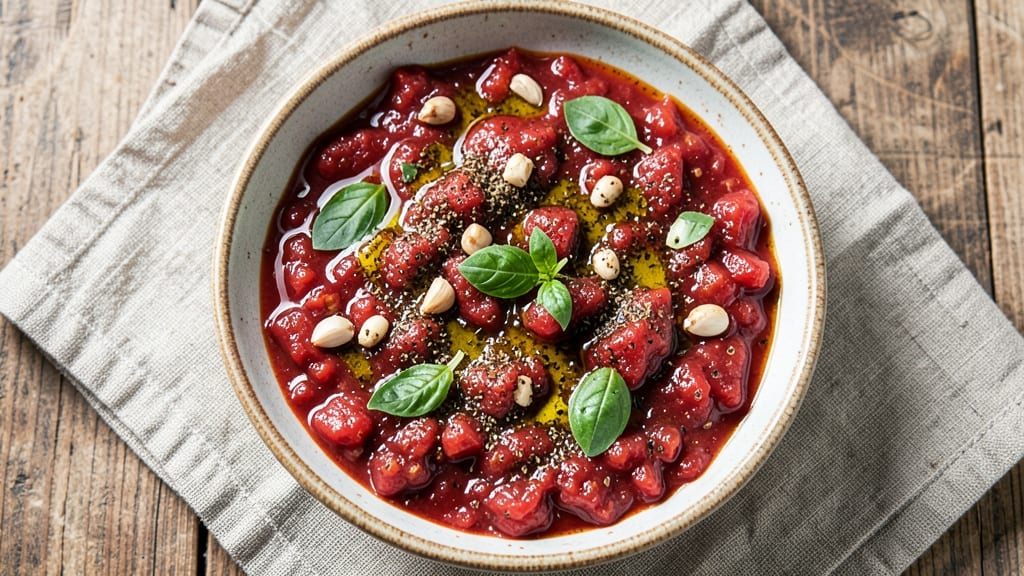
This artisan pizza sauce recipe transforms canned tomatoes into a rich, slow-simmered base with deep umami and fresh basil brightness. The secret lies in reducing high-quality crushed tomatoes with olive oil and garlic until thick and velvety—no sugar or artificial flavors needed.
I’ve perfected this sauce over years of testing, and it elevates every homemade pizza with its balanced acidity and aromatic depth.
What sets this sauce apart is the slow-simmering technique, which develops complex flavors without overpowering the natural sweetness of the tomatoes. A touch of oregano and a splash of red wine vinegar add brightness, while fresh basil at the end keeps the sauce vibrant.
The result is a sauce that’s restaurant-quality but simple enough for weeknight cooking.
This versatile sauce works for classic margherita or bold meat-topped pies, and it keeps beautifully in the fridge for up to a week or freezes for months. For variations, try adding a pinch of chili flakes for heat or swapping tomatoes for a white sauce base with heavy cream.
The possibilities are endless once you master this foundational recipe.
Ready in just 30 minutes, this sauce requires minimal effort but delivers professional results. The key is patience—letting the flavors meld during simmering is what transforms basic ingredients into something extraordinary. Let’s get started!
Ingredients for artisan pizza sauce
Nine essential ingredients transform simple canned tomatoes into restaurant-quality pizza sauce.
| Ingredient | Amount | Notes |
|---|---|---|
| High-Quality Crushed Tomatoes 🍅 | 28 oz | San Marzano preferred for sweetness |
| Extra-Virgin Olive Oil 🫒 | ½ cup | Fruity, peppery variety for depth |
| Garlic Cloves 🧄 | 4 cloves | Fresh, minced for aromatic base |
| Dried Oregano 🌿 | 1 tbsp | Mediterranean oregano preferred |
| Red Wine Vinegar 🍷 | 1 tbsp | Brightens acidity balance |
| Fresh Basil Leaves 🌿 | ¼ cup | Packed, stems removed for garnish |
| Sea Salt 🧂 | 1 tsp | Diamond Crystal preferred |
| Black Pepper 🌶️ | ½ tsp | Freshly cracked for warmth |
| Granulated Sugar 🍯 | 1 tsp | Balances acidity subtly |
The tomatoes are non-negotiable—San Marzano delivers the perfect balance of sweetness and acidity without mealiness. Whole Foods or specialty Italian markets carry the best cans, but any high-quality crushed tomatoes work in a pinch. For olive oil, California Extra Virgin brands like Corto or Lucini add herbal depth that store-bought varieties often lack. Garlic should be freshly minced just before simmering to preserve its volatile oils—pre-minced jars lose potency quickly. Oregano matters too: Mediterranean oregano has a more complex profile than Mexican oregano, which can taste medicinal when reduced.
No red wine vinegar? Balsamic vinegar at half the amount works, though it adds subtle sweetness. Fresh basil is ideal, but dried basil at one-third the quantity suffices if you're short on time—just add it at the very end. For a sugar-free version, omit the granulated sugar and increase the tomatoes by 2 oz to maintain balance. The sauce's texture comes from slow reduction—don't rush this step. If you prefer a smoother sauce, blend it briefly after simmering, though purists argue for leaving it rustic. For extra umami, add 1 tsp of tomato paste during simmering.
This sauce thickens as it cools, so store it in a sealed glass jar with a thin layer of olive oil on top to preserve freshness. Keeps for up to 1 week in the fridge or 3 months frozen in airtight containers. Reheat gently on low heat, stirring frequently to prevent scorching. For meal prep, portion into ice cube trays before freezing—perfect for quick pizza nights. The sauce develops even more depth after 24 hours, so making it a day ahead is ideal.
Why You'll Love This Recipe
- Five-Ingredient Magic: I swear by this—just tomatoes, olive oil, garlic, oregano, and a splash of vinegar. No blenders, no straining, no fuss. The crushed tomatoes break down beautifully on their own, giving you that perfect, chunky texture without extra work.
- Umami Bomb: That red wine vinegar? It’s the secret weapon. A tiny splash brightens the sauce, cutting through the richness of the olive oil and garlic while adding this just-right tang. Honestly, it’s the difference between good pizza sauce and "oh my god, why didn’t I do this sooner?"
- Pantry Staple Power: This sauce doesn’t just work for pizza—it’s my go-to for bruschetta, pasta, or even a quick marinade. I keep a jar in the fridge at all times because it’s that reliable. (Yes, even on a Tuesday night when I’m too tired to think.)
- No-Waste Flexibility: Make a big batch (it keeps for weeks in the fridge) and use it all. Too much? Freeze it in ice cube trays for single-serving portions later. The vinegar and olive oil actually improve with time, so leftovers aren’t just edible—they’re better. Budget-friendly? Absolutely. Versatile? Even more so.
Step-by-step instructions for slow-simmered umami pizza sauce
Here's the method for a rich, balanced sauce with deep flavor and bright basil notes.
Bloom the Aromatics in Olive Oil
Heat the 0.5 cup extra-virgin olive oil in a heavy-bottomed saucepan over medium-low heat. Add the 4 minced garlic cloves and 1 tablespoon dried oregano, stirring constantly for 2-3 minutes until the garlic becomes fragrant but doesn't brown. This gentle cooking prevents bitterness while developing the aromatic base.
Watch the oil carefully—it should shimmer but not smoke. The oregano will release its earthy notes while the garlic softens, creating the foundation for your sauce's complex flavor profile. If the oil starts to sizzle too vigorously, reduce the heat slightly to maintain even cooking.
Incorporate Tomatoes and Simmer
Pour in the 28 oz high-quality crushed tomatoes and bring to a gentle simmer over medium heat. Stir in the 1 tablespoon red wine vinegar and 1 teaspoon granulated sugar, then reduce heat to low. Let the sauce simmer uncovered for 30-40 minutes, stirring occasionally, until it thickens to a spreadable consistency.
This slow reduction allows the tomatoes to break down naturally, concentrating their sweetness and developing a deeper umami flavor. You'll notice the sauce darkening slightly as it reduces—this is normal and indicates proper development. The vinegar brightens the acidity while the sugar subtly balances the tomatoes' natural tartness.
Season and Finish with Basil
Remove the sauce from heat and stir in the 1 teaspoon sea salt, 0.5 teaspoon freshly cracked black pepper, and 0.25 cup packed fresh basil leaves. Let it sit for 5 minutes to allow the flavors to meld completely. The basil should soften slightly, releasing its aromatic oils into the sauce.
Taste and adjust seasoning if needed—this is your final opportunity to balance the sauce. The salt should enhance all flavors without overpowering, while the pepper adds warmth. The basil leaves will impart their signature brightness, but they'll continue to soften as the sauce cools, so don't worry if they don't completely dissolve.
Cool and Store Properly
Transfer the sauce to a clean jar or airtight container and let it cool to room temperature. Once cooled, refrigerate for up to 5 days or freeze for up to 3 months. The flavors will continue to develop and deepen as it rests, making it even more complex when used later.
For best results, bring the sauce to room temperature before using on pizza. The texture will be slightly thicker when cold but will become more fluid as it warms, creating the perfect base for your dough. This sauce's rich umami profile and balanced acidity make it ideal for both traditional Neapolitan-style pies and creative gourmet variations.
Pro Tips For Making Artisan Pizza Sauce
- Simmer Low and Slow: I learned this the hard way—boiling crushed tomatoes turns them into mush. Keep the heat at a gentle simmer (think tiny bubbles, not rolling) for at least 20 minutes. This lets the flavors meld without breaking down the texture, so your sauce stays vibrant and chunky, not gloppy.
- Toast the Oregano First: Skip the dried oregano straight from the jar—it tastes dull. Lightly toast it in a dry pan over medium heat for 30 seconds until fragrant. Then add it to the sauce. The warmth unlocks its flavor, making it taste fresh and bright instead of dusty.
- Peel and Mince the Garlic: Whole garlic cloves burn before they infuse. Peel and finely mince them (or use a garlic press) so they blend smoothly into the sauce. If you’re short on time, use 1-2 teaspoons of garlic powder instead—just don’t overdo it, or the sauce will taste flat.
- Finish with Vinegar Last: Add the red wine vinegar at the very end, just before removing the sauce from heat. A splash (start with 1 tablespoon) brightens the acidity without making the sauce taste sour. If you add it too early, the heat will cook it off, leaving your sauce bland.
Common mistakes when making great artisan pizza sauce
Over-Simmering Risks
Pushing your sauce past 40 minutes of simmering concentrates flavors too aggressively, turning your vibrant red sauce into a dark, bitter mess. I’ve seen this happen when people get distracted—always keep an eye on the pot.
The ideal texture is thick but still glossy, not dried-out. If it starts to separate or develop a skin, you’ve gone too far. 🌡️
Skipping the Bloom Step
Rushing to add tomatoes without properly blooming your garlic and oregano in olive oil means missing out on the sauce’s aromatic foundation. The 2-3 minute bloom step releases essential oils that create depth.
If you skip it, your sauce will taste flat and one-dimensional. Think of it as the flavor’s backbone—don’t neglect it!
Using Low-Quality Tomatoes
Store-brand crushed tomatoes with added salt, sugar, or preservatives will ruin your sauce’s balance. Stick to San Marzano or other high-quality brands like Mutti or Centopietre.
These tomatoes have natural sweetness and minimal acidity, making them perfect for artisan sauces. The difference is night and day—trust me, I’ve tried the cheap stuff!
Ignoring Vinegar Balance
Omitting the 1 tbsp red wine vinegar makes your sauce taste flat, while adding too much can overwhelm the tomatoes. The vinegar brightens the acidity without adding sourness. If your sauce tastes dull, a splash of vinegar (or even a squeeze of lemon) can save it.
Taste as you go—this is where home cooks often go wrong.
Over-Salting Early
Adding all the salt at once can make your sauce inedible if you misjudge. Instead, add the 1 tsp sea salt at the very end and adjust to taste.
Remember, salt enhances all flavors—don’t be afraid to taste and tweak. If it’s too salty, a splash of water or a pinch of sugar can help balance it out.
Not Resting the Sauce
Using sauce immediately after cooking means missing out on its full flavor potential. Let it sit for at least 30 minutes (or overnight) to allow the ingredients to meld.
The basil will soften, the garlic will mellow, and the tomatoes will deepen in flavor. Patience here makes all the difference—it’s worth the wait! 💫
Nutrition facts
Frequently asked questions
Can I make this sauce without fresh basil?
Use 1 tablespoon dried basil instead, but add it at the very end and reduce the amount by one-third. For extra brightness, finish with ½ teaspoon lemon zest or a pinch of red pepper flakes. The sauce will still taste amazing—fresh basil just adds that signature aroma.
How do I adjust the sauce for white pizza?
Swap the tomatoes for 1 cup heavy cream or ½ cup whole milk reduced by half with 1 tablespoon butter. Add ½ cup grated Parmesan, 1 teaspoon lemon zest, and ¼ teaspoon nutmeg for depth. Simmer for 15 minutes until thickened, then finish with fresh basil. The result is creamy, tangy, and perfect for white pizza toppings!
Why does my sauce taste bitter?
Bitter flavor usually means over-simmering or using low-quality tomatoes. Reduce cooking time to 25-30 minutes and use only San Marzano-style tomatoes. If it’s already bitter, stir in 1 teaspoon sugar or ½ teaspoon honey> to balance, or add a splash of vinegar to brighten. Never add more salt—it’ll make bitterness worse.
Can I make this sauce in a slow cooker?
Yes! Combine all ingredients in your slow cooker and cook on low for 4-5 hours or high for 2-3 hours. Stir occasionally to prevent sticking. The sauce will thicken more slowly, so you may need to reduce it further on the stovetop afterward. The slow cooker method works well for meal prep—just store properly to maintain quality.
How much sauce should I use per pizza?
For a 12-inch pizza, use about ½ cup sauce spread thinly over the dough. Spread it evenly to the edge for a classic look, but don’t worry about perfect lines—rustic is better! For extra flavor, add a second thin layer after toppings. The sauce will thin slightly when heated, so don’t overdo it.