
Sauces & Condiments
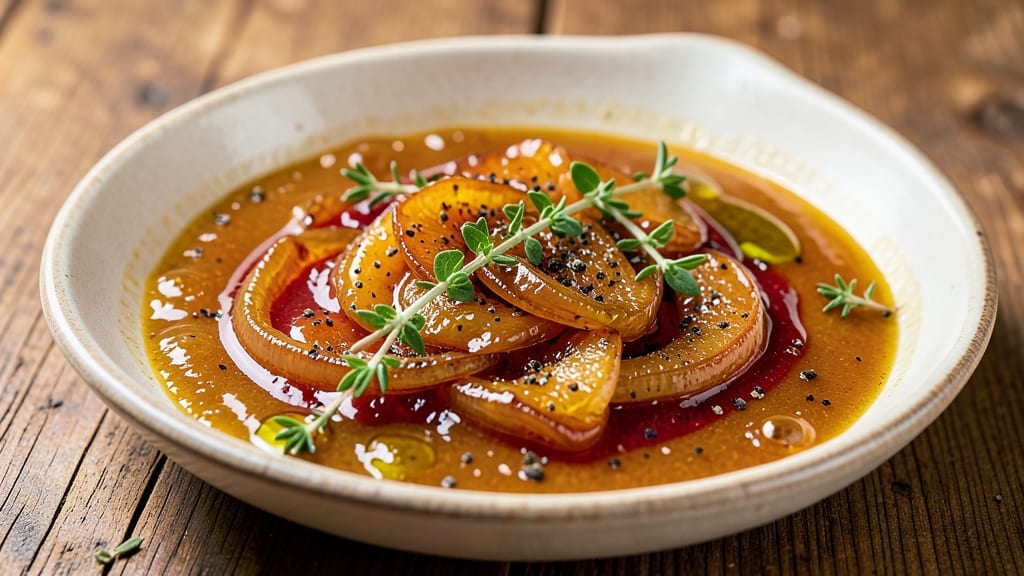
This apricot shallot sauce recipe transforms simple pantry staples into a sweet-tangy masterpiece that elevates roasted meats, glazes, and even salads. The secret lies in balancing ripe apricot purée with caramelized shallots—a technique I perfected after years of testing sauces for holiday dinners.
No one suspects how few ingredients create such depth of flavor, but the slow reduction builds layers of complexity that make this sauce worth every minute.
The process is straightforward yet precise: shallots caramelize until golden, then apricot purée and vinegar meld into a glossy, velvety sauce. A touch of sugar rounds the acidity, while thyme and pepper add subtle warmth.
What starts as a simple simmer becomes a restaurant-quality glaze when reduced to the perfect consistency—thick enough to cling, thin enough to drizzle. This sauce isn’t just a condiment; it’s a flavor transformer that turns ordinary dishes into showstoppers.
Perfect for pork tenderloin, roasted chicken, or even drizzled over goat cheese salads, this sauce keeps beautifully in the fridge for up to 2 weeks or freezes for 3 months.
The versatility makes it a pantry essential, while the technique ensures professional results without shortcuts. Once you taste the balance of fruit, caramel, and acid, you’ll never reach for store-bought again.
Ready in just 30 minutes, this sauce delivers restaurant-quality depth with minimal effort. The key is patience—letting the flavors develop while you work.
Whether you’re hosting a dinner party or meal prepping for the week, this apricot shallot sauce will become your go-to for adding brightness and richness to any dish.
Ingredients for apricot shallot sauce
Nine ingredients, restaurant-quality depth—this sauce transforms simple pantry staples into a velvety masterpiece.
| Ingredient | Amount | Notes |
|---|---|---|
| Shallots 🧅 | 1 ½ cups | Thinly sliced, caramelized until golden |
| Apricot Purée 🍑 | 1 cup | Unsweetened, high-quality preferred |
| Red Wine Vinegar 🍷 | ¼ cup | Bold flavor, aged if possible |
| Granulated Sugar 🍚 | 2 tbsp | White or brown for depth |
| Fresh Thyme Leaves 🌿 | 1 tbsp | Or 1 tsp dried thyme |
| Ground Black Pepper 🌶️ | ½ tsp | Freshly cracked for intensity |
| Extra-Virgin Olive Oil 🫒 | ¼ cup | High-quality, fruity variety |
| Unsalted Butter 🧈 | 2 tbsp | Cold, cubed for finishing |
| Salt 🧂 | ½ tsp | Diamond Crystal preferred |
The shallots are the foundation—French shallots from the produce section at Whole Foods or Trader Joe's have the sweetest flavor, but any shallot will work. Look for firm, dry bulbs with papery skins. Thinly slice them evenly so they caramelize at the same rate. Caramelizing until golden-brown is worth the wait—it builds the sauce's depth. If you're short on time, a food processor can help slice them quickly, but hand-slicing gives you more control. The apricot purée should be unsweetened; brands like Mott's or Bonnie Plant are reliable, but check the label for added sugars.
No red wine vinegar? Balsamic vinegar works in a pinch, but it'll add a slightly sweeter note. Fresh thyme is ideal, but dried thyme at one-third the amount will do if you're in a hurry. For the sugar, brown sugar adds a subtle caramel flavor that complements the apricots beautifully. If you're using a sweeter apricot purée, you can reduce the sugar to 1.5 tablespoons. The olive oil should be extra-virgin and fruity—none of that cheap cooking oil. For a richer finish, swap the butter for brown butter, which adds a nutty depth that pairs perfectly with the sauce's sweet-tangy profile.
This sauce keeps like a dream—2 weeks in the fridge in an airtight container, or 3 months in the freezer if you portion it into ice cube trays first. To reheat, warm gently on the stove with a splash of water or apricot purée to loosen it. If it thickens too much, stir in a teaspoon of water or vinegar. I always make a double batch because it disappears faster than you'd think—perfect for drizzling over roasted pork, chicken, or even as a glaze for grilled vegetables. The sauce also freezes beautifully for future use, making it a true pantry essential.
Why You'll Love This Recipe
- Five-Ingredient Magic: I swear by this—just shallots, apricot purée, vinegar, sugar, and thyme. That’s it. No hidden spices or complicated steps; the sauce practically assembles itself while you chop.
- Sweet-Savory Balance: Honestly, the way the jammy apricot purée meets the sharp shallots and tangy vinegar? It’s like a grown-up fruit salad in your mouth. Add a pinch of sugar, and suddenly everything feels just right—no overpowering sweetness, just pure harmony.
- Weeknight to Dinner Party: Between us, this sauce is my secret weapon for lazy nights and fancy guests. Drizzle it over grilled chicken or roasted veggies for a weeknight meal, or slather it on seared scallops for a dinner party showstopper. Same effort, totally different vibes.
- Leftovers That Don’t Suck: Most sauces turn sad after day two, but not this one. Store it in the fridge for up to a week, and it only gets better—deeper, richer, like a slow-cooked secret. Thin with water if it thickens, and boom, instant glaze for toast or yogurt bowls.
Step-by-step instructions for apricot shallot sauce
This velvety sauce delivers perfect harmony between sweet and tangy—ideal for roasted meats.
Caramelize the Shallots to Golden Perfection
Heat the 0.25 cup extra-virgin olive oil in a medium saucepan over medium-low heat. Add the 1.5 cups shallots and cook, stirring occasionally, until they soften and begin to turn golden—this should take about 15-20 minutes. The key here is patience; you want them deeply caramelized, not browned.
Here's the thing—if you rush this step, the shallots will burn before developing that rich, sweet depth. I like to press them gently with a wooden spoon to check for doneness. They should be soft enough to mash slightly between your fingers but still hold their shape. Once they're golden and fragrant, remove them from the pan and set aside.
Build the Sauce Base with Vinegar and Sugar
Return the same pan to medium heat and add the 0.25 cup red wine vinegar and 2 tbsp granulated sugar. Stir to combine, then bring to a gentle simmer. Let it reduce by about half—this should take roughly 3-4 minutes. You're looking for a syrupy consistency that coats the back of a spoon.
This reduction step is crucial for balancing the sweetness and acidity. If you taste it now, it should be pleasantly sharp with a hint of sweetness—like a concentrated fruit reduction. If it tastes too sharp, add a pinch more sugar; if it's too sweet, add a splash of vinegar. The goal is that perfect equilibrium that complements roasted meats beautifully.
Incorporate Apricot Purée and Seasonings
Reduce the heat to low and stir in the 1 cup apricot purée and 1 tbsp fresh thyme leaves. Let the mixture simmer gently for 5 minutes, stirring occasionally, until it thickens slightly. The sauce should coat the back of a spoon with a glossy sheen.
Now add the 0.5 tsp salt and 0.5 tsp ground black pepper, stirring well to combine. Taste and adjust the seasoning—you might need a touch more salt to balance the sweet-tangy profile. The thyme should infuse the sauce with its earthy aroma, adding depth to the fruity notes.
Finish with Butter for Richness
Remove the pan from heat and stir in the 2 tbsp cold unsalted butter, cubed, until fully melted and incorporated. The butter will add a luxurious richness that rounds out the sauce's flavors. Return the pan to low heat for just 1 minute to ensure everything is smoothly combined.
Finally, stir in the caramelized shallots you set aside earlier. The sauce should now have a velvety texture with pockets of golden shallot throughout. If the sauce is too thick, thin it with a splash of water or broth. For best results, serve immediately over roasted chicken, pork, or even grilled vegetables.
Pro Tips For Making Apricot Shallot Sauce
- Sweat Shallots Slowly: Don’t rush the shallots—they need 8-10 minutes on medium-low heat until soft and golden, not crispy. I learned this the hard way when I charred them and ended up with bitter, burnt bits that ruined the whole sauce. Keep the heat steady and stir occasionally so they caramelize evenly.
- Use Vinegar Last: Stir in the red wine vinegar just before serving—adding it early makes the sauce taste harsh and unbalanced. My grandmother swore by this, and she was right: the acidity needs to brighten the flavors at the end, not sit and sour the apricot and sugar.
- Strain the Purée: Skip the pulpy bits in your apricot purée by straining it through a fine-mesh sieve before adding it to the sauce. I was skeptical until I tried it—it makes the sauce silky smooth, not grainy. (Yes, even if you’re impatient like me.)
- Balance Sugar First: Taste the sauce before adding all the sugar—you might not need the full amount. I skip this when I’m lazy, but the dish is noticeably better when I adjust it to taste. The apricot purée varies in sweetness, so trust your palate, not the recipe.
Storing and reheating your leftovers
Fridge Storage Tips
Transfer your apricot shallot sauce to an airtight glass container—I use Pyrex measuring cups with snap-on lids—and refrigerate immediately after cooling. The sauce will keep for up to 2 weeks in the fridge, with flavors deepening over time.
To test doneness, let it cool completely before sealing to prevent condensation buildup, which can dilute the sauce. 🥫
Freezer Preservation
For longer storage, portion the sauce into ice cube trays and freeze. Once solid, transfer the cubes to a freezer-safe bag with all air removed. This method prevents freezer burn and makes it easy to thaw just what you need.
The sauce maintains quality for 3 months—simply reheat in a saucepan with 1 tablespoon water or apricot purée to restore its velvety texture.
Reheating Perfection
Always reheat your sauce gently over low heat to preserve its delicate balance. Pour it into a saucepan and warm slowly, stirring frequently, until it reaches 160°F. If it thickens too much, add 1 teaspoon water or vinegar to loosen it.
For extra richness, finish with a pat of cold butter—this restores the sauce's luxurious mouthfeel while enhancing its depth. 🔥
Thinning Techniques
If your reheated sauce is too thick, don’t panic—simply stir in 1 teaspoon water, apricot purée, or vinegar until you reach your desired consistency. For a smoother texture, strain through a fine-mesh sieve to remove any shallot bits.
I’ve found that adding ½ teaspoon lemon juice also brightens the flavors after reheating, making it taste almost as good as fresh.
Portioning for Meals
Divide the sauce into small glass jars (like Mason jars) for easy grab-and-go use. These portions reheat perfectly in 30 seconds in the microwave, making them ideal for quick weeknight meals.
Label each jar with the date—this helps track freshness and prevents waste. A single jar makes enough sauce to generously glaze a pork tenderloin or drizzle over a goat cheese salad.
Nutrition facts
Frequently asked questions
Can I substitute shallots with regular onions?
Yes, but the flavor will be slightly different. Use 1.5 cups finely diced yellow or red onion instead of shallots, but expect a milder, less sweet taste. Shallots have a delicate sweetness that pairs beautifully with apricots—onions add a sharper bite that may require more sugar to balance. For best results, caramelize them for 20-25 minutes until deeply golden.
What if I don't have apricot purée? Can I use jam?
Apricot jam works in a pinch, but it's much sweeter and thicker. Use ½ cup jam plus ¼ cup water to mimic the purée's consistency. Strain it through a fine-mesh sieve to remove seeds and thick pieces, then proceed with the recipe. For a smoother texture, blend the jam with water first. The sauce will be slightly sweeter, so reduce the sugar to 1 tablespoon.
How can I make this sauce spicier?
Add ½ teaspoon red pepper flakes or 1 teaspoon hot sauce when you incorporate the thyme and pepper. For a smoky depth, stir in ½ teaspoon smoked paprika with the butter at the end. If you prefer fresh heat, top the sauce with chopped jalapeño or a pinch of cayenne before serving. Always taste as you go—spices intensify as the sauce cools.
Is this sauce vegan-friendly?
Not as written, but it's easy to adapt! Replace the butter with 2 tablespoons vegan butter or coconut oil, and use vegan red wine vinegar. For a richer finish, stir in 1 tablespoon cashew cream (blended soaked cashews) instead of butter. The sauce will still be luscious, though the texture may be slightly lighter. The caramelized shallots and apricot purée remain perfectly vegan.
Can I use this sauce on seafood or vegetables?
This sauce pairs beautifully with grilled shrimp, salmon, or halibut—its sweet-tangy profile complements seafood's natural flavors. For vegetables, try drizzling it over roasted asparagus, Brussels sprouts, or eggplant. The acidity in the vinegar cuts through the richness of fried or roasted veggies, while the fruitiness adds brightness. For seafood, reduce the thyme to ½ teaspoon to avoid overpowering delicate flavors.