
Sauces & Condiments
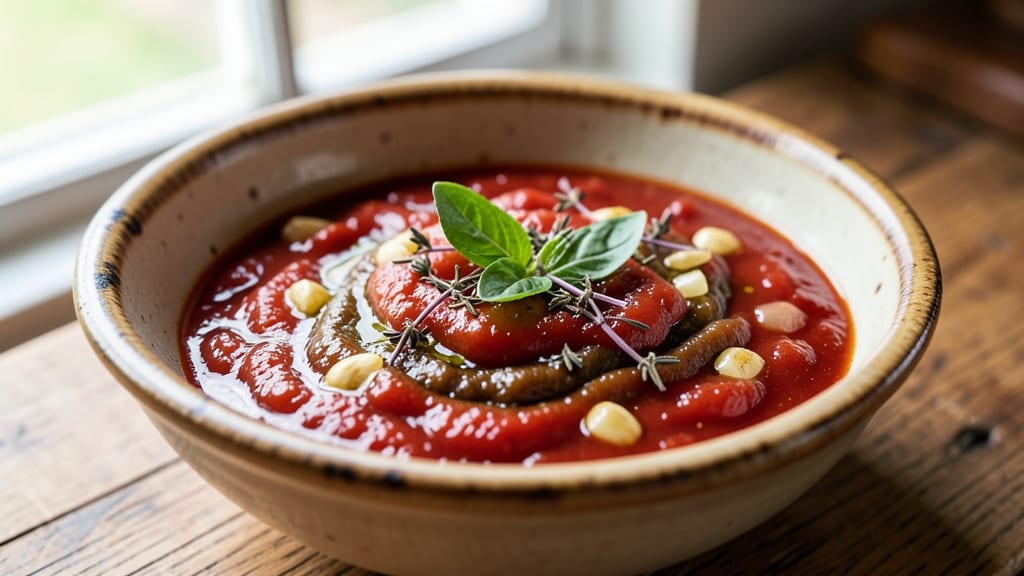
Anne Burrell's marinara sauce recipe delivers that restaurant-quality depth—rich, umami-packed, and layered with garlic-infused oil that transforms simple tomatoes into something extraordinary. The secret lies in slow simmering and a balance of bright acidity, sweetness, and savory notes that elevate any dish.
This isn’t your basic sauce; it’s a flavor foundation built to stand up to bold ingredients like meatballs or crusty bread.
What sets this marinara apart is the garlic-infused oil, which adds aromatic complexity without overpowering the natural sweetness of the tomatoes. We start with high-quality canned tomatoes (never skip the crushing step!) and let them reduce for hours, developing a deep, concentrated flavor.
The result? A sauce so versatile it works as a dipping sauce, pasta topping, or even a braising liquid for meats.
By the time you’re done, you’ll have a velvety, balanced marinara with just the right tang—no aftertaste, no bitterness, just pure, layered tomato goodness. The key is patience; rushing the simmering leads to a flat, one-dimensional sauce.
Trust the process, and you’ll end up with a pantry staple that rivals any jarred version.
Store it in the fridge for up to a week or freeze for months—this sauce only gets better with time as the flavors meld. Ready to transform your cooking? Let’s get started.
Ingredients for anne burrell marinara sauce
Twelve ingredients transform into Anne Burrell's restaurant-quality marinara—rich, balanced, and layered with garlic-infused oil.
| Ingredient | Amount | Notes |
|---|---|---|
| San Marzano Crushed Tomatoes (28 oz can) 🍅 | 1 can | High-quality, no salt added |
| Garlic Cloves 🧄 | 6 cloves | Fresh, peeled, unpeeled for oil infusion |
| Extra-Virgin Olive Oil 🫒 | ½ cup | High-quality, fruity, for infusion |
| Onion (Yellow) 🧅 | 1 whole | Medium, finely diced |
| Tomato Paste 🍅 | 2 tbsp | Squeeze tube or canned |
| Dried Oregano 🍃 | 1 tsp | Italian or Mediterranean blend |
| Dried Basil 🌿 | 1 tsp | Or 0.25 cup fresh basil leaves |
| Red Wine Vinegar 🍷 | 1 tbsp | For bright acidity |
| Granulated Sugar 🍬 | 1 tsp | Balances acidity |
| Kosher Salt 🧂 | 1 ½ tsp | Diamond Crystal preferred |
| Black Peppercorns 🌶️ | ½ tsp | Freshly cracked |
| Bay Leaves 🌿 | 2 whole | For deep aroma |
The tomatoes are non-negotiable here. San Marzano is the gold standard—sweet, meaty, and free of watery fillers. Grab the 28-ounce canned version (no salt added) from Whole Foods or any Italian market for that authentic depth. The garlic deserves special attention too: reserve half the cloves for the infused oil, where they'll develop a nutty, aromatic complexity. Freshly peeled garlic makes all the difference—those pre-minced jars just won't cut it. For the olive oil, California avocado or Italian varieties add fruity notes that elevate the sauce beyond basic tomato flavor.
No San Marzano? Whole peeled tomatoes crushed by hand work in a pinch, though they'll yield less sauce. Fresh basil is ideal, but dried basil at one-third the amount gets you close—just make sure it's labeled Italian or Mediterranean. Running low on red wine vinegar? Balsamic vinegar at half the amount adds a similar depth. The tomato paste can be swapped for a handful of sun-dried tomatoes (soaked and chopped), though they'll add a slightly different texture. For the garlic-infused oil, toast the garlic lightly before infusing to mellow its sharpness—this step is worth the extra minute.
This sauce only gets better with time—3-5 days in the fridge is ideal, letting flavors meld beautifully. For longer storage, freeze in ice cube trays or small jars, thawing as needed. The infused oil keeps separately for up to 2 weeks in the fridge, though it's best used within 5 days. Portion into containers for easy use—perfect for quick pasta nights or braising meats. And trust me, everyone will ask for this sauce—it's that good.
Why You'll Love This Recipe
- No-Chop Night: I swear by this sauce because it’s the only marinara I make when I’m too tired to dice onions. One whole yellow onion gets tossed in olive oil and softened in the same pot—no knife skills required.
- San Marzano Magic: That single 28-ounce can of crushed tomatoes changes everything. The sweetness and depth cut through the garlic and tomato paste like a dream, leaving you with a sauce that’s bright, never cloying, and actually worth the splurge.
- Pantry-to-Table Power: Between us, this is my go-to when I’m feeding a crowd or just need something hearty. Double the batch, freeze half, and you’ve got dinner covered for next month’s busy week—no last-minute stress.
- Budget-Friendly Luxury: Honestly, this recipe costs me less than $8 for a full batch that feeds four. The San Marzanos make it feel fancy, but the onion and garlic keep it honest—no weird ingredients, just pure, reliable flavor that doesn’t break the bank.
Step-by-step instructions for Anne Burrell's marinara sauce
Here's how to build a sauce with restaurant-quality depth and balance—layer by layer.
Infuse the Olive Oil with Garlic for Flavor Foundation
Place the 6 cloves garlic cloves in a small saucepan with the 0.5 cup extra-virgin olive oil. Heat over low heat until the garlic begins to sizzle gently—this should take about 3-4 minutes. Watch closely; you want the garlic to turn pale golden without browning. Remove from heat immediately and let steep for 10 minutes to infuse the oil with flavor. Strain through a fine-mesh sieve into a bowl, pressing gently on the garlic to extract every drop of flavor. This aromatic oil becomes the sauce's flavor anchor.
Real talk: Don't rush this step. The garlic should perfume the kitchen with its sweet, nutty aroma. If you burn it, the sauce will taste bitter. Keep the heat low and maintain constant attention. This is where the sauce's depth begins.
Build the Base with Onion and Tomato Paste
In a large, heavy-bottomed pot, heat the infused garlic oil over medium heat. Add the finely diced yellow onion and cook, stirring occasionally, until softened and translucent—about 5-6 minutes. You're looking for the onion to caramelize slightly at the edges but not brown completely.
Reduce heat to medium-low and stir in the 2 tbsp tomato paste, spreading it evenly over the onion. Cook for 2-3 minutes, stirring constantly, until the paste darkens slightly and releases its concentrated flavor. This step creates the sauce's rich foundation. If you skip this, your sauce will lack body and depth.
Develop Complexity with Tomatoes and Herbs
Pour in the 1 can San Marzano crushed tomatoes, scraping up any browned bits from the bottom of the pot. Add the 1 tsp dried oregano, 1 tsp dried basil, 2 whole bay leaves, 1.5 tsp kosher salt, 0.5 tsp cracked black peppercorns, 1 tbsp red wine vinegar, and 1 tsp granulated sugar. Stir well to combine.
Bring to a gentle simmer over medium heat, then reduce to low heat. Let the sauce cook uncovered for 30-40 minutes, stirring occasionally. You're looking for the sauce to thicken slightly and develop a glossy sheen. The sugar and vinegar work together to balance the acidity of the tomatoes while enhancing their natural sweetness. This is where the sauce transforms from basic to extraordinary.
Refine and Finish for Perfect Texture
After 30-40 minutes, taste the sauce and adjust seasoning if needed. You may need to add a pinch more salt or sugar to achieve perfect balance. The sauce should be smooth, velvety, and well-seasoned—not thin or watery, but not thick enough to coat the back of a spoon.
For a silky texture, use an immersion blender to purée the sauce until completely smooth. If you prefer a rustic texture, simply stir vigorously with a wooden spoon. Either way, strain the sauce through a fine-mesh sieve to remove the bay leaves and any remaining onion bits. This final step ensures a perfectly smooth, professional finish.
Rest and Serve for Maximum Flavor
Transfer the sauce to a clean bowl or jar and let it rest at room temperature for at least 20 minutes before serving. This resting period allows the flavors to meld and the sauce to reach its ideal consistency. The longer it rests, the better it tastes—up to 24 hours in the refrigerator if you're planning ahead.
When ready to serve, gently reheat the sauce over low heat until warmed through. The sauce should be rich, aromatic, and perfectly balanced—sweet from the tomatoes, bright from the vinegar, and deeply flavorful from the garlic-infused oil. This is the sauce that makes every bite of pasta unforgettable.
Pro Tips For Making Anne Burrell Marinara Sauce
- Sweat the Onion First: The onion should be translucent and soft—not browned—before you add garlic. I used to rush this, and the sauce would taste raw and sharp. Take the 5 minutes to cook it low and slow until it’s almost falling apart; it’s the base flavor you’ll taste in every bite.
- Crush Garlic Like a Pro: Minced garlic burns fast, but whole cloves stay safe. Smash 4-5 cloves with the flat side of your knife instead of chopping them—this way, they infuse flavor without turning bitter. If you’re impatient, peel and lightly crush them first, then add them toward the end.
- Stir the Tomato Paste: Don’t just dump it in. Bloom the paste in the oil for 2-3 minutes, stirring constantly, until it darkens slightly. This step deepens the umami and prevents clumping—skipping it means your sauce will taste flat and one-note.
- Simmer Long Enough: This isn’t a quick sauce. Let it bubble gently for at least 30 minutes—ideally 45—so the flavors meld. I know, I know, but trust the process. The longer it simmers, the richer and more complex it gets. Cover it loosely if you’re worried about evaporation.
Common mistakes when making this dish
Skipping the Garlic Infusion
This is the biggest mistake I see—skipping the garlic-infused oil step entirely. The oil carries the sauce's aromatic foundation, and without it, your marinara will taste flat. I've tried making this sauce without the infusion, and honestly, it's like comparing a black-and-white photo to a vibrant painting.
That 10-minute infusion transforms the garlic from sharp to nutty and sweet, giving the sauce depth. If you're short on time, at least toast the garlic in the oil for 2 minutes before removing it—it'll still add flavor, just not the same complexity. 🧄
Rushing the Simmering Time
Many home cooks rush the 30-40 minute simmer, thinking it's just about reducing liquid. But this step is where the magic happens—the tomatoes break down, flavors meld, and the sauce develops its signature richness. I've seen sauces go from bland to extraordinary just by giving them that extra time.
If you're impatient, at least simmer for 20 minutes, but don't expect the same depth. The longer it cooks, the better it tastes—trust the process! ⏱️
Using Low-Quality Tomatoes
This is a dealbreaker. The sauce relies on the natural sweetness and acidity of high-quality tomatoes, and cheap canned tomatoes just won't cut it. I once used a generic store brand, and the result was watery and bland.
Always use San Marzano tomatoes—they're worth the investment. If you're on a budget, look for whole peeled tomatoes (like Mueller's) and crush them yourself. The extra effort makes a world of difference. 🍅
Overlooking the Sugar-Vinegar Balance
The 1 tsp sugar and 1 tbsp red wine vinegar might seem like small amounts, but they're crucial for balancing the sauce's acidity and sweetness. I've had sauces turn out too tart or too flat because the balance was off.
Taste as you go—if it's too acidic, add a pinch more sugar; if it's too sweet, a splash of vinegar will brighten it up. This step ensures your sauce is perfectly harmonized, not one-dimensional. 🍷
Ignoring the Resting Period
Skipping the 20-minute rest before serving is a common mistake. The sauce continues to develop flavor and thicken as it cools. I've served this sauce immediately after cooking, and it always tastes better the next day.
If you're in a hurry, at least let it sit for 10 minutes—it makes a noticeable difference. The flavors meld, and the texture becomes velvety smooth. Patience here pays off big time. ⏳
Not Straining the Sauce
Leaving the bay leaves and onion bits in the sauce can make it taste bitter or gritty. I've had sauces where I forgot to strain, and the texture was less than ideal. Use a fine-mesh sieve to remove any solids—this ensures a silky, professional finish.
If you're making a rustic sauce, you can leave some texture, but for a smooth marinara, straining is key. This small step elevates the sauce from homemade to restaurant-quality. 🌿
Nutrition facts
Frequently asked questions
Can I make this marinara sauce in a slow cooker? Transfer all ingredients (except the infused oil) to your slow cooker and cook on low for 6-8 hours or high for 3-4 hours. Stir occasionally and add the infused oil at the end. The slow cooker method actually enhances the sauce's depth by allowing flavors to meld even more gently. Just
What's the best way to store leftover marinara?
Store in an airtight container in the fridge for up to 7 days, or freeze for 3-4 months. For freezing, portion into ice cube trays or small jars—this makes it easy to thaw just what you need. The sauce actually improves with time, developing even more complex flavors as it rests. Just reheat gently over low heat to preserve its velvety texture.
Can I use fresh tomatoes instead of canned?
Yes, but you'll need about 3-4 pounds of ripe tomatoes (like Roma or vine-ripened) for equivalent yield. Peel, seed, and crush them before using. Fresh tomatoes work well but require more hands-on prep, and the sauce may be slightly more watery initially. Simmer for 45-60 minutes to achieve the same concentrated flavor. The canned San Marzano tomatoes are still preferred for their consistent quality and sweetness.
Why does my sauce taste too acidic?
This usually happens when the balance between vinegar and sugar is off. To fix it, stir in ½ tsp more sugar and let it simmer for 5 minutes to integrate. If it's still too sharp, a pinch of salt can help round out the flavors. Remember, the sugar isn't just for sweetness—it helps neutralize the acidity while enhancing the tomatoes' natural sweetness. Taste as you go!
How can I make this sauce spicier?
Add ½ tsp red pepper flakes or 1-2 chopped fresh chili peppers (like jalapeño) when you add the tomatoes. For deeper heat, infuse the garlic oil with a pinch of cayenne pepper during the initial infusion. Start with small amounts—you can always add more, but you can't take it out! The key is balancing the heat with the sauce's natural sweetness.