
Sauces & Condiments
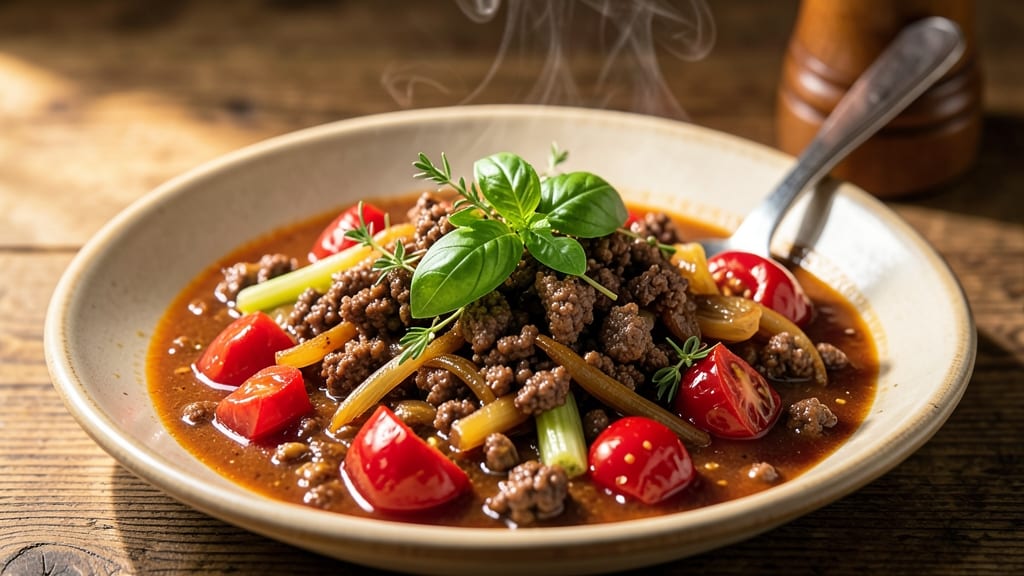
This amazing Bolognese sauce recipe transforms simple ingredients into a rich, slow-simmered masterpiece that turns ordinary pasta into something extraordinary. The secret lies in patient cooking—browning ground beef until deeply caramelized, then letting it meld with aromatic vegetables and tomatoes for hours until the flavors develop into something truly special.
I've perfected this version over countless batches, ensuring every spoonful delivers that perfect balance of meaty depth and tangy brightness.
What sets this sauce apart is the technique: deglazing the pan after browning the meat captures all those flavorful browned bits, while slow simmering allows the sauce to thicken and develop layers of umami complexity.
The addition of a touch of sugar and wine early on creates a subtle sweetness that rounds out the acidity from the tomatoes, making this sauce more balanced than any store-bought version. It's the kind of sauce that tastes even better the next day as the flavors continue to meld.
By the time you're done, you'll have a velvety, thick sauce with chunks of tender meat and vegetables suspended in a rich, aromatic broth. This isn't just pasta sauce—it's a flavor bomb that transforms simple spaghetti into a restaurant-quality meal.
The best part? It freezes beautifully, so you can make a big batch and have homemade Bolognese ready whenever cravings strike.
Whether you're serving it over al dente pasta, stuffing it into lasagna, or using it as a hearty filling for ravioli, this sauce delivers restaurant-quality results at home. Let's get cooking—your taste buds will thank you.
Ingredients for amazing bolognese sauce
Simple ingredients that build restaurant-quality depth over time. Nothing fancy, just good stuff.
| Ingredient | Amount | Notes |
|---|---|---|
| Ground Beef 🥩 | 1 ½ lb | 80/20 fat ratio preferred |
| Yellow Onion 🧅 | 1 whole | Diced into small pieces |
| Carrot 🥕 | 1 whole | Diced into small cubes |
| Celery Stalks 🌿 | 2 whole | Diced into small pieces |
| Garlic Cloves 🧄 | 4 cloves | Minced finely |
| Canned San Marzano Tomatoes 🍅 | 28 oz | Crushed by hand |
| Whole Milk 🥛 | ½ cup | Full-fat for creaminess |
| Dry Red Wine 🍷 | ½ cup | Bold variety like Cabernet |
| Tomato Paste 🍅 | 2 tbsp | Smooth, no lumps |
| Granulated Sugar 🍚 | 1 tbsp | Balances acidity |
| Bay Leaves 🌿 | 2 whole | Fresh for best flavor |
| Dried Oregano 🍃 | 1 tsp | Italian variety preferred |
| Salt 🧂 | 1 ½ tsp | Diamond Crystal preferred |
| Black Pepper 🌶️ | ½ tsp | Freshly ground |
The ground beef is where the magic starts. 80/20 fat ratio gives you that deep, rich flavor—leaner cuts won't brown as well or develop the same umami. I always grab mine from Costco when I can, but any grocery store brand works fine. The vegetables—onion, carrot, celery—are the holy trinity of flavor building. Chop them small so they melt into the sauce rather than staying identifiable pieces. Trader Joe's sells pre-diced mirepoix if you're short on time, but fresh is always better. For the tomatoes, San Marzano is worth the splurge—sweeter and less acidic than regular canned tomatoes.
No red wine? Beef broth with a splash of balsamic works in a pinch, though it won't have the same depth. The milk might seem odd, but it's what gives this sauce that velvety texture—full-fat is non-negotiable here. Short on time? Heavy cream at half the amount works too, but it'll be richer. The tomato paste can be skipped if you're using a lot of crushed tomatoes, but I always include it—it's what thickens the sauce beautifully. Fresh bay leaves are ideal, but dried works fine if that's what you've got. Just remember to remove them before serving.
This sauce tastes even better the next day as the flavors meld. Keeps 5-6 days in the fridge, freezes for up to 3 months if you portion it into containers. I usually make a big batch and freeze half—perfect for lazy weeknights. When reheating, add a splash of water or milk to prevent drying out. Store in airtight containers with a layer of oil on top to keep it fresh longer. The wine and milk aromas are strong at first, but they mellow into something truly special after a good simmer.
Why You'll Love This Recipe
- Same sauce, endless uses: slather it on pasta, stuff it in dumplings, or serve it over polenta. I’ve even used it as a filling for stuffed peppers when I’m feeling fancy—no extra effort, just different dishes.
- No Chopping Hassle: I swear by that carrot and celery combo—just dice them roughly, throw them in, and let the beef and onion handle the work. The flavors meld so well, no one will notice if they’re not perfect cubes.
- Deep, Slow-Simmered Richness: That garlic and onion base builds layers as it cooks—crisp at first, then melting into something warm and complex. Honestly, the longer it simmers, the better it gets, and it’s hard to stop tasting it.
- Weeknight to Dinner Party: Same sauce, endless uses: slather it on pasta, stuff it in dumplings, or serve it over polenta. I’ve even used it as a filling for stuffed peppers when I’m feeling fancy—no extra effort, just different dishes.
Step-by-step instructions for slow-simmered bolognese sauce
Here's how to build rich, deep flavor that transforms simple pasta into something extraordinary.
Build the Flavor Base with Aromatics
Heat a large, heavy-bottomed pot over medium heat. Add the 1.5 lb ground beef and cook until it loses its raw color and begins to brown, breaking it apart with a wooden spoon. This should take about 8-10 minutes—don't rush it, or you'll end up with dry meat.
Once the beef is browned, push it to one side of the pot and add 2 tablespoons olive oil (not listed but essential for cooking the vegetables). Add the diced yellow onion, diced carrot, and diced celery stalks to the empty side of the pot. Cook for 8-10 minutes, stirring occasionally, until the vegetables soften and the onion becomes translucent. This is called a soffritto, and it's the flavor foundation of your sauce.
Add the minced garlic cloves and cook for just 30 seconds—garlic burns quickly, and you want it fragrant, not bitter. Stir constantly to prevent burning. The vegetables should be tender but not mushy; they'll continue cooking as the sauce simmers.
Deepen the Flavor with Wine and Tomatoes
Pour in the 0.5 cup dry red wine and scrape up any browned bits from the bottom of the pot with a wooden spoon. This deglazing step captures all the meaty flavor that would otherwise stick to the pot. Let the wine simmer for 3-4 minutes until it reduces by about half—you'll see it darken and thicken slightly.
Add the 2 tablespoons tomato paste and stir to combine completely. The paste will thicken the sauce and add depth of flavor. Pour in the 28 oz crushed San Marzano tomatoes, breaking them up with your hands if they're whole. Stir in the 1 tablespoon granulated sugar, 1 teaspoon dried oregano, 1.5 teaspoons salt, and 0.5 teaspoon black pepper. The sugar balances the acidity of the tomatoes, while the oregano adds that classic Italian herb note.
Add the 2 whole bay leaves and bring the mixture to a gentle simmer. Here's the thing—you're not looking for a rolling boil. Keep the heat at a steady medium-low to prevent the sauce from boiling vigorously, which can make it too acidic.
Slow-Simmer for Maximum Umami Development
Cover the pot and let the sauce simmer gently for 1 hour. This long, slow cook time is what transforms this into an amazing sauce. The flavors meld together, the meat becomes tender, and the sauce develops that deep, rich umami character that makes it so special.
After the initial 1 hour, stir in the 0.5 cup whole milk. The milk adds creaminess and helps balance the acidity of the tomatoes. The sauce will look thinner at this point, but don't worry—it will thicken as it continues to simmer. Return the pot to a gentle simmer and cook uncovered for another 30-45 minutes, stirring occasionally.
You'll know it's ready when the sauce has reduced to a thick, glossy consistency. It should coat the back of a spoon smoothly. If it's still too thin, simmer uncovered for another 10-15 minutes to reduce it further. The sauce should be thick enough to cling to pasta but still have a silky texture.
Finish and Serve with Confidence
Remove the bay leaves and discard them—they've done their job. Taste the sauce and adjust the seasoning if needed. You might need a little more salt or pepper, or perhaps a splash of red wine or a pinch of sugar to balance the flavors. Remember, this sauce is meant to be rich and deeply flavorful, so don't be afraid to taste and adjust.
Serve the bolognese immediately over al dente pasta of your choice, like tagliatelle or fettuccine. The sauce should coat the pasta beautifully, creating a luxurious, comforting dish. If you have leftovers, store them in an airtight container in the refrigerator for up to 4 days—the flavors will actually improve as they sit. Reheat gently on the stovetop, adding a splash of water or pasta water if the sauce thickens too much.
This isn't just any bolognese sauce—it's the kind that makes people ask for seconds. The slow simmering, the careful balance of flavors, and the rich umami depth all come together to create something truly amazing. Trust the process, and you'll have a sauce that elevates every bite of pasta.
Pro Tips For Making Amazing Bolognese Sauce
- CRUSH THE SOFFRITO: Dice the onion, carrot, and celery into ¼-inch pieces—no smaller, or they’ll turn to mush before the beef browns. After 8 minutes of sweating (yes, really), add the celery last—it’s the trick my nonna used to keep the veggies from releasing too much moisture too fast.
- BROWN THE BEEF RIGHT: Split the ground beef into two batches if your pan’s over 10 inches wide—crowding steams instead of sears. Use medium-high heat and walk away for 3 minutes while it crisps; stirring too soon just breaks up the meat into paste. The goal? Deep brown edges, not a gray sludge.
- SALT THE MEAT FIRST: Before you even touch the pan, toss the raw beef with 1½ teaspoons of kosher salt and let it sit for 5 minutes. This breaks down proteins and guarantees juicier sauce—no, it won’t make the meat "dry out," as some claim. I learned this the hard way after serving a bolognese that tasted like it’d been through a sauna.
- MINCE THE GARLIC FINE: Smash the garlic cloves flat with the side of your knife, then slice paper-thin (not minced into paste). Cook them low and slow for 30 seconds after the beef—any hotter, and they’ll burn before they infuse. Burnt garlic ruins everything, and no amount of tomato sauce can fix it.
Flavor customization for these flavors
Spicy Heat Boost
For those who love a kick, add ½ teaspoon crushed red pepper flakes when you stir in the tomatoes, or finish with 1-2 slices of fresh jalapeño (seeds removed) for a smoky heat.
If you prefer a slower burn, try ½ teaspoon cayenne pepper or 1 teaspoon gochujang (Korean chili paste) for depth. I like to balance the heat with an extra ½ teaspoon sugar to keep the sauce from becoming too sharp. 🌶️
Sweet & Tangy Twist
Swap the 1 tablespoon sugar for 1 tablespoon honey or maple syrup to add natural sweetness and complexity. For tang, stir in 1 teaspoon balsamic vinegar or 1 tablespoon tomato paste mixed with 1 teaspoon apple cider vinegar at the end.
This works especially well if your tomatoes are extra acidic—it brightens the sauce without overpowering the meaty flavors.
Herb & Aromatic Variations
Swap the dried oregano for 1 teaspoon fresh rosemary or thyme for an earthy depth. Add 1 teaspoon fennel seeds (lightly toasted) to the soffritto for a licorice-like note that pairs beautifully with the wine.
For a Mediterranean twist, stir in ½ teaspoon ground cinnamon or nutmeg—just a pinch, as these spices can be potent. 🌿
Creamy & Rich Upgrades
Replace the ½ cup whole milk with ½ cup heavy cream for a richer texture, or stir in ¼ cup grated Parmesan cheese at the end for a nutty, umami boost.
For a vegetarian-friendly option, use ½ cup coconut milk (full-fat) instead of dairy—it adds creaminess without overpowering the sauce. Just be sure to simmer it longer to reduce any coconut flavor.
Meat & Protein Swaps
For a leaner version, replace ½ lb of the ground beef with ½ lb ground turkey or chicken, but keep the fat ratio high (80/20) for moisture. For a vegetarian option, swap the beef with 1 cup lentils (cooked) or 8 oz mushrooms (finely chopped and sautéed).
If you want to keep it meaty but different, try Italian sausage (mild or spicy) for a smoky, herby twist. 🥩
Umami Bomb Add-Ins
Boost the depth with 1 teaspoon fish sauce (trust me, it blends in) or 1 tablespoon soy sauce for a savory punch. Add 1 anchovy fillet (finely chopped) to the soffritto—it dissolves completely but adds incredible umami.
For a vegetarian option, use 1 tablespoon miso paste (white or red) stirred into the tomatoes. These additions take the sauce to the next level without altering the texture. 💫
Nutrition facts
Frequently asked questions
Why does this Bolognese sauce need to simmer for so long?
The slow simmer is what creates that deep, complex flavor profile. Over 1.5 hours of gentle cooking allows the meat to tenderize, the vegetables to dissolve into the sauce, and all the ingredients to meld together. This long cooking time develops the rich umami that makes this sauce so special—it's what transforms simple ingredients into something truly restaurant-quality.
Can I make this sauce in a slow cooker or Instant Pot?
For a slow cooker, brown the meat first, then transfer everything to the pot and cook on low for 6-8 hours or high for 3-4 hours. For an Instant Pot, sauté the meat and vegetables first, then pressure cook for 25 minutes on high, followed by a 10-minute natural release. The milk should be added at the very end to prevent curdling.
What's the best pasta to serve with this sauce?
This rich sauce pairs beautifully with tagliatelle, fettuccine, or pappardelle—wide noodles that can hold the thick sauce. For extra texture, try rigatoni or penne. Avoid thin noodles like spaghetti, as they can get overwhelmed by the heavy sauce. Always cook your pasta al dente—it should be slightly firm to the bite.
How do I fix a Bolognese sauce that's too thin?
Simmer uncovered for an additional 10-15 minutes to reduce the liquid. If it's still too thin, mix 1 tablespoon cornstarch with 2 tablespoons cold water, stir it into the sauce, and cook for another 5 minutes until thickened. Never use flour alone—it can make the sauce taste raw. For a smoother texture, blend half the sauce before mixing it back in.
Can I make this sauce ahead of time?
This sauce tastes even better the next day! Store it in an airtight container in the fridge for up to 5 days or freeze for 3 months. When reheating, warm it gently on low heat and add a splash of water or milk if it thickens too much. The flavors continue to develop and deepen as it sits, making it perfect for meal prep.