
Sauces & Condiments
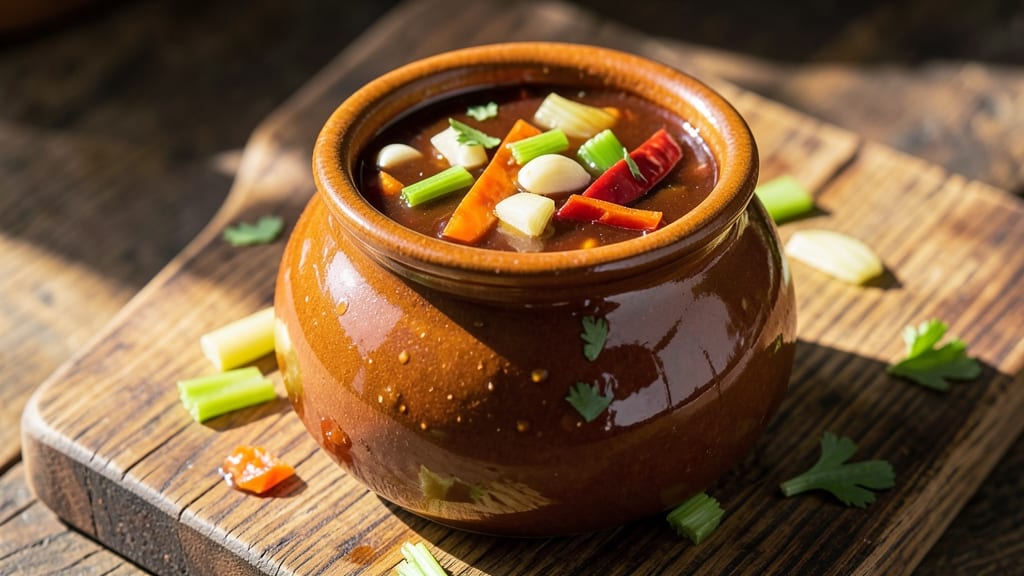
Albert's hot sauce delivers the perfect balance of smoky depth and fiery heat that transforms every dish from ordinary to extraordinary. This recipe captures the essence of bold vinegar zing paired with celery crown crunch, creating a sauce that's as complex as it is addictive. The secret lies in fermenting the peppers and vegetables first, which builds layers of flavor that no bottled sauce can match.
What sets this hot sauce apart is the combination of fresh celery, garlic, and vinegar that creates a bright, tangy base.
The sauce develops its signature heat from a blend of cayenne and habanero peppers, but you can adjust the spice level to suit your taste—whether you prefer a gentle warmth or full-on fire.
The fermentation process, which takes about a week, allows all the flavors to meld together naturally, resulting in a sauce that's rich, aromatic, and packed with character.
The final product is a versatile condiment that elevates everything from tacos and grilled meats to deviled eggs and even cocktails. The texture is smooth yet slightly textured, with a subtle crunch from the celery that adds an unexpected dimension.
Each batch yields enough sauce to stock your pantry for months, making it a project worth repeating.
With just a few simple ingredients and a little patience, you'll have a hot sauce that rivals anything you've ever bought—one that carries the bold, smoky personality of Albert's original. Ready to make your own? Let's get started.
Ingredients for alberts hot sauce
Bold flavors start with these nine ingredients—simple but powerful.
| Ingredient | Amount | Notes |
|---|---|---|
| Fresh Celery Stalks 🧅 | 1 cup | Chopped, including leaves for extra flavor |
| Yellow Onions 🧅 | 1 whole | Medium size, chopped fine |
| Garlic Cloves 🧄 | 6 cloves | Fresh, peeled and minced |
| White Vinegar 💧 | 1 cup | Distilled, not apple cider |
| Cayenne Peppers 🌶️ | 2 whole | Dried, seeds removed |
| Habanero Peppers 🌶️ | 2 whole | Fresh, seeds removed for milder heat |
| Salt 🧂 | 1 tbsp | Non-iodized preferred |
| Granulated Sugar 🍚 | 2 tbsp | White or brown sugar |
| Water 💧 | 1 cup | Filtered or distilled |
The celery crown is the secret weapon here. Look for fresh, crisp stalks—the greener the better, and don't toss the leaves. I grab mine from the produce section at Trader Joe's because they're always super fresh. For the peppers, fresh habaneros give the best heat, but dried cayenne works too if you want to control the spice level. The garlic should be firm and free of sprouts—no soft spots. If you're using fresh habaneros, wear gloves (the oils can burn). The vinegar? White vinegar is non-negotiable—apple cider vinegar changes the flavor profile.
No fresh habaneros? Red pepper flakes or chipotle powder can stand in, but you'll lose that bright, fruity heat. Short on celery? Extra green onions or bell peppers add crunch, but the flavor won't be identical. The sugar helps balance the acidity—brown sugar adds a caramel note if you're feeling fancy. For fermentation, non-iodized salt is key—iodine can inhibit the process. If you're sensitive to heat, reduce the habaneros to 1 or even skip them, adding extra cayenne for depth instead. The water should be filtered if your tap water has a strong chlorine taste.
Ferment the mix in a clean glass jar with a lid (not airtight). Store in a dark place at room temperature for 7 days, stirring daily. After fermentation, strain through a fine-mesh sieve and bottle. Keeps in the fridge for up to 6 months—the flavor actually improves over time. I make two batches at once and give one away. The sauce thickens as it ages, so add a splash of water if needed. For extra crunch, blend in a few celery seeds at the end.
Why You'll Love This Recipe
- No Pantry Hoarding Needed: I’ll be real—this sauce only asks for five things, and three of them are probably already in your fridge. That celery you swore you’d use? Finally. No weird spices, no obscure imports, just onion, garlic, and vinegar doing their magic.
- Heat with Depth: The cayenne brings the fire, sure, but it’s the celery and onion that make it sing—crisp, bright, and lingering. Honestly, it’s the kind of heat that doesn’t just burn; it builds, like a slow reveal. (Yes, even on a Tuesday night.)
- Tailgate or Taco Night: Slather it on wings, drizzle it over deviled eggs, or toss it into a pot of beans. I’ve seen it work at backyard cookouts, lazy Sunday brunches, and when I’m too tired to cook but still crave flavor. It’s the MVP of easy upgrades.
- Lasts Long, Costs Less: A single batch stretches for weeks in my fridge, and the vinegar keeps it fresh without weird aftertastes. Between us, I’ve made this for under $3 a jar—way cheaper than store-bought, and way more me. Plus, the leftovers? Always disappear first.
Step-by-step instructions for Albert's hot sauce recipe
Here's how to craft this vibrant, crunchy hot sauce with layers of celery crown flavor and fiery vinegar kick.
Prep and Sterilize Your Equipment
Wash all your ingredients thoroughly—especially the celery stalks and peppers—to remove any dirt or pesticide residue. Chop the celery stalks into ½-inch pieces, including the leaves for extra flavor and texture. Finely dice the yellow onion and mince the garlic cloves until you have ¼-inch pieces of both.
Sterilize a clean glass jar with a lid by rinsing it with boiling water. This prevents contamination during fermentation. I like to use a quart-sized jar for this recipe, as it gives enough room for the ingredients to expand slightly during the process. Keep everything ready so you can move quickly to the next step.
Combine Ingredients in the Jar
In your sterilized jar, add the chopped celery stalks, finely diced yellow onion, and minced garlic cloves. Place the dried cayenne peppers and the seeded habanero peppers directly into the jar. The habanero peppers should be cut into ¼-inch pieces to ensure even distribution of heat.
Next, add the 1 cup of white vinegar, 1 tablespoon of salt, and 2 tablespoons of granulated sugar. The vinegar will help preserve the sauce and balance the heat, while the sugar adds a subtle sweetness that rounds out the flavors. Stir everything together with a clean wooden spoon until all ingredients are well combined and the vinegar coats the peppers and celery.
Add Water and Seal the Jar
Pour the 1 cup of water into the jar and stir again to ensure all ingredients are fully submerged. The water helps create the right consistency for fermentation and prevents the sauce from becoming too thick. Seal the jar tightly with the lid.
Here's the thing—you want to make sure there's no air gap between the liquid and the lid. If there's any space, the ingredients might mold instead of fermenting properly. Give the jar one final stir and then let it sit at room temperature for 24 hours. This initial rest period allows the flavors to start melding together before you refrigerate it.
Ferment and Rest for Flavor Development
After the 24-hour rest, transfer the jar to the refrigerator and let it ferment for 3-5 days. The cool temperature slows down fermentation, allowing the flavors to develop gradually. You'll notice the celery and peppers start to soften, and the liquid will take on a deeper, richer color.
Taste the sauce after 3 days to check the heat level and flavor balance. If it's not spicy enough, you can add a pinch more salt or a tiny bit of extra vinegar to adjust the taste. If it's too strong, dilute it with a splash of water. The goal is a harmonious blend of crunchy celery, sharp vinegar, and fiery peppers.
Strain and Bottle for Serving
Once the sauce reaches your desired flavor profile, strain it through a fine-mesh sieve or cheesecloth to remove the solids. Press down gently on the celery and peppers to extract as much liquid as possible—this ensures you get every last drop of flavor. Pour the strained sauce into clean, sterilized bottles or jars.
Your hot sauce is now ready to use! It will keep in the refrigerator for up to 3 months, so you can enjoy it on everything from tacos to deviled eggs. The celery crown crunch adds a unique texture, while the vinegar and peppers deliver that bold, tangy heat Albert's is known for. Store it in a cool, dark place to preserve its vibrant color and fiery kick.
Pro Tips For Making Alberts Hot Sauce
- BLANCH THE CELERY FIRST: Dump those celery stalks into boiling water for 30 seconds before chopping—it softens the fibrous core and makes them puree like butter. I used to skip this and ended up with gritty sauce that tasted like I’d blended celery seeds by accident.
- SAUTÉ ONIONS LOW AND LONG: Don’t rush the onions—cook them at medium-low heat for 10-12 minutes until they’re golden and caramelized, not browned. I learned this the hard way when my sauce tasted bitter because I burned them in 5 minutes like I was making onion rings.
- STRAIN THE CAYENNE SEEDS: Remove the seeds and membranes from cayenne peppers before chopping—this controls the heat without sacrificing flavor. Sounds obvious, but I’ve seen people blindly toss whole peppers into the mix and end up with a sauce that could strip paint.
- USE A MIXED-ACID BRINE: Soak the chopped veggies in a 50/50 vinegar-water mix with a pinch of salt for 10 minutes before cooking—it jumpstarts the flavor extraction. I was skeptical until I tried it, and now my sauce develops depth faster than the old-school boil-from-scratch method.
Common mistakes when making great alberts hot sauce
Skipping the Ferment
Rushing the fermentation process is a big mistake—it's what builds the deep, complex flavors. If you skip the 3-5 day refrigeration step and strain immediately, your sauce will taste flat and one-dimensional.
I've tried this shortcut, and while it's faster, you miss the magic where the celery and peppers develop their full potential. Patience here makes all the difference. 🧄
Using the Wrong Vinegar
Apple cider vinegar or balsamic will completely change the flavor profile of your hot sauce. The recipe calls for white vinegar because its sharp, clean acidity cuts through the heat and complements the celery perfectly.
If you substitute, you'll end up with a sweeter, fruitier sauce that lacks the bold tang Albert's is known for. Stick to the white vinegar for authentic results.
Not Removing Pepper Seeds
Leaving seeds in your habanero peppers will make your sauce unbearably hot. Always remove the seeds and membranes before adding them to the jar.
If you accidentally leave seeds in, you can reduce the heat later by adding a splash of vinegar or water, but it's better to prevent the problem in the first place. I like to wear gloves when handling fresh habaneros—they're fiery little things! 🌶️
Overfilling the Jar
Filling your jar to the brim leaves no room for the ingredients to expand during fermentation. This can cause spillage or even mold growth. Leave about 1 inch of headspace at the top of the jar.
If you're worried about losing too much liquid, you can press down on the ingredients with a clean spoon to create space without overfilling.
Ignoring the 24-Hour Rest
Skipping the initial 24-hour rest at room temperature means your ingredients won't have time to meld together before refrigeration. This step is crucial for building flavor depth. If you rush straight to the fridge, your sauce will taste disjointed and underdeveloped.
Think of it like letting a good stew simmer—it needs time to come together.
Using Contaminated Equipment
Dirty jars or utensils can introduce bacteria that spoil your hot sauce. Always sterilize your equipment with boiling water before use. I like to rinse my jars and lids with hot, soapy water, then give them a quick dip in boiling water to kill any lingering germs.
This extra step ensures your fermentation goes smoothly and your sauce stays safe to eat. 💡
Nutrition facts
Frequently asked questions
Can I adjust the heat level in Albert's hot sauce?
For milder heat, reduce the habanero peppers to 1 or remove them entirely, adding extra cayenne for depth instead. If you want more fire, add 1 extra habanero or a pinch of red pepper flakes. Always taste before bottling—you can balance heat with a splash of vinegar or water later if needed.
How long does this hot sauce last in the fridge?
The sauce stays fresh for up to 6 months when stored properly in airtight bottles. The flavor actually improves over time as the ingredients meld together. For best quality, keep it in a cool, dark place away from sunlight, which can degrade the vinegar's acidity.
What can I use if I don't have fresh habanero peppers?
Try red pepper flakes or chipotle powder for heat, but you'll lose the bright fruity notes. For a similar crunch, add extra celery leaves or green onions. The key is maintaining the celery-vinegar base—just adjust the spice level to your preference.
Can I make this hot sauce without fermenting?
Fermentation is what creates the signature depth, but you can make a quick version by simmering all ingredients for 10-15 minutes instead. The flavor will be less complex, but still delicious. For best results, follow the full fermentation process—it's worth the wait!
How should I use Albert's hot sauce?
This versatile sauce works on everything from tacos and grilled meats to deviled eggs and cocktails! Try drizzling it over pizza, mixing into mayo for sandwiches, or using it as a marinade. The celery crunch adds a unique texture that makes it perfect for dipping or finishing dishes.