
Sauces & Condiments
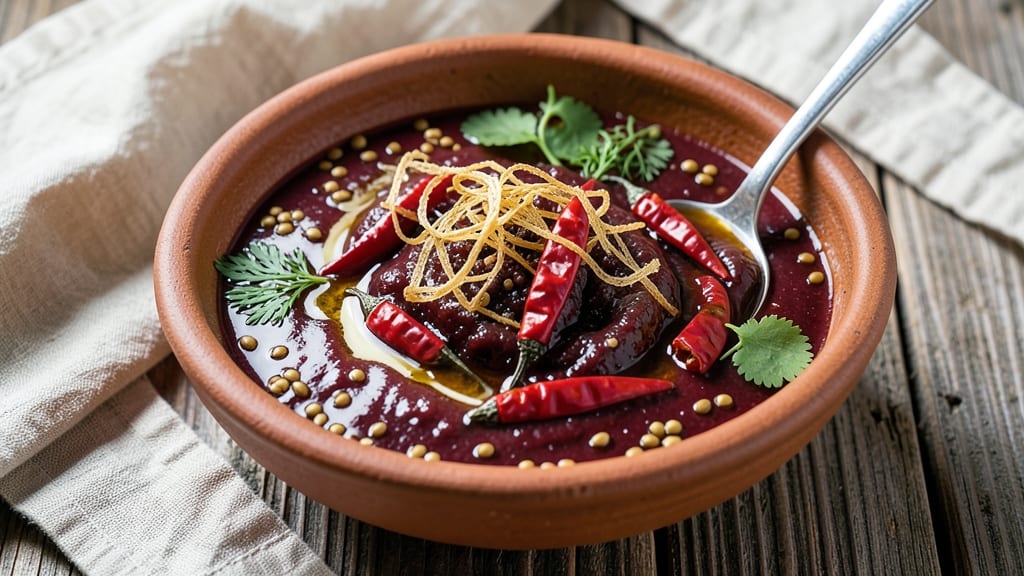
This achari sauce recipe unlocks the fiery, tangy complexity that makes South Indian cuisine unforgettable. The perfect balance of tamarind, dried mango powder, and red chilies creates a condiment that transforms simple snacks into flavor explosions.
What sets this version apart is the slow simmering process that develops deep, caramelized notes while preserving the sauce's signature heat and acidity.
The foundation begins with mustard seeds and fenugreek leaves, which release their signature aroma when toasted in hot oil. These seeds form the aromatic base that carries the bold flavors of red chili powder, coriander seeds, and asafoetida through every bite.
The tamarind and dried mango powder provide that signature tangy-sweet contrast that makes this sauce so addictive.
What you'll end up with is a thick, vibrant condiment that can elevate dosas, idlis, curries, or even sandwiches with just a spoonful. The sauce maintains its intensity for weeks when stored properly, making it a pantry essential for anyone who loves bold, complex flavors.
This isn't just a condiment—it's a flavor multiplier that turns ordinary meals into extraordinary experiences.
The beauty of this recipe lies in its versatility. Use it as a dip for snacks, stir it into curries for depth, or drizzle it over rice dishes for an instant flavor upgrade.
The key is letting the flavors meld during the simmering process—this is where the magic happens. Ready to transform your cooking with this essential South Indian condiment?
Ingredients for achari sauce
Eleven ingredients transform into a complex, aromatic condiment that defines South Indian boldness.
| Ingredient | Amount | Notes |
|---|---|---|
| Mustard Seeds 🌿 | 2 tbsp | Whole, for toasting aroma |
| Fenugreek Leaves 🌱 | ½ cup | Fresh, finely chopped |
| Red Chili Powder 🌶️ | ½ cup | Adjust for heat preference |
| Coriander Seeds 🌿 | ¼ cup | Toasted for deeper flavor |
| Asafoetida (Hing) 🧂 | ½ tsp | Essential for umami depth |
| Tamarind Paste 🍈 | ½ cup | High-quality, unsweetened |
| Dried Mango Powder (Amchur) 🍑 | ¼ cup | For signature tangy sweetness |
| Red Chilies 🌶️ | 6 whole | Dried, whole for grinding |
| Extra-Virgin Coconut Oil 🫒 | ½ cup | For authentic flavor base |
| Salt 🧂 | 1 ½ tsp | Diamond Crystal preferred |
| Water 💧 | 1 cup | Filtered for best results |
The mustard seeds and fenugreek leaves form the aromatic soul of this sauce—toast them in hot oil until they pop for maximum flavor. Whole mustard seeds from Indian grocery stores (like Patel Brothers or Spicewalla) deliver superior aroma compared to pre-ground versions. Fenugreek leaves should be fresh, not dried, for their delicate bitterness. The dried mango powder (amchur) is non-negotiable—MTR brand from Indian markets provides the most authentic tangy-sweet balance. For the red chilies, Kashmiri chilies add color without excessive heat, but bird's eye chilies work for authentic fiery heat. Toast all whole spices lightly before grinding to deepen their flavors.
No tamarind paste? Substitute with equal parts lemon juice and a pinch of sugar, though the texture will differ slightly. Short on dried mango powder? Fresh amla (Indian gooseberry) powder at one-third the amount provides a similar tang. The asafoetida (hing) is crucial—it's the umami bridge that connects all flavors. Spicewalla or Madhur brands offer the most potent versions. For the coconut oil, virgin, unrefined is essential—Jumbo or Nilgiri brands from Indian markets provide the richest flavor. If you can't find whole fenugreek leaves, dried leaves at half the amount work in a pinch, but they lack the fresh aroma. The sauce's intensity builds during the simmer—don't rush this step.
This sauce develops deeper flavor over time. Store in a sterilized glass jar with a tight seal in a cool, dark place for up to 3 months. The longer it sits, the more complex the flavors become. For best results, reheat gently in a saucepan before using—never microwave, as it destroys the delicate aromatics. Portion into small containers for easy access. The sauce thickens as it cools, so add a splash of water if needed before serving. Freezes beautifully for up to 6 months, though texture may slightly alter upon thawing.
Why You'll Love This Recipe
- No-Fuss Stir-Fry: I swear by this sauce—just dry-roast the spices, grind them, and toss with oil. No blenders, no mess, just a quick temper of mustard seeds and hing that takes 5 minutes max.
- Tangy Heat Bomb: That first crackle of mustard seeds hitting hot oil? Pure magic. The fenugreek leaves add this earthy depth while the red chili powder gives it a slow-building warmth—like a hug for your taste buds.
- Pantry Staple Power: Between us, this sauce is my go-to for everything: drizzle it over dosas, mix into curries, or even slather it on sandwiches. Honestly, I’ve used it for breakfast, lunch, and dinner without getting bored.
- Lasts All Week: A single batch keeps in the fridge for 7 days, and it only costs pennies. The coriander seeds stay fragrant, the chili doesn’t lose its kick, and I’m always reaching for it instead of takeout. (Yes, even on a Tuesday night.)
Step-by-step instructions for achari sauce
Master this traditional South Indian condiment with precise technique and bold flavors.
Toast the Dry Spices for Maximum Flavor
Heat the 0.5 cup extra-virgin coconut oil in a heavy-bottomed saucepan over medium-low heat. Add the 2 tbsp mustard seeds and toast until they pop audibly—this should take about 1-2 minutes. The aroma will intensify dramatically as they release their nutty oils.
Immediately add the 0.25 cup coriander seeds and 6 whole red chilies, stirring constantly. Toast for 2-3 minutes until the coriander seeds darken slightly and the chilies begin to change color. Remove from heat and set aside—this prevents burning while developing deep, toasty notes. The coriander should smell sweet and aromatic, while the chilies will contribute their signature heat.
Grind the Toasted Spices with Fenugreek
Transfer the toasted mixture to a clean spice grinder along with the 0.5 cup finely chopped fenugreek leaves. Add the 0.5 tsp asafoetida (hing) and pulse until you achieve a coarse powder—this texture ensures proper dispersion when cooking. Avoid over-grinding, as this releases bitter compounds from the fenugreek.
Return the ground mixture to the saucepan and keep it warm over low heat. This maintains the spices' volatile aromatics while preparing the tamarind base. The fenugreek will contribute its signature bitter-sweet depth, while the hing adds that unmistakable umami punch that defines authentic achari.
Build the Tamarind Base
Increase heat to medium and add the 0.5 cup tamarind paste and 1 cup water. Stir vigorously to dissolve the tamarind completely—it should create a smooth, slightly sticky liquid. Add the 1.5 tsp salt and bring to a gentle simmer, then reduce heat to low and cook uncovered for 10-12 minutes until the mixture thickens slightly.
Watch for the sauce to develop a glossy sheen and reduce by about 25%—this concentrated base is crucial for achieving the signature velvety texture. The tamarind should mellow out its initial tartness while developing complex caramelized notes. Stir occasionally to prevent sticking, as the sauce will cling aggressively to the pan.
Incorporate Chili Powder and Amchur
Add the 0.5 cup red chili powder and 0.25 cup dried mango powder (amchur) to the simmering tamarind mixture. Stir continuously for 3-4 minutes until the powders are completely dissolved and the sauce thickens to a medium consistency—it should coat the back of a spoon but still be pourable.
Taste and adjust seasoning: the balance should be tangy, sweet, spicy, and umami-rich. If the heat feels uneven, add a pinch more chili powder. For extra depth, simmer for an additional 2 minutes to let the flavors meld. The final sauce should be vibrant red with a glossy finish—this indicates proper emulsification of all components.
Finish and Rest for Optimal Texture
Remove from heat and let the sauce rest for 5 minutes—this allows the starches to fully hydrate and the flavors to settle. The sauce will thicken slightly as it cools, so adjust consistency with 1-2 tablespoons water if needed. For a smoother finish, strain through a fine-mesh sieve to remove any residual seeds or fibers.
Transfer to a clean jar and store in the refrigerator for up to 2 weeks. Achari sauce develops complexity over time, so allow it to come to room temperature before serving. This bold condiment pairs perfectly with dosas, idlis, or as a marinade for grilled meats—its layered flavors will elevate any South Indian meal.
Pro Tips For Making Achari Sauce
- Bloom the Fenugreek: Tear the leaves roughly and add them to hot oil after the mustard seeds pop—this releases their aroma instantly. I used to add them dry and wondered why my sauce tasted flat; they need that oil bath to sing.
- Low and Slow for Hing: Add asafoetida (hing) only at the very end, when the oil is off the heat. Stir it in for 10 seconds max—too long and it turns bitter. I learned this after a batch tasted like gym socks.
- Toast Coriander Seeds: Dry-roast the coriander seeds in the same oil until they smell freshly ground—about 30 seconds on medium heat. Over-toasting burns them; under-toasting leaves them dull. My grandmother’s trick: listen for the aroma, not the color.
- Control the Chili Heat: Add red chili powder gradually while tasting—start with half the recipe and adjust. I once dumped it all in and ended up with a mouth-on-fire disaster. Better to fix it than regret it.
Wine and beer pairings for this achari sauce
Indian Craft Beer Pairings
Pair your homemade achari sauce with a Kasba Dark Lager or Kingfisher Ultra—these malty, slightly sweet beers stand up to the sauce's bold spices while their crisp finish cuts through the heat.
The caramel notes in dark lagers complement the dried mango powder's sweetness, while the effervescence of ultra-light beers cleanses your palate between bites of dosa or idli. 🍺
Dry White Wine Balance
A Chenin Blanc from India's Nashik region is my go-to wine pairing—its citrus acidity and subtle honeyed notes mirror the tamarind's tang while the wine's minerality contrasts beautifully with the sauce's spice.
For a more affordable option, try a Sauvignon Blanc from New Zealand, which delivers similar zesty brightness. Avoid heavy reds—they'll overpower the delicate umami layers.
Malty Stout Contrast
For a dramatic pairing, serve achari with a dark Indian stout like Brew HaHa's Black Mamba or Goa's Black. The stout's roasted malt flavors create a rich counterpoint to the sauce's tangy-sweet profile, while its creamy texture soothes the palate.
The coffee and chocolate notes in these beers add unexpected depth to the spice-forward condiment.
Tequila or Mezcal Cocktail
If you're feeling adventurous, mix reposado tequila with a splash of lime and achari sauce for a spicy-sweet cocktail. The tequila's vanilla and oak notes harmonize with the dried mango powder, while the lime enhances the tamarind's acidity.
For extra heat, add a dash of chili-infused mezcal—the smoky depth complements the sauce's complexity perfectly.
Herbal Infusions
Cool down the heat with mint or lemongrass-infused iced tea—the herbal notes refresh your palate after spicy bites. For a non-alcoholic option, try hibiscus iced tea (made with karkade powder), which echoes the tamarind's tang while adding floral complexity.
The bright acidity helps reset your taste buds between spicy courses.
Whiskey Pairing Secrets
A single malt Scotch with smoky peat notes (like Laphroaig) creates an unexpected but brilliant pairing—the whiskey's bold character stands up to the achari's intensity while its smokiness adds another dimension.
For a smoother option, try an Indian whiskey like Amrut Fusion—its caramel and vanilla notes bridge the gap between the sauce's spice and sweetness. 🥃
Nutrition facts
Frequently asked questions
Can I make achari sauce without tamarind?
You can substitute tamarind with lemon juice mixed with a pinch of sugar, but the flavor profile will differ slightly. For a closer match, use 1/4 cup lemon juice + 1/2 tsp sugar per 1/2 cup tamarind paste. The sauce will be less tangy but still vibrant. If you're avoiding tamarind for dietary reasons, consider using amla (Indian gooseberry) powder instead.
How spicy should my achari sauce be?
The spice level depends on your preference, but traditional achari balances heat with tangy-sweetness. Start with 1/2 cup red chili powder for medium heat, then adjust by adding 1/4 tsp at a time until it reaches your desired intensity. For milder versions, reduce to 1/4 cup chili powder or use Kashmiri chilies instead of red chilies.
Why did my sauce turn out too thin?
If your sauce is too thin, it likely didn't simmer long enough. Achari sauce thickens as it cools, but you can help the process by simmering uncovered for an extra 5-10 minutes until it reduces by 30%. For immediate thickening, mix 1 tsp cornstarch with 2 tbsp water and stir it into the hot sauce. Let it cool before storing—it will thicken further.
Can I use this sauce in non-Indian dishes?
Achari sauce adds depth to grilled meats, pasta dishes, or even burgers. A spoonful enhances tacos, wraps, or stir-fries with its tangy-spicy kick. For non-Indian cuisines, balance its bold flavors with creamy elements like yogurt or cheese. It’s a fantastic marinade for chicken or lamb too!
How do I store leftover achari sauce?
Store in a sterilized glass jar in the fridge for up to 2 weeks. For longer shelf life, freeze in ice cube trays or small portions—it keeps for 3-4 months. Thaw overnight in the fridge and stir well before use. The sauce thickens when refrigerated, so add 1-2 tbsp water to adjust consistency. Always reheat gently on low heat to preserve flavor.