
Sauces & Condiments
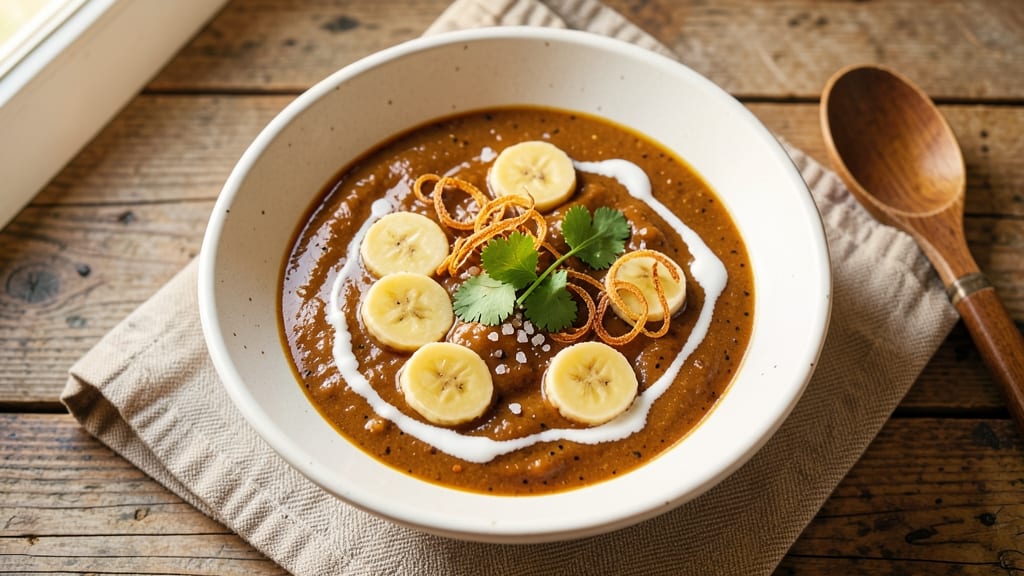
This banana curry sauce recipe transforms simple ingredients into a rich, aromatic condiment that bridges sweet and savory flavors with surprising depth. The secret lies in caramelizing ripe bananas with warm spices—cinnamon, turmeric, and ginger—before blending them into velvety coconut milk.
What starts as a fragrant paste becomes a versatile sauce that elevates stir-fries, glazes grilled proteins, or even enhances desserts with an unexpected twist.
The process is straightforward: Simmer bananas, coconut milk, and spices until thickened, then blend until silky smooth. A touch of tamarind or lime juice balances the sweetness, ensuring complexity in every drizzle.
This sauce keeps beautifully in the refrigerator for up to 5 days, making it a pantry staple for quick meals or last-minute flavor boosts.
What makes this sauce special is its duality—it works as a bold marinade for chicken or tofu, a glossy drizzle over steamed rice, or even a swirl in yogurt for a tropical twist.
The caramelized banana adds natural sweetness, while the curry spices deliver warmth, creating a profile that’s both familiar and exciting.
For best results, use overripe bananas—their deep sweetness and soft texture melt perfectly into the sauce. Adjust spice levels to taste, and store leftovers in an airtight container.
Ready in under 30 minutes, this sauce proves that bold flavors don’t require complicated techniques—just patience and the right balance.
Ingredients for banana curry sauce
Nine ingredients blend sweet and savory for a versatile sauce that elevates any dish.
| Ingredient | Amount | Notes |
|---|---|---|
| Ripe Bananas 🍌 | 2 medium | Overripe for deep sweetness |
| Coconut Milk 🥥 | 1 ½ cups | Full-fat for creaminess |
| Ground Turmeric 🌿 | 1 tsp | Freshly ground preferred |
| Ground Cinnamon 🌶️ | 1 ½ tsp | Ceylon preferred for purity |
| Fresh Ginger 🧄 | 1 tbsp | Grated, aromatic variety |
| Tamarind Paste 🍋 | 1 tbsp | Or lime juice substitute |
| Garlic Cloves 🧄 | 3 cloves | Minced for aromatic depth |
| Extra-Virgin Olive Oil 🫒 | 1 tbsp | For smooth blending |
| Sea Salt 🧂 | ½ tsp | Diamond Crystal preferred |
| Black Peppercorns 🌶️ | ¼ tsp | Freshly cracked for heat |
The bananas are the heart of this sauce—overripe for maximum sweetness and easy blending. Trader Joe's or local markets often carry perfectly spotted bananas, but any fruit with brown speckles works. Fresh ginger and turmeric make all the difference; Penzeys Spices sells high-quality ground versions if you prefer convenience over fresh. For the coconut milk, full-fat canned versions create the richest texture, while lighter options work in a pinch for a less decadent finish. The tamarind paste adds depth, but if unavailable, lime juice at half the amount balances sweetness effectively.
No tamarind? Lime juice or lemon juice works beautifully—just reduce to 1 teaspoon for brightness. Fresh ginger can be swapped for ground ginger at one-third the amount, though the flavor will be slightly muted. For a spicier kick, add a pinch of cayenne or red pepper flakes. The olive oil isn't just for blending—it adds a subtle richness that rounds out the sauce. If you're using this as a marinade, reduce the salt slightly to balance with salty proteins like tofu or chicken. For a smoother texture, strain the sauce through a fine-mesh sieve after blending.
Store in an airtight container in the fridge for up to 5 days, though the flavors deepen overnight. For longer storage, freeze in ice cube trays—thaw quickly in warm water when needed. This sauce reheats beautifully, making it perfect for batch cooking. The caramelized banana flavor intensifies when reheated, so it's worth making extra. If the sauce thickens too much, simply stir in a splash of water or coconut milk to reach your desired consistency.
Why You'll Love This Recipe
- No Fuss, No Stress: I swear by this sauce because it’s basically five ingredients, one pot. Mash those ripe bananas right in the saucepan with coconut milk, then toss in the spices—turmeric for that golden glow, cinnamon for warmth, and ginger to wake everything up. No blender, no straining, no mess. Honestly, I make it while scrolling through my phone.
- Sweet-Spicy Magic: That first spoonful of banana curry sauce is dangerously good—creamy from the coconut, caramelized from the bananas, and kissed by the earthy cinnamon and zingy ginger. The turmeric gives it this gorgeous color, but it’s the balance of sweet and spicy that makes it unforgettable. (Yes, even on a Tuesday night.)
- Doubles as Dinner: Slather it on grilled chicken or fish for a main, drizzle it over rice for a one-bowl meal, or toss it with tofu for a vegetarian win. Leftovers? They’re even better the next day—thicker, richer, and perfect for lazy mornings. Between us, I’ve also used it as a glaze for roasted veggies. Versatile like that.
- Budget-Friendly Pantry Hero: Coconut milk and bananas are cheap staples, and spices last forever. I’ve made this sauce for under $3 a batch, and it stretches to feed four people easily. Plus, it keeps in the fridge for a week, so no wasted ingredients here. My wallet—and my taste buds—thank me every time.
Step-by-step instructions for banana curry sauce
This velvety sauce balances sweet and spice with precise technique—here's how to craft it perfectly.
Blend the Base Ingredients for Smooth Texture
Peel the 2 medium ripe bananas and cut them into ½-inch chunks—overripe bananas with brown speckles yield the deepest sweetness. In a high-speed blender, combine the banana chunks, 1.5 cups coconut milk, 1 tbsp fresh ginger (grated), 3 cloves garlic (minced), 1 tbsp tamarind paste, 1 tsp ground turmeric, and 1.5 tsp ground cinnamon. The tamarind adds a subtle tang that cuts through the sweetness while balancing the coconut's richness.
Blend on high speed for 1 minute until completely smooth, scraping down the sides as needed. You're aiming for a uniform consistency without any graininess—this ensures your sauce will coat proteins and vegetables evenly. The mixture should be thick but pourable, with a vibrant golden-orange hue from the turmeric and cinnamon.
Infuse with Olive Oil and Seasonings
Transfer the blended mixture to a medium saucepan and place it over medium-low heat. Add 1 tbsp extra-virgin olive oil and stir gently to distribute it evenly. The oil helps stabilize the sauce during cooking and adds a subtle fruity depth. Let the mixture simmer for 5 minutes, stirring occasionally, until it begins to thicken slightly and small bubbles form around the edges.
This low-and-slow approach prevents scorching while allowing the spices to bloom. You'll notice the aroma intensify as the ginger and garlic release their volatile oils—this is your cue that the flavors are melding. If the sauce appears too thick at this stage, add 1-2 tablespoons of water to maintain a smooth, velvety texture.
Simmer and Reduce for Balanced Flavor
Increase the heat to medium and bring the sauce to a gentle boil. Reduce the heat to low and let it simmer uncovered for 10-12 minutes, stirring every 2-3 minutes with a silicone spatula. This reduction process concentrates the flavors while developing a glossy sheen. You're looking for a sauce that coats the back of a spoon but still flows freely—it should thicken just enough to cling to ingredients without being syrupy.
During this time, taste the sauce and adjust the seasoning. Add ½ tsp sea salt and ¼ tsp freshly cracked black peppercorns if needed, remembering that the tamarind and cinnamon already contribute significant depth. The sauce should finish with a harmonious balance of sweet, spicy, and tangy notes—no single flavor should dominate. If it tastes too sweet, a pinch of salt helps rebalance the profile.
Finish and Strain for Silky Perfection
Once the sauce reaches your desired consistency, remove it from heat and let it cool for 5 minutes. This resting period allows the flavors to fully integrate. For an ultra-smooth texture, strain the sauce through a fine-mesh sieve into a clean bowl, pressing gently with a spatula to extract every last drop of flavor. The straining step eliminates any lingering ginger or garlic fibers, resulting in a luxurious, velvety sauce.
Your finished banana curry sauce should have a vibrant golden color, a rich aroma of cinnamon and ginger, and a taste that's sweet with a subtle heat. It's now ready to drizzle over grilled meats, stir into coconut rice, or serve as a dipping sauce for spring rolls. For best results, use it within 3 days or store it in an airtight container in the refrigerator—its flavors only deepen with time.
Pro Tips For Making Banana Curry Sauce
- Peel Bananas First: Slice them raw—peeling after cooking makes a mess. Ripe bananas soften fast; if you wait, they’ll turn to mush in the pan. (I learned this the hard way when my sauce looked like pancake batter.)
- Bloom Spices Slow: Toast turmeric and cinnamon in the dry pan for 30 seconds before adding oil. This wakes up their flavors—no need to burn them, just let them smell amazing. (Yes, even if you’re impatient like me.)
- Grate Ginger Fine: Use a microplane or the smallest holes on a box grater. Lumpy ginger just sits there; you want it to dissolve into the sauce. (Skip the food processor—it releases too much liquid.)
- Simmer, Don’t Boil: Keep the coconut milk at a gentle bubble, not a rolling boil. Otherwise, the sauce will split and look greasy. (Your future self will thank you for resisting the urge to crank the heat.)
Essential equipment for perfect results
High-Speed Blender
Your sauce starts in a high-speed blender like the Ninja BN601 or Vitamix 5200—these handle the thick banana-coconut mixture effortlessly. A standard blender may struggle with the density, leading to grainy results.
I blend mine for 1 full minute to ensure no banana chunks remain, which guarantees a silky texture. If you don’t own one, a immersion blender works in a pinch, but you’ll need to work in batches for consistency. 💫
Medium Saucepan
A 3-quart stainless steel saucepan is ideal for simmering—its even heat distribution prevents scorching while allowing controlled reduction. I use All-Clad’s 3-quart pan because it handles the sauce’s natural stickiness without sticking.
Avoid nonstick pans for this step; they can’t withstand the prolonged low heat needed to develop flavors. For smaller batches, a 2-quart pan works, but leave extra room for stirring.
Fine-Mesh Sieve
Straining your sauce through a fine-mesh sieve (like the OXO Good Grips) removes any lingering ginger or garlic fibers, resulting in a velvety finish. A regular colander won’t cut it—its large holes let fibers through, ruining the texture.
Press the mixture gently with a silicone spatula to extract every last drop of flavor. If you’re short on time, skip straining, but expect a slightly textured sauce.
Silicone Spatula
A heat-resistant silicone spatula is non-negotiable for stirring and scraping. I reach for OXO’s Good Grips—its flexible edge navigates the saucepan’s curves while preventing scorching. Wooden spoons can absorb moisture and warp, while metal spatulas may scratch your pan.
Use it to stir every 2-3 minutes during simmering to ensure even heat distribution and prevent sticking. 🔥
Fine-Mesh Tamis Strainer
For an even smoother sauce, a tamis strainer (like the Norpro) is a game-changer. Its ultra-fine mesh removes particles without losing liquid, ideal for professional-level results. If you don’t own one, layer a cheesecloth over a regular sieve for a DIY alternative.
Press the mixture gently to avoid trapping air bubbles, which can make the sauce foam when reheated.
Air-Tight Storage Container
Store your sauce in a glass airtight container (like Le Parfait) to preserve freshness for up to 5 days in the fridge. Glass prevents absorption of odors and maintains the sauce’s vibrant color. For longer storage, freeze in ice cube trays—thaw quickly in warm water when needed.
Avoid plastic containers, which can impart off-flavors and degrade over time. Label your container with the date to track freshness. ✨
Nutrition facts
Frequently asked questions
Can I use this banana curry sauce on desserts?
This sauce's sweet-spiced profile works beautifully on desserts like banana pudding, yogurt parfaits, or even as a glaze for baked apples. The caramelized banana and cinnamon add natural sweetness that pairs perfectly with vanilla ice cream or coconut whipped cream. Just reduce the heat slightly—skip the tamarind and add a pinch of cardamom for extra dessert-friendly warmth.
What if I don't have tamarind paste?
No problem! Substitute with 1 teaspoon lime juice or ½ teaspoon apple cider vinegar to balance the sweetness. For a deeper tang, try 1 teaspoon lemon juice—just remember these alternatives are more acidic, so start with less and adjust to taste. The sauce will still develop rich flavors, though the tamarind's unique umami complexity will be missing.
How can I make this sauce spicier?
Add ½ teaspoon cayenne pepper or 1 teaspoon red pepper flakes during the simmering stage for immediate heat. For a smoky depth, stir in ½ teaspoon smoked paprika at the end. If you prefer gradual heat, blend in 1 teaspoon fresh chili paste with the initial ingredients. Always taste before finishing—you can reduce spice by adding more coconut milk if needed.
Will this sauce work as a marinade?
Yes! This sauce makes an excellent marinade for chicken, tofu, or shrimp—just reduce the salt slightly (to ¼ teaspoon) since proteins already contain sodium. Marinate for 30-60 minutes at room temperature for best flavor absorption. The banana's natural sugars help tenderize meat while the spices create a delicious crust when grilled or pan-seared.
Can I make this sauce without coconut milk?
You can substitute with 1 cup heavy cream or ½ cup Greek yogurt + ½ cup water for a lighter version. The texture will be slightly different—cream creates a richer sauce while yogurt adds tang. For a dairy-free alternative, use 1 cup cashew cream (soaked cashews blended with water). Note that coconut milk's natural sweetness and fat content are hard to replicate, so expect a slightly less balanced flavor profile.