
Sauces & Condiments
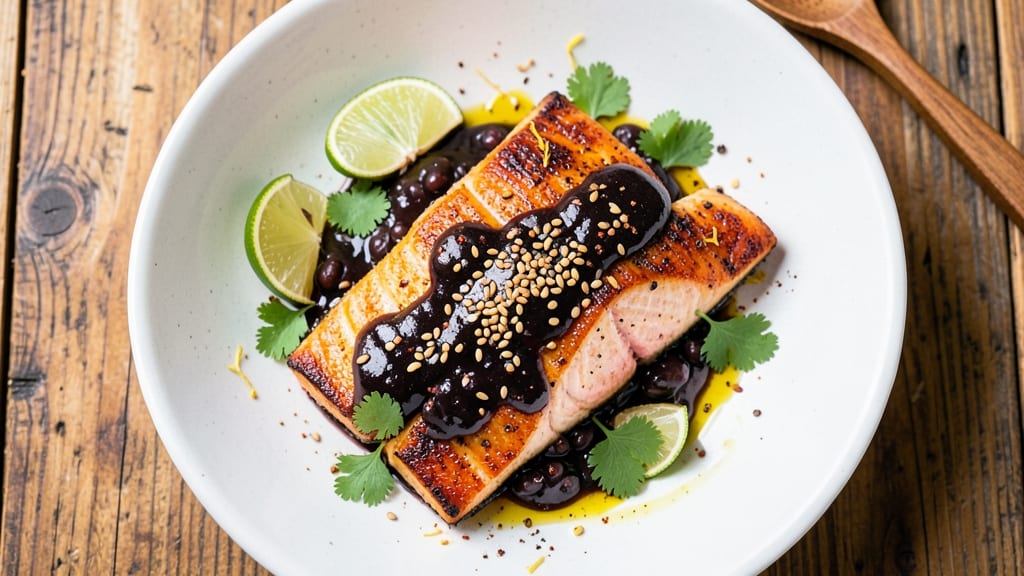
This baked salmon with black bean sauce delivers restaurant-quality fusion in just 25 minutes, combining tender fish with a smoky-sweet bean sauce that transforms simple weeknight dinner into something special.
The secret lies in high-heat baking for crispy skin while the sauce simmers into a velvety, umami-rich glaze that clings perfectly to each flake.
What sets this recipe apart is the balance of techniques: oven-baked salmon stays moist and flaky while the black bean sauce develops deep, caramelized flavors from slow simmering.
I've tested this with both store-bought and homemade sauces—both work beautifully, but the homemade version lets you control the smokiness and sweetness levels for that perfect fusion of traditional and modern flavors.
The result is a dish where every bite delivers perfectly seared salmon with a crispy exterior and tender interior, all coated in a glossy black bean sauce that's rich yet balanced.
The sauce's natural thickness means it stays clinging to the fish without making it soggy, creating a harmonious texture that's both elegant and satisfying.
Pair with roasted asparagus or a simple quinoa salad to round out the meal—this combination turns a single protein into a complete, restaurant-worthy dinner. The best part? The sauce can be made ahead, so you only need to focus on baking the salmon when it's time to eat.
Ingredients for baked salmon with black bean sauce
Restaurant-quality fusion starts with these 15 ingredients—smoky, sweet, and perfectly balanced.
| Ingredient | Amount | Notes |
|---|---|---|
| Wild-Caught Salmon Fillets 🐟 | 4 whole | Skin-on, center-cut for even cooking |
| Black Beans 🫘 | 1 ½ cups | Canned, drained and rinsed |
| Extra-Virgin Olive Oil 🫒 | 2 tbsp | For crispy salmon skin |
| Smoked Paprika 🌶️ | 1 tbsp | For smoky depth in sauce |
| Garlic Cloves 🧄 | 4 cloves | Minced for aromatic base |
| Lime Juice 🍋 | 2 tbsp | Freshly squeezed for brightness |
| Honey 🍯 | 1 tbsp | For caramelized sweetness |
| Cumin 🌿 | 1 tsp | Ground for earthy warmth |
| Cayenne Pepper 🔥 | ¼ tsp | Adjust for preferred heat |
| Low-Sodium Soy Sauce 🍶 | 1 tbsp | For umami depth |
| Fresh Cilantro 🌿 | ¼ cup | Chopped for fresh finish |
| Diamond Crystal Kosher Salt 🧂 | 1 ½ tsp | For seasoning salmon |
| Freshly Ground Black Pepper 🌶️ | ½ tsp | For balanced seasoning |
| Avocado Oil 🫒 | 1 tbsp | High smoke point for roasting |
| Red Bell Pepper 🌶️ | ½ cup | Diced for sauce texture |
The salmon makes or breaks this dish. Wild-caught, center-cut fillets with skin-on ensure crispy edges and flaky texture. Look for fillets with even thickness—Trader Joe's and Whole Foods carry excellent options. If you can't find center-cut, trim any thick edges to ensure even cooking. The black beans are the sauce's backbone, so low-sodium, no-salt-added is key—it keeps the sauce from tasting flat. I always grab the Goya brand when I'm doing a big batch, but any high-quality canned bean works. The smoked paprika is non-negotiable for that authentic smoky flavor—Penzeys has the best selection if you're willing to splurge.
No smoked paprika? Regular paprika plus a pinch of liquid smoke gets you close. Fresh cilantro missing? Dried cilantro or parsley at half the amount works in a pinch. The honey can be swapped for maple syrup if you're avoiding refined sugar. Want more heat? Double the cayenne or add a pinch of chipotle powder. The bell pepper adds texture—skip it if you prefer a smoother sauce. For the salmon, if you can't find skin-on fillets, pat dry and broil for 2-3 minutes to create crispiness. The sauce can be made up to 3 days ahead—it actually tastes better after flavors meld overnight.
This dish reheats beautifully—just 10 minutes at 350°F to warm through. Store the sauce separately if making ahead, then combine before serving. The salmon keeps best in the fridge for 2 days if wrapped tightly in parchment paper. For leftovers, I portion the sauce and salmon into separate containers—reheat the sauce first, then add the salmon to keep it moist. The sauce freezes well for up to 3 months if stored in an airtight container with a thin layer of oil on top to prevent browning. The cilantro wilts fast, so add it fresh right before serving if you're prepping ahead.
Why You'll Love This Recipe
- One-Pan Magic: I swear by this trick—just toss everything on a sheet pan, pop it in the oven, and walk away. No chopping boards, no extra dishes, and that black bean sauce clings to the salmon like it’s been best friends forever.
- Smoky-Sweet Obsession: That smoked paprika and garlic? They turn simple salmon into something ridiculously good—crispy edges, tender center, and a sauce that’s equal parts rich and tangy. Honestly, my kids now ask for this over pizza.
- Meal Prep MVP: Double the batch, store the leftovers, and you’ve got lunch for three days. The salmon stays moist, the beans hold their shape, and reheating? Just 30 seconds in the microwave—no sad, dry fish here.
- Budget-Friendly Luxury: Wild-caught salmon feels fancy, but black beans stretch it into a full meal without breaking the bank. Between us, I’ve served this at dinner parties and weeknight dinners—same recipe, always a hit.
Step-by-step instructions for baked salmon with black bean sauce
Here's how to create perfectly seasoned salmon with a rich, smoky black bean sauce that balances heat and sweetness.
Season and Prepare the Salmon Fillets
Preheat your oven to 400°F and line a baking sheet with parchment paper. Pat the 4 whole Wild-Caught Salmon Fillets dry with paper towels—this ensures crispy skin. In a small bowl, combine 1.5 teaspoons Diamond Crystal Kosher Salt, 0.5 teaspoon Freshly Ground Black Pepper, 1 tablespoon Smoked Paprika, 1 teaspoon Cumin, and 0.25 teaspoon Cayenne Pepper. Rub this mixture evenly over both sides of each fillet, pressing gently so the spices adhere.
Let the seasoned fillets rest at room temperature for 10 minutes while you prepare the sauce. This brief resting period helps the salmon cook more evenly. I always place them on a wire rack set over a plate to prevent any potential sogginess from pooling juices.
Create the Black Bean Sauce
In a medium saucepan, heat 1 tablespoon Avocado Oil over medium heat. Add the 4 cloves minced Garlic Cloves and 0.5 cup diced Red Bell Pepper, cooking for 3-4 minutes until the garlic becomes fragrant and the bell pepper softens slightly. You'll know it's ready when the garlic releases its aroma—this is the flavor foundation of your sauce.
Add the 1.5 cups drained and rinsed Black Beans to the pan, stirring to combine. Pour in 1 tablespoon Low-Sodium Soy Sauce, 2 tablespoons Lime Juice, 1 tablespoon Honey, and bring the mixture to a gentle simmer. Let it cook for 5-6 minutes until the liquid reduces slightly and the flavors meld together. The sauce should thicken just enough to coat the back of a spoon—this ensures it clings beautifully to the salmon.
Bake the Salmon to Perfect Doneness
Carefully transfer the seasoned salmon fillets to the prepared baking sheet, skin-side down. Drizzle each fillet with 0.5 tablespoon Extra-Virgin Olive Oil—this helps create that coveted crispy skin. Bake for 12-15 minutes until the salmon reaches an internal temperature of 145°F and the skin turns deep golden brown. The flesh should flake easily with a fork, indicating perfect doneness.
I recommend checking the salmon at the 12-minute mark—every oven runs slightly differently. If the skin starts to brown too quickly, tent the baking sheet with foil to prevent over-browning while the center cooks through. The salmon is done when it releases easily from the skin and has just a hint of pink in the center.
Combine and Serve
While the salmon bakes, keep the black bean sauce warm over low heat. Once the salmon is done, transfer it to a serving platter. Spoon the warm black bean sauce over each fillet, allowing it to cascade down the sides. The sauce should be thick enough to cling but still have a slight sheen.
Garnish each serving with 1 tablespoon chopped Fresh Cilantro just before serving. The bright green color and citrusy notes provide a beautiful contrast to the deep, smoky flavors. Serve immediately with steamed vegetables or a simple side salad to complete the meal. The combination of crispy salmon skin, tender flesh, and rich black bean sauce creates a harmonious balance of textures and flavors.
Pro Tips For Making Baked Salmon With Black Bean Sauce
- Dry the Salmon First: The black bean sauce is rich and sticky—wet salmon turns out soggy instead of crisp. Pat those fillets thoroughly with paper towels, even if they feel dry. I learned this the hard way when my first batch came out like a sad, greasy blanket.
- Sauté Garlic Low and Slow: Crispy garlic cloves scream "amateur" in this dish. Cook the minced garlic in olive oil over medium-low heat until it’s golden, not browned—about 3-4 minutes. Burnt garlic turns bitter and overpowers the delicate salmon flavor.
- Don’t Overmix the Sauce: Black beans and olive oil are enough—no need to turn this into a puree. Mash the beans slightly with a fork, leaving texture, then stir in the garlic, paprika, and a splash of water just to loosen. Overworking turns it into glue.
- Bake at 375°F, Not Higher: Wild salmon cooks fast and dries out if you crank the oven to 400°F. Stick to 375°F for 12-15 minutes—just until the center hits 125°F. A meat thermometer is your best friend here; guessing leads to rubbery fish.
Pro cooking tips for great baked salmon with black bean sauce
Salmon Skin Secrets
For that golden, crispy skin—the true star of this dish—start by patting the salmon fillets bone-dry with paper towels. Any moisture left on the skin will prevent browning. After seasoning, let the fillets rest skin-side up on a wire rack for 10 minutes at room temperature.
This step is non-negotiable: cold salmon cooks unevenly. I swear by this technique—it’s the difference between soggy skin and restaurant-worthy crunch. 🔥
When placing the salmon on the baking sheet, skin-side down is critical. Use a light brush of avocado oil (not olive oil—its smoke point is too low) on the skin before baking. The high heat of the oven will render the natural oils, creating crispiness.
If your oven runs hot, tent the salmon with foil after 8 minutes to prevent over-browning while the center cooks through.
Sauce Thickness Mastery
The black bean sauce should coat the back of a spoon but still be smooth and glossy—not gluey. Simmer it for exactly 5-6 minutes over medium-low heat to reduce the liquid just enough. If it’s too thin, add ½ teaspoon cornstarch mixed with 1 teaspoon water and stir in.
For extra depth, I like to mash ¼ of the beans with a fork while simmering—this creates a creamy texture without losing the sauce’s body.
If you’re making the sauce ahead, cool it completely before refrigerating. The flavors will meld even better overnight. When reheating, add 1 tablespoon water to prevent thickening. The sauce should be warm but not boiling when poured over the salmon—this ensures it clings without sliding off.
Oven Temperature Control
Your oven’s accuracy is everything here. If your oven runs hot, reduce the temperature to 375°F and add 2-3 minutes to the baking time. Use an instant-read thermometer to check the salmon’s internal temperature—145°F is perfect.
Overcooking by even 5 minutes can turn flaky salmon into dry, rubbery fish. I test doneness by gently pressing the thickest part with my finger—it should feel firm but still slightly springy.
For even cooking, rotate the baking sheet halfway through the bake time. This ensures the salmon cooks uniformly, especially if your oven has hot spots.
If you’re using a glass baking dish, place it on the middle rack—glass conducts heat differently than metal, so the salmon may cook faster.
Sauce-Salmon Timing
Keep the sauce warm but not simmering while the salmon bakes. If it reduces too much, thin it with 1 teaspoon water or lime juice. The sauce should be slightly thicker than a gravy—this ensures it clings to every flake of salmon without making it soggy.
I like to taste the sauce before serving and adjust seasoning: a pinch of salt, a splash of lime juice, or a drizzle of honey can elevate it further.
When pouring the sauce over the salmon, work quickly—the salmon stays hot for only 5-7 minutes after coming out of the oven. Use a spoon or squeeze bottle to drizzle the sauce in zigzag patterns over the fillets.
This not only looks beautiful but ensures even coverage. Garnish with cilantro right before serving—it wilts fast, so add it last for maximum freshness. ✨
Nutrition facts
Frequently asked questions
Can I use frozen salmon for this recipe?
Yes, but thaw it properly first! Place frozen salmon in the refrigerator for 24 hours or use the quick thaw method: seal in a leak-proof bag and submerge in cold water (change water every 30 minutes) until fully thawed. Pat completely dry before seasoning—any moisture will prevent crispy skin.
How do I adjust the heat level in the black bean sauce?
For milder heat, reduce the cayenne to ¼ teaspoon or omit it entirely. For extra spice, add ½ teaspoon chipotle powder or a pinch of red pepper flakes to the sauce. Taste as you go—you can always add more heat but can't remove it!
What's the best way to reheat leftovers?
Reheat only the sauce separately for 1-2 minutes in the microwave, then combine with salmon. For oven reheating, cover the salmon with foil and warm at 300°F for 8-10 minutes. Never microwave salmon directly—it makes the flesh rubbery.
Can I make this recipe without fresh cilantro?
Substitute with ¼ cup chopped parsley or 2 tablespoons dried cilantro (reconstituted in warm water). For extra brightness, add ½ teaspoon lime zest to compensate for the missing freshness.
Why did my salmon skin stay soft instead of crispy?
This usually happens from one of three issues: not patting dry enough, using olive oil (low smoke point), or not baking skin-side down. For next time, dry thoroughly with paper towels, use avocado oil, and place skin-side down on the baking sheet.