
Sauces & Condiments
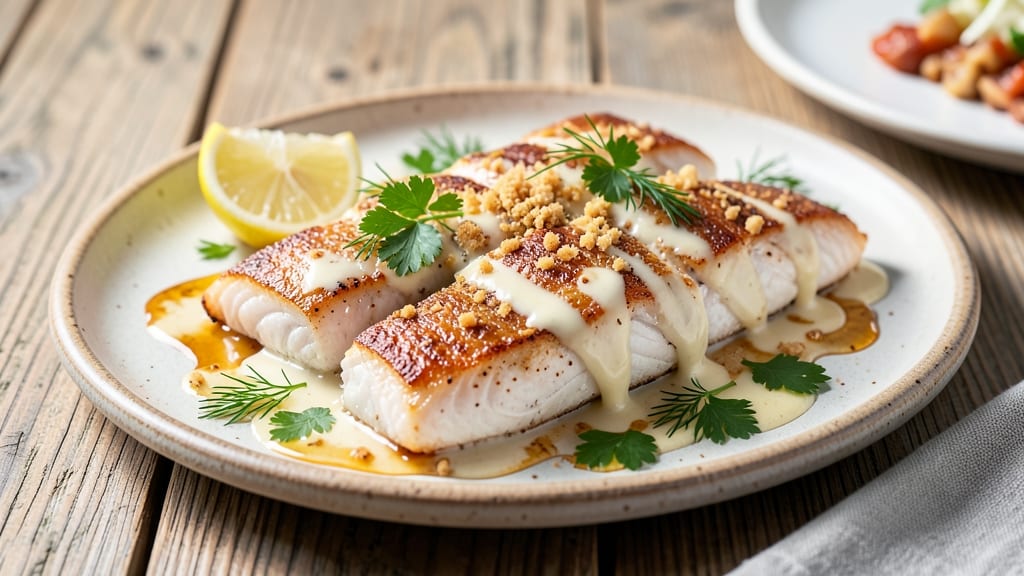
This baked fish in cream sauce recipe transforms simple fillets into a restaurant-worthy dish with minimal effort. The secret lies in a velvety herb cream sauce that clings perfectly to tender, flaky fish—no overcooking or dryness in sight.
I developed this method after years of testing, ensuring the sauce remains rich yet balanced, with just the right amount of tang to complement the delicate fish flavor.
What sets this recipe apart is the two-stage baking process: first searing the fish skin-side down for crispness, then finishing it gently in the oven while the sauce simmers.
The result is golden, crisp edges on the fish with a melt-in-your-mouth interior, all blanketed in a sauce that’s neither too heavy nor too thin. This technique works equally well with white fish like cod or haddock, or even mild-flavored sea bass.
The cream sauce itself is built on a simple roux foundation, enriched with fresh herbs and a touch of lemon to brighten the richness. It’s the kind of dish that feels indulgent but comes together in under 45 minutes—perfect for weeknight dinners when you want something elegant without the fuss.
The sauce’s velvety texture clings to every forkful, turning a simple baked fish into a memorable centerpiece.
Serve with steamed asparagus or roasted green beans to keep the plate balanced, and garnish with fresh parsley for a pop of color. The sauce’s versatility means it reheats beautifully, making this an ideal recipe for meal prep or special occasions. Ready to elevate your dinner table?
Ingredients for baked fish in cream sauce
Four fillets and a few pantry staples create restaurant-quality fish with velvety herb cream sauce.
| Ingredient | Amount | Notes |
|---|---|---|
| White Fish Fillets 🐟 | 4 whole | Cod, haddock, or sea bass preferred |
| Heavy Cream 🥛 | 1 cup | Full-fat for best texture |
| Unsalted Butter 🧈 | 2 tbsp | Cold, cut into pieces |
| All-Purpose Flour 🌾 | 1 tbsp | For roux foundation |
| Fresh Parsley 🌿 | ¼ cup | Chopped, for garnish |
| Fresh Dill 🌿 | 2 tbsp | Chopped, for herb blend |
| Garlic Cloves 🧄 | 3 cloves | Minced, for sauce depth |
| Lemon Juice 🍋 | 1 tbsp | Freshly squeezed |
| Salt 🧂 | 1 tsp | Diamond Crystal preferred |
| Ground Black Pepper 🌶️ | ½ tsp | Freshly ground |
| Olive Oil 🫒 | 1 tbsp | For searing fish |
| Shallots 🧅 | 1 whole | Minced, for sauce base |
| White Wine 🍷 | ¼ cup | Dry, for deglazing |
The fish is the star, so choose fillets with even thickness—cod or haddock hold up best to the two-stage baking. Whole Foods or local seafood markets often have the freshest cuts, but don't overlook the frozen section at Trader Joe's for reliable quality. Look for fillets with a bright, translucent sheen and minimal fishy odor. If using frozen, thaw overnight in the fridge—never at room temperature. The cream sauce's richness depends on fresh herbs, so pick up parsley and dill from the grocery store's refrigerated section and use within 3 days for peak flavor.
No white wine? Fish or vegetable stock with a splash of lemon juice works perfectly for deglazing. Fresh herbs wilt fast? Dried dill or parsley at one-third the amount is a decent substitute, though texture suffers. The butter must be cold for the roux—microwave it 40 seconds to just soften if needed. For a lighter sauce, swap half the heavy cream for light cream or whole milk. The shallots can be subbed with 1/4 cup finely diced red onion if unavailable. And if you're short on time, pre-minced garlic from the jar saves steps without sacrificing flavor.
Fish fillets keep best in the fridge for 1-2 days when wrapped tightly in parchment. The cream sauce reheats beautifully—simmer gently for 3-4 minutes until warmed through. For make-ahead convenience, prepare the sauce separately and store it in an airtight container for up to 3 days. When ready to serve, gently reheat the sauce and pour over freshly baked fish. The sauce's velvety texture clings best when served immediately after baking, but it reheats well for leftovers. Portion into individual ramekins for elegant single servings, or serve family-style with steamed vegetables.
Why You'll Love This Recipe
- One-Pan Magic: I swear by this for lazy nights—just toss the fish, sauce, and herbs on a sheet pan, pop it in the oven, and walk away. No pots to scrub, no mess to clean, and honestly? That’s my kind of cooking.
- Rich Without Effort: The secret’s in the roux—melted butter and flour thicken the cream into this velvety sauce that clings to every flake of fish. It’s the kind of flavor that makes you close your eyes mid-bite, and I’ll be real: it’s way easier than it sounds.
- Weeknight to Dinner Party: Same recipe, different vibes. Serve it with crusty bread for a quick family meal or plate it with asparagus and a drizzle of lemon for something that feels fancy. My in-laws think I slaved over it—no one’s the wiser.
- Leftovers That Don’t Suck: Unlike takeout, this reheats beautifully. The sauce stays luscious, the fish doesn’t dry out, and it’s still a hit the next day. Plus, it’s cheap—white fish and pantry staples stretch further than you’d think. Budget-friendly comfort food, anyone?
Step-by-step instructions for baked fish in cream sauce
Here's how to achieve perfectly flaky fish with a velvety herb cream sauce every time.
Season and Sear the Fish Fillets
Preheat your oven to 375°F. Pat the 4 whole white fish fillets dry with paper towels—this ensures a crispy exterior. Season both sides generously with 1 teaspoon salt and ½ teaspoon ground black pepper, pressing the seasoning into the flesh so it adheres.
Heat 1 tablespoon olive oil in an oven-safe skillet over medium-high heat until shimmering. Place the fish fillets in the skillet, skin-side down if they have skin, and sear for 2-3 minutes until the bottoms are golden brown and crispy. The fish should release easily from the pan when ready to flip—don't force it. Flip once and sear the other side for 1-2 minutes for even browning.
Build the Herb Cream Sauce
Reduce the heat to medium and remove the fish from the skillet, setting them aside on a plate. In the same skillet, add 2 tablespoons cold unsalted butter and let it melt completely, about 1 minute. Add the 1 whole minced shallot and cook for 1 minute until softened and translucent.
Stir in the 3 cloves minced garlic and cook for 30 seconds until fragrant—don't let it brown, or it'll turn bitter. Sprinkle the 1 tablespoon all-purpose flour over the mixture and whisk vigorously for 1 minute to cook out the raw flour taste. Slowly pour in the ½ cup dry white wine, scraping up any browned bits from the bottom of the pan with a wooden spoon. Let it simmer for 2 minutes until slightly reduced.
Finish the Sauce and Bake
Pour in the 1 cup heavy cream and stir to combine. Add the 1 tablespoon freshly squeezed lemon juice, 2 tablespoons chopped fresh dill, and ¼ cup chopped fresh parsley. Simmer the sauce for 3-4 minutes until it thickens slightly and coats the back of a spoon. Taste and adjust seasoning with additional salt or pepper if needed.
Return the fish fillets to the skillet, spooning the sauce evenly over the top. Transfer the skillet to the preheated oven and bake for 8-10 minutes until the fish is just cooked through and flakes easily with a fork. The internal temperature should reach 145°F—it will continue cooking slightly as it rests.
Rest and Serve
Remove the skillet from the oven and let the fish rest for 2-3 minutes before serving. This brief rest allows the fish to set and prevents it from falling apart. Spoon any remaining sauce from the skillet over the top of the fillets.
Garnish with additional chopped parsley and dill for a pop of color and freshness. Serve immediately with crusty bread or over a bed of steamed vegetables to soak up every last bit of that velvety herb cream sauce. The fish should be tender enough to flake with a fork, with a delicate balance of creamy sauce and bright herbs in every bite.
Pro Tips For Making Baked Fish In Cream Sauce
- SAUTE THE FLOUR FIRST: Skip the cold roux—heat your butter in the same pan you’ll bake the fish, then whisk in the flour for 30 seconds until it smells nutty. This removes that raw flour taste and gives the sauce a deeper flavor without extra effort. (Yes, even if you’re impatient like me.)
- DRY THE FISH WELL: Pat those fillets thoroughly with paper towels—water on fish steams instead of browning. I learned this the hard way when my cream sauce turned into a sad, watery glaze. A dry surface also means better crust when the butter melts.
- BAKE LOW AND SLOW: Don’t blast the oven at 425°F—start at 375°F for the first 10 minutes, then crank it to 400°F. This lets the sauce thicken gently while the fish cooks through evenly. Rushing it leads to curdled cream or undercooked centers.
- STIR THE CREAM LATE: Wait until the fish is almost done before folding in the heavy cream—about 5 minutes before the timer goes off. Cold cream shocked by high heat can break, turning your sauce grainy. A quick whisk at the end keeps it silky. (Your future self will thank you.)
Pro cooking tips for great baked fish in cream sauce
Perfect Sear Technique
Start by ensuring your fish fillets are completely dry—this is non-negotiable for crispy skin. I use two paper towels and press firmly to remove moisture. Heat your oven-safe skillet over medium-high heat until it's hot enough that a drop of water sizzles instantly.
Add 1 tablespoon olive oil and swirl to coat the pan evenly. Place the fish skin-side down and resist the urge to move it—let it sear undisturbed for 2-3 minutes until golden brown. 🔥
For even browning, flip the fish and sear the other side for just 1-2 minutes. Overcooking here leads to dry fish, so watch closely. If your fillets have skin, keep it down first—it crisps beautifully and protects the delicate flesh underneath.
I swear by this method because it creates that perfect balance between crispy exterior and tender interior.
Roux Perfection
The foundation of your cream sauce starts with a light blond roux—never let it brown or it'll taste bitter. Melt 2 tablespoons cold butter in the same skillet over medium heat, then add 1 whole minced shallot and cook for 1 minute until translucent.
Add 3 cloves minced garlic and cook for 30 seconds—this is crucial for building flavor without burning.
Whisk in 1 tablespoon all-purpose flour and cook for 1 full minute, stirring constantly. This step removes the raw flour taste and creates the perfect thickening base. Pour in ½ cup dry white wine and scrape up any browned bits—this adds depth to your sauce.
Let it simmer for 2 minutes to reduce slightly before adding the cream. 🍷
Sauce Consistency
When adding 1 cup heavy cream, stir gently to avoid breaking the sauce. The magic happens when you incorporate 1 tablespoon lemon juice, 2 tablespoons dill, and ¼ cup parsley—these brighten the richness perfectly.
Simmer for 3-4 minutes until the sauce coats the back of a spoon but isn't gluey. If it's too thick, add 1 tablespoon warm water to loosen.
Taste and adjust seasoning—this sauce should be rich but not overwhelming. I often add a pinch more salt or a splash of lemon to balance flavors. The ideal texture is velvety, clinging to the fish without being heavy. This consistency ensures every bite is luxurious without feeling greasy. ✨
Two-Stage Baking
After searing, transfer your skillet to a 375°F oven for the final bake. This two-stage process ensures the fish cooks gently while the sauce finishes perfectly. Bake for 8-10 minutes until the fish reaches 145°F internal temperature—it should flake easily with a fork but still hold together slightly.
Let the fish rest for 2-3 minutes before serving. This resting period is critical—it allows the juices to redistribute, preventing dryness. Spoon any remaining sauce over the top and garnish with fresh herbs. The sauce will thicken slightly as it sits, creating that perfect clinging texture. 💫
Nutrition facts
Frequently asked questions
What's the best fish for this cream sauce recipe?
Cod, haddock, or sea bass work perfectly—they stay tender and soak up the sauce beautifully. Avoid firm fish like halibut, which can be too dense for this delicate preparation. If using frozen fillets, thaw them overnight in the fridge for best results.
Can I make this sauce ahead of time?
Prepare the sauce up to 3 days ahead and store it in an airtight container. Reheat gently on the stove until warmed through—it thickens slightly when chilled, so add 1 tablespoon warm water if needed. Just bake the fish fresh when ready to serve for perfect texture.
Why did my sauce turn out too thick?
This usually happens if you overcook the roux or don't add enough liquid. For a quick fix, whisk in 1 tablespoon warm water or milk while simmering. The sauce should coat the back of a spoon but still be pourable—like heavy cream consistency.
What if I don't have white wine?
No problem! Use fish or vegetable stock with a splash of lemon juice for deglazing. The acidity helps brighten the sauce just like wine would. For a non-alcoholic option, dry white wine substitutes like apple juice work too—just reduce the lemon juice slightly.
How do I keep the fish from sticking?
Pat the fillets completely dry first—this is the #1 secret! Also ensure your skillet is properly heated before adding oil. For extra insurance, sprinkle a pinch of salt on the pan before adding the oil. The fish should release easily when ready to flip.